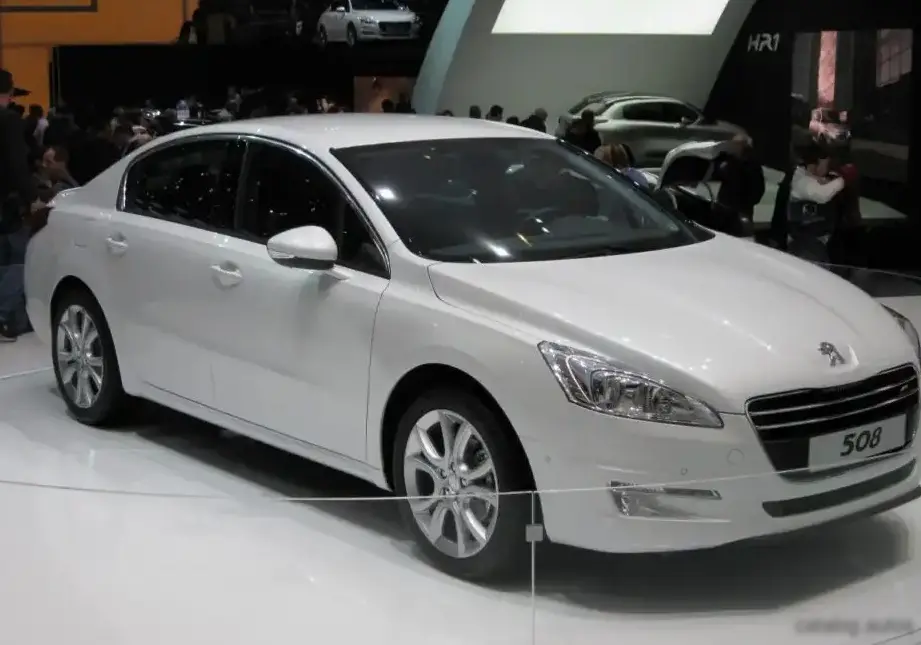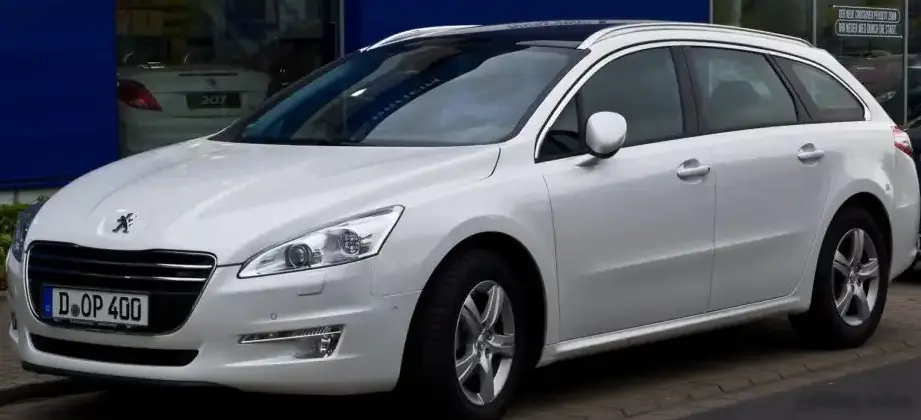
The Peugeot 508 I SW 2.2 HDI FAP Automatic, produced between 2010 and 2014, represents a significant offering in the European D-segment station wagon market. As part of the first generation (508 I) of the 508 series, the SW (Station Wagon) body style aimed to combine practicality with Peugeot’s established design language. This particular variant, equipped with the 2.2-liter HDi diesel engine producing 204 horsepower and paired with a six-speed automatic transmission, was positioned as a mid-to-upper range option within the 508 SW lineup, appealing to buyers seeking a blend of performance, fuel efficiency, and comfort. It was a key competitor to vehicles like the Ford Mondeo Estate, Volkswagen Passat Variant, and Opel/Vauxhall Insignia Sports Tourer.
Technical Specifications
| Brand | Peugeot |
| Model | 508 |
| Generation | 508 I SW (Phase I, 2010) |
| Type (Engine) | 2.2 HDI (204 Hp) FAP Automatic |
| Start of production | 2010 |
| End of production | 2014 |
| Powertrain Architecture | Internal Combustion engine |
| Body type | Station wagon (estate) |
| Seats | 5 |
| Doors | 5 |
| Fuel consumption (urban) | 8.1 l/100 km (29 US mpg, 34.9 UK mpg, 12.3 km/l) |
| Fuel consumption (extra urban) | 4.7 l/100 km (50 US mpg, 60.1 UK mpg, 21.3 km/l) |
| Fuel consumption (combined) | 5.9 l/100 km (39.9 US mpg, 47.9 UK mpg, 16.9 km/l) |
| Fuel Type | Diesel |
| Acceleration 0 – 100 km/h | 8.4 sec |
| Acceleration 0 – 62 mph | 8.4 sec |
| Acceleration 0 – 60 mph | 8 sec (Calculated) |
| Maximum speed | 232 km/h (144.16 mph) |
| Emission standard | Euro 5 |
| Weight-to-power ratio | 8.1 kg/Hp, 122.9 Hp/tonne |
| Weight-to-torque ratio | 3.7 kg/Nm, 271.1 Nm/tonne |
| Power | 204 Hp @ 3500 rpm |
| Power per litre | 93.6 Hp/l |
| Torque | 450 Nm @ 2000-2750 rpm (331.9 lb.-ft. @ 2000-2750 rpm) |
| Engine layout | Front, Transverse |
| Engine Model/Code | 4HL DW12C |
| Engine displacement | 2179 cm3 (132.97 cu. in.) |
| Number of cylinders | 4 |
| Engine configuration | Inline |
| Number of valves per cylinder | 4 |
| Fuel injection system | Diesel Commonrail |
| Engine aspiration | Turbocharger, Intercooler |
| Engine oil capacity | 5.25 l (5.55 US qt, 4.62 UK qt) |
| Coolant capacity | 10 l (10.57 US qt, 8.8 UK qt) |
| Kerb Weight | 1660 kg (3659.67 lbs) |
| Max. weight | 2280 kg (5026.54 lbs) |
| Max load | 620 kg (1366.87 lbs) |
| Trunk (boot) space – maximum | 560 l (19.78 cu. ft.) |
| Fuel tank capacity | 72 l (19.02 US gal, 15.84 UK gal) |
| Length | 4813 mm (189.49 in) |
| Width | 1920 mm (75.59 in) |
| Height | 1476 mm (58.11 in) |
| Wheelbase | 2817 mm (110.91 in) |
| Minimum turning circle | 10.9 m (35.76 ft) |
| Drivetrain Architecture | Front wheel drive |
| Number of gears | 6 |
| Gearbox type | Automatic transmission |
| Front suspension | Independent type McPherson |
| Rear suspension | Independent multi-link suspension |
| Front brakes | Ventilated discs |
| Rear brakes | Disc |
| Assisting systems | ABS (Anti-lock braking system) |
| Steering type | Steering rack and pinion |
| Tires size | 235/45 R18; 235/40 R19 |
| Wheel rims size | 18; 19 |
INTRODUCTION
The Peugeot 508 I SW 2.2 HDI Automatic, launched in 2010, was a key component of Peugeot’s strategy to offer a compelling alternative in the competitive mid-size wagon segment. Built on the PSA Group’s Platform 3, also known as the 1HX0/A3 platform, the 508 aimed to elevate Peugeot’s image with a more sophisticated design and improved driving dynamics. The SW variant, specifically, targeted families and individuals needing a versatile vehicle with ample cargo space. The 2.2 HDI engine, coupled with the automatic transmission, was intended to provide a comfortable and refined driving experience, making it suitable for long-distance journeys and everyday use.
Powertrain & Engine Architecture
The heart of this 508 SW variant is the 4HL DW12C 2.2-liter four-cylinder diesel engine. This engine utilizes a common rail direct injection system, delivering fuel at extremely high pressure for optimized combustion. The DW12C engine is a turbocharged engine, employing a variable geometry turbocharger (VGT) to enhance low-end torque and overall responsiveness. An intercooler further cools the intake air, increasing air density and boosting power output. The engine features four valves per cylinder and a double overhead camshaft (DOHC) configuration. The six-speed automatic transmission, sourced from Aisin, was chosen for its smoothness and efficiency. It features a torque converter and electronic control for precise gear changes. The inclusion of a Diesel Particulate Filter (DPF), denoted by the “FAP” in the model name, was crucial for meeting stringent Euro 5 emission standards.
Driving Characteristics
The 204 horsepower and 450 Nm (331.9 lb-ft) of torque provided by the 2.2 HDI engine delivered respectable performance for a wagon of this size. Acceleration from 0 to 100 km/h (0-62 mph) took approximately 8.4 seconds, and the car could reach a top speed of 232 km/h (144 mph). The automatic transmission, while offering convenience, did slightly diminish the sense of driver engagement compared to the available manual transmission. Gear ratios were tuned for a balance between fuel economy and responsiveness. In real-world driving, the 508 SW 2.2 HDI Automatic felt composed and stable, particularly on highways. The engine provided ample torque for overtaking maneuvers, and the automatic transmission shifted smoothly, although it could occasionally feel hesitant during quick downshifts. Compared to the lower-powered 1.6 HDI variants, this 2.2 HDI offered a noticeably more refined and effortless driving experience.
Equipment & Trim Levels
The 508 SW 2.2 HDI Automatic typically came equipped with a generous level of standard features. These included air conditioning, a CD/MP3 stereo system, electric windows and mirrors, and alloy wheels. Higher trim levels, such as the Allure or Feline, added features like leather upholstery, a panoramic sunroof, a navigation system, and parking sensors. Interior upholstery was generally cloth on base models, with leather options available. The dashboard layout was modern and functional, with a focus on ergonomics. Optional extras included a premium sound system, heated seats, and xenon headlights.
Chassis & Braking
The 508 SW featured a McPherson strut front suspension and a multi-link rear suspension, providing a comfortable ride and good handling characteristics. The suspension was tuned to prioritize comfort over outright sportiness. The braking system consisted of ventilated discs at the front and solid discs at the rear. Anti-lock Braking System (ABS) was standard, enhancing safety during emergency braking situations. Stabilizer bars were fitted to both the front and rear axles to reduce body roll during cornering. The steering was a rack and pinion system, providing precise and responsive steering feel.
Market Reception & Comparison
The Peugeot 508 SW 2.2 HDI Automatic received generally positive reviews from automotive critics. It was praised for its stylish design, comfortable ride, and spacious interior. The 2.2 HDI engine was lauded for its power and fuel efficiency. However, some critics noted that the automatic transmission could be occasionally sluggish, and the steering lacked some of the feedback found in competitors like the Ford Mondeo. Fuel economy was a strong point, with combined figures around 5.9 l/100 km (39.9 US mpg), making it competitive with other diesel wagons in its class. Reliability was generally good, although some owners reported issues with the DPF system, a common concern with diesel vehicles of this era.
Legacy
The Peugeot 508 I SW 2.2 HDI Automatic remains a popular choice in the used car market, particularly for those seeking a practical and stylish wagon. The DW12C engine, while requiring regular maintenance (including DPF regeneration), is generally considered to be a robust and reliable unit. Parts availability is good, and maintenance costs are reasonable. The 508 SW’s combination of comfort, practicality, and fuel efficiency continues to appeal to buyers today, making it a well-regarded example of a European D-segment station wagon.