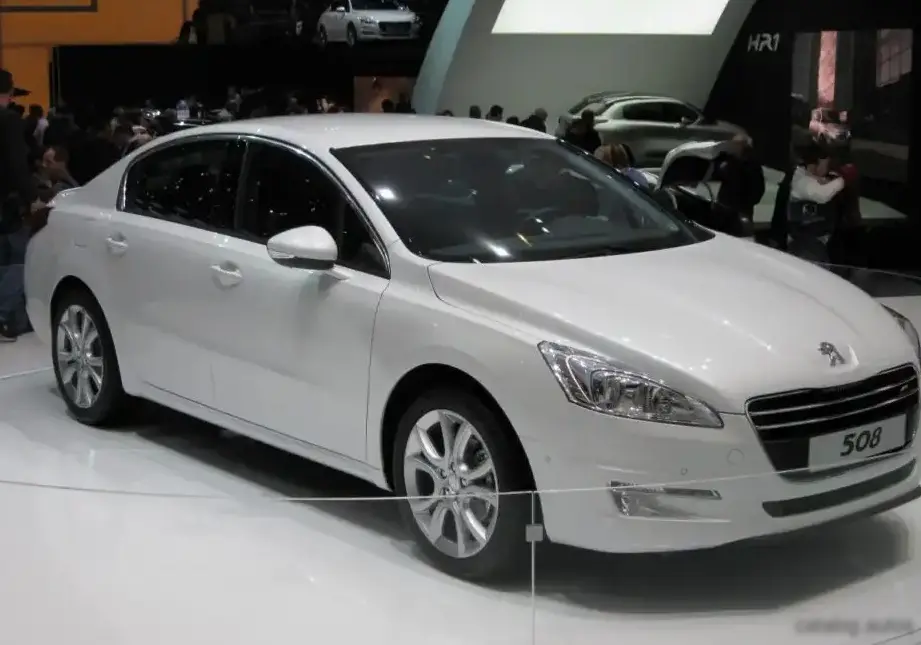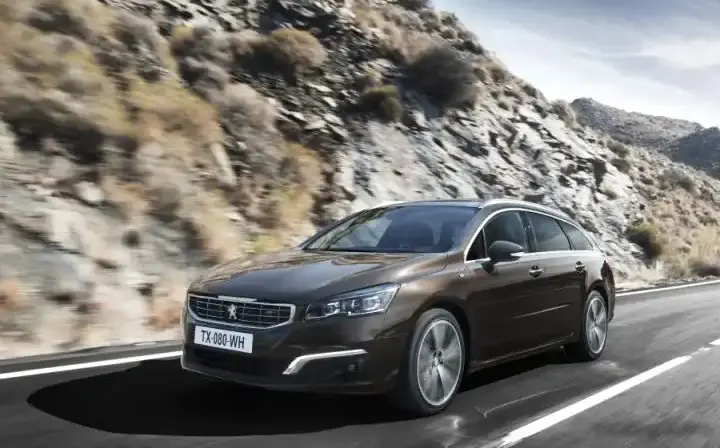
The Peugeot 508 I SW 1.6 e-HDI (115 hp) FAP, produced from 2014 to 2015, represents a significant offering within the first generation (T8F) of Peugeot’s mid-size wagon. This variant, part of the Phase II facelift of the 508, was designed to appeal to European buyers seeking a fuel-efficient and practical family vehicle. Positioned as an entry-to-mid-range trim, it provided a balance between affordability and features, slotting below the more powerful gasoline and diesel options available in the 508 SW lineup. The “SW” designation denotes the station wagon (estate) body style, emphasizing cargo capacity and versatility.
Technical Specifications
| Brand | Peugeot |
| Model | 508 |
| Generation | 508 I SW (Phase II, 2014) |
| Type (Engine) | 1.6 e-HDI (115 Hp) FAP |
| Start of production | 2014 |
| End of production | 2015 |
| Powertrain Architecture | Internal Combustion engine |
| Body type | Station wagon (estate) |
| Seats | 5 |
| Doors | 5 |
| Fuel consumption (urban) | 5 l/100 km (47 US mpg, 56.5 UK mpg, 20 km/l) |
| Fuel consumption (extra urban) | 3.7 l/100 km (63.6 US mpg, 76.3 UK mpg, 27 km/l) |
| Fuel consumption (combined) | 4 l/100 km (58.8 US mpg, 70.6 UK mpg, 25 km/l) |
| CO2 emissions | 110 g/km |
| Fuel Type | Diesel |
| Acceleration 0 – 100 km/h | 11.6 sec |
| Acceleration 0 – 62 mph | 11.6 sec |
| Acceleration 0 – 60 mph | 11 sec |
| Maximum speed | 197 km/h (122.41 mph) |
| Emission standard | Euro 5 |
| Weight-to-power ratio | 12.4 kg/Hp, 80.4 Hp/tonne |
| Weight-to-torque ratio | 5.6 kg/Nm, 177.6 Nm/tonne |
| Power | 115 Hp @ 3600 rpm |
| Power per litre | 73.7 Hp/l |
| Torque | 254 Nm @ 1500-3000 rpm (187.34 lb.-ft. @ 1500-3000 rpm) |
| Engine layout | Front, Transverse |
| Engine Model/Code | 9HL DV6C |
| Engine displacement | 1560 cm3 (95.2 cu. in.) |
| Number of cylinders | 4 |
| Engine configuration | Inline |
| Number of valves per cylinder | 2 |
| Fuel injection system | Diesel Commonrail |
| Engine aspiration | Turbocharger, Intercooler |
| Engine oil capacity | 3.75 l (3.96 US qt | 3.3 UK qt) |
| Coolant | 6 l (6.34 US qt | 5.28 UK qt) |
| Kerb Weight | 1430 kg (3152.61 lbs.) |
| Max. weight | 2080 kg (4585.62 lbs.) |
| Max load | 650 kg (1433 lbs.) |
| Trunk (boot) space – minimum | 512 l (18.08 cu. ft.) |
| Trunk (boot) space – maximum | 1592 l (56.22 cu. ft.) |
| Fuel tank capacity | 72 l (19.02 US gal | 15.84 UK gal) |
| Length | 4829 mm (190.12 in.) |
| Width | 1828 mm (71.97 in.) |
| Height | 1476 mm (58.11 in.) |
| Wheelbase | 2817 mm (110.91 in.) |
| Front track | 1579 mm (62.17 in.) |
| Rear (Back) track | 1552 mm (61.1 in.) |
| Ride height (ground clearance) | 148 mm (5.83 in.) |
| Minimum turning circle (turning diameter) | 12.2 m (40.03 ft.) |
| Drivetrain Architecture | Front wheel drive |
| Number of gears and type of gearbox | 5 gears, manual transmission |
| Front suspension | Independent, type McPherson with coil spring and anti-roll bar |
| Rear suspension | Independent multi-link suspension |
| Front brakes | Ventilated discs |
| Rear brakes | Disc |
| Assisting systems | ABS (Anti-lock braking system) |
| Steering type | Steering rack and pinion |
| Tires size | 215/60 R16; 215/55 R17 |
| Wheel rims size | 16; 17 |
Powertrain & Engine Architecture
The heart of this 508 SW variant is the 9HL DV6C engine, a 1.6-liter inline-four cylinder diesel. This engine is part of the DV6 family, a widely used powerplant in PSA Group (Peugeot-Citroën) vehicles. The “e-HDI” designation signifies the inclusion of Stop & Start technology for improved fuel economy. The engine utilizes a common rail direct injection system, delivering fuel at high pressure for efficient combustion. A turbocharger with an intercooler is employed to boost power output. The engine produces 115 horsepower at 3600 rpm and 254 Nm (187 lb-ft) of torque between 1500 and 3000 rpm. The engine is paired with a 5-speed manual transmission, which was the standard offering for this trim level. While an automatic transmission was available on other 508 models, it wasn’t offered with this specific engine and power output.
Driving Characteristics
The 1.6 e-HDI engine, coupled with the 5-speed manual gearbox, provides adequate performance for everyday driving. Acceleration from 0 to 100 km/h (0-62 mph) takes approximately 11.6 seconds, and top speed is rated at 197 km/h (122 mph). The engine’s torque delivery is its strong suit, offering good pulling power at lower engine speeds, making it suitable for overtaking and navigating hilly terrain. Compared to the more powerful 2.0-liter HDi variants, this 1.6-liter engine feels less responsive, particularly at higher speeds. However, the trade-off is significantly improved fuel economy. The manual transmission provides a more engaging driving experience than an automatic, but requires more driver involvement.
Equipment & Trim Levels
The 1.6 e-HDI SW typically came equipped with a reasonable level of standard features. These included air conditioning, power windows, power mirrors, a CD/MP3 stereo system, and basic safety equipment like ABS, ESP (Electronic Stability Program), and multiple airbags. Higher trim levels offered options such as leather upholstery, a panoramic sunroof, navigation system, and parking sensors. The interior generally featured a dark color scheme with cloth upholstery. The Phase II facelift brought minor cosmetic updates to the interior, including revised dashboard trim and updated infotainment systems.
Chassis & Braking
The 508 SW features a McPherson strut front suspension and a multi-link rear suspension, providing a comfortable ride quality. The front brakes are ventilated discs, while the rear brakes are solid discs. The suspension setup is tuned for comfort rather than outright sportiness, prioritizing ride quality over sharp handling. The steering is a rack and pinion system, offering reasonable precision. The 1.6 e-HDI variant, being lighter than its more powerful siblings, benefits from slightly improved agility.
Market Reception & Comparison
The Peugeot 508 SW 1.6 e-HDI was well-received in Europe as a practical and economical family car. Critics praised its fuel efficiency, spacious interior, and comfortable ride. However, some noted that the engine lacked the punch of the larger diesel options. Compared to competitors like the Ford Mondeo Estate and Volkswagen Passat Variant, the 508 SW offered a more stylish design and a slightly more refined interior. Its fuel economy was competitive, and its reliability was generally considered good, although some owners reported issues with the diesel particulate filter (DPF).
Legacy
The 1.6 e-HDI engine proved to be a reliable powerplant when properly maintained. The DPF system, however, required regular attention, particularly for drivers who primarily undertook short journeys. In the used car market, the 508 SW 1.6 e-HDI represents a good value proposition for buyers seeking an affordable and fuel-efficient estate car. Its combination of practicality, comfort, and economy continues to make it a popular choice, though potential buyers should be aware of the potential maintenance costs associated with the DPF system.