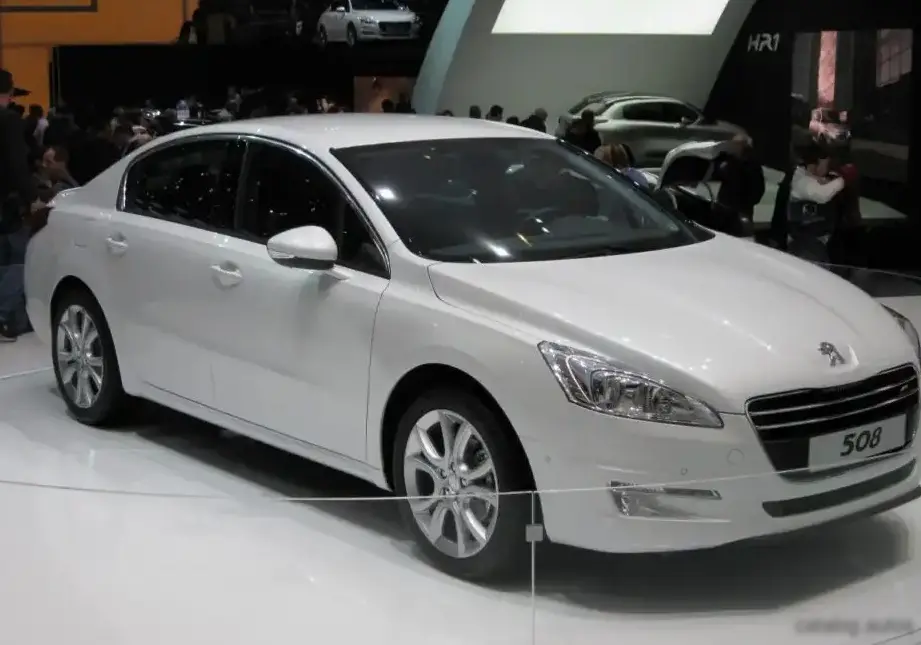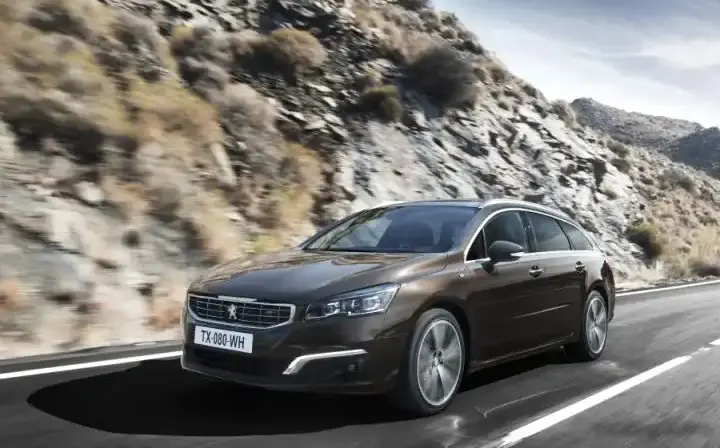
The Peugeot 508 I SW (Phase II), specifically the 1.6 THP 156 horsepower variant, was a popular choice in the European market from 2014 to 2018. This model represents a mid-cycle refresh of the first-generation 508 SW (Station Wagon), building upon the original’s strengths with updated styling, improved technology, and refined engine options. Positioned as a mid-range offering within the 508 SW lineup, it aimed to balance performance, fuel efficiency, and practicality for families and drivers seeking a versatile vehicle. It was part of the broader 508 I series, which utilized the PSA Group’s EMP2 platform.
Technical Specifications
| Brand | Peugeot |
| Model | 508 |
| Generation | 508 I SW (Phase II, 2014) |
| Type (Engine) | 1.6 THP (156 Hp) |
| Start of production | 2014 |
| End of production | 2018 |
| Powertrain Architecture | Internal Combustion engine |
| Body type | Station wagon (estate) |
| Seats | 5 |
| Doors | 5 |
| Fuel consumption (urban) | 7.6 l/100 km (30.9 US mpg, 37.2 UK mpg, 13.2 km/l) |
| Fuel consumption (extra urban) | 4.6 l/100 km (51.1 US mpg, 61.4 UK mpg, 21.7 km/l) |
| Fuel consumption (combined) | 5.6 l/100 km (42 US mpg, 50.4 UK mpg, 17.9 km/l) |
| CO2 emissions | 130 g/km |
| Fuel Type | Petrol (Gasoline) |
| Acceleration 0 – 100 km/h | 8.8 sec |
| Acceleration 0 – 62 mph | 8.8 sec |
| Acceleration 0 – 60 mph | 8.4 sec |
| Maximum speed | 210 km/h (130.49 mph) |
| Emission standard | Euro 6 |
| Weight-to-power ratio | 9.1 kg/Hp, 109.9 Hp/tonne |
| Weight-to-torque ratio | 5.9 kg/Nm, 169 Nm/tonne |
| Power | 156 Hp @ 6000 rpm |
| Power per litre | 97.6 Hp/l |
| Torque | 240 Nm @ 1400 rpm (177.01 lb.-ft. @ 1400 rpm) |
| Engine layout | Front, Transverse |
| Engine Model/Code | 5GZ EP6FDT |
| Engine displacement | 1598 cm3 (97.52 cu. in.) |
| Number of cylinders | 4 |
| Engine configuration | Inline |
| Number of valves per cylinder | 4 |
| Fuel injection system | Direct injection |
| Engine aspiration | Turbocharger, Intercooler |
| Engine oil capacity | 4.25 l (4.49 US qt | 3.74 UK qt) |
| Coolant capacity | 6.4 l (6.76 US qt | 5.63 UK qt) |
| Kerb Weight | 1420 kg (3130.56 lbs.) |
| Max. weight | 2080 kg (4585.62 lbs.) |
| Max load | 660 kg (1455.05 lbs.) |
| Trunk (boot) space – minimum | 512 l (18.08 cu. ft.) |
| Trunk (boot) space – maximum | 1592 l (56.22 cu. ft.) |
| Fuel tank capacity | 72 l (19.02 US gal | 15.84 UK gal) |
| Length | 4829 mm (190.12 in.) |
| Width | 1828 mm (71.97 in.) |
| Height | 1476 mm (58.11 in.) |
| Wheelbase | 2817 mm (110.91 in.) |
| Front track | 1579 mm (62.17 in.) |
| Rear track | 1552 mm (61.1 in.) |
| Ride height (ground clearance) | 148 mm (5.83 in.) |
| Minimum turning circle | 12.2 m (40.03 ft.) |
| Drivetrain Architecture | Front wheel drive |
| Number of gears | 6 |
| Gearbox type | Manual transmission |
| Front suspension | Independent, McPherson with coil spring and anti-roll bar |
| Rear suspension | Independent multi-link suspension |
| Front brakes | Ventilated discs |
| Rear brakes | Disc |
| Assisting systems | ABS (Anti-lock braking system) |
| Steering type | Steering rack and pinion |
| Tires size | 215/60 R16; 215/55 R17; 235/45 R18 |
| Wheel rims size | 16; 17; 18 |
INTRODUCTION
The Peugeot 508 I SW (Phase II) 1.6 THP 156 represents a practical and efficient option within the 508 SW range. Introduced as part of the facelift in 2014, this variant aimed to broaden the appeal of the 508 SW by offering a balance between performance and fuel economy. The “SW” designation signifies the station wagon body style, offering increased cargo capacity compared to the sedan version. This model competed with other mid-size wagons like the Ford Mondeo Estate, Volkswagen Passat Variant, and Opel/Vauxhall Insignia Sports Tourer. The 1.6 THP engine, a key component of Peugeot’s PureTech engine family, was designed to deliver improved efficiency and reduced emissions.
Powertrain & Engine Architecture
At the heart of the 508 I SW 1.6 THP 156 lies the 5GZ EP6FDT engine, a 1.6-liter turbocharged four-cylinder petrol engine. This engine is part of Peugeot’s Prince engine family, developed in collaboration with BMW. The “THP” designation stands for Turbo High Pressure, indicating the use of a twin-scroll turbocharger for improved responsiveness and reduced turbo lag. Direct fuel injection is employed, delivering fuel directly into the combustion chamber for precise control and enhanced efficiency. The engine features a variable valve timing system on both the intake and exhaust valves, optimizing performance across the rev range. The 156 horsepower output is achieved at 6,000 rpm, while peak torque of 240 Nm (177 lb-ft) is available from just 1,400 rpm, providing strong low-end and mid-range acceleration. The engine is paired with a six-speed manual transmission, delivering power to the front wheels.
Driving Characteristics
The 1.6 THP 156 powertrain delivers a respectable driving experience. Acceleration from 0 to 100 km/h (0-62 mph) takes approximately 8.8 seconds, making it adequately quick for everyday driving. The turbocharger provides a noticeable boost in power, particularly when overtaking or climbing hills. The six-speed manual transmission offers precise shifts and allows drivers to maintain optimal engine speed for efficiency or performance. Compared to the more powerful 181 hp version of the 1.6 THP, the 156 hp variant feels slightly less energetic, but it compensates with improved fuel economy. Compared to diesel variants like the 2.0 HDi, the 1.6 THP offers a more responsive and refined driving experience, albeit with slightly higher fuel consumption. The wagon body style contributes to a comfortable ride, absorbing bumps and imperfections in the road effectively.
Equipment & Trim Levels
The 508 I SW 1.6 THP 156 typically came equipped with a reasonable level of standard features. These included air conditioning, electric front and rear windows, a touchscreen infotainment system with Bluetooth connectivity, and alloy wheels. Higher trim levels, such as Allure or Feline, added features like leather upholstery, a panoramic sunroof, navigation system, and parking sensors. Interior upholstery was typically cloth on the base models, with leather options available on higher trims. The dashboard layout was modern and functional, with a focus on ergonomics. Optional extras included a head-up display, adaptive cruise control, and a premium sound system.
Chassis & Braking
The 508 I SW features a McPherson strut front suspension and an independent multi-link rear suspension, providing a comfortable and controlled ride. The suspension is tuned to balance handling and comfort, making it suitable for both city driving and long-distance journeys. The steering is precise and responsive, offering good feedback to the driver. Braking duties are handled by ventilated discs at the front and solid discs at the rear. Anti-lock Braking System (ABS) and Electronic Stability Control (ESC) are standard safety features. The 508 SW’s weight of around 1420 kg is relatively moderate for a mid-size wagon, contributing to its balanced handling characteristics.
Market Reception & Comparison
The Peugeot 508 I SW 1.6 THP 156 was generally well-received by automotive critics. It was praised for its stylish design, comfortable ride, and efficient engine. However, some critics noted that the interior quality could be improved compared to some of its rivals. Fuel economy was a strong point, with combined figures of around 5.6 l/100 km (42 US mpg). Compared to the 2.0 HDi diesel variant, the 1.6 THP offered a more refined driving experience but slightly higher fuel consumption. Reliability was generally good, although some owners reported minor issues with the turbocharger and fuel injection system.
Legacy
The 508 I SW 1.6 THP 156 remains a popular choice in the used car market. Its combination of practicality, efficiency, and style makes it an attractive option for buyers seeking a versatile family vehicle. The 1.6 THP engine, while generally reliable, requires regular maintenance, including oil changes and timing belt replacements. The availability of spare parts is good, and the 508 SW is relatively affordable to maintain. The model represents a significant step forward for Peugeot in terms of design and technology, and it helped to establish the brand as a serious contender in the mid-size wagon segment.