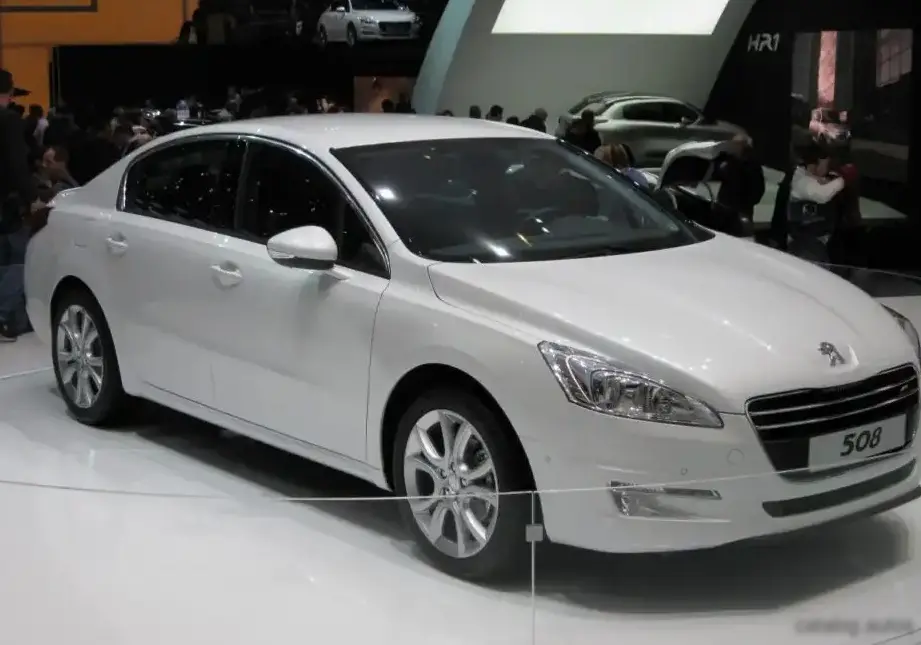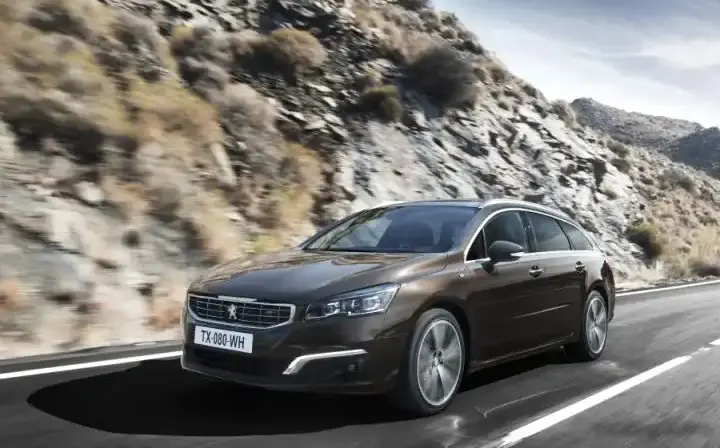
The Peugeot 508 I SW 2.0 HDi (163 hp) FAP Automatic, produced from 2014 to 2015, represents a significant iteration of Peugeot’s mid-size station wagon offering. This variant falls within the Phase II refresh of the first-generation 508 (introduced in 2010), and is built on the 1HX0/A3 platform shared with Citroën and, briefly, with Maserati. Positioned as a mid-range option within the 508 SW lineup, it aimed to balance fuel efficiency, practicality, and comfortable cruising for European families and business users. The “SW” designation denotes the station wagon (estate) body style, emphasizing cargo capacity and versatility. This model was primarily sold in the European market, where diesel-powered wagons held a substantial share of the automotive landscape.
Technical Specifications
| Brand | Peugeot |
| Model | 508 |
| Generation | 508 I SW (Phase II, 2014) |
| Type (Engine) | 2.0 HDi (163 Hp) FAP Automatic |
| Start of production | 2014 |
| End of production | 2015 |
| Powertrain Architecture | Internal Combustion engine |
| Body type | Station wagon (estate) |
| Seats | 5 |
| Doors | 5 |
| Fuel consumption (urban) | 7.3 l/100 km (32.2 US mpg, 38.7 UK mpg, 13.7 km/l) |
| Fuel consumption (extra urban) | 4.5 l/100 km (52.3 US mpg, 62.8 UK mpg, 22.2 km/l) |
| Fuel consumption (combined) | 5.5 l/100 km (42.8 US mpg, 51.4 UK mpg, 18.2 km/l) |
| CO2 emissions | 144 g/km |
| Fuel Type | Diesel |
| Acceleration 0 – 100 km/h | 9.5 sec |
| Acceleration 0 – 62 mph | 9.5 sec |
| Acceleration 0 – 60 mph | 9 sec |
| Maximum speed | 223 km/h (138.57 mph) |
| Emission standard | Euro 5 |
| Weight-to-power ratio | 9.4 kg/Hp, 105.8 Hp/tonne |
| Weight-to-torque ratio | 4.5 kg/Nm, 220.8 Nm/tonne |
| Power | 163 Hp @ 3750 rpm |
| Power per litre | 81.6 Hp/l |
| Torque | 340 Nm @ 2000-3000 rpm (250.77 lb.-ft. @ 2000-3000 rpm) |
| Engine layout | Front, Transverse |
| Engine Model/Code | RHH DW10CTED4 |
| Engine displacement | 1997 cm3 (121.86 cu. in.) |
| Number of cylinders | 4 |
| Engine configuration | Inline |
| Number of valves per cylinder | 4 |
| Fuel injection system | Diesel Commonrail |
| Engine aspiration | Turbocharger, Intercooler |
| Engine oil capacity | 5 l (5.28 US qt | 4.4 UK qt) |
| Coolant | 10 l (10.57 US qt | 8.8 UK qt) |
| Kerb Weight | 1540 kg (3395.12 lbs.) |
| Max. weight | 2180 kg (4806.08 lbs.) |
| Max load | 640 kg (1410.96 lbs.) |
| Trunk (boot) space – minimum | 512 l (18.08 cu. ft.) |
| Trunk (boot) space – maximum | 1592 l (56.22 cu. ft.) |
| Fuel tank capacity | 72 l (19.02 US gal | 15.84 UK gal) |
| Length | 4829 mm (190.12 in.) |
| Width | 1828 mm (71.97 in.) |
| Height | 1476 mm (58.11 in.) |
| Wheelbase | 2817 mm (110.91 in.) |
| Front track | 1579 mm (62.17 in.) |
| Rear (Back) track | 1552 mm (61.1 in.) |
| Ride height (ground clearance) | 148 mm (5.83 in.) |
| Minimum turning circle | 12.2 m (40.03 ft.) |
| Drivetrain Architecture | Front wheel drive |
| Number of gears | 6 |
| Gearbox type | Automatic transmission |
| Front suspension | Independent, type McPherson with coil spring and anti-roll bar |
| Rear suspension | Independent multi-link suspension |
| Front brakes | Ventilated discs |
| Rear brakes | Disc |
| Assisting systems | ABS (Anti-lock braking system) |
| Steering type | Steering rack and pinion |
| Tires size | 215/55 R17; 235/45 R18 |
| Wheel rims size | 17; 18 |
Powertrain & Engine Architecture
At the heart of the 508 SW 2.0 HDi Automatic lies the DW10CTED4 engine, a 2.0-liter inline-four cylinder diesel. This engine, commonly found in PSA Group vehicles (Peugeot, Citroën, and DS Automobiles), is characterized by its robust construction and focus on fuel efficiency. The ‘RHH’ engine code specifically denotes a variant optimized for the 508. It utilizes a common rail direct injection system, delivering fuel at extremely high pressure for improved combustion and reduced emissions. A turbocharger with an intercooler further enhances performance by forcing more air into the cylinders. The engine produces 163 horsepower at 3750 rpm and a substantial 340 Nm (250.77 lb-ft) of torque between 2000 and 3000 rpm. This torque output is a key characteristic of diesel engines, providing strong pulling power at lower engine speeds. The engine also incorporates a Diesel Particulate Filter (DPF), denoted by the “FAP” in the model name, to reduce particulate matter emissions and comply with Euro 5 standards. The engine is paired with a six-speed automatic transmission, providing smooth gear changes and enhancing driving comfort. This transmission was designed to work in harmony with the engine’s torque curve, optimizing fuel economy and drivability.
Driving Characteristics
The 508 SW 2.0 HDi Automatic offers a comfortable and refined driving experience. While not a performance-oriented variant, the 163 hp engine and six-speed automatic provide adequate power for everyday driving and long-distance cruising. Acceleration from 0 to 100 km/h (0-62 mph) takes approximately 9.5 seconds. The automatic transmission is tuned for smooth shifts and prioritizes fuel efficiency over aggressive acceleration. Compared to the manual transmission versions of the same engine, the automatic offers greater convenience, particularly in urban traffic. However, it may result in a slight reduction in fuel economy and a less engaging driving experience. Compared to higher-output versions of the 508, such as those equipped with the 2.2-liter diesel, this variant offers less outright performance but compensates with improved fuel economy and lower running costs. The suspension setup provides a good balance between comfort and handling, absorbing bumps and imperfections in the road while maintaining stability in corners.
Equipment & Trim Levels
The 508 SW 2.0 HDi Automatic typically came equipped with a respectable level of standard features. These included air conditioning, power windows, power mirrors, a CD/MP3 stereo system, and alloy wheels. Higher trim levels offered additional features such as leather upholstery, a panoramic sunroof, a navigation system, and parking sensors. Safety features included ABS, electronic stability control, and multiple airbags. The interior design was modern and functional, with a focus on ergonomics and user-friendliness. The dashboard layout was clean and uncluttered, with intuitive controls. The station wagon body style provided ample cargo space, making it ideal for families and those who frequently transport large items. The rear seats could be folded down to further increase cargo capacity.
Chassis & Braking
The 508 SW features an independent suspension system on both the front and rear axles. The front suspension utilizes a McPherson strut design, while the rear suspension employs a multi-link setup. This configuration provides a comfortable ride and good handling characteristics. The braking system consists of ventilated discs on the front wheels and solid discs on the rear wheels. ABS (Anti-lock Braking System) is standard, enhancing braking performance and stability in emergency situations. The steering is a rack and pinion system, providing precise and responsive steering feel.
Market Reception & Comparison
The Peugeot 508 SW 2.0 HDi Automatic was generally well-received by automotive critics. It was praised for its fuel efficiency, comfortable ride, and spacious interior. However, some critics noted that the engine could feel slightly underpowered when fully loaded or when tackling steep hills. Compared to its rivals, such as the Ford Mondeo Estate and the Volkswagen Passat Variant, the 508 SW offered a distinctive styling and a more refined driving experience. Its fuel economy was competitive, and its reliability was generally considered to be good. The automatic transmission was appreciated for its smoothness and ease of use.
Legacy
The DW10CTED4 engine, in its various iterations, has proven to be a durable and reliable powertrain. While diesel engines, in general, have faced increased scrutiny in recent years due to emissions concerns, the 508 SW 2.0 HDi Automatic remains a popular choice in the used car market. Its fuel efficiency and practicality continue to appeal to buyers looking for a versatile and economical family vehicle. Regular maintenance, including timely oil changes and DPF servicing, is crucial to ensure the long-term reliability of this powertrain. The 508 SW, as a whole, established Peugeot as a serious contender in the mid-size station wagon segment, offering a compelling alternative to more mainstream rivals.