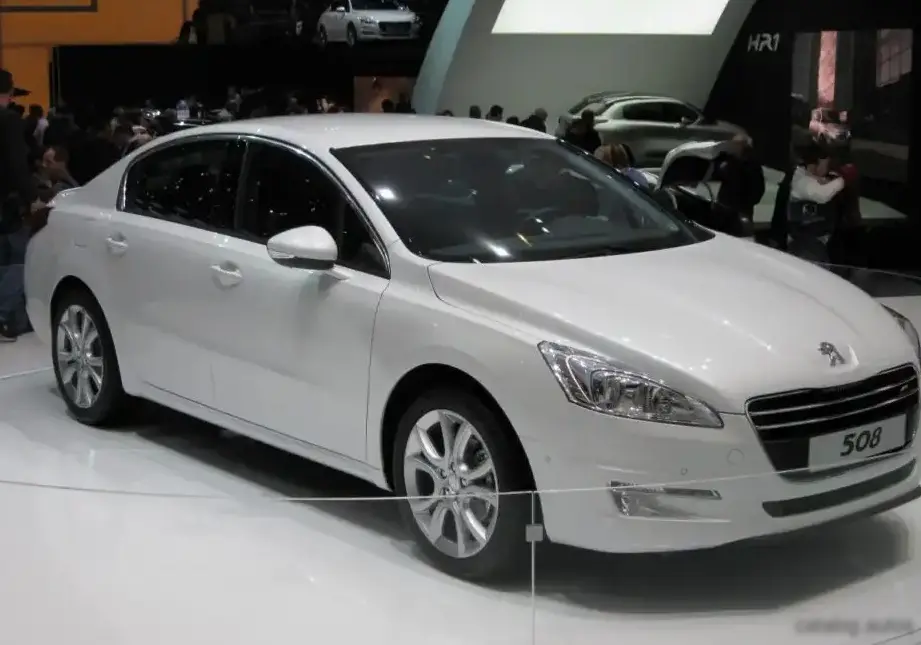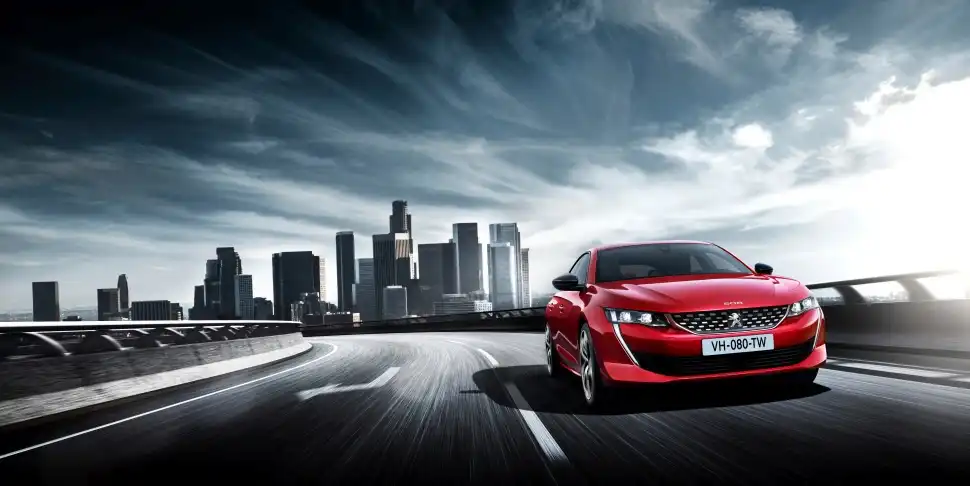
The Peugeot 508 II, launched in 2018 (Phase I), represented a significant departure for the French automaker, moving towards a more premium and stylish mid-size offering. The 1.2 PureTech 131 horsepower (Hp) variant, paired with the EAT8 eight-speed automatic transmission, was introduced in 2020 and remained in production through 2023. This configuration occupied the entry-level position in the 508 lineup, aiming to provide a balance of affordability, fuel efficiency, and comfort. It was primarily marketed in Europe, where smaller displacement engines are favored due to taxation and fuel costs, and offered as an alternative to diesel options.
Technical Specifications
| Brand | Peugeot |
| Model | 508 |
| Generation | 508 II (Phase I, 2018) |
| Type (Engine) | 1.2 PureTech (131 Hp) EAT8 |
| Start of production | 2020 |
| End of production | 2023 |
| Powertrain Architecture | Internal Combustion engine |
| Body type | Fastback |
| Seats | 5 |
| Doors | 5 |
| Fuel consumption at Low speed (WLTP) | 7.6-8.2 l/100 km (30.9 – 28.7 US mpg, 37.2 – 34.4 UK mpg, 13.2 – 12.2 km/l) |
| Fuel consumption at Medium speed (WLTP) | 6-6.8 l/100 km (39.2 – 34.6 US mpg, 47.1 – 41.5 UK mpg, 16.7 – 14.7 km/l) |
| Fuel consumption at high speed (WLTP) | 5-5.9 l/100 km (47 – 39.9 US mpg, 56.5 – 47.9 UK mpg, 20 – 16.9 km/l) |
| Fuel consumption at very high speed (WLTP) | 5.6-6.8 l/100 km (42 – 34.6 US mpg, 50.4 – 41.5 UK mpg, 17.9 – 14.7 km/l) |
| Combined fuel consumption (WLTP) | 5.8-6.7 l/100 km (40.6 – 35.1 US mpg, 48.7 – 42.2 UK mpg, 17.2 – 14.9 km/l) |
| CO2 emissions (WLTP) | 129-151 g/km |
| Fuel consumption (economy) – urban (NEDC) | 5.7-5.9 l/100 km (41.3 – 39.9 US mpg, 49.6 – 47.9 UK mpg, 17.5 – 16.9 km/l) |
| Fuel consumption (economy) – extra urban (NEDC) | 4.2-4.4 l/100 km (56 – 53.5 US mpg, 67.3 – 64.2 UK mpg, 23.8 – 22.7 km/l) |
| Fuel consumption (economy) – combined (NEDC) | 4.8-4.9 l/100 km (49 – 48 US mpg, 58.9 – 57.6 UK mpg, 20.8 – 20.4 km/l) |
| CO2 emissions (NEDC) | 108-112 g/km |
| Fuel Type | Petrol (Gasoline) |
| Acceleration 0 – 100 km/h | 10 sec |
| Acceleration 0 – 62 mph | 10 sec |
| Acceleration 0 – 60 mph | 9.5 sec |
| Maximum speed | 204 km/h (126.76 mph) |
| Emission standard | Euro 6d |
| Weight-to-power ratio | 10.7 kg/Hp, 93.6 Hp/tonne |
| Weight-to-torque ratio | 6.1 kg/Nm, 164.3 Nm/tonne |
| Power | 131 Hp @ 5500 rpm |
| Power per litre | 109.3 Hp/l |
| Torque | 230 Nm @ 1750 rpm (169.64 lb.-ft. @ 1750 rpm) |
| Engine layout | Front, Transverse |
| Engine Model/Code | HNS EB2ADTS |
| Engine displacement | 1199 cm3 (73.17 cu. in.) |
| Number of cylinders | 3 |
| Engine configuration | Inline |
| Cylinder Bore | 75 mm (2.95 in.) |
| Piston Stroke | 90.5 mm (3.56 in.) |
| Number of valves per cylinder | 4 |
| Fuel injection system | Direct injection |
| Engine aspiration | Turbocharger, Intercooler |
| Valvetrain | DOHC |
| Engine oil capacity | 3.5 l (3.7 US qt | 3.08 UK qt) |
| Kerb Weight | 1400 kg (3086.47 lbs.) |
| Max. weight | 1970 kg (4343.11 lbs.) |
| Max load | 570 kg (1256.63 lbs.) |
| Trunk (boot) space – minimum | 487 l (17.2 cu. ft.) |
| Trunk (boot) space – maximum | 1537 l (54.28 cu. ft.) |
| Fuel tank capacity | 62 l (16.38 US gal | 13.64 UK gal) |
| Max. roof load | 80 kg (176.37 lbs.) |
| Permitted trailer load with brakes (12%) | 1330 kg (2932.15 lbs.) |
| Permitted trailer load without brakes | 735 kg (1620.4 lbs.) |
| Permitted towbar download | 70 kg (154.32 lbs.) |
| Length | 4750 mm (187.01 in.) |
| Width | 1859 mm (73.19 in.) |
| Width with mirrors folded | 1907 mm (75.08 in.) |
| Width including mirrors | 2079 mm (81.85 in.) |
| Height | 1403 mm (55.24 in.) |
| Wheelbase | 2793 mm (109.96 in.) |
| Front track | 1601 mm (63.03 in.) |
| Rear (Back) track | 1597 mm (62.87 in.) |
| Front overhang | 948 mm (37.32 in.) |
| Rear overhang | 1009 mm (39.72 in.) |
| Minimum turning circle (turning diameter) | 10.8 m (35.43 ft.) |
| Drivetrain Architecture | The Internal combustion engine (ICE) drives the front wheels of the vehicle. |
| Drive wheel | Front wheel drive |
| Number of gears and type of gearbox | 8 gears, automatic transmission EAT |
| Front suspension | Independent type McPherson |
| Rear suspension | Independent multi-link suspension |
| Front brakes | Ventilated discs, 304×28 mm |
| Rear brakes | Disc, 268×12 mm |
| Assisting systems | ABS (Anti-lock braking system) |
| Steering type | Steering rack and pinion |
| Power steering | Electric Steering |
| Tires size | 215/60 R16; 215/55 R17; 235/45 R18; 235/40 R19 |
INTRODUCTION
The Peugeot 508 II, launched in 2018, marked a significant shift for the brand, moving away from more conservative designs towards a more dynamic and emotionally appealing aesthetic. The 1.2 PureTech 131 Hp EAT8 variant, introduced in 2020, was positioned as the entry point to the 508 range. Built on the EMP1 platform (also known as the 1HX0/A3 platform), this version aimed to attract buyers seeking a stylish and comfortable mid-size vehicle with reasonable running costs. It served as a key offering in the European market, where smaller, turbocharged engines are popular due to tax incentives and fuel efficiency concerns.
Powertrain & Engine Architecture
The heart of this 508 variant is the HNS EB2ADTS 1.2-liter three-cylinder turbocharged gasoline engine. This engine is part of Peugeot’s “PureTech” family, known for its direct injection and advanced combustion technology. The engine produces 131 Hp at 5500 rpm and 230 Nm (169.64 lb.-ft.) of torque at 1750 rpm. Direct injection is crucial for precise fuel delivery and efficient combustion. The engine utilizes a dual-scroll turbocharger to minimize turbo lag and provide a responsive driving experience. The EAT8 eight-speed automatic transmission, developed in partnership with Aisin, is a torque converter automatic known for its smooth shifts and efficiency. It features a wide gear ratio spread, optimizing both acceleration and fuel economy. The transmission is electronically controlled and adapts to driving conditions and driver input.
Driving Characteristics
The 1.2 PureTech EAT8 508 offers a comfortable and refined driving experience, prioritizing ease of use over outright performance. While not a sports car, the engine provides adequate power for everyday driving situations. Acceleration from 0-100 km/h (0-62 mph) takes around 10 seconds. The EAT8 transmission contributes to smooth gear changes, and the wide gear ratios help keep the engine within its optimal operating range. Compared to the more powerful 1.6 PureTech or diesel variants, this version feels less urgent in acceleration, particularly when overtaking. However, the lower weight of the three-cylinder engine compared to the four-cylinder options does contribute to a slightly more agile feel. The transmission’s programming is geared towards fuel efficiency, sometimes resulting in slightly hesitant responses during quick acceleration requests.
Equipment & Trim Levels
The 1.2 PureTech 131 Hp EAT8 typically came equipped with a respectable level of standard features. These generally included air conditioning, a touchscreen infotainment system with Apple CarPlay and Android Auto compatibility, LED headlights, and a suite of safety features such as automatic emergency braking and lane departure warning. Interior upholstery was typically cloth, with options for leather upgrades available. Higher trim levels added features like a larger touchscreen, digital instrument cluster, panoramic sunroof, and premium audio system. Optional extras included adaptive cruise control, blind-spot monitoring, and a hands-free parking assist system.
Chassis & Braking
The 508 II utilizes an independent suspension setup on both the front and rear axles. The front suspension employs a McPherson strut design, while the rear features a multi-link setup. This configuration provides a good balance of ride comfort and handling. The 1.2 PureTech variant, being the entry-level model, typically featured smaller diameter wheels (16-17 inches) and disc brakes on all four wheels, with ventilated discs at the front for improved heat dissipation. ABS (Anti-lock Braking System) was standard, along with electronic brake-force distribution and emergency brake assist. Stabilizer bars were fitted to both the front and rear axles to reduce body roll during cornering.
Market Reception & Comparison
The 1.2 PureTech EAT8 508 received generally positive reviews, particularly for its stylish design, comfortable interior, and fuel efficiency. Critics noted that the engine, while adequate, was not as refined or powerful as some of its competitors. Compared to the 1.6 PureTech variants, the 1.2 offered lower running costs but sacrificed some performance. The diesel models provided even better fuel economy but came with the potential drawbacks associated with diesel emissions regulations. The 1.2 PureTech appealed to buyers prioritizing style, comfort, and affordability over outright performance.
Legacy
The 1.2 PureTech engine, while generally reliable, has been subject to some reports of timing chain issues in certain applications. Regular oil changes and adherence to the manufacturer’s maintenance schedule are crucial for long-term reliability. The EAT8 transmission has proven to be a robust and dependable unit. On the used car market, the 1.2 PureTech 508 represents a relatively affordable entry point into the 508 range, offering a stylish and well-equipped vehicle for those seeking a comfortable and economical mid-size car. Its fuel efficiency and lower running costs continue to make it an attractive option for budget-conscious buyers.