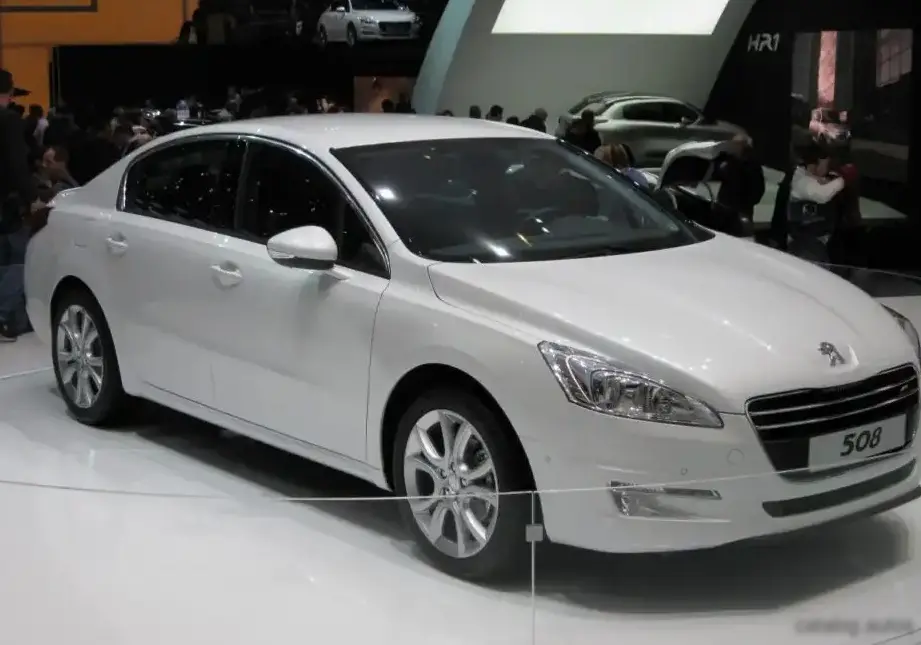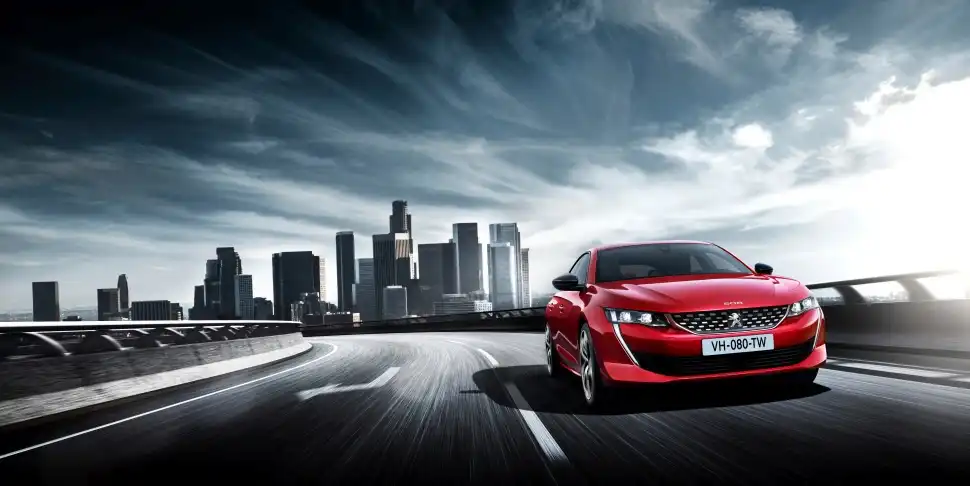
The Peugeot 508 II, launched in 2018, represented a significant departure for the French automaker, moving towards a more premium and stylish mid-size offering. The 1.5 BlueHDi 130 horsepower variant, produced from 2018 through 2023, served as a key entry point into the 508 lineup, particularly in European markets where diesel engines remained popular. This fastback model aimed to blend practicality with a more emotive driving experience, challenging established competitors like the Volkswagen Passat and Ford Mondeo. It was built on the EMP1 platform, shared with other PSA Group vehicles like the DS 7 Crossback and Opel/Vauxhall Grandland X.
Technical Specifications
| Brand | Peugeot |
| Model | 508 |
| Generation | 508 II (Phase I, 2018) |
| Type (Engine) | 1.5 BlueHDi (130 Hp) |
| Start of production | 2018 |
| End of production | 2023 |
| Powertrain Architecture | Internal Combustion engine |
| Body type | Fastback |
| Seats | 5 |
| Doors | 5 |
| Fuel consumption (urban) | 4.7 l/100 km (50 US mpg, 60.1 UK mpg, 21.3 km/l) |
| Fuel consumption (extra urban) | 3.4 l/100 km (69.2 US mpg, 83.1 UK mpg, 29.4 km/l) |
| Fuel consumption (combined) | 3.8 l/100 km (61.9 US mpg, 74.3 UK mpg, 26.3 km/l) |
| CO2 emissions | 101 g/km |
| Fuel Type | Diesel |
| Acceleration 0 – 100 km/h | 9.7 sec |
| Acceleration 0 – 62 mph | 9.7 sec |
| Acceleration 0 – 60 mph | 9.2 sec |
| Maximum speed | 210 km/h (130.49 mph) |
| Emission standard | Euro 6 |
| Weight-to-power ratio | 10.9 kg/Hp, 91.9 Hp/tonne |
| Weight-to-torque ratio | 4.7 kg/Nm, 212 Nm/tonne |
| Power | 130 Hp @ 3750 rpm |
| Power per litre | 86.7 Hp/l |
| Torque | 300 Nm @ 1750 rpm (221.27 lb.-ft. @ 1750 rpm) |
| Engine layout | Front, Transverse |
| Engine Model/Code | YHZ DV5RC |
| Engine displacement | 1499 cm3 (91.47 cu. in.) |
| Number of cylinders | 4 |
| Engine configuration | Inline |
| Number of valves per cylinder | 4 |
| Fuel injection system | Diesel Commonrail |
| Engine aspiration | Turbocharger, Intercooler |
| Engine oil capacity | 4 l (4.23 US qt | 3.52 UK qt) |
| Kerb Weight | 1415 kg (3119.54 lbs.) |
| Max. weight | 2000 kg (4409.25 lbs.) |
| Max load | 585 kg (1289.7 lbs.) |
| Trunk (boot) space – minimum | 487 l (17.2 cu. ft.) |
| Trunk (boot) space – maximum | 1537 l (54.28 cu. ft.) |
| Fuel tank capacity | 55 l (14.53 US gal | 12.1 UK gal) |
| Permitted trailer load with brakes (12%) | 1500 kg (3306.93 lbs.) |
| Length | 4750 mm (187.01 in.) |
| Width | 1859 mm (73.19 in.) |
| Height | 1403 mm (55.24 in.) |
| Wheelbase | 2793 mm (109.96 in.) |
| Front track | 1601 mm (63.03 in.) |
| Rear (Back) track | 1597 mm (62.87 in.) |
| Front overhang | 948 mm (37.32 in.) |
| Rear overhang | 1009 mm (39.72 in.) |
| Minimum turning circle | 10.8 m (35.43 ft.) |
| Drivetrain Architecture | Front wheel drive |
| Drive wheel | Front wheel drive |
| Number of gears | 6 gears, manual transmission |
| Front suspension | Independent type McPherson |
| Rear suspension | Independent multi-link suspension |
| Front brakes | Ventilated discs |
| Rear brakes | Disc |
| Assisting systems | ABS (Anti-lock braking system) |
| Steering type | Steering rack and pinion |
| Power steering | Electric Steering |
| Tires size | 215/60 R16; 215/55 R17; 235/45 R18; 235/40 R19 |
| Wheel rims size | 16; 17; 18; 19 |
Powertrain & Engine Architecture
The 1.5 BlueHDi engine, identified by the code YHZ DV5RC, is a four-cylinder, inline diesel engine displacing 1499cc. It features a turbocharger with an intercooler to enhance power and efficiency. The engine utilizes a common-rail direct injection system, delivering fuel at extremely high pressure for optimized combustion. This particular engine benefits from Peugeot’s BlueHDi technology, incorporating a Selective Catalytic Reduction (SCR) system and a particulate filter to significantly reduce NOx emissions and particulate matter, meeting stringent Euro 6 emission standards. The 130 horsepower output is achieved at 3750 rpm, while peak torque of 300 Nm (221 lb-ft) is available from just 1750 rpm, providing good low-end responsiveness. The engine is transversely mounted in the front of the vehicle. The 6-speed manual transmission was the standard offering for this variant, chosen for its balance of fuel economy and driver engagement.
Driving Characteristics
The 1.5 BlueHDi 130 hp version of the 508 offered a comfortable and refined driving experience, prioritizing fuel efficiency over outright performance. Acceleration from 0-100 km/h (0-62 mph) took approximately 9.7 seconds. While not a sports car, the engine’s strong low-end torque made it well-suited for everyday driving and overtaking maneuvers. The 6-speed manual transmission provided precise shifts, although the gear ratios were tuned for economy rather than aggressive acceleration. Compared to higher-output versions of the 508, such as those with the 180 hp diesel or the gasoline engines, this variant felt less eager to rev and required more planning when overtaking. However, it excelled in fuel economy, consistently achieving combined figures around 3.8 l/100 km (61.9 US mpg).
Equipment & Trim Levels
The 1.5 BlueHDi 130 hp typically represented a mid-range trim level in the 508 lineup. Standard equipment generally included air conditioning, a touchscreen infotainment system with Apple CarPlay and Android Auto compatibility, alloy wheels, and a suite of safety features such as automatic emergency braking, lane departure warning, and traffic sign recognition. Higher trim levels added features like leather upholstery, a panoramic sunroof, adaptive cruise control, and a more advanced sound system. Interior upholstery was typically cloth, with options for partial leather. The dashboard layout was modern and driver-focused, featuring a digital instrument cluster on some trims.
Chassis & Braking
The Peugeot 508 II utilized an independent suspension system on both the front and rear axles. The front suspension employed a McPherson strut design, while the rear featured a multi-link setup, contributing to a comfortable ride and good handling characteristics. Front brakes were ventilated discs, providing ample stopping power, while rear brakes were solid discs. The 508’s chassis was tuned to balance comfort and agility, offering a composed ride on most road surfaces. Electric power steering provided light and precise steering feel.
Market Reception & Comparison
The Peugeot 508 II, and specifically the 1.5 BlueHDi 130 hp variant, was generally well-received by automotive critics. It was praised for its stylish design, comfortable interior, and fuel-efficient engine. However, some reviewers noted that the engine lacked the punch of its more powerful counterparts. Compared to the 180 hp diesel, the 130 hp version offered a more affordable entry point into the 508 range, but at the expense of performance. Against competitors like the Volkswagen Passat and Ford Mondeo, the 508 distinguished itself with its more distinctive styling and focus on driver engagement. Fuel economy was a key selling point, consistently outperforming many gasoline-powered rivals.
Legacy
The 1.5 BlueHDi engine has proven to be a relatively reliable powertrain, although, like all modern diesels, it requires regular maintenance, particularly regarding the diesel particulate filter (DPF). The DPF can become clogged if the vehicle is primarily used for short trips at low speeds. On the used car market, the 508 II 1.5 BlueHDi 130 hp represents a good value proposition, offering a stylish and efficient mid-size car at a reasonable price. Its combination of fuel economy, comfort, and practicality continues to appeal to buyers seeking a well-rounded family vehicle.