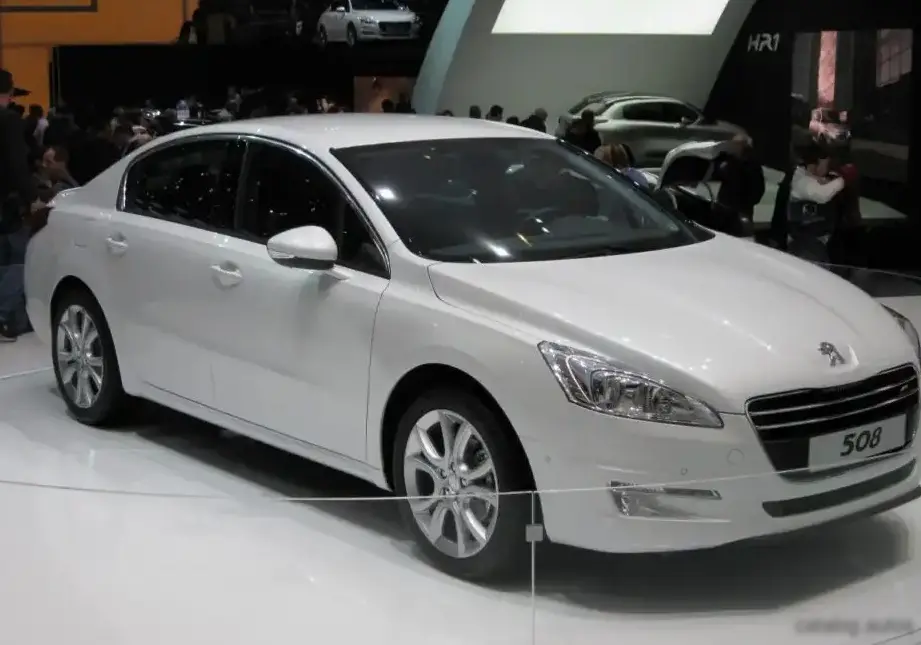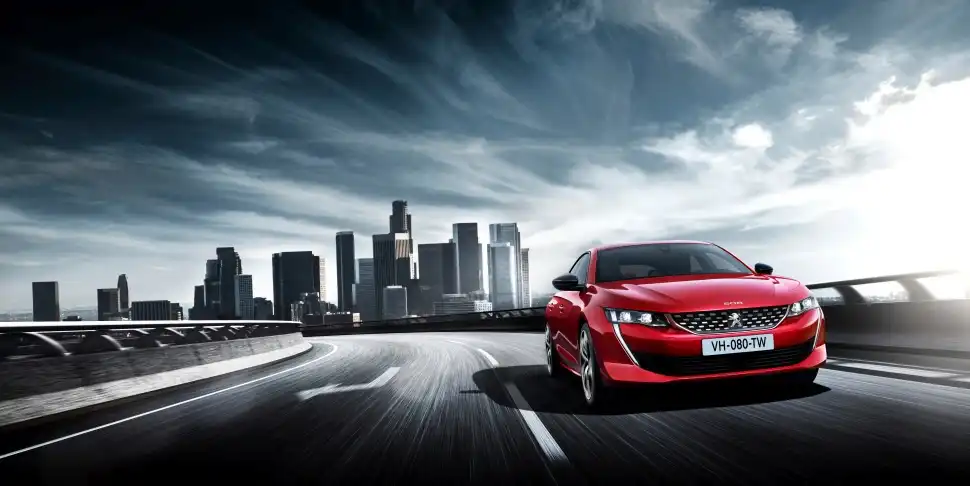
The Peugeot 508 II, launched in 2018, represented a significant departure for the French automaker, moving towards a more premium and stylish mid-size offering. The 1.5 BlueHDi 130 horsepower automatic variant, produced from 2018 to 2023, served as a key entry point into the 508 range, particularly in European markets where diesel engines remained popular. This fastback model aimed to blend practicality with a sophisticated design, appealing to buyers seeking a comfortable and fuel-efficient vehicle for both daily commuting and longer journeys. It was positioned as a more economical alternative to the higher-powered GT Line and GT trims.
Technical Specifications
| Brand | Peugeot |
| Model | 508 |
| Generation | 508 II (Phase I, 2018) |
| Type (Engine) | 1.5 BlueHDi (130 Hp) Automatic |
| Start of production | 2018 |
| End of production | 2023 |
| Powertrain Architecture | Internal Combustion engine |
| Body type | Fastback |
| Seats | 5 |
| Doors | 5 |
| Fuel consumption (urban) | 4.4 l/100 km (53.5 US mpg, 64.2 UK mpg, 22.7 km/l) |
| Fuel consumption (extra urban) | 3.4 l/100 km (69.2 US mpg, 83.1 UK mpg, 29.4 km/l) |
| Fuel consumption (combined) | 3.7 l/100 km (63.6 US mpg, 76.3 UK mpg, 27 km/l) |
| CO2 emissions | 98 g/km |
| Fuel Type | Diesel |
| Acceleration 0 – 100 km/h | 10 sec |
| Acceleration 0 – 62 mph | 10 sec |
| Acceleration 0 – 60 mph | 9.5 sec |
| Maximum speed | 210 km/h (130.49 mph) |
| Emission standard | Euro 6 |
| Weight-to-power ratio | 10.9 kg/Hp, 91.5 Hp/tonne |
| Weight-to-torque ratio | 4.7 kg/Nm, 211.3 Nm/tonne |
| Power | 130 Hp @ 3750 rpm |
| Power per litre | 86.7 Hp/l |
| Torque | 300 Nm @ 1750 rpm (221.27 lb.-ft. @ 1750 rpm) |
| Engine layout | Front, Transverse |
| Engine Model/Code | YHZ DV5RC |
| Engine displacement | 1499 cm3 (91.47 cu. in.) |
| Number of cylinders | 4 |
| Engine configuration | Inline |
| Number of valves per cylinder | 4 |
| Fuel injection system | Diesel Commonrail |
| Engine aspiration | Turbocharger, Intercooler |
| Engine oil capacity | 4 l (4.23 US qt | 3.52 UK qt) |
| Kerb Weight | 1420 kg (3130.56 lbs.) |
| Max. weight | 2020 kg (4453.34 lbs.) |
| Max load | 600 kg (1322.77 lbs.) |
| Trunk (boot) space – minimum | 487 l (17.2 cu. ft.) |
| Trunk (boot) space – maximum | 1537 l (54.28 cu. ft.) |
| Fuel tank capacity | 55 l (14.53 US gal | 12.1 UK gal) |
| Permitted trailer load with brakes (12%) | 1500 kg (3306.93 lbs.) |
| Length | 4750 mm (187.01 in.) |
| Width | 1859 mm (73.19 in.) |
| Height | 1403 mm (55.24 in.) |
| Wheelbase | 2793 mm (109.96 in.) |
| Front track | 1601 mm (63.03 in.) |
| Rear (Back) track | 1597 mm (62.87 in.) |
| Front overhang | 948 mm (37.32 in.) |
| Rear overhang | 1009 mm (39.72 in.) |
| Minimum turning circle | 10.8 m (35.43 ft.) |
| Drivetrain Architecture | Front wheel drive |
| Number of gears and type of gearbox | 8 gears, automatic transmission |
| Front suspension | Independent type McPherson |
| Rear suspension | Independent multi-link suspension |
| Front brakes | Ventilated discs |
| Rear brakes | Disc |
| Assisting systems | ABS (Anti-lock braking system) |
| Steering type | Steering rack and pinion |
| Power steering | Electric Steering |
| Tires size | 215/60 R16; 215/55 R17; 235/45 R18; 235/40 R19 |
| Wheel rims size | 16; 17; 18; 19 |
Powertrain & Engine Architecture
The heart of this 508 variant is the 1.5 BlueHDi engine, part of Peugeot’s BlueHDi range of diesel engines designed to meet stringent Euro 6 emissions standards. The YHZ DV5RC engine is a four-cylinder, inline configuration, displacing 1499cc. It utilizes a turbocharger with an intercooler to boost power output to 130 horsepower at 3750 rpm and 300 Nm (221 lb-ft) of torque at a low 1750 rpm. The engine employs a diesel commonrail direct injection system, ensuring precise fuel delivery for optimized combustion and efficiency. A particulate filter is included to reduce harmful emissions. The engine is transversely mounted in the front of the vehicle. The eight-speed automatic transmission, sourced from Aisin, was chosen for its smooth shifting and contribution to fuel economy. This transmission features a torque converter and provides a wide range of gear ratios to optimize performance and efficiency.
Driving Characteristics
The 1.5 BlueHDi automatic offers a comfortable and refined driving experience. While not a performance-oriented variant, the 300 Nm of torque provides adequate pulling power for everyday driving and overtaking maneuvers. The eight-speed automatic transmission contributes to smooth gear changes, and the relatively low engine weight helps maintain good balance. Acceleration from 0-60 mph takes around 9.5 seconds, and top speed is rated at 130 mph. Compared to the more powerful 180 hp BlueHDi or the petrol-powered variants, this version prioritizes fuel efficiency over outright performance. The gear ratios are tuned for economy, meaning the engine doesn’t rev as high or feel as responsive as higher-spec models. However, for typical commuting and long-distance cruising, the 1.5 BlueHDi provides a relaxed and efficient driving experience.
Equipment & Trim Levels
The 1.5 BlueHDi 130 Automatic typically came equipped with a respectable level of standard features. These included air conditioning, a touchscreen infotainment system with Apple CarPlay and Android Auto compatibility, Bluetooth connectivity, and a suite of safety features such as automatic emergency braking, lane departure warning, and traffic sign recognition. Interior upholstery was generally cloth, with options for leather upgrades. Trim levels varied by market, but commonly included ‘Active’, ‘Allure’, and ‘GT Line’ designations. Higher trims offered features like a larger touchscreen, digital instrument cluster, heated seats, and a panoramic sunroof. Optional extras included a premium sound system, adaptive cruise control, and a hands-free parking assist system.
Chassis & Braking
The 508 II utilizes a McPherson strut front suspension and a multi-link rear suspension, providing a good balance between comfort and handling. The suspension is tuned to prioritize ride quality, absorbing bumps and imperfections in the road effectively. Front brakes are ventilated discs, while rear brakes are solid discs. Anti-lock Braking System (ABS) is standard, along with Electronic Stability Control (ESC). The steering is electric power-assisted, offering a light and precise feel. Wheel sizes ranged from 16 to 19 inches, depending on the trim level, influencing both aesthetics and handling characteristics.
Market Reception & Comparison
The Peugeot 508 II, and specifically the 1.5 BlueHDi 130 Automatic, was generally well-received by automotive critics. It was praised for its stylish design, comfortable interior, and fuel efficiency. However, some reviewers noted that the engine, while adequate, lacked the punch of the more powerful alternatives. Compared to the 180 hp BlueHDi, the 130 hp version offered lower running costs but compromised on performance. Against petrol-powered rivals, the 1.5 BlueHDi provided superior fuel economy, making it an attractive option for high-mileage drivers. Reliability reports have been generally positive, with the BlueHDi engine proving to be relatively robust.
Legacy
The 1.5 BlueHDi 130 Automatic Peugeot 508 II remains a popular choice in the used car market, particularly for those seeking a stylish, comfortable, and fuel-efficient mid-size vehicle. The engine has proven to be reasonably reliable, although regular servicing and adherence to manufacturer recommendations are crucial for long-term durability. The combination of a refined diesel engine, smooth automatic transmission, and a well-equipped interior makes this variant a compelling option for buyers looking for a practical and sophisticated vehicle.