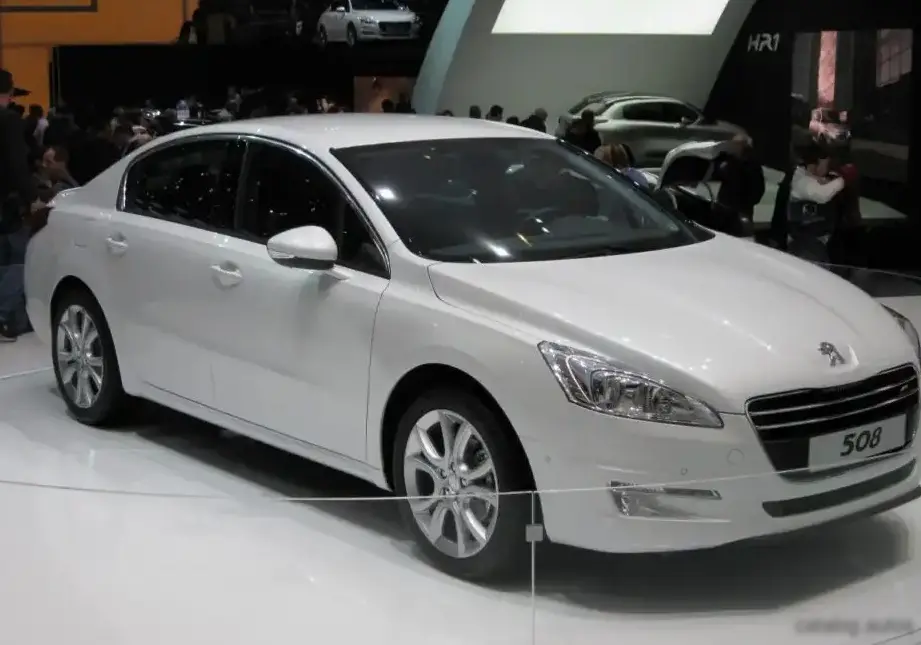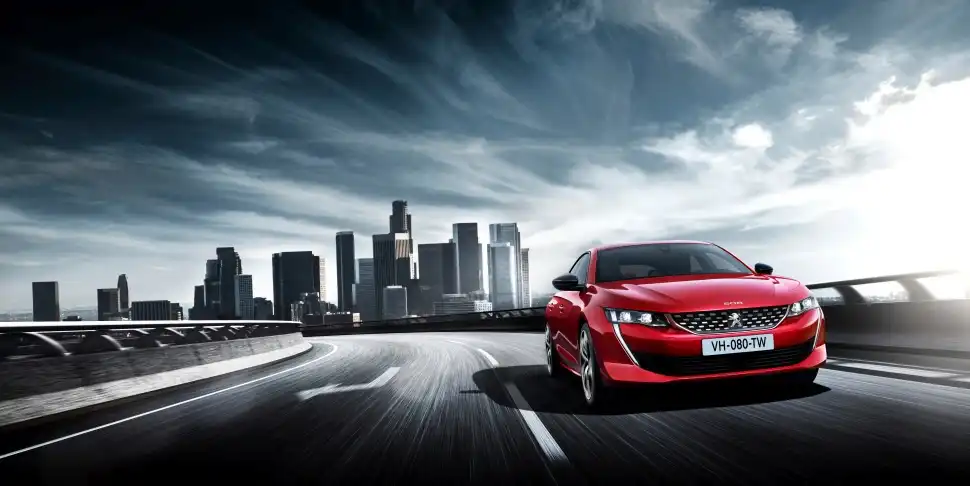
The Peugeot 508 II 1.6 PureTech 225 Hp Plug-in Hybrid e-EAT8, introduced in 2019 as part of the Phase I redesign of the 508, represents Peugeot’s entry into the increasingly competitive plug-in hybrid market. Positioned as a premium offering within the 508 lineup, it combined a gasoline engine with electric power to deliver improved fuel economy and reduced emissions while maintaining a respectable level of performance. Production continued through 2023, solidifying its place as a key model in Peugeot’s transition towards electrification. The 508 II is built on the EMP1 (Efficient Modular Platform 1) architecture, shared with other PSA Group vehicles like the DS 7 Crossback and Opel/Vauxhall Grandland.
Technical Specifications
| Brand | Peugeot |
| Model | 508 |
| Generation | 508 II (Phase I, 2018) |
| Type (Engine) | 1.6 PureTech (225 Hp) Plug-in Hybrid e-EAT8 |
| Start of production | 2019 |
| End of production | 2023 |
| Powertrain Architecture | PHEV (Plug-in Hybrid Electric Vehicle) |
| Body type | Fastback |
| Seats | 5 |
| Doors | 5 |
| Combined fuel consumption (WLTP) | 1.3-1.5 l/100 km (180.9 – 156.8 US mpg, 217.3 – 188.3 UK mpg, 76.9 – 66.7 km/l) |
| CO2 emissions (WLTP) | 28-34 g/km |
| Fuel consumption (NEDC) | 1.4-1.5 l/100 km (168 – 156.8 US mpg, 201.8 – 188.3 UK mpg, 71.4 – 66.7 km/l) |
| CO2 emissions (NEDC) | 32-35 g/km |
| Fuel Type | Petrol / electricity |
| Acceleration 0 – 100 km/h | 8.1 sec |
| Acceleration 0 – 62 mph | 8.1 sec |
| Acceleration 0 – 60 mph | 7.7 sec |
| Maximum speed | 240 km/h (149.13 mph) |
| Emission standard | Euro 6 |
| Weight-to-power ratio | 7.6 kg/Hp, 130.8 Hp/tonne |
| Weight-to-torque ratio | 4.8 kg/Nm, 209.3 Nm/tonne |
| Gross battery capacity | 11.6 kWh |
| Battery voltage | 300 V |
| Battery technology | Lithium-ion (Li-Ion) |
| Battery location | Below the floor, under the rear seats |
| All-electric range (WLTP) | 54 km (33.55 mi) |
| All-electric range (NEDC) | 57 km (35.42 mi) |
| Average Energy consumption (WLTP) | 14.3-15.3 kWh/100 km (23.01 – 24.62 kWh/100 mi, 146 – 137 MPGe, 7 – 6.5 km/kWh, 4.3 – 4.1 mi/kWh) |
| Max speed (electric) | 135 km/h (83.89 mph) |
| Electric motor power | 110 Hp @ 2500 rpm |
| Electric motor Torque | 320 Nm (236.02 lb.-ft.) |
| Electric motor location | Between the combustion engine and the transmission |
| System power | 225 Hp |
| System torque | 360 Nm (265.52 lb.-ft.) |
| Power | 180 Hp @ 6000 rpm |
| Torque | 300 Nm @ 3000 rpm (221.27 lb.-ft. @ 3000 rpm) |
| Engine layout | Front, Transverse |
| Engine Model/Code | EP6FADTXHPD |
| Engine displacement | 1598 cm3 (97.52 cu. in.) |
| Number of cylinders | 4 |
| Engine configuration | Inline |
| Cylinder Bore | 77 mm (3.03 in.) |
| Piston Stroke | 85.8 mm (3.38 in.) |
| Compression ratio | 10.2:1 |
| Number of valves per cylinder | 4 |
| Fuel injection system | Direct injection |
| Engine aspiration | Turbocharger, Intercooler |
| Valvetrain | DOHC |
| Engine oil capacity | 4.25 l (4.49 US qt | 3.74 UK qt) |
| Kerb Weight | 1720 kg (3791.95 lbs.) |
| Max. weight | 2270 kg (5004.49 lbs.) |
| Max load | 550 kg (1212.54 lbs.) |
| Trunk (boot) space – minimum | 487 l (17.2 cu. ft.) |
| Trunk (boot) space – maximum | 1537 l (54.28 cu. ft.) |
| Fuel tank capacity | 43 l (11.36 US gal | 9.46 UK gal) |
| Max. roof load | 80 kg (176.37 lbs.) |
| Permitted trailer load with brakes (12%) | 1330 kg (2932.15 lbs.) |
| Permitted trailer load without brakes | 745 kg (1642.44 lbs.) |
| Permitted towbar download | 54 kg (119.05 lbs.) |
| Length | 4750 mm (187.01 in.) |
| Width | 1859 mm (73.19 in.) |
| Width with mirrors folded | 1907 mm (75.08 in.) |
| Width including mirrors | 2079 mm (81.85 in.) |
| Height | 1403 mm (55.24 in.) |
| Wheelbase | 2793 mm (109.96 in.) |
| Front track | 1601 mm (63.03 in.) |
| Rear (Back) track | 1597 mm (62.87 in.) |
| Front overhang | 948 mm (37.32 in.) |
| Rear overhang | 1009 mm (39.72 in.) |
| Minimum turning circle | 10.8 m (35.43 ft.) |
| Drivetrain Architecture | The Internal combustion engine (ICE) and electric motor drive the front wheels of the car with the ability to work in full electric or mixed mode. |
| Drive wheel | Front wheel drive |
| Number of gears and type of gearbox | 8 gears, automatic transmission e-EAT |
| Front suspension | Independent type McPherson |
| Rear suspension | Independent multi-link suspension |
| Front brakes | Ventilated discs, 304×28 mm |
| Rear brakes | Disc, 268×12 mm |
| Assisting systems | ABS (Anti-lock braking system) |
| Steering type | Steering rack and pinion |
| Power steering | Electric Steering |
| Tires size | 215/55 R17; 235/45 R18 |
| Wheel rims size | 7J x 17; 8J x 18 |
INTRODUCTION
The Peugeot 508 II 1.6 PureTech 225 Hp Plug-in Hybrid e-EAT8, launched in 2019, marked a significant step in Peugeot’s strategy to offer electrified powertrains. This variant, built on the EMP1 platform, combined a 1.6-liter turbocharged gasoline engine with an electric motor and a lithium-ion battery pack, providing both all-electric driving capability and the extended range of a hybrid system. It was positioned as a premium trim level within the 508 range, appealing to buyers seeking a blend of efficiency, performance, and sophisticated styling. The “e-EAT8” designation refers to the eight-speed automatic transmission specifically tuned for hybrid applications.
Powertrain & Engine Architecture
At the heart of the 508 Hybrid lies the EP6FADTXHPD engine, a 1.6-liter inline-four cylinder gasoline engine utilizing direct fuel injection and a turbocharger. This engine produces 180 horsepower at 6000 rpm and 300 Nm (221 lb-ft) of torque at 3000 rpm. The engine is paired with a 110 horsepower electric motor, integrated between the engine and the e-EAT8 eight-speed automatic transmission. The electric motor draws power from a 11.6 kWh lithium-ion battery pack located under the rear seats. The combined system output is 225 horsepower and 360 Nm (265 lb-ft) of torque. The e-EAT8 transmission is a conventional automatic, but with software and hardware modifications to seamlessly integrate with the electric motor, allowing for smooth transitions between electric, hybrid, and gasoline power modes. The engine utilizes a sophisticated Start & Stop system to further enhance fuel efficiency.
Driving Characteristics
The 508 II 1.6 PureTech Hybrid offers a refined driving experience. In all-electric mode, the car provides silent and smooth acceleration, capable of covering up to 54 km (33.55 miles) on the WLTP cycle. Switching to hybrid mode allows the gasoline engine to assist during acceleration or when the battery charge is depleted. The e-EAT8 transmission provides quick and responsive gear changes, contributing to a feeling of effortless performance. While not as overtly sporty as some of the higher-powered 508 variants, the hybrid powertrain delivers ample power for everyday driving and highway cruising. The weight of the battery pack does add some mass, but the well-tuned suspension helps to mitigate any noticeable impact on handling. The gear ratios are optimized for both fuel efficiency and responsiveness, providing a good balance between the two.
Equipment & Trim Levels
The 1.6 PureTech 225 Hp Plug-in Hybrid e-EAT8 typically came equipped with a high level of standard features. Interior appointments included premium cloth or leather upholstery, a touchscreen infotainment system with Apple CarPlay and Android Auto compatibility, and a digital instrument cluster. Standard safety features included automatic emergency braking, lane departure warning, and adaptive cruise control. Optional extras included a panoramic sunroof, premium audio system, and advanced driver-assistance systems such as blind-spot monitoring and parking assist. Trim levels varied by market, but generally offered progressively more luxurious features and styling enhancements.
Chassis & Braking
The 508 II utilizes an independent McPherson strut suspension at the front and an independent multi-link suspension at the rear, providing a comfortable and controlled ride. The suspension is tuned to balance handling and ride quality, offering a good compromise for everyday driving. Braking duties are handled by ventilated discs at the front and solid discs at the rear. The hybrid system incorporates regenerative braking, which helps to recapture energy during deceleration and recharge the battery. The car is equipped with ABS (Anti-lock Braking System) and electronic stability control as standard safety features.
Market Reception & Comparison
The Peugeot 508 II Plug-in Hybrid was generally well-received by automotive critics. It was praised for its stylish design, comfortable interior, and efficient powertrain. Compared to the gasoline-only 508 variants, the hybrid offered significantly improved fuel economy and reduced emissions, particularly for drivers who frequently commute in urban areas. Compared to the diesel-powered 508 models, the hybrid provided a quieter and more refined driving experience. However, the hybrid’s higher price point and slightly reduced trunk space were noted as potential drawbacks. The hybrid’s real-world fuel economy was generally consistent with the WLTP figures, making it a compelling option for environmentally conscious buyers.
Legacy
The Peugeot 508 II 1.6 PureTech 225 Hp Plug-in Hybrid e-EAT8 represents an important milestone in Peugeot’s electrification journey. The powertrain has proven to be relatively reliable, with few widespread issues reported. On the used car market, these models hold their value reasonably well, reflecting their desirable combination of efficiency, performance, and features. The hybrid system’s longevity is generally good, although regular maintenance of the battery pack and hybrid components is recommended. The 508 Hybrid paved the way for Peugeot’s broader range of plug-in hybrid and fully electric vehicles, solidifying the brand’s commitment to sustainable mobility.