Technical Specifications
| Brand | Peugeot |
| Model | 508 |
| Generation | 508 II (Phase I, 2018) |
| Type (Engine) | 2.0 BlueHDi (160 Hp) Automatic |
| Start of production | 2018 |
| End of production | 2023 |
| Powertrain Architecture | Internal Combustion engine |
| Body type | Fastback |
| Seats | 5 |
| Doors | 5 |
| Fuel consumption (urban) | 5.5 l/100 km (42.8 US mpg, 51.4 UK mpg, 18.2 km/l) |
| Fuel consumption (extra urban) | 3.8 l/100 km (61.9 US mpg, 74.3 UK mpg, 26.3 km/l) |
| Fuel consumption (combined) | 4.5 l/100 km (52.3 US mpg, 62.8 UK mpg, 22.2 km/l) |
| CO2 emissions | 118 g/km |
| Fuel Type | Diesel |
| Acceleration 0 – 100 km/h | 8.4 sec |
| Acceleration 0 – 62 mph | 8.4 sec |
| Acceleration 0 – 60 mph | 8 sec |
| Maximum speed | 230 km/h (142.92 mph) |
| Emission standard | Euro 6 |
| Weight-to-power ratio | 9.6 kg/Hp, 104.6 Hp/tonne |
| Weight-to-torque ratio | 3.8 kg/Nm, 261.4 Nm/tonne |
| Power | 160 Hp @ 3750 rpm |
| Power per litre | 80.1 Hp/l |
| Torque | 400 Nm @ 2000 rpm (295.02 lb.-ft. @ 2000 rpm) |
| Engine layout | Front, Transverse |
| Engine Model/Code | EHY DW10FCC |
| Engine displacement | 1997 cm3 (121.86 cu. in.) |
| Number of cylinders | 4 |
| Engine configuration | Inline |
| Number of valves per cylinder | 4 |
| Fuel injection system | Diesel Commonrail |
| Engine aspiration | Turbocharger, Intercooler |
| Engine oil capacity | 5 l (5.28 US qt | 4.4 UK qt) |
| Kerb Weight | 1530 kg (3373.07 lbs.) |
| Max. weight | 2125 kg (4684.82 lbs.) |
| Max load | 595 kg (1311.75 lbs.) |
| Trunk (boot) space – minimum | 487 l (17.2 cu. ft.) |
| Trunk (boot) space – maximum | 1537 l (54.28 cu. ft.) |
| Fuel tank capacity | 55 l (14.53 US gal | 12.1 UK gal) |
| Permitted trailer load with brakes (12%) | 1800 kg (3968.32 lbs.) |
| Length | 4750 mm (187.01 in.) |
| Width | 1859 mm (73.19 in.) |
| Height | 1403 mm (55.24 in.) |
| Wheelbase | 2793 mm (109.96 in.) |
| Front track | 1601 mm (63.03 in.) |
| Rear (Back) track | 1597 mm (62.87 in.) |
| Front overhang | 948 mm (37.32 in.) |
| Rear overhang | 1009 mm (39.72 in.) |
| Minimum turning circle | 10.8 m (35.43 ft.) |
| Drivetrain Architecture | Front wheel drive |
| Number of gears and type of gearbox | 8 gears, automatic transmission |
| Front suspension | Independent type McPherson |
| Rear suspension | Independent multi-link suspension |
| Front brakes | Ventilated discs |
| Rear brakes | Disc |
| Assisting systems | ABS (Anti-lock braking system) |
| Steering type | Steering rack and pinion |
| Power steering | Electric Steering |
| Tires size | 215/55 R17; 235/45 R18; 235/40 R19 |
| Wheel rims size | 17; 18; 19 |
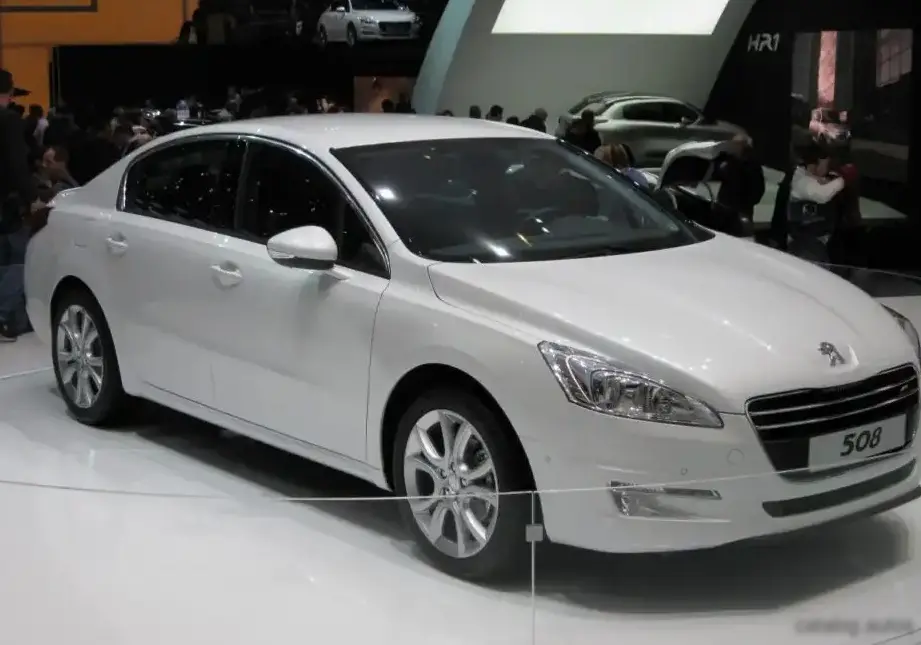
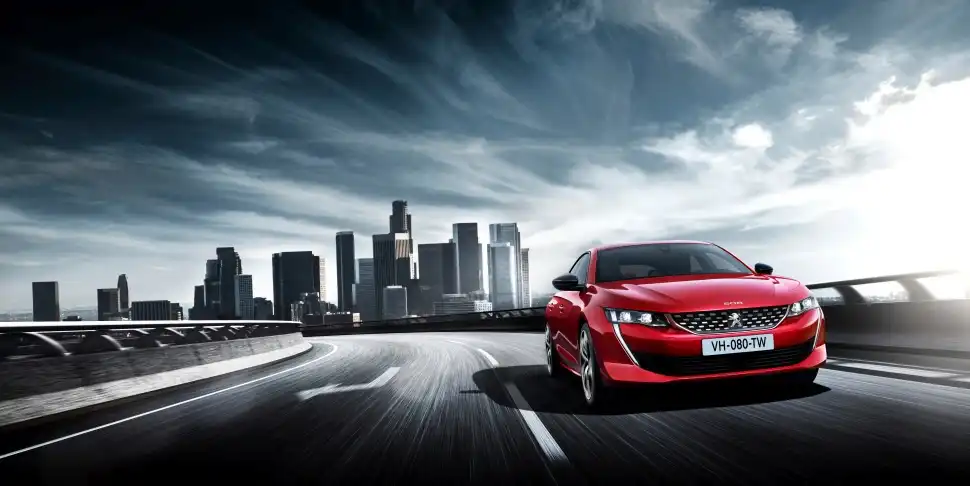
The Peugeot 508 II, launched in 2018, marked a significant shift for the French automaker, embracing a more premium and stylish design language within the mid-size segment. The 2.0 BlueHDi 160 Automatic, produced from 2018 to 2023, occupied an important position in the lineup, appealing to buyers who prioritized fuel efficiency, long-distance comfort, and a refined driving experience. This fastback model, belonging to the Phase I generation, was intended to compete with established rivals such as the Volkswagen Passat, Ford Mondeo, and Skoda Superb, offering a distinctive French aesthetic and a focus on modern technology.
Powertrain & Engine Architecture
At the core of the 508 II 2.0 BlueHDi 160 Automatic lies the DW10FCC engine, a 2.0-liter inline-four cylinder diesel. This engine is a member of Peugeot’s BlueHDi family, incorporating Selective Catalytic Reduction (SCR) technology and a Diesel Particulate Filter (DPF) to drastically reduce NOx emissions and particulate matter, adhering to the strict Euro 6 emission standards. The engine employs a common-rail direct injection system, delivering fuel at exceptionally high pressures for optimized combustion efficiency. A turbocharger, coupled with an intercooler, further boosts performance by forcing more air into the cylinders. The engine generates 160 horsepower at 3750 rpm and a robust 400 Nm (295 lb-ft) of torque at 2000 rpm. This torque characteristic is typical of modern diesel engines, providing strong pulling power and responsive acceleration. The engine is mated to an eight-speed automatic transmission, designed for smooth gear changes and optimized fuel economy.
Driving Characteristics
The 2.0 BlueHDi 160 Automatic delivers a refined and comfortable driving experience. While not positioned as a performance variant, the engine’s torque provides sufficient power for everyday driving and overtaking. The eight-speed automatic transmission contributes to smooth acceleration and efficient cruising. Compared to the more powerful 180 hp version of the same engine, the 160 hp variant feels slightly less responsive, especially at higher speeds, but the difference is subtle. The 160 hp model achieves a 0-60 mph time of around 8 seconds. The automatic transmission is well-calibrated, offering quick and seamless gear changes. The gear ratios are optimized for fuel efficiency, maintaining relatively low engine speeds during highway driving. Compared to manual transmission models, the automatic provides greater convenience, particularly in congested urban environments.
Equipment & Trim Levels
The 2.0 BlueHDi 160 Automatic generally came with a comprehensive set of standard features. These included automatic climate control, a touchscreen infotainment system with Apple CarPlay and Android Auto compatibility, rear parking sensors, and cruise control. Higher trim levels added features such as leather upholstery, a panoramic sunroof, a premium sound system, and advanced driver-assistance systems like adaptive cruise control and lane-keeping assist. Interior upholstery was typically cloth on base trims, with leather options available on higher-specification models. The dashboard layout was modern and driver-centric, featuring a clean and uncluttered design.
Chassis & Braking
The 508 II utilizes a McPherson strut front suspension and a multi-link rear suspension, providing a comfortable and controlled ride. The suspension is tuned to strike a balance between ride comfort and handling precision. The front brakes are ventilated discs, while the rear brakes are solid discs. Anti-lock Braking System (ABS) and Electronic Stability Control (ESC) are standard safety features. The steering is electrically assisted, offering a light and responsive feel. Wheel sizes varied depending on the trim level, ranging from 17-inch to 19-inch alloy wheels.
Market Reception & Comparison
The Peugeot 508 II 2.0 BlueHDi 160 Automatic received generally positive reviews from automotive critics. It was praised for its stylish design, comfortable ride, and fuel efficiency. The diesel engine was noted for its strong torque output and refined operation. Some critics, however, found the interior materials to be slightly less premium compared to some competitors. In terms of fuel economy, the 2.0 BlueHDi 160 Automatic delivered excellent figures, typically achieving around 52.3 US mpg on the combined cycle. Reliability was generally good, although some owners reported issues with the DPF system, a common concern with modern diesel engines. Compared to the gasoline-powered variants, the 2.0 BlueHDi offered significantly better fuel economy, making it a popular choice for drivers who frequently cover long distances.
Legacy
The Peugeot 508 II 2.0 BlueHDi 160 Automatic remains a desirable option in the used car market. Its combination of style, comfort, and fuel efficiency makes it an appealing choice for buyers seeking a refined and practical mid-size car. The DW10FCC engine is known for its durability, although regular maintenance, including DPF regeneration, is crucial for long-term reliability. As diesel technology faces increasing scrutiny, the 508 II 2.0 BlueHDi represents a transitional period in automotive engineering, offering a balance between performance, efficiency, and environmental responsibility.