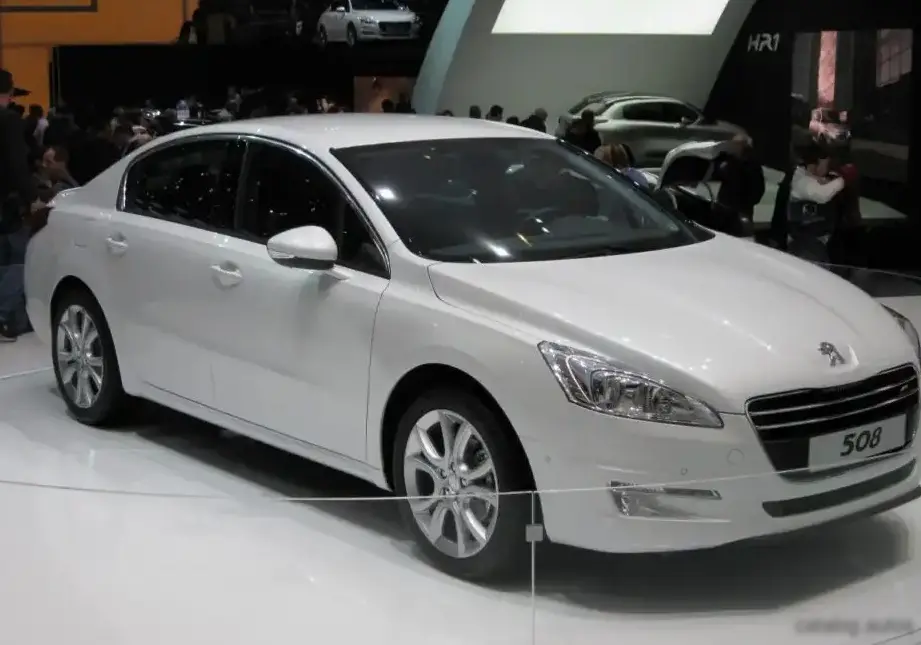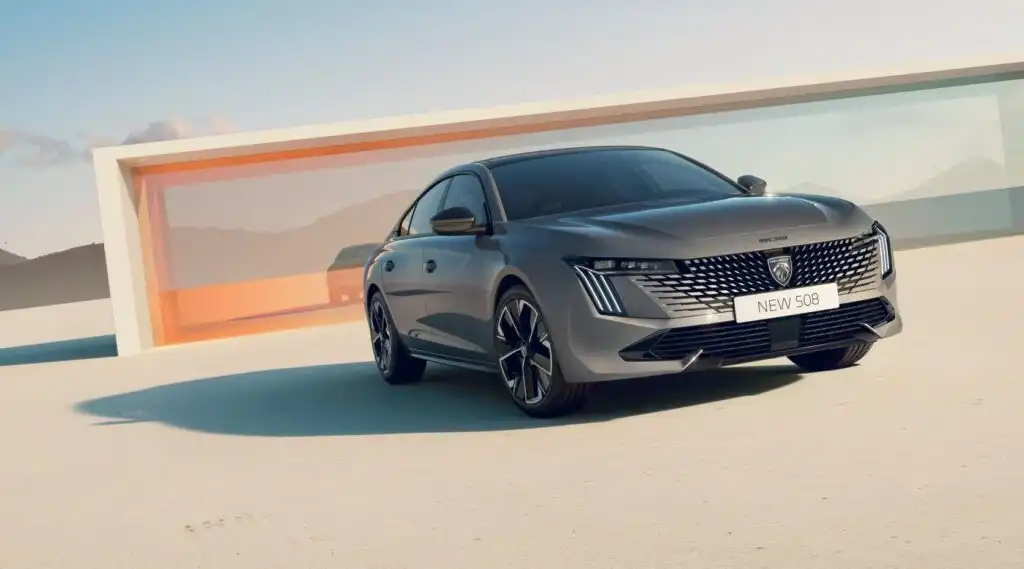
The Peugeot 508 II Phase II 1.6 PureTech 180 hp Plug-in Hybrid e-EAT8, introduced in 2023, represents a significant evolution of Peugeot’s flagship fastback. This variant occupies a mid-range position within the 508 lineup, offering a balance between performance, efficiency, and technology. It builds upon the foundation of the 508 II (introduced in 2018), which aimed to redefine Peugeot’s image with a more premium and stylish offering in the D-segment, competing with vehicles like the Volkswagen Passat, Ford Mondeo (in Europe), and BMW 3 Series. The Phase II update brought styling revisions, enhanced technology, and powertrain refinements, solidifying the 508’s position as a compelling alternative to traditional executive cars.
Technical Specifications
| Brand | Peugeot |
| Model | 508 |
| Generation | 508 II (Phase II, 2023) |
| Type (Engine) | 1.6 PureTech (180 Hp) Plug-in Hybrid e-EAT8 |
| Start of production | 2023 |
| Powertrain Architecture | PHEV (Plug-in Hybrid Electric Vehicle) |
| Body type | Fastback |
| Seats | 5 |
| Doors | 5 |
| Combined fuel consumption (WLTP) | 1.1-1.5 l/100 km (213.8 – 156.8 US mpg, 256.8 – 188.3 UK mpg, 90.9 – 66.7 km/l) |
| CO2 emissions (WLTP) | 25-32 g/km |
| Fuel Type | Petrol / electricity |
| Maximum speed | 230 km/h (142.92 mph) |
| Emission standard | Euro 6 |
| Weight-to-power ratio | 9.6 kg/Hp, 103.7 Hp/tonne |
| Weight-to-torque ratio | 4.8 kg/Nm, 207.4 Nm/tonne |
| Gross battery capacity | 12.4 kWh |
| Battery technology | Lithium-ion (Li-Ion) |
| Battery location | Below the floor, under the rear seats |
| All-electric range (WLTP) | 64 km (39.77 mi) |
| Max speed (electric) | 135 km/h (83.89 mph) |
| Electric motor power | 110 Hp |
| Electric motor Torque | 320 Nm (236.02 lb.-ft.) |
| Electric motor location | Between the combustion engine and the transmission |
| System power | 180 Hp |
| System torque | 360 Nm (265.52 lb.-ft.) |
| Power | 150 Hp @ 6000 rpm |
| Torque | 300 Nm @ 3000 rpm (221.27 lb.-ft. @ 3000 rpm) |
| Engine layout | Front, Transverse |
| Engine displacement | 1598 cm3 (97.52 cu. in.) |
| Number of cylinders | 4 |
| Engine configuration | Inline |
| Cylinder Bore | 77 mm (3.03 in.) |
| Piston Stroke | 85.8 mm (3.38 in.) |
| Number of valves per cylinder | 4 |
| Fuel injection system | Direct injection |
| Engine aspiration | Turbocharger, Intercooler |
| Valvetrain | DOHC |
| Engine oil capacity | 4.25 l (4.49 US qt | 3.74 UK qt) |
| Kerb Weight | 1736 kg (3827.22 lbs.) |
| Max. weight | 2280 kg (5026.54 lbs.) |
| Max load | 544 kg (1199.31 lbs.) |
| Trunk (boot) space – minimum | 487 l (17.2 cu. ft.) |
| Trunk (boot) space – maximum | 1537 l (54.28 cu. ft.) |
| Permitted trailer load with brakes (12%) | 1320 kg (2910.1 lbs.) |
| Length | 4750 mm (187.01 in.) |
| Width | 1859 mm (73.19 in.) |
| Width including mirrors | 2079 mm (81.85 in.) |
| Height | 1403 mm (55.24 in.) |
| Wheelbase | 2793 mm (109.96 in.) |
| Minimum turning circle (turning diameter) | 10.8 m (35.43 ft.) |
| Drivetrain Architecture | Front wheel drive. PHEV. ICE and electric motor drive front wheels. |
| Number of gears and type of gearbox | 8 gears, automatic transmission e-EAT8 |
| Front suspension | Independent, type McPherson with coil spring and anti-roll bar |
| Rear suspension | Independent multi-link spring suspension with stabilizer |
| Front brakes | Ventilated discs, 304×28 mm |
| Rear brakes | Disc, 268×12 mm |
| Assisting systems | ABS (Anti-lock braking system) |
| Steering type | Steering rack and pinion |
| Power steering | Electric Steering |
| Tires size | 215/55 R17; 235/45 R18; 235/40 R19 |
| Wheel rims size | 17; 18; 19 |
INTRODUCTION
The Peugeot 508 II Phase II 1.6 PureTech 180 hp Plug-in Hybrid e-EAT8, launched in 2023, is a front-wheel-drive, five-seater fastback. It represents a key component of Peugeot’s strategy to offer electrified options across its range. This model is built on the EMP2 platform (also known as the 1HX0/A3 platform), shared with other Stellantis vehicles like the DS 9 and Opel/Vauxhall Insignia. The plug-in hybrid powertrain aims to deliver both reduced emissions for urban driving and extended range for longer journeys. The Phase II facelift brought subtle styling updates, a more modern interior with an upgraded infotainment system, and refinements to the hybrid powertrain for improved efficiency and responsiveness.
Powertrain & Engine Architecture
At the heart of this 508 variant lies Peugeot’s 1.6 PureTech turbocharged four-cylinder petrol engine (engine code B165QY). This engine produces 150 hp at 6000 rpm and 300 Nm of torque at 3000 rpm. It utilizes direct fuel injection and a twin-scroll turbocharger for enhanced performance and efficiency. The engine is paired with an 110 hp electric motor integrated between the engine and the eight-speed automatic transmission (e-EAT8). The combined system output is 180 hp and 360 Nm of torque. The 12.4 kWh lithium-ion battery pack is located under the rear seats, minimizing impact on cabin space. The e-EAT8 transmission is specifically tuned for hybrid applications, offering smooth transitions between electric and petrol power. The powertrain features various driving modes, including Zero Emission (EV), Hybrid, and Sport, allowing the driver to prioritize efficiency or performance.
Driving Characteristics
The 1.6 PureTech 180 hp Plug-in Hybrid e-EAT8 offers a refined driving experience. In electric mode, it provides near-silent operation and instant torque, making it ideal for city driving. The all-electric range of 64 km (39.77 miles) allows for many daily commutes to be completed without using the petrol engine. When the battery is depleted or when more power is required, the petrol engine seamlessly kicks in. The e-EAT8 transmission provides smooth and quick gear changes, contributing to a comfortable ride. While not as overtly sporty as some rivals, the combined output of 180 hp provides adequate performance for most driving situations. Compared to the 1.5 BlueHDi diesel variant, the hybrid offers quicker acceleration and a more responsive feel, albeit with a slightly higher kerb weight. The gear ratios are optimized for both fuel efficiency and responsiveness, with a focus on maximizing electric driving range.
Equipment & Trim Levels
The 508 II Phase II 1.6 PureTech 180 hp Plug-in Hybrid e-EAT8 typically comes well-equipped as a mid-range offering. Standard features often include a touchscreen infotainment system with Apple CarPlay and Android Auto compatibility, a digital instrument cluster, automatic climate control, keyless entry, and a suite of advanced driver-assistance systems (ADAS) such as lane-keeping assist, adaptive cruise control, and automatic emergency braking. Interior upholstery is typically a combination of cloth and synthetic leather, with options for full leather available. Higher trim levels add features like a panoramic sunroof, premium audio system, and ventilated front seats. Exterior features include LED headlights, alloy wheels, and chrome trim accents.
Chassis & Braking
The 508 II utilizes an independent suspension setup, with McPherson struts at the front and a multi-link system at the rear. This configuration provides a good balance between ride comfort and handling. The suspension is tuned to be slightly softer than some of its sportier rivals, prioritizing comfort. The braking system consists of ventilated discs at the front and solid discs at the rear. ABS (Anti-lock Braking System) and Electronic Stability Control (ESC) are standard features. The steering is an electric power-assisted rack and pinion system, offering precise and responsive control. Stabilizer bars are fitted to both the front and rear axles to reduce body roll during cornering.
Market Reception & Comparison
The Peugeot 508 II Phase II 1.6 PureTech 180 hp Plug-in Hybrid e-EAT8 has been generally well-received by automotive critics. It’s praised for its stylish design, comfortable ride, and efficient powertrain. The plug-in hybrid system offers a compelling alternative to traditional petrol and diesel engines, particularly for drivers who frequently commute in urban areas. Compared to the petrol-only 1.6 PureTech variants, the hybrid offers significantly improved fuel economy and lower emissions. However, some critics note that the hybrid system adds weight, slightly impacting handling agility. Against rivals like the Volkswagen Passat GTE and Skoda Superb iV, the 508 stands out with its more distinctive styling and focus on driver engagement.
Legacy
The 1.6 PureTech engine, while generally reliable, has been subject to some reports of timing chain issues in certain applications. However, the hybrid powertrain, with its reduced reliance on the internal combustion engine, may mitigate some of these concerns. The e-EAT8 transmission has proven to be a durable and reliable unit. On the used car market, the 508 II Phase II 1.6 PureTech 180 hp Plug-in Hybrid e-EAT8 is likely to hold its value well, thanks to its fuel efficiency, low emissions, and stylish design. Its long-term reliability will depend on regular maintenance and adherence to recommended service intervals. The 508’s success demonstrates Peugeot’s commitment to offering innovative and appealing alternatives in the competitive D-segment.