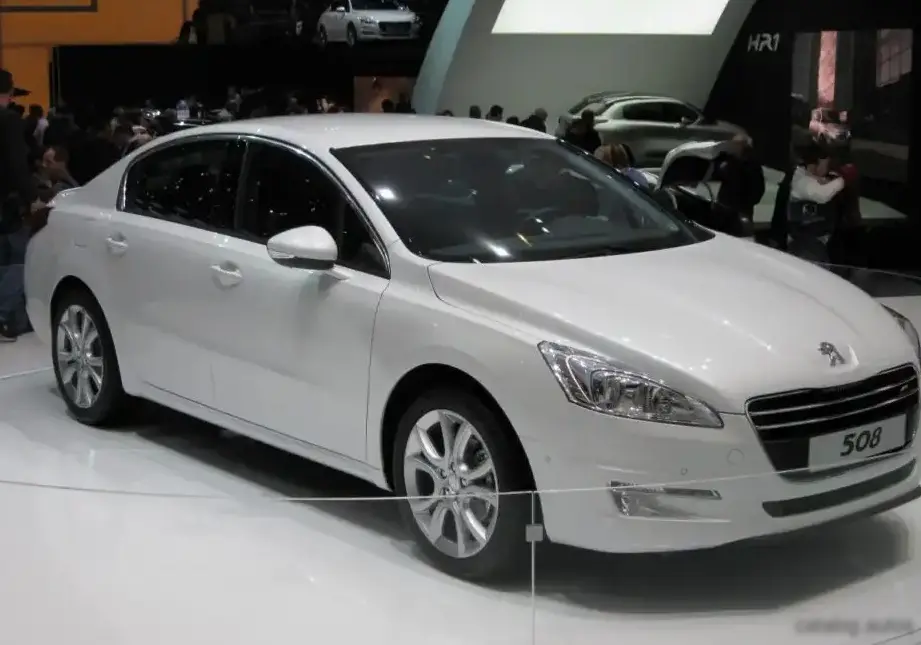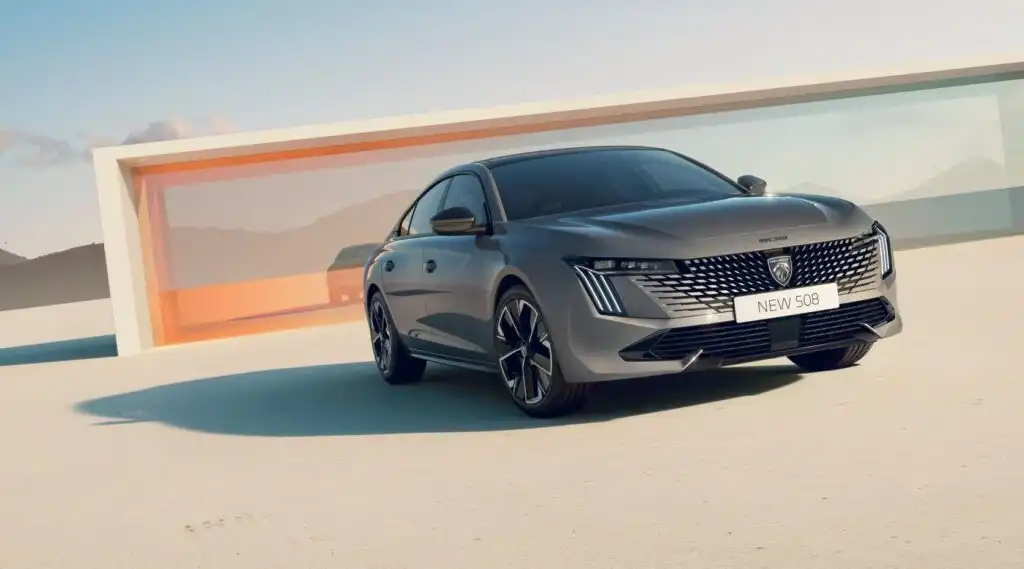
The Peugeot 508 II Phase II 1.6 PureTech 225 Hp Plug-in Hybrid e-EAT8, introduced in 2023, represents a significant evolution of Peugeot’s flagship fastback. This variant occupies a mid-to-upper position within the 508 lineup, offering a blend of performance, efficiency, and technology. Built on the EMP1 platform (also known as the 1HX0/A3 platform), it caters to buyers seeking a sophisticated and environmentally conscious executive car. The Phase II update brought styling revisions and enhanced technology compared to the initial 508 II launch.
Technical Specifications
| Brand | Peugeot |
| Model | 508 |
| Generation | 508 II (Phase II, 2023) |
| Type (Engine) | 1.6 PureTech (225 Hp) Plug-in Hybrid e-EAT8 |
| Start of production | 2023 |
| Powertrain Architecture | PHEV (Plug-in Hybrid Electric Vehicle) |
| Body type | Fastback |
| Seats | 5 |
| Doors | 5 |
| Combined fuel consumption (WLTP) | 1.1-1.4 l/100 km (213.8 – 168 US mpg, 256.8 – 201.8 UK mpg, 90.9 – 71.4 km/l) |
| CO2 emissions (WLTP) | 25-31 g/km |
| Fuel Type | Petrol / electricity |
| Acceleration 0 – 100 km/h | 7.9 sec |
| Acceleration 0 – 62 mph | 7.9 sec |
| Acceleration 0 – 60 mph | 7.5 sec |
| Maximum speed | 240 km/h (149.13 mph) |
| Emission standard | Euro 6 |
| Weight-to-power ratio | 7.7 kg/Hp, 129.6 Hp/tonne |
| Weight-to-torque ratio | 4.8 kg/Nm, 207.4 Nm/tonne |
| Gross battery capacity | 12.4 kWh |
| Battery technology | Lithium-ion (Li-Ion) |
| Battery location | Below the floor, under the rear seats |
| All-electric range (WLTP) | 64 km (39.77 mi) |
| Max speed (electric) | 135 km/h (83.89 mph) |
| Electric motor power | 110 Hp |
| Electric motor Torque | 320 Nm (236.02 lb.-ft.) |
| Electric motor location | Between the combustion engine and the transmission |
| System power | 225 Hp |
| System torque | 360 Nm (265.52 lb.-ft.) |
| Power | 180 Hp @ 6000 rpm |
| Torque | 300 Nm @ 3000 rpm (221.27 lb.-ft. @ 3000 rpm) |
| Engine layout | Front, Transverse |
| Engine displacement | 1598 cm3 (97.52 cu. in.) |
| Number of cylinders | 4 |
| Engine configuration | Inline |
| Cylinder Bore | 77 mm (3.03 in.) |
| Piston Stroke | 85.8 mm (3.38 in.) |
| Number of valves per cylinder | 4 |
| Fuel injection system | Direct injection |
| Engine aspiration | Turbocharger, Intercooler |
| Valvetrain | DOHC |
| Engine oil capacity | 4.25 l (4.49 US qt | 3.74 UK qt) |
| Kerb Weight | 1736 kg (3827.22 lbs.) |
| Max. weight | 2280 kg (5026.54 lbs.) |
| Max load | 544 kg (1199.31 lbs.) |
| Trunk (boot) space – minimum | 487 l (17.2 cu. ft.) |
| Trunk (boot) space – maximum | 1537 l (54.28 cu. ft.) |
| Permitted trailer load with brakes (12%) | 1320 kg (2910.1 lbs.) |
| Length | 4750 mm (187.01 in.) |
| Width | 1859 mm (73.19 in.) |
| Width including mirrors | 2079 mm (81.85 in.) |
| Height | 1403 mm (55.24 in.) |
| Wheelbase | 2793 mm (109.96 in.) |
| Minimum turning circle | 10.8 m (35.43 ft.) |
| Drivetrain Architecture | Front wheel drive. PHEV. ICE and electric motor drive front wheels. |
| Number of gears and type of gearbox | 8 gears, automatic transmission e-EAT8 |
| Front suspension | Independent, McPherson with coil spring and anti-roll bar |
| Rear suspension | Independent multi-link spring suspension with stabilizer |
| Front brakes | Ventilated discs, 304×28 mm |
| Rear brakes | Disc, 268×12 mm |
| Assisting systems | ABS (Anti-lock braking system) |
| Steering type | Steering rack and pinion |
| Power steering | Electric Steering |
| Tires size | 215/55 R17; 235/45 R18; 235/40 R19 |
| Wheel rims size | 17; 18; 19 |
INTRODUCTION
The Peugeot 508 II Phase II 1.6 PureTech 225 Hp Plug-in Hybrid e-EAT8 is a five-seat, five-door fastback designed to compete in the executive car segment. Introduced in 2023 as part of the Phase II refresh of the 508 II, this variant combines a 1.6-liter turbocharged petrol engine with an electric motor and a 12.4 kWh battery pack. This powertrain delivers a combined output of 225 horsepower and allows for a significant amount of all-electric range – up to 64 km (39.77 miles) under WLTP testing. The 508, in general, aimed to revitalize Peugeot’s image, moving it upmarket with a focus on style, technology, and driving experience.
Powertrain & Engine Architecture
At the heart of this 508 is the EP6 CDT 1.6-liter turbocharged four-cylinder petrol engine. This engine, part of Peugeot’s PureTech family, utilizes direct injection and a twin-scroll turbocharger to deliver 180 horsepower at 6000 rpm and 300 Nm (221.27 lb-ft) of torque at 3000 rpm. The engine features a DOHC valvetrain and operates on a Miller cycle for improved efficiency. The electric motor, producing 110 horsepower and 320 Nm (236.02 lb-ft) of torque, is integrated between the engine and the eight-speed automatic transmission (e-EAT8). This transmission is specifically tuned for hybrid applications, offering smooth and efficient gear changes. The battery pack, utilizing Lithium-ion technology, is positioned under the rear seats, minimizing impact on trunk space. The hybrid system allows for various driving modes, including Zero Emission (EV), Hybrid, and Sport, adjusting the powertrain’s behavior to prioritize efficiency or performance.
Driving Characteristics
The 508 II 1.6 PureTech 225 Hybrid offers a refined driving experience. In electric mode, the car provides near-silent acceleration and is perfectly suited for urban commuting. The electric motor’s instant torque provides brisk off-the-line performance. When the petrol engine engages, the transition is generally seamless. The combined output of 225 hp allows for a 0-60 mph time of around 7.5 seconds. Compared to the standard petrol versions, the hybrid offers quicker acceleration due to the electric motor’s boost. The e-EAT8 transmission provides smooth gear changes, although it can sometimes feel slightly hesitant during kickdown. The steering is precise and well-weighted, contributing to a confident feel on the road. The suspension strikes a good balance between comfort and handling, providing a composed ride even on uneven surfaces.
Equipment & Trim Levels
The 508 II Phase II 1.6 PureTech 225 Hybrid typically comes well-equipped, reflecting its position in the upper-mid-range of the 508 lineup. Standard features often include a 10-inch touchscreen infotainment system with Apple CarPlay and Android Auto compatibility, a digital instrument cluster, automatic climate control, and a suite of advanced driver-assistance systems (ADAS) such as lane-keeping assist, adaptive cruise control, and automatic emergency braking. Interior upholstery is typically a combination of cloth and leather, with higher trims offering full leather options. Optional extras include a panoramic sunroof, premium audio system, and ventilated front seats. The Phase II update brought improvements to the infotainment system and added new connectivity features.
Chassis & Braking
The 508 II utilizes an independent suspension setup on both the front and rear axles. The front suspension employs a McPherson strut design with a coil spring and anti-roll bar, while the rear features a multi-link setup, also with a stabilizer bar. This configuration provides a good balance of ride comfort and handling precision. Braking duties are handled by ventilated discs at the front and solid discs at the rear. The car is equipped with ABS, electronic brakeforce distribution (EBD), and emergency brake assist. The steering system is an electric power-assisted rack and pinion system, offering precise and responsive steering feel.
Market Reception & Comparison
The Peugeot 508 II, and particularly the plug-in hybrid variants, have been well-received by critics for their stylish design, comfortable ride, and efficient powertrain. The 1.6 PureTech 225 Hybrid offers a compelling alternative to traditional petrol and diesel executive cars, providing a significant reduction in emissions and running costs. Compared to the 1.5 BlueHDi diesel variant, the hybrid offers similar performance but with lower CO2 emissions and the benefit of electric-only driving. Against competitors like the BMW 3 Series, Audi A4, and Mercedes-Benz C-Class, the 508 stands out with its distinctive styling and value proposition. However, some critics have noted that the infotainment system can be slightly complex to use.
Legacy
The Peugeot 508 II 1.6 PureTech 225 Hybrid represents a key step in Peugeot’s transition towards electrification. The EP6 engine, while having some reported issues with timing chain durability in earlier iterations, has been refined over time. The e-EAT8 transmission has proven to be a reliable unit. The long-term reliability of the hybrid system itself is still being assessed, but early indications suggest it is generally robust. On the used car market, these models are becoming increasingly desirable due to their fuel efficiency and low running costs, particularly in areas with congestion charges or emission-based taxes. The 508 II, in general, has helped to elevate Peugeot’s brand image and establish it as a serious contender in the executive car segment.