Technical Specifications
| Brand | Peugeot |
| Model | 508 |
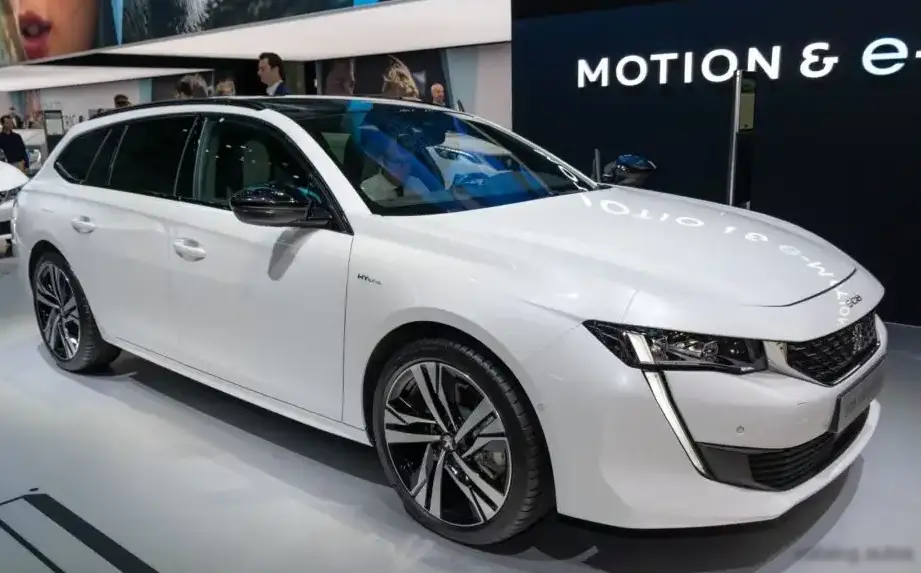
| Generation | 508 II SW (Phase I, 2018) |
| Type (Engine) | 2.0 BlueHDi (160 Hp) S&S Automatic |
| Start of production | 2018 |
| End of production | 2023 |
| Powertrain Architecture | Internal Combustion engine |
| Body type | Station wagon (estate) |
| Seats | 5 |
| Doors | 5 |
| Fuel consumption (urban) | 5.5 l/100 km (42.8 US mpg, 51.4 UK mpg, 18.2 km/l) |
| Fuel consumption (extra urban) | 3.8 l/100 km (61.9 US mpg, 74.3 UK mpg, 26.3 km/l) |
| Fuel consumption (combined) | 4.5 l/100 km (52.3 US mpg, 62.8 UK mpg, 22.2 km/l) |
| CO2 emissions | 118 g/km |
| Fuel Type | Diesel |
| Acceleration 0 – 100 km/h | 8.5 sec |
| Acceleration 0 – 62 mph | 8.5 sec |
| Acceleration 0 – 60 mph | 8.1 sec |
| Maximum speed | 226 km/h (140.43 mph) |
| Emission standard | Euro 6 |
| Weight-to-power ratio | 9.6 kg/Hp, 103.9 Hp/tonne |
| Weight-to-torque ratio | 3.9 kg/Nm, 259.7 Nm/tonne |
| Power | 160 Hp @ 3750 rpm |
| Power per litre | 80.1 Hp/l |
| Torque | 400 Nm @ 2000 rpm (295.02 lb.-ft. @ 2000 rpm) |
| Engine layout | Front, Transverse |
| Engine Model/Code | EHY DW10FCC |
| Engine displacement | 1997 cm3 (121.86 cu. in.) |
| Number of cylinders | 4 |
| Engine configuration | Inline |
| Number of valves per cylinder | 4 |
| Fuel injection system | Diesel Commonrail |
| Engine aspiration | Turbocharger, Intercooler |
| Engine oil capacity | 5 l (5.28 US qt | 4.4 UK qt) |
| Kerb Weight | 1540 kg (3395.12 lbs.) |
| Max. weight | 2146 kg (4731.12 lbs.) |
| Max load | 606 kg (1336 lbs.) |
| Trunk (boot) space – minimum | 530 l (18.72 cu. ft.) |
| Trunk (boot) space – maximum | 1780 l (62.86 cu. ft.) |
| Fuel tank capacity | 55 l (14.53 US gal | 12.1 UK gal) |
| Permitted trailer load with brakes (12%) | 1800 kg (3968.32 lbs.) |
| Length | 4778 mm (188.11 in.) |
| Width with mirrors folded | 1907 mm (75.08 in.) |
| Width including mirrors | 2079 mm (81.85 in.) |
| Height | 1420 mm (55.91 in.) |
| Wheelbase | 2793 mm (109.96 in.) |
| Front overhang | 948 mm (37.32 in.) |
| Rear overhang | 1037 mm (40.83 in.) |
| Minimum turning circle | 10.8 m (35.43 ft.) |
| Drivetrain Architecture | Front wheel drive |
| Number of gears and type of gearbox | 8 gears, automatic transmission |
| Front suspension | Independent type McPherson |
| Rear suspension | Independent multi-link suspension |
| Front brakes | Disc |
| Rear brakes | Disc |
| Assisting systems | ABS (Anti-lock braking system) |
| Steering type | Steering rack and pinion |
| Power steering | Electric Steering |
| Tires size | 215/55 R17 W; 235/45 R18 Y; 235/40 R19 Y |
| Wheel rims size | 17; 18; 19 |
Introduction
The Peugeot 508 II SW 2.0 BlueHDi 160 S&S Automatic, introduced in 2018 as part of the second-generation 508 lineup, represents Peugeot’s entry into the competitive mid-size station wagon segment. Built on the EMP2 platform (also known as the 1HX0/A3 platform), the 508 SW aimed to blend practicality with a more premium and stylish aesthetic than its predecessor. This particular variant, powered by the 2.0 BlueHDi engine paired with an eight-speed automatic transmission, was positioned as a strong all-rounder, offering a balance between fuel efficiency, reasonable performance, and comfortable cruising. Production continued through 2023, with this engine and transmission combination being a popular choice throughout the model’s lifespan. The SW (Station Wagon) body style was crucial for European markets where practicality and cargo space are highly valued.
Powertrain & Engine Architecture
At the heart of the 508 SW 2.0 BlueHDi 160 Automatic lies the DW10FCC engine, a 1997cc four-cylinder diesel engine. This engine is part of Peugeot’s BlueHDi range, incorporating Selective Catalytic Reduction (SCR) technology and a Diesel Particulate Filter (DPF) to significantly reduce NOx emissions and meet stringent Euro 6 emission standards. The engine utilizes a common rail direct injection system, delivering fuel at pressures up to 2000 bar for optimized combustion. The engine features a single turbocharger with variable geometry turbine (VGT) technology, enhancing responsiveness across a wider RPM range. The 160 horsepower output is achieved at 3750 rpm, while the impressive 400 Nm (295 lb-ft) of torque is available from just 2000 rpm, providing strong mid-range pull. The eight-speed automatic transmission, sourced from Aisin, was chosen for its smooth shifting characteristics and efficiency. It features a torque converter and offers both automatic and manual shift modes. The Start & Stop system further contributes to fuel savings by automatically shutting off the engine when the vehicle is stationary.
Driving Characteristics
The 2.0 BlueHDi 160 Automatic variant of the 508 SW delivers a comfortable and refined driving experience. While not overtly sporty, the engine provides ample power for everyday driving and long-distance cruising. The 8.5-second 0-62 mph acceleration is respectable, and the strong low-end torque makes overtaking maneuvers relatively effortless. The eight-speed automatic transmission contributes to a relaxed driving experience, with smooth gear changes and well-chosen ratios. Compared to the more powerful 180 hp version of the same engine, the 160 hp variant feels slightly less urgent, particularly at higher speeds. However, the difference is not dramatic, and many drivers will appreciate the improved fuel economy offered by the lower-powered engine. Compared to manual transmission versions, the automatic offers greater convenience, especially in urban traffic, but may result in a slight reduction in fuel efficiency. The gear ratios are tuned for efficiency, prioritizing comfortable cruising over outright performance.
Equipment & Trim Levels
The 508 SW 2.0 BlueHDi 160 Automatic typically came well-equipped, even in base trim levels. Standard features often included a touchscreen infotainment system with Apple CarPlay and Android Auto compatibility, automatic climate control, cruise control, and a suite of safety features such as automatic emergency braking, lane departure warning, and traffic sign recognition. Interior upholstery was typically cloth, with options for leather upgrades available. Higher trim levels added features such as a panoramic sunroof, heated seats, a premium sound system, and adaptive cruise control. The dashboard design was modern and driver-focused, with a compact steering wheel and a high-mounted instrument cluster. Optional extras included a hands-free parking assist system and a 360-degree camera system.
Chassis & Braking
The 508 SW features a McPherson strut front suspension and a multi-link rear suspension, providing a good balance between ride comfort and handling. The suspension is tuned to prioritize comfort, absorbing bumps and imperfections in the road surface effectively. The front and rear brakes are both ventilated discs, providing ample stopping power. ABS (Anti-lock Braking System) and Electronic Stability Control (ESC) are standard features, enhancing safety and stability. The steering is electric power-assisted, offering a light and precise feel. The weight distribution is well-balanced, contributing to predictable handling characteristics. Stabilizer bars are fitted to both the front and rear axles to reduce body roll during cornering.
Market Reception & Comparison
The Peugeot 508 SW 2.0 BlueHDi 160 Automatic was generally well-received by automotive critics. It was praised for its stylish design, comfortable ride, and fuel efficiency. The engine was considered a good compromise between performance and economy, and the automatic transmission was lauded for its smoothness. Compared to other station wagons in its class, such as the Volkswagen Passat Estate and the Ford Mondeo Estate, the 508 SW offered a more distinctive and premium feel. However, some critics noted that the interior space was not as generous as some of its rivals. Fuel economy figures consistently hovered around 52.3 US mpg (combined), making it an attractive option for drivers seeking a practical and economical vehicle. Reliability reports have been generally positive, with few major issues reported with the engine or transmission.
Legacy
The 2.0 BlueHDi engine, in various iterations, has proven to be a reliable and durable powertrain. The DW10FCC engine code is well-known within the Peugeot-Citroën group and has been used in numerous models. While diesel engines have faced increasing scrutiny in recent years, the BlueHDi engines, with their advanced emission control systems, have demonstrated a commitment to reducing environmental impact. In the used car market, the 508 SW 2.0 BlueHDi 160 Automatic remains a popular choice, offering a compelling combination of practicality, comfort, and fuel efficiency. Maintenance costs are generally reasonable, and parts availability is good. The longevity of this powertrain suggests that well-maintained examples will continue to provide reliable service for many years to come.