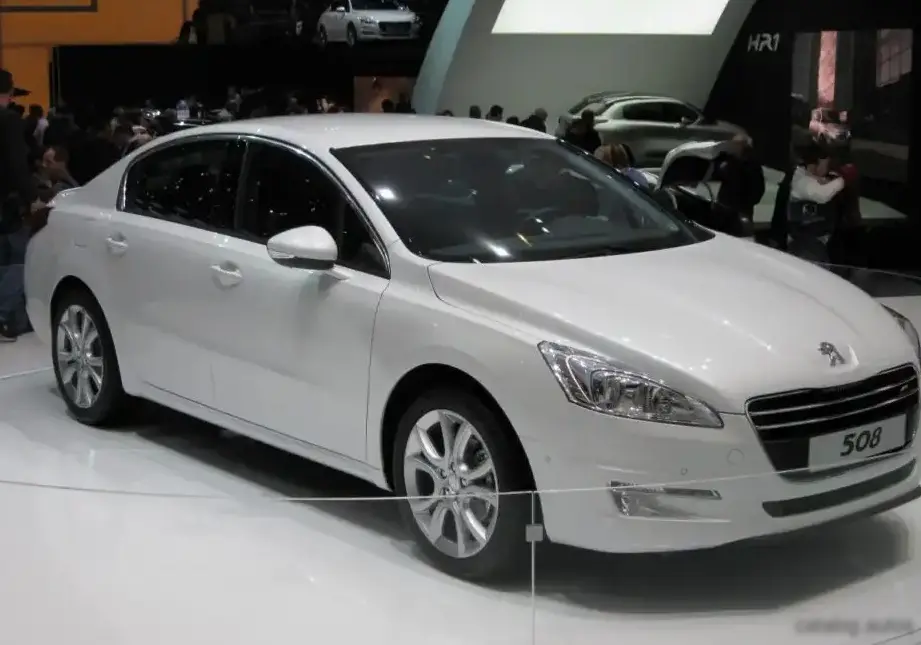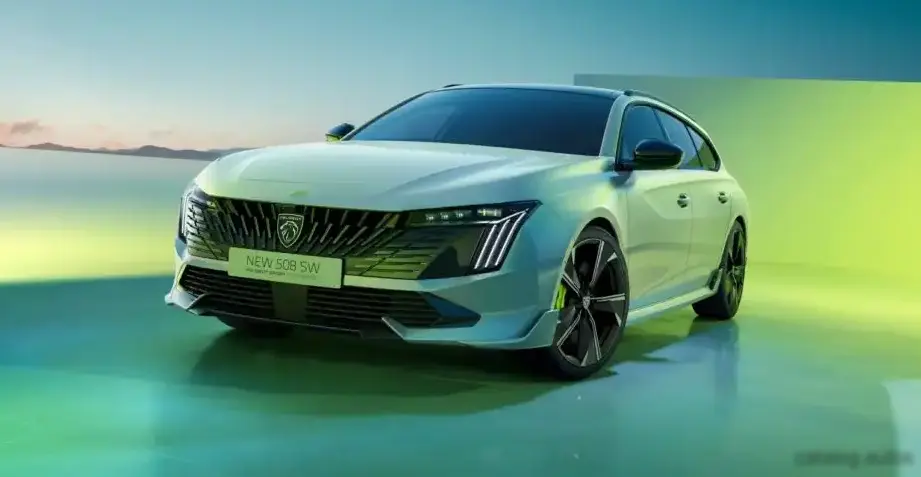
The Peugeot 508 II SW PSE 1.6 PureTech (360 Hp) 4WD Plug-in Hybrid e-EAT8, introduced in 2023 as part of the Phase II refresh of the 508 lineup, represents the performance pinnacle of the second-generation 508 SportWagon (SW) range. Built on the EMPV2 platform (also known as the 1HX0/A3 platform shared with other Stellantis vehicles like the DS 9 and Opel/Vauxhall Emgrand), this variant combines a turbocharged four-cylinder gasoline engine with a sophisticated plug-in hybrid system and all-wheel drive. Positioned as the flagship model, the PSE (Peugeot Sport Engineered) offers a significant performance upgrade over the standard 508 SW trims, targeting drivers seeking a blend of practicality, efficiency, and sporty driving dynamics. It is a direct response to the growing demand for high-performance, yet environmentally conscious, vehicles in the European market.
Technical Specifications
| Brand | Peugeot |
| Model | 508 |
| Generation | 508 II SW (Phase II, 2023) |
| Type (Engine) | PSE 1.6 PureTech (360 Hp) 4WD Plug-in Hybrid e-EAT8 |
| Start of production | 2023 |
| Powertrain Architecture | PHEV (Plug-in Hybrid Electric Vehicle) |
| Body type | Station wagon (estate) |
| Seats | 5 |
| Doors | 5 |
| Combined fuel consumption (WLTP) | 1.8 l/100 km (130.7 US mpg, 156.9 UK mpg, 55.6 km/l) |
| CO2 emissions (WLTP) | 40 g/km |
| Fuel Type | Petrol / electricity |
| Acceleration 0 – 100 km/h | 5.2 sec |
| Acceleration 0 – 62 mph | 5.2 sec |
| Acceleration 0 – 60 mph | 4.9 sec |
| Maximum speed | 250 km/h (155.34 mph) – Electronically limited |
| Emission standard | Euro 6 |
| Weight-to-power ratio | 5.3 kg/Hp, 190.3 Hp/tonne |
| Weight-to-torque ratio | 3.6 kg/Nm, 274.8 Nm/tonne |
| Gross battery capacity | 12.4 kWh |
| Battery technology | Lithium-ion (Li-Ion) |
| Battery location | Below the floor, under the rear seats |
| All-electric range (WLTP) | 52 km (32.31 mi) |
| Max speed (electric) | 135 km/h (83.89 mph) |
| Electric motor power (x2) | 110 Hp / 113 Hp |
| Electric motor Torque (x2) | 320 Nm / 166 Nm (236.02 lb.-ft. / 122.44 lb.-ft.) |
| Electric motor location | Between the combustion engine and the transmission / Rear axle, Transverse |
| System power | 360 Hp |
| System torque | 520 Nm (383.53 lb.-ft.) |
| Power | 200 Hp @ 6000 rpm |
| Torque | 300 Nm @ 3000 rpm (221.27 lb.-ft. @ 3000 rpm) |
| Engine layout | Front, Transverse |
| Engine displacement | 1598 cm3 (97.52 cu. in.) |
| Number of cylinders | 4 |
| Engine configuration | Inline |
| Cylinder Bore | 77 mm (3.03 in.) |
| Piston Stroke | 85.8 mm (3.38 in.) |
| Number of valves per cylinder | 4 |
| Fuel injection system | Direct injection |
| Engine aspiration | Turbocharger, Intercooler |
| Valvetrain | DOHC |
| Engine oil capacity | 4.25 l (4.49 US qt | 3.74 UK qt) |
| Kerb Weight | 1892 kg (4171.15 lbs.) |
| Max. weight | 2340 kg (5158.82 lbs.) |
| Max load | 448 kg (987.67 lbs.) |
| Trunk (boot) space – minimum | 530 l (18.72 cu. ft.) |
| Trunk (boot) space – maximum | 1780 l (62.86 cu. ft.) |
| Permitted trailer load with brakes (12%) | 1260 kg (2777.82 lbs.) |
| Length | 4778 mm (188.11 in.) |
| Width | 1859 mm (73.19 in.) |
| Width including mirrors | 2079 mm (81.85 in.) |
| Height | 1420 mm (55.91 in.) |
| Wheelbase | 2793 mm (109.96 in.) |
| Minimum turning circle | 10.8 m (35.43 ft.) |
| Drivetrain Architecture | All wheel drive (4×4). PHEV. ICE drives front, electric motors drive front and rear. |
| Number of gears and type of gearbox | 8 gears, automatic transmission e-EAT8 |
| Front suspension | Independent, type McPherson with coil spring and anti-roll bar |
| Rear suspension | Independent multi-link spring suspension with stabilizer |
| Front brakes | Ventilated discs, 380×32 mm |
| Rear brakes | Disc, 268×12 mm |
| Assisting systems | ABS (Anti-lock braking system) |
| Steering type | Steering rack and pinion |
| Power steering | Electric Steering |
| Tires size | 245/35 R20 |
| Wheel rims size | 20 |
Powertrain & Engine Architecture
At the heart of the 508 PSE SW lies the EP1.6 PureTech four-cylinder gasoline engine, a member of the Prince engine family developed jointly by PSA (now Stellantis) and BMW. This engine, designated as the DW10FCDT, produces 200 horsepower at 6000 rpm and 300 Nm (221 lb-ft) of torque at 3000 rpm. It features direct fuel injection, a twin-scroll turbocharger, and variable valve timing on both intake and exhaust sides. The engine is paired with an eight-speed automatic transmission (e-EAT8) specifically tuned for the hybrid application. Crucially, the PSE utilizes a dual-motor plug-in hybrid system. An 110 hp electric motor is integrated between the engine and the transmission, driving the front wheels, while a separate 113 hp electric motor powers the rear axle, providing all-wheel drive capability. The combined system output is a substantial 360 horsepower and 520 Nm (383 lb-ft) of torque. The 12.4 kWh lithium-ion battery pack is located under the rear seats, providing an all-electric range of up to 52 km (32 miles) under WLTP testing.
Driving Characteristics
The 508 PSE SW delivers a markedly different driving experience compared to other 508 SW variants. The instant torque from the electric motors, combined with the gasoline engine’s power, results in brisk acceleration – 0 to 62 mph in just 5.2 seconds. The all-wheel-drive system provides excellent traction, particularly in adverse weather conditions. The e-EAT8 transmission is well-programmed, offering smooth and responsive shifts. In electric mode, the car is near-silent and provides a relaxed driving experience. Switching to Sport mode sharpens throttle response, stiffens the suspension (thanks to electronically controlled dampers), and provides a more engaging driving experience. While the added weight of the hybrid system (approximately 200 kg / 440 lbs more than a comparable gasoline-only model) is noticeable, the increased power more than compensates for it. The gear ratios are optimized for both acceleration and fuel efficiency, with the electric motors providing a boost at lower speeds and the gasoline engine taking over at higher speeds.
Equipment & Trim Levels
The PSE trim level is comprehensively equipped. Standard features include a unique exterior styling package with a distinctive front grille, larger air intakes, and a rear diffuser. Inside, the PSE boasts sport seats upholstered in Alcantara and leather, with red stitching and PSE badging. A 10-inch touchscreen infotainment system with navigation, Apple CarPlay, and Android Auto compatibility is standard. Other features include a digital instrument cluster, a panoramic sunroof, a premium sound system, and a suite of advanced driver-assistance systems (ADAS) such as adaptive cruise control, lane-keeping assist, and automatic emergency braking. Optional extras included a Nappa leather interior upgrade and a head-up display.
Chassis & Braking
The 508 PSE SW features a specially tuned chassis to handle the increased power and weight. The suspension utilizes frequency selective damping (FSD) technology, which provides a comfortable ride in normal driving conditions while firming up during spirited driving. The front suspension is a McPherson strut design, while the rear suspension employs a multi-link setup. Brakes are upgraded with larger ventilated discs at the front (380mm) and solid discs at the rear (268mm). The braking system is further enhanced by a regenerative braking system that recovers energy during deceleration, contributing to the car’s overall efficiency.
Market Reception & Comparison
The Peugeot 508 PSE SW was generally well-received by automotive critics. Praise was given for its impressive performance, engaging driving dynamics, and stylish design. The plug-in hybrid system was lauded for its ability to provide both electric-only driving and a combined range comparable to gasoline-only vehicles. Compared to the standard 508 SW models, the PSE offers a significant performance advantage. Against rivals like the BMW 330e Touring and the Mercedes-Benz C300e Estate, the 508 PSE SW offered a compelling combination of performance, practicality, and value. Fuel economy in hybrid mode is excellent, and the all-electric range is sufficient for many daily commutes. However, some critics noted that the ride can be firm on rough roads.
Legacy
The Peugeot 508 PSE SW represents a significant step forward for Peugeot in terms of performance and electrification. While relatively new to the market, early reports suggest that the powertrain is proving to be reliable. The combination of a turbocharged engine, electric motors, and a sophisticated hybrid system provides a compelling alternative to traditional gasoline-powered vehicles. On the used car market, the PSE is expected to hold its value well due to its unique performance and features. It stands as a testament to Peugeot’s commitment to innovation and its ability to create vehicles that are both exciting to drive and environmentally responsible.