
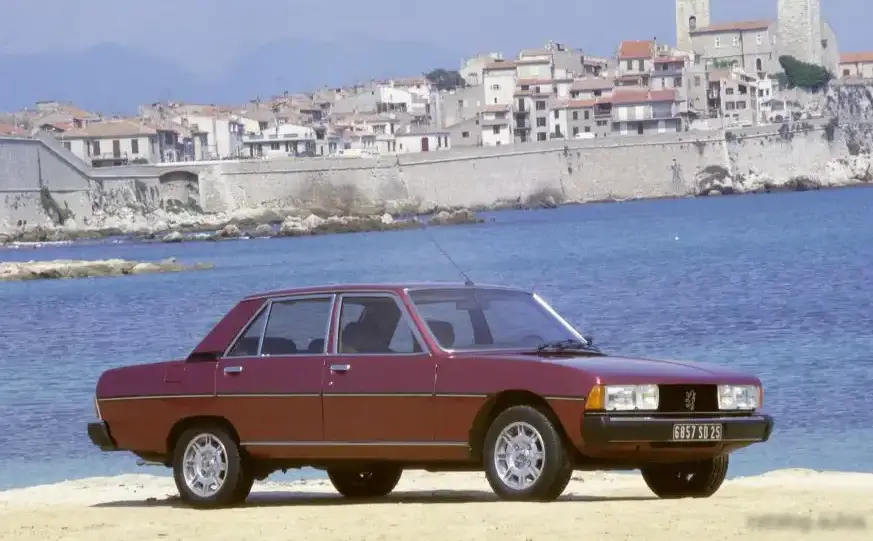
The Peugeot 604 2.7 TI/STI, produced between 1977 and 1983, represents the top-of-the-line performance variant of Peugeot’s flagship executive sedan during that era. Positioned as a competitor to vehicles like the Mercedes-Benz S-Class and BMW 7 Series, the 604 aimed to offer French sophistication and engineering prowess in a segment traditionally dominated by German manufacturers. The 2.7 TI/STI model, distinguished by its fuel injection and higher horsepower output, served as the performance flagship of the 604 range. It was a relatively short-lived but significant model, embodying Peugeot’s ambition to create a world-class luxury car. The 604, as a whole, was Peugeot’s replacement for the 504, offering a larger, more modern, and more comfortable experience.
Technical Specifications
| Brand | Peugeot |
| Model | 604 |
| Generation | 604 |
| Type (Engine) | 2.7 TI/STI (144 Hp) |
| Start of Production | 1977 |
| End of Production | 1983 |
| Powertrain Architecture | Internal Combustion Engine |
| Body Type | Sedan |
| Fuel Type | Petrol (Gasoline) |
| Power | 144 Hp |
| Engine Model/Code | ZMJ 140 |
| Engine Aspiration | Naturally Aspirated |
| Engine Oil Capacity | 6 l (6.34 US qt | 5.28 UK qt) |
| Coolant Capacity | 10.3 l (10.88 US qt | 9.06 UK qt) |
Powertrain & Engine Architecture
The heart of the 604 2.7 TI/STI is the ZMJ 140 engine, a 2.687-liter (164.1 cubic inch) V6. This engine is notable for its unusual 90-degree V-angle and its all-aluminum construction, a relatively advanced feature for the late 1970s. The ‘TI’ designation indicated fuel injection (Bosch L-Jetronic system), differentiating it from the carbureted versions of the 2.7-liter engine. The ‘STI’ variant, often considered a minor upgrade within the TI trim, featured slight refinements to the fuel injection system and potentially minor adjustments to the ignition timing for improved performance. The engine utilizes a single overhead camshaft (SOHC) design per cylinder bank, operating two valves per cylinder. The engine’s design prioritized smoothness and refinement over outright power, reflecting its intended role in a luxury vehicle. The engine’s output of 144 horsepower at 5,500 rpm and 195 lb-ft of torque at 3,500 rpm provided brisk, though not overwhelming, performance for the time. The engine was mated to a three-speed automatic transmission, which was the standard transmission for the TI/STI model. A five-speed manual transmission was available as an option, but less common.
Driving Characteristics
The 604 2.7 TI/STI offered a comfortable and refined driving experience, prioritizing smoothness and quietness over sporty handling. The automatic transmission, while providing convenience, wasn’t particularly quick-shifting by modern standards. Acceleration from 0 to 60 mph was achieved in around 9.5 to 10.5 seconds, depending on testing conditions and vehicle load. The three-speed automatic’s gear ratios were geared towards relaxed cruising, with a relatively tall final drive. This resulted in good fuel economy for the era, but limited the car’s ability to accelerate rapidly. Compared to the manual transmission versions, the automatic models felt noticeably slower, particularly in overtaking situations. The suspension, featuring independent front suspension with MacPherson struts and a torsion beam rear axle, provided a comfortable ride, absorbing bumps and imperfections in the road effectively. However, the car’s relatively heavy weight (around 3,500 lbs) and soft suspension setup meant that it wasn’t particularly agile in corners.
Equipment & Trim Levels
The 604 2.7 TI/STI was the most luxurious trim level available. Standard features included leather upholstery, power windows, central locking, and a high-quality stereo system. Air conditioning was also standard equipment. The interior was characterized by its elegant design and high-quality materials. The dashboard featured wood trim and a comprehensive array of gauges, including a voltmeter and oil pressure gauge. Optional extras included a sunroof, limited-slip differential (rare), and upgraded audio systems. The exterior of the TI/STI was distinguished by its chrome trim, alloy wheels, and often, a metallic paint finish. The interior color schemes were typically more refined and luxurious than those offered on lower trim levels.
Chassis & Braking
The 604 utilized a robust chassis with independent front suspension and a torsion beam rear axle. The front suspension employed MacPherson struts with anti-roll bar, while the rear utilized a trailing arm setup. Braking was initially provided by disc brakes on the front wheels and drum brakes on the rear wheels. Later models, particularly those produced after 1980, often featured disc brakes on all four wheels, providing improved stopping power. The braking system was hydraulically assisted, offering a reasonable level of stopping performance for the time. Steering was power-assisted, making the car relatively easy to maneuver, despite its size and weight. The stabilizer bar thickness was moderate, contributing to the car’s comfortable ride but limiting its handling capabilities.
Market Reception & Comparison
The Peugeot 604 2.7 TI/STI was generally well-received by automotive critics, who praised its comfortable ride, refined interior, and smooth engine. However, it was often criticized for its relatively high price and its lack of sporting pretensions. Compared to its German rivals, the 604 offered a different driving experience – one that prioritized comfort and refinement over outright performance. The automatic transmission was often seen as a weakness, detracting from the engine’s potential. Fuel economy was reasonable for the time, averaging around 18-22 mpg in mixed driving conditions. Reliability was generally good, although the Bosch L-Jetronic fuel injection system could be prone to occasional issues. Compared to the carbureted 2.7-liter versions, the TI/STI offered improved performance and drivability, but at a higher cost.
Legacy
The Peugeot 604, and particularly the 2.7 TI/STI variant, holds a special place in automotive history as a bold attempt by a French manufacturer to compete in the luxury car segment. While it didn’t achieve the same sales success as its German rivals, it established Peugeot as a capable and innovative automaker. The ZMJ 140 engine, despite its complexity, proved to be a relatively durable and reliable powerplant when properly maintained. Today, the 604 2.7 TI/STI is a sought-after classic car, appreciated by enthusiasts for its unique character, elegant design, and comfortable driving experience. Parts availability can be a challenge, but a dedicated community of owners and specialists exists to support the preservation of these vehicles. Well-maintained examples command a premium in the used car market, reflecting their rarity and historical significance. The 604’s influence can be seen in subsequent Peugeot models, which continued to prioritize comfort, refinement, and innovative design.
