
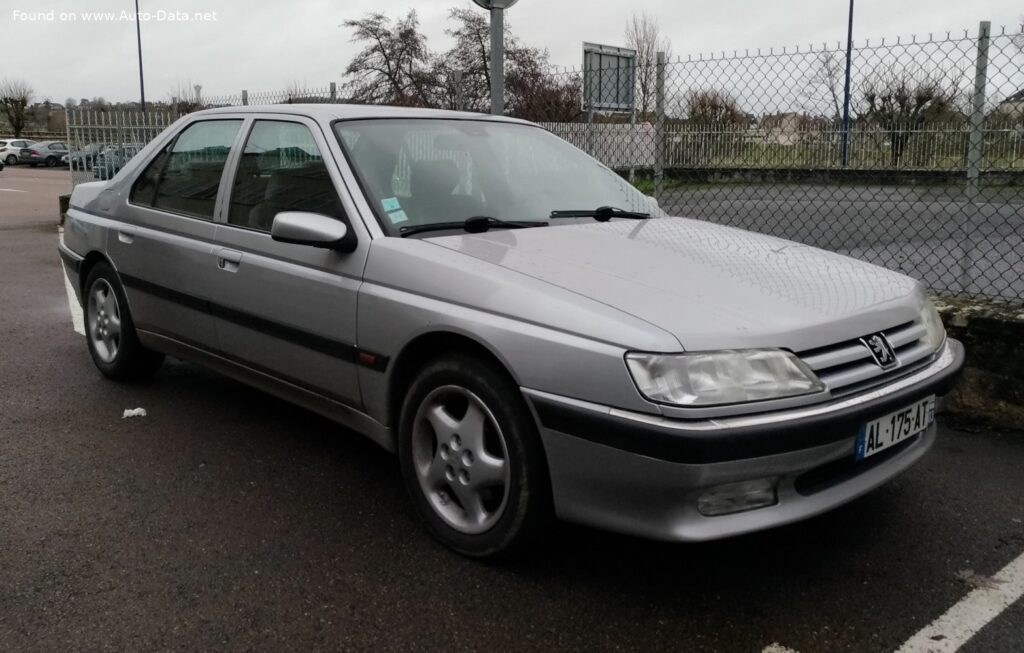
The Peugeot 605 (6B), produced from 1989 to 2000, represents a significant step forward for the French automaker, positioned as a large, executive sedan. Intended to replace the aging Peugeot 505, the 605 aimed to compete with established German rivals like the BMW 5 Series and Mercedes-Benz E-Class. While never a massive sales success, particularly outside of Europe, the 605 garnered respect for its sophisticated engineering, comfortable ride, and distinctive styling. The 3.0-liter variant, producing 167 horsepower, was a popular choice, offering a balance of performance and fuel economy for the time. The 605 was Peugeot’s flagship sedan during its production run, showcasing many of the company’s technological advancements.
Peugeot 605 (6B) 3.0: An Overview
The 605 was a crucial model for Peugeot, demonstrating the company’s ambition to move upmarket and challenge the dominance of German manufacturers in the executive car segment. It was available with a range of engines, including petrol (gasoline) and diesel options, with varying levels of equipment. The 3.0-liter petrol engine, detailed here, was a V6 configuration, offering smooth power delivery and a relatively refined driving experience. The car’s design, penned by Pininfarina, was modern for its time, featuring clean lines and a spacious interior. The 605 was primarily sold in Europe, but limited numbers were exported to other markets. It was discontinued in 2000, replaced by the Peugeot 607.
Engine & Performance
The heart of the Peugeot 605 3.0 is a 2.963-liter (180.81 cubic inches) naturally aspirated V6 engine, designated UFZ S6A. This engine produces 167 horsepower at 5600 rpm and 235 Nm (173.33 lb-ft) of torque at 4600 rpm. The engine features a multi-port fuel injection system and an overhead camshaft (OHC) valvetrain with two valves per cylinder. Power is delivered to the front wheels via a 5-speed manual transmission. Acceleration from 0 to 100 km/h (0-62 mph) takes 9.7 seconds, while 0 to 60 mph is achieved in approximately 9.2 seconds. The top speed is rated at 222 km/h (137.94 mph). The engine’s power-to-weight ratio is 9.2 kg/Hp, and the torque-to-weight ratio is 6.5 kg/Nm. The engine’s specific output is 56.4 horsepower per liter, a respectable figure for a naturally aspirated V6 of this era.
Design & Features
The Peugeot 605 is a four-door sedan with a classic three-box design. Pininfarina’s influence is evident in the car’s elegant proportions and clean lines. The interior is spacious and well-appointed, offering comfortable seating for five passengers. Key features of the 605 included power steering, ventilated front disc brakes, and disc brakes on the rear axle. An Anti-lock Braking System (ABS) was also available, enhancing safety. The trunk (boot) offers a minimum capacity of 497 liters (17.55 cubic feet). The 605 prioritized comfort and refinement, offering a smooth ride and a quiet cabin. While not overtly luxurious, the car provided a level of sophistication that was competitive with its rivals. The car’s design emphasized practicality and usability, with a focus on providing a comfortable and enjoyable driving experience.
Technical Specifications
| Brand | Peugeot |
| Model | 605 |
| Generation | 605 (6B) |
| Type (Engine) | 3.0 (167 Hp) |
| Start of production | 1989 |
| End of production | 2000 |
| Powertrain Architecture | Internal Combustion engine |
| Body type | Sedan |
| Seats | 5 |
| Doors | 4 |
| Fuel consumption (urban) | 15 l/100 km (15.7 US mpg, 18.8 UK mpg, 6.7 km/l) |
| Fuel consumption (extra urban) | 7.8 l/100 km (30.2 US mpg, 36.2 UK mpg, 12.8 km/l) |
| Fuel consumption (combined) | 9.6 l/100 km (24.5 US mpg, 29.4 UK mpg, 10.4 km/l) |
| Fuel Type | Petrol (Gasoline) |
| Acceleration 0 – 100 km/h | 9.7 sec |
| Acceleration 0 – 62 mph | 9.7 sec |
| Acceleration 0 – 60 mph | 9.2 sec |
| Maximum speed | 222 km/h (137.94 mph) |
| Weight-to-power ratio | 9.2 kg/Hp |
| Weight-to-torque ratio | 6.5 kg/Nm |
| Power | 167 Hp @ 5600 rpm |
| Torque | 235 Nm @ 4600 rpm (173.33 lb.-ft. @ 4600 rpm) |
| Engine layout | Front, Transverse |
| Engine Model/Code | UFZ S6A |
| Engine displacement | 2963 cm3 (180.81 cu. in.) |
| Number of cylinders | 6 |
| Engine configuration | V-engine |
| Cylinder Bore | 93 mm (3.66 in.) |
| Piston Stroke | 72.7 mm (2.86 in.) |
| Compression ratio | 9.5:1 |
| Number of valves per cylinder | 2 |
| Fuel injection system | Multi-port manifold injection |
| Engine aspiration | Naturally aspirated engine |
| Valvetrain | OHC |
| Engine oil capacity | 6.5 l (6.87 US qt | 5.72 UK qt) |
| Coolant capacity | 9.5 l (10.04 US qt | 8.36 UK qt) |
| Kerb Weight | 1530 kg (3373.07 lbs.) |
| Max. weight | 2030 kg (4475.38 lbs.) |
| Max load | 500 kg (1102.31 lbs.) |
| Trunk (boot) space – minimum | 497 l (17.55 cu. ft.) |
| Fuel tank capacity | 80 l (21.13 US gal | 17.6 UK gal) |
| Length | 4765 mm (187.6 in.) |
| Width | 1799 mm (70.83 in.) |
| Height | 1415 mm (55.71 in.) |
| Wheelbase | 2800 mm (110.24 in.) |
| Front track | 1527 mm (60.12 in.) |
| Rear (Back) track | 1528 mm (60.16 in.) |
| Drivetrain Architecture | Front wheel drive |
| Number of gears and type of gearbox | 5 gears, manual transmission |
| Front suspension | Wishbone |
| Rear suspension | Double wishbone |
| Front brakes | Ventilated discs |
| Rear brakes | Disc |
| Assisting systems | ABS (Anti-lock braking system) |
| Steering type | Steering rack and pinion |
| Power steering | Hydraulic Steering |
| Tires size | 205/65 R15 |
