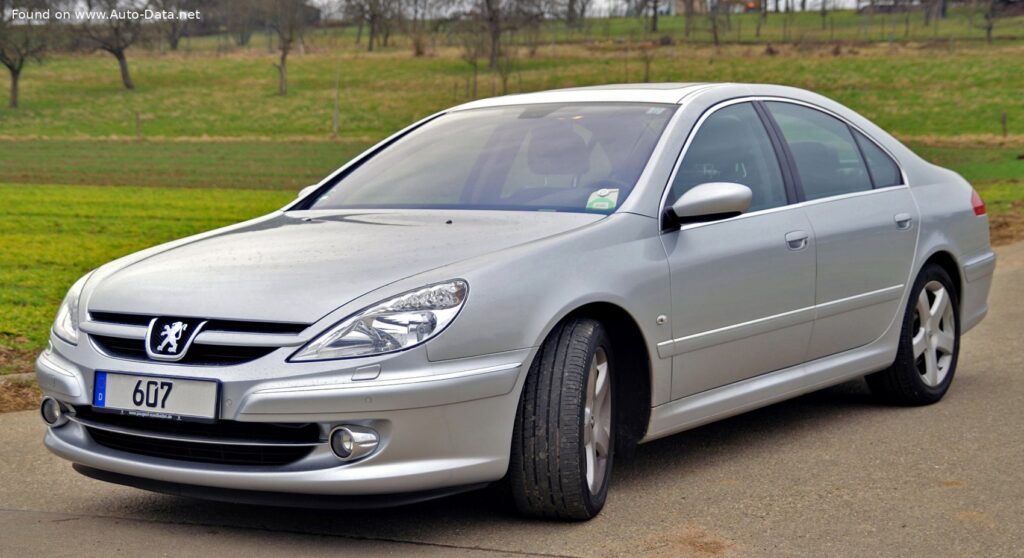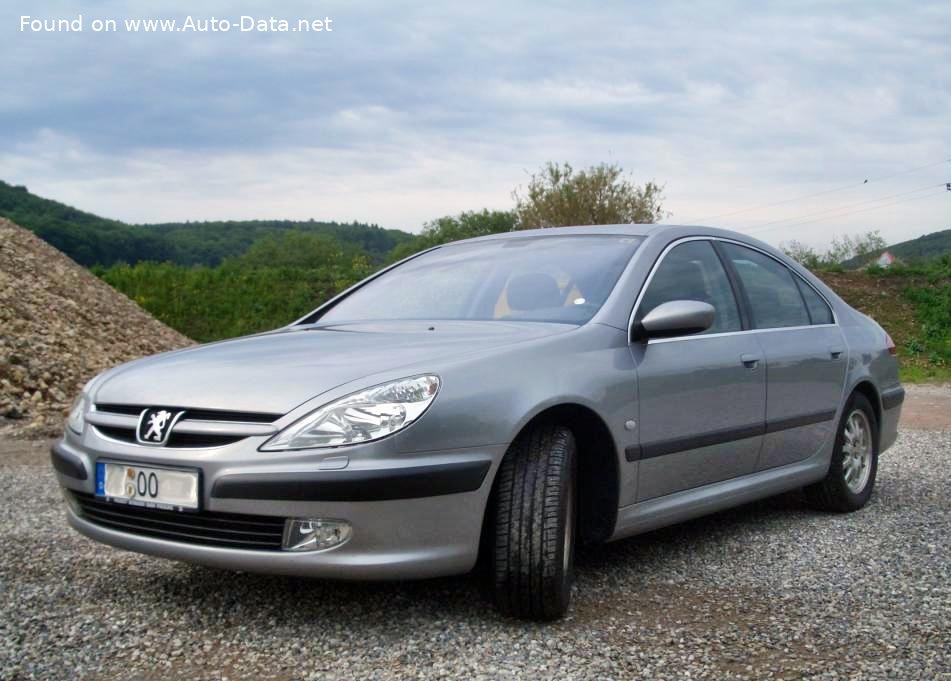
The Peugeot 607 2.2 16V, produced between 1999 and 2004, represents Peugeot’s foray into the executive car segment. Designed as a replacement for the aging 604, the 607 aimed to compete with established German rivals like the BMW 5 Series and Mercedes-Benz E-Class. While not a major sales success in all markets, particularly outside of Europe, the 607 showcased Peugeot’s ambition to offer a sophisticated and technologically advanced vehicle. This model, equipped with a 2.2-liter 16-valve engine and automatic transmission, offered a balance of performance and comfort for discerning buyers.
The Peugeot 607: A European Executive Sedan
The Peugeot 607 was primarily marketed in Europe as a flagship sedan, embodying French automotive design and engineering. It was positioned as a comfortable and refined vehicle, emphasizing ride quality and interior space. Unlike many of its competitors, the 607 didn’t prioritize sporty handling, instead focusing on providing a relaxed and luxurious driving experience. The 2.2-liter engine variant, while not the most powerful in the 607 lineup, was a popular choice due to its fuel efficiency and smooth operation. The car’s styling, characterized by its flowing lines and distinctive front end, aimed to project an image of understated elegance.
Engine & Performance
The 607 2.2 16V is powered by Peugeot’s 3FZ EW12J4 inline four-cylinder engine, displacing 2.2 liters (2231 cm3 or 136.14 cu. in.). This naturally aspirated engine produces 158 horsepower (Hp) at 5650 rpm and 217 Newton-meters (160.05 lb.-ft.) of torque at 3900 rpm. The engine features multi-port fuel injection and a double overhead camshaft (DOHC) valvetrain with four valves per cylinder. This configuration allows for a respectable power output of 70.8 Hp per liter. Power is delivered to the front wheels via a four-speed automatic transmission. Acceleration from 0 to 100 km/h (0-62 mph) takes 11.5 seconds, while 0 to 60 mph is achieved in approximately 10.9 seconds. The vehicle has a maximum speed of 213 km/h (132.35 mph). The weight-to-power ratio is 9.7 kg/Hp, and the weight-to-torque ratio is 7.1 kg/Nm.
Design & Features
The Peugeot 607 is a four-door sedan with a five-seat configuration. Its body style is characterized by a long wheelbase (2800 mm or 110.24 in.) and a relatively wide stance (1800 mm or 70.87 in.). The car’s dimensions – 4877 mm (192.01 in.) in length and 1437 mm (56.57 in.) in height – provide ample interior space. Key features of the 607 included a comfortable and well-appointed interior, designed with a focus on ergonomics and passenger comfort. Standard safety equipment for the era included ABS (Anti-lock Braking System). The 607 also offered a generous trunk (boot) space of 481 liters (16.99 cu. ft.). The suspension system utilizes wishbone front suspension and a double wishbone rear suspension, contributing to a smooth and controlled ride. Hydraulic power steering provides ease of maneuverability. The vehicle rides on 215/60 R16 tires mounted on 16-inch wheel rims.
Technical Specifications
| Brand | Peugeot |
| Model | 607 |
| Generation | 607 |
| Type (Engine) | 2.2 16V (158 Hp) Automatic |
| Start of production | 1999 |
| End of production | 2004 |
| Powertrain Architecture | Internal Combustion engine |
| Body type | Sedan |
| Seats | 5 |
| Doors | 4 |
| Fuel consumption (urban) | 13.5 l/100 km (17.4 US mpg, 20.9 UK mpg, 7.4 km/l) |
| Fuel consumption (extra urban) | 7.5 l/100 km (31.4 US mpg, 37.7 UK mpg, 13.3 km/l) |
| Fuel consumption (combined) | 9.7 l/100 km (24.2 US mpg, 29.1 UK mpg, 10.3 km/l) |
| Fuel Type | Petrol (Gasoline) |
| Acceleration 0 – 100 km/h | 11.5 sec |
| Acceleration 0 – 62 mph | 11.5 sec |
| Acceleration 0 – 60 mph | 10.9 sec |
| Maximum speed | 213 km/h (132.35 mph) |
| Weight-to-power ratio | 9.7 kg/Hp |
| Weight-to-torque ratio | 7.1 kg/Nm |
| Power | 158 Hp @ 5650 rpm |
| Power per litre | 70.8 Hp/l |
| Torque | 217 Nm @ 3900 rpm (160.05 lb.-ft. @ 3900 rpm) |
| Engine layout | Front, Transverse |
| Engine Model/Code | 3FZ EW12J4 |
| Engine displacement | 2231 cm3 (136.14 cu. in.) |
| Number of cylinders | 4 |
| Engine configuration | Inline |
| Cylinder Bore | 86 mm (3.39 in.) |
| Piston Stroke | 96 mm (3.78 in.) |
| Compression ratio | 10.8:1 |
| Number of valves per cylinder | 4 |
| Fuel injection system | Multi-port manifold injection |
| Engine aspiration | Naturally aspirated engine |
| Valvetrain | DOHC |
| Engine oil capacity | 4.25 l (4.49 US qt | 3.74 UK qt) |
| Coolant | 8.2 l (8.66 US qt | 7.21 UK qt) |
| Kerb Weight | 1530 kg (3373.07 lbs.) |
| Max. weight | 2035 kg (4486.41 lbs.) |
| Max load | 505 kg (1113.33 lbs.) |
| Trunk (boot) space – minimum | 481 l (16.99 cu. ft.) |
| Fuel tank capacity | 80 l (21.13 US gal | 17.6 UK gal) |
| Length | 4877 mm (192.01 in.) |
| Width | 1800 mm (70.87 in.) |
| Height | 1437 mm (56.57 in.) |
| Wheelbase | 2800 mm (110.24 in.) |
| Front track | 1539 mm (60.59 in.) |
| Rear (Back) track | 1537 mm (60.51 in.) |
| Drivetrain Architecture | Front wheel drive |
| Number of gears and type of gearbox | 4 gears, automatic transmission |
| Front suspension | Wishbone |
| Rear suspension | Double wishbone |
| Front brakes | Ventilated discs |
| Rear brakes | Disc |
| Assisting systems | ABS (Anti-lock braking system) |
| Steering type | Steering rack and pinion |
| Power steering | Hydraulic Steering |
| Tires size | 215/60 R16 |
| Wheel rims size | 16 |