
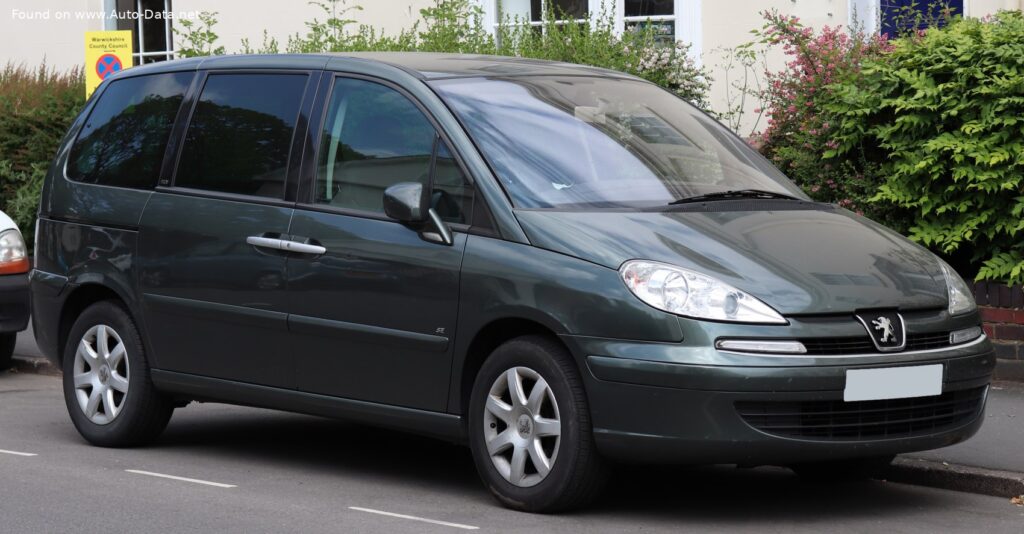
The Peugeot 807 2.2 16V, produced from 2002 to 2008, was a key variant within the first generation of the Peugeot 807 minivan (designated as the U60 series). Positioned as a mid-range offering, it aimed to balance practicality, space, and a reasonable level of performance for family transport. The 807, along with its twin counterparts – the Citroën C8 and Fiat Ulysse – were developed as part of a joint venture known as PSA/Fiat, sharing a common platform and many mechanical components. This collaboration allowed each manufacturer to offer a competitive minivan without the full development costs. The 2.2 16V engine represented a step up in power and refinement compared to the base 2.0L engine, while remaining more accessible than the later diesel options.
Peugeot 807 2.2 16V: Powertrain & Engine Architecture
The heart of the 807 2.2 16V is the 3FZ (EW12J4) engine, a 2.2-liter inline-four cylinder gasoline engine. This engine is a naturally aspirated unit, meaning it does not utilize a turbocharger or supercharger. It features a double overhead camshaft (DOHC) valvetrain with four valves per cylinder, contributing to its relatively high output for its displacement. The engine utilizes multi-port fuel injection, delivering fuel directly into the intake ports just before the intake valves. This system, common for its time, provides a good balance between fuel efficiency and performance.
The 2.2L engine produces 158 horsepower at 5650 rpm and 217 Nm (160.05 lb-ft) of torque at 3900 rpm. The engine’s bore and stroke are 86mm x 96mm, resulting in a compression ratio of 10.8:1. The engine oil capacity is 4.25 liters (4.49 US quarts / 3.74 UK quarts), and the cooling system requires 7.2 liters (7.61 US quarts / 6.34 UK quarts) of coolant. The engine is transversely mounted in the front of the vehicle, driving the front wheels.
While a five-speed manual transmission was available, the 2.2 16V was frequently paired with a four-speed automatic transmission. This automatic, while providing convenience, was a somewhat dated design by the early 2000s. It featured a traditional torque converter and electronic control, but lacked the smoothness and efficiency of more modern automatic gearboxes. The gear ratios were geared towards comfortable cruising rather than sporty acceleration.
Engine Codes and Variations
The 3FZ (EW12J4) engine code is specific to this 2.2L 16V configuration in the Peugeot 807. It’s important to note that Peugeot offered other engine options in the 807 range, including a 2.0L petrol engine with lower power output and a range of diesel engines (1.8L, 2.0L, and 2.2L HDi) which offered significantly improved fuel economy and torque. The diesel variants quickly became the more popular choice in European markets due to favorable taxation and fuel costs.
Driving Characteristics
The Peugeot 807 2.2 16V with the automatic transmission offered a comfortable, if not particularly exciting, driving experience. Acceleration from 0-100 km/h (0-62 mph) took approximately 11.6 seconds, and top speed was rated at 196 km/h (121.79 mph). The four-speed automatic transmission, while convenient, did contribute to a noticeable lack of urgency during acceleration. Downshifts were relatively slow, and the transmission sometimes hesitated when attempting to overtake.
Compared to the manual transmission version of the 2.2 16V, the automatic suffered a slight performance penalty due to the transmission’s inherent inefficiencies. The manual version offered quicker acceleration and better fuel economy. Compared to the diesel variants, the 2.2L petrol engine provided a smoother and quieter driving experience, but lacked the low-end torque of the diesels, making them feel more responsive in everyday driving situations. The petrol engine also required higher octane fuel and generally had higher running costs.
Equipment & Trim Levels
The 807 2.2 16V typically came equipped with a reasonable level of standard features, positioning it as a mid-range offering. Standard equipment generally included air conditioning, power windows, central locking, and an audio system. Higher trim levels, often denoted by specific package names, added features such as alloy wheels, upgraded upholstery, a sunroof, and rear parking sensors. Interior upholstery was typically cloth, with options for leather available on higher-spec models. The dashboard layout was functional and straightforward, prioritizing practicality over stylistic flair. Optional extras included a DVD entertainment system for rear passengers, which was a popular choice for families.
Chassis & Braking
The Peugeot 807 utilized a front-wheel-drive layout with a MacPherson strut suspension at the front and a coil spring suspension at the rear. This suspension setup provided a comfortable ride, absorbing bumps and imperfections in the road surface effectively. The front brakes were ventilated discs, offering good stopping power, while the rear brakes were solid discs. Anti-lock Braking System (ABS) was standard equipment, enhancing safety by preventing wheel lockup during hard braking. The steering system was a hydraulic power steering rack and pinion, providing light and easy steering input. The vehicle was equipped with 205/65 R15 tires.
Market Reception & Comparison
The Peugeot 807 2.2 16V received generally positive reviews, with critics praising its spacious interior, comfortable ride, and practical features. However, the four-speed automatic transmission was often criticized for its lack of responsiveness and dated technology. Fuel economy was considered average for a vehicle of its size and class, with combined fuel consumption figures around 9.7 l/100 km (24.2 US mpg). Reliability was generally good, although some owners reported minor issues with the electrical system and the automatic transmission. Compared to its rivals, such as the Renault Espace and Volkswagen Sharan, the 807 offered a competitive package, particularly in terms of value for money.
Technical Specifications
| Brand | Peugeot |
| Model | 807 |
| Generation | 807 |
| Type (Engine) | 2.2 16V (158 Hp) |
| Start of production | 2002 year |
| End of production | 2008 year |
| Powertrain Architecture | Internal Combustion engine |
| Body type | Minivan |
| Seats | 8 |
| Doors | 5 |
| Fuel consumption (urban) | 12.9 l/100 km (18.2 US mpg) |
| Fuel consumption (extra urban) | 7.8 l/100 km (30.2 US mpg) |
| Fuel consumption (combined) | 9.7 l/100 km (24.2 US mpg) |
| Fuel Type | Petrol (Gasoline) |
| Acceleration 0 – 100 km/h | 11.6 sec |
| Acceleration 0 – 62 mph | 11.6 sec |
| Acceleration 0 – 60 mph | 11 sec |
| Maximum speed | 196 km/h (121.79 mph) |
| Power | 158 Hp @ 5650 rpm |
| Torque | 217 Nm @ 3900 rpm (160.05 lb.-ft. @ 3900 rpm) |
| Engine layout | Front, Transverse |
| Engine Model/Code | 3FZ EW12J4 |
| Engine displacement | 2231 cm3 (136.14 cu. in.) |
| Number of cylinders | 4 |
| Cylinder Bore | 86 mm (3.39 in.) |
| Piston Stroke | 96 mm (3.78 in.) |
| Compression ratio | 10.8:1 |
| Kerb Weight | 1650 kg (3637.63 lbs.) |
| Trunk (boot) space – minimum | 340 l (12.01 cu. ft.) |
| Trunk (boot) space – maximum | 3300 l (116.54 cu. ft.) |
| Fuel tank capacity | 80 l (21.13 US gal) |
| Length | 4730 mm (186.22 in.) |
| Width | 1850 mm (72.83 in.) |
| Height | 1750 mm (68.9 in.) |
Legacy
The Peugeot 807 2.2 16V, while not the most sought-after variant of the 807 range, remains a reasonably reliable and practical option in the used car market. The 3FZ engine is generally considered durable, although regular maintenance is crucial to prevent issues. The four-speed automatic transmission is the most common point of concern, and potential buyers should carefully inspect its operation before purchasing. Today, these vehicles are often found with high mileage, having served as family transport for many years. Their spacious interiors and comfortable ride continue to appeal to those seeking an affordable and practical minivan solution.
