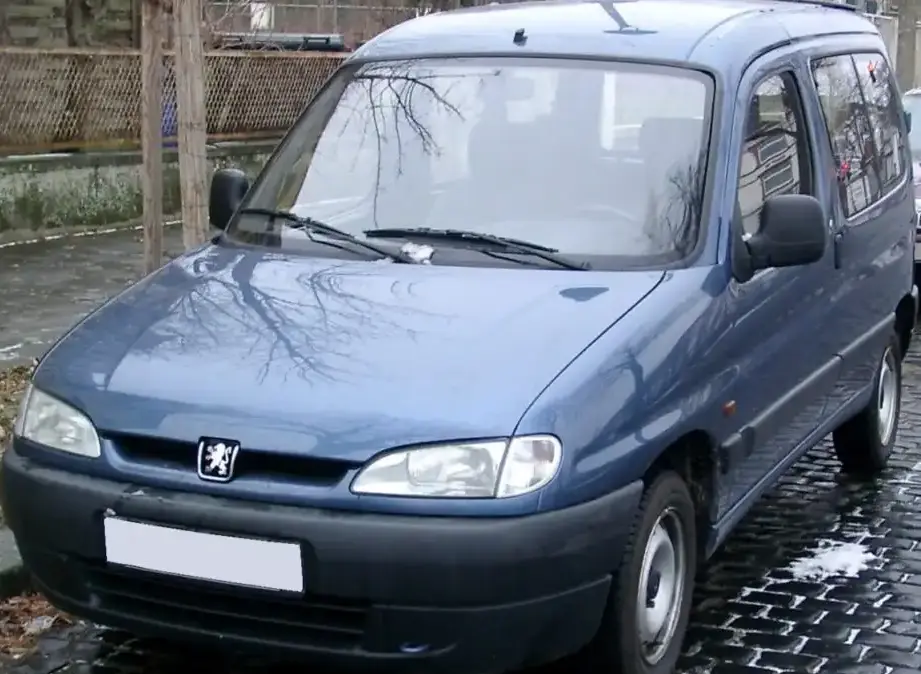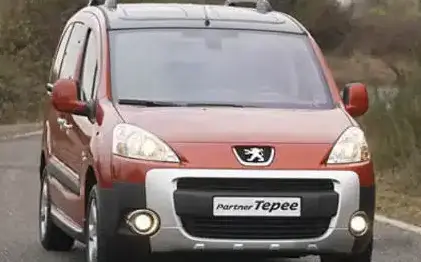
The Peugeot Partner II Tepee 1.6, producing 110 horsepower, was a popular configuration of the second-generation Partner Tepee, manufactured between 2008 and 2012. Positioned as a mid-range offering within the Partner Tepee lineup, it aimed to balance affordability with reasonable performance and practicality for families and commercial users. The Partner II Tepee, based on the Peugeot 207 and Citroën Berlingo platform, served as a versatile vehicle, bridging the gap between a traditional minivan and a light commercial vehicle, particularly favored in European markets.
Technical Specifications
| Brand | Peugeot |
| Model | Partner |
| Generation | Partner II Tepee |
| Type (Engine) | 1.6 (110 Hp) |
| Start of production | 2008 |
| End of production | 2012 |
| Powertrain Architecture | Internal Combustion engine |
| Body type | Minivan |
| Seats | 5 |
| Doors | 5 |
| Fuel consumption (urban) | 10.8 l/100 km (21.8 US mpg) |
| Fuel consumption (extra urban) | 6.8 l/100 km (34.6 US mpg) |
| Fuel consumption (combined) | 8.2 l/100 km (28.7 US mpg) |
| Fuel Type | Petrol (Gasoline) |
| Acceleration 0 – 100 km/h | 13.5 sec |
| Acceleration 0 – 62 mph | 13.5 sec |
| Acceleration 0 – 60 mph | 12.8 sec |
| Maximum speed | 170 km/h (105.63 mph) |
| Emission standard | Euro 4 |
| Weight-to-power ratio | 13.4 kg/Hp |
| Weight-to-torque ratio | 10 kg/Nm |
| Power | 110 Hp @ 5800 rpm |
| Torque | 147 Nm @ 4000 rpm (108.42 lb.-ft. @ 4000 rpm) |
| Engine layout | Front, Transverse |
| Engine Model/Code | NFU TU5JP4 |
| Engine displacement | 1587 cm3 (96.84 cu. in.) |
| Number of cylinders | 4 |
| Engine configuration | Inline |
| Number of valves per cylinder | 4 |
| Fuel injection system | Multi-port manifold injection |
| Engine aspiration | Naturally aspirated |
| Engine oil capacity | 3.25 l (3.43 US qt | 2.86 UK qt) |
| Coolant capacity | 5.9 l (6.23 US qt | 5.19 UK qt) |
| Kerb Weight | 1472 kg (3245.2 lbs) |
| Max. weight | 2025 kg (4464.36 lbs) |
| Max load | 553 kg (1219.16 lbs) |
| Trunk (boot) space – minimum | 505 l (17.83 cu. ft.) |
| Fuel tank capacity | 60 l (15.85 US gal | 13.2 UK gal) |
| Length | 4380 mm (172.44 in) |
| Width | 1810 mm (71.26 in) |
| Height | 1803 mm (70.98 in) |
| Wheelbase | 2728 mm (107.4 in) |
| Front track | 1505 mm (59.25 in) |
| Rear track | 1554 mm (61.18 in) |
| Drivetrain | Front wheel drive |
| Number of gears | 5 gears, manual transmission |
| Front brakes | Ventilated discs |
| Rear brakes | Disc |
| Assisting systems | ABS (Anti-lock braking system) |
| Tires size | 205/65 R16 |
Powertrain & Engine Architecture
The heart of the Partner II Tepee 1.6 was the NFU (or sometimes TU5JP4) engine, a 1.6-liter inline-four cylinder gasoline engine. This engine was a common sight in various Peugeot and Citroën models of the era. It featured a multi-point fuel injection system, providing adequate fuel delivery for its displacement and power output. The engine utilized a single overhead camshaft (SOHC) valvetrain with four valves per cylinder, contributing to its relatively efficient operation. The 110 horsepower output was achieved at 5800 rpm, while peak torque of 147 Nm (108.42 lb-ft) was available at 4000 rpm. The engine was transversely mounted in the front of the vehicle, driving the front wheels. The Partner Tepee 1.6 was exclusively offered with a five-speed manual transmission, providing a balance between fuel efficiency and driver control.
Driving Characteristics
The 1.6-liter engine, paired with the five-speed manual transmission, offered adequate, though not exhilarating, performance. Acceleration from 0 to 100 km/h (0-62 mph) took approximately 13.5 seconds, and top speed was limited to 170 km/h (105.63 mph). The gear ratios were tuned for practicality and fuel economy rather than outright speed. In real-world driving, the engine felt responsive enough for everyday tasks, such as commuting and carrying passengers. However, when fully loaded with passengers and cargo, or when tackling steep inclines, the engine could feel strained. Compared to the more powerful diesel variants (like the 1.9 TDI), the 1.6-liter gasoline engine offered less torque and required more frequent gear changes to maintain momentum. The manual transmission provided a more engaging driving experience than an automatic would have, allowing drivers to better control the engine’s power band.
Equipment & Trim Levels
The Partner II Tepee 1.6 typically came with a reasonable level of standard equipment. This included power steering, central locking, electric front windows, and an adjustable steering column. Safety features such as ABS (Anti-lock Braking System) were also standard. Interior upholstery was typically cloth, with a durable and practical design. Optional extras included air conditioning, a CD player with radio, and alloy wheels. Higher trim levels offered additional features such as rear parking sensors, upgraded upholstery, and a panoramic sunroof. The Partner Tepee was designed with practicality in mind, featuring a modular interior with folding rear seats and ample storage compartments.
Chassis & Braking
The Partner II Tepee utilized a conventional front-wheel-drive chassis with MacPherson strut suspension at the front and a torsion beam suspension at the rear. The front brakes were ventilated discs, providing good stopping power, while the rear brakes were solid discs. The suspension setup was tuned for comfort and ride quality, prioritizing a smooth ride over sporty handling. The vehicle’s relatively high center of gravity and soft suspension meant that it wasn’t particularly engaging to drive on winding roads. The 15-inch or 16-inch wheels, typically fitted with 205/65 R16 tires, contributed to the comfortable ride.
Market Reception & Comparison
The Peugeot Partner II Tepee 1.6 was generally well-received by critics as a practical and affordable family vehicle. It was praised for its spacious interior, versatility, and reasonable running costs. However, the 1.6-liter engine was sometimes criticized for being underpowered, especially when the vehicle was fully loaded. Compared to the diesel variants, the 1.6-liter gasoline engine offered lower fuel economy but was generally quieter and smoother. The manual transmission was seen as a positive feature by many, offering a more engaging driving experience. The Partner Tepee competed with other compact minivans such as the Citroën Berlingo, Renault Kangoo, and Fiat Doblo.
Legacy
The Peugeot Partner II Tepee 1.6, while not the most powerful or refined version of the model, remains a popular choice in the used car market due to its affordability and practicality. The NFU engine is generally considered to be reliable, although regular maintenance is essential to prevent issues. Common problems include oil leaks and occasional sensor failures. The Partner Tepee’s robust construction and simple mechanical design make it relatively easy and inexpensive to repair. Today, these vehicles are often sought after by families, small businesses, and individuals who need a versatile and affordable vehicle for carrying passengers and cargo.