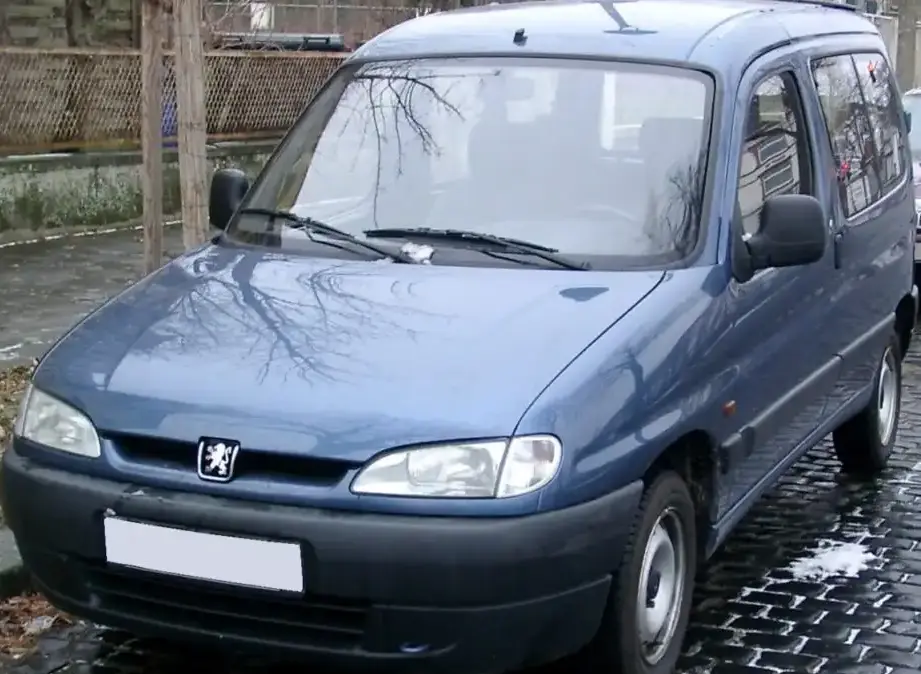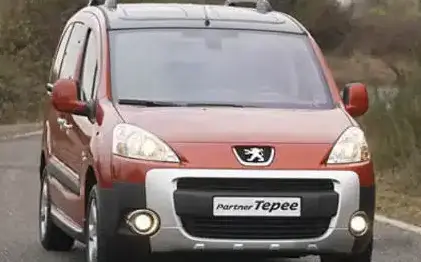
The Peugeot Partner II Tepee 1.6 HDi 90 horsepower variant, produced between 2008 and 2012, represents an entry-level offering within the second generation of the Peugeot Partner Tepee (also known as the Partner Combi in some markets). Positioned as a practical and economical choice, this version of the Partner II Tepee aimed to provide affordable family transport and light commercial functionality. It was a key model in Peugeot’s strategy to offer a versatile vehicle appealing to both private buyers and small businesses, particularly in European markets. The Partner II Tepee, and its Citroën Berlingo First counterpart, were built on the shared PSA Peugeot Citroën 1HX0/A3 platform.
Technical Specifications
| Brand | Peugeot |
| Model | Partner |
| Generation | Partner II Tepee |
| Type (Engine) | 1.6 HDi (90 Hp) |
| Start of production | 2008 |
| End of production | 2012 |
| Powertrain Architecture | Internal Combustion engine |
| Body type | Minivan |
| Seats | 5 |
| Doors | 5 |
| Fuel consumption (urban) | 7 l/100 km (33.6 US mpg, 40.4 UK mpg, 14.3 km/l) |
| Fuel consumption (extra urban) | 5 l/100 km (47 US mpg, 56.5 UK mpg, 20 km/l) |
| Fuel consumption (combined) | 5.7 l/100 km (41.3 US mpg, 49.6 UK mpg, 17.5 km/l) |
| Fuel Type | Diesel |
| Acceleration 0 – 100 km/h | 14.3 sec |
| Acceleration 0 – 62 mph | 14.3 sec |
| Acceleration 0 – 60 mph | 13.6 sec |
| Maximum speed | 160 km/h (99.42 mph) |
| Emission standard | Euro 4 |
| Weight-to-power ratio | 15.6 kg/Hp |
| Weight-to-torque ratio | 6.5 kg/Nm |
| Power | 90 Hp @ 4000 rpm |
| Power per litre | 57.7 Hp/l |
| Torque | 215 Nm @ 1750 rpm (158.58 lb.-ft. @ 1750 rpm) |
| Engine layout | Front, Transverse |
| Engine Model/Code | 9HX DV6TED4 |
| Engine displacement | 1560 cm3 (95.2 cu. in.) |
| Number of cylinders | 4 |
| Engine configuration | Inline |
| Cylinder Bore | 75 mm (2.95 in.) |
| Piston Stroke | 88.3 mm (3.48 in.) |
| Compression ratio | 17.6:1 |
| Number of valves per cylinder | 4 |
| Fuel injection system | Diesel Commonrail |
| Engine aspiration | Turbocharger, Intercooler |
| Valvetrain | OHC |
| Engine oil capacity | 3.75 l (3.96 US qt | 3.3 UK qt) |
| Coolant capacity | 6 l (6.34 US qt | 5.28 UK qt) |
| Kerb Weight | 1407 kg (3101.9 lbs.) |
| Max. weight | 2040 kg (4497.43 lbs.) |
| Max load | 633 kg (1395.53 lbs.) |
| Trunk (boot) space – minimum | 505 l (17.83 cu. ft.) |
| Fuel tank capacity | 60 l (15.85 US gal | 13.2 UK gal) |
| Length | 4380 mm (172.44 in.) |
| Width | 1810 mm (71.26 in.) |
| Height | 1803 mm (70.98 in.) |
| Wheelbase | 2728 mm (107.4 in.) |
| Front track | 1505 mm (59.25 in.) |
| Rear (Back) track | 1554 mm (61.18 in.) |
| Drivetrain Architecture | Front wheel drive |
| Number of gears | 5 |
| Gearbox type | Manual transmission |
| Front brakes | Ventilated discs |
| Rear brakes | Disc |
| Assisting systems | ABS (Anti-lock braking system) |
| Tires size | 205/65 R15H |
Powertrain & Engine Architecture
The 1.6 HDi engine, specifically the 9HX (DV6TED4) variant, is a four-cylinder diesel engine utilizing common rail direct injection. This engine was a mainstay of the PSA group’s offerings during the late 2000s and early 2010s. The ‘HDi’ designation signifies High-Pressure Diesel Injection, a technology that improves fuel atomization and combustion efficiency. The 9HX engine features a single overhead camshaft (OHC) operating four valves per cylinder. A turbocharger with an intercooler is employed to boost power output and improve torque delivery. The intercooler cools the compressed air from the turbocharger, increasing its density and further enhancing combustion. The 90 horsepower output is achieved at 4000 rpm, while peak torque of 215 Nm (158.58 lb-ft) is available from just 1750 rpm, emphasizing the engine’s focus on low-end usability. The Partner II Tepee 1.6 HDi 90 was exclusively offered with a five-speed manual transmission, prioritizing fuel economy over outright performance.
Driving Characteristics
The 1.6 HDi 90 hp engine in the Partner II Tepee delivers adequate, but not exhilarating, performance. Acceleration from 0-100 km/h (0-62 mph) takes around 14.3 seconds, and top speed is limited to 160 km/h (99 mph). The engine’s strength lies in its usable torque, making it well-suited for carrying passengers and cargo. The five-speed manual transmission is geared for economy, with relatively long ratios. This contributes to good fuel economy – around 5.7 l/100 km (41.3 US mpg) combined – but means the engine can feel strained when accelerating hard or climbing hills. Compared to higher-powered versions of the Partner II Tepee, such as those equipped with the 1.6 HDi 110 hp engine, the 90 hp variant feels noticeably slower and requires more frequent gear changes. However, the lower power output also translates to reduced stress on the engine and potentially lower maintenance costs.
Equipment & Trim Levels
The 1.6 HDi 90 version of the Partner II Tepee typically represented the base trim level. Standard equipment generally included power steering, central locking, electric front windows, and an adjustable steering column. Safety features such as ABS (Anti-lock Braking System) were also standard. Interior upholstery was typically a durable cloth material. Optional extras included air conditioning, rear parking sensors, and a CD player with radio. Higher trim levels, available with the more powerful engines, offered features like alloy wheels, upgraded interior trim, and a trip computer. The Partner II Tepee’s interior was designed with practicality in mind, featuring numerous storage compartments and a modular seating arrangement.
Chassis & Braking
The Partner II Tepee utilizes a conventional front-wheel-drive layout with independent front suspension (typically MacPherson struts) and a semi-independent rear suspension (often a torsion beam). The braking system consists of ventilated discs on the front wheels and solid discs on the rear. The suspension setup is tuned for comfort and practicality, prioritizing ride quality over sporty handling. The 1.6 HDi 90 variant, being the entry-level model, often featured smaller wheels (typically 15-inch) and narrower tires (205/65 R15H) compared to higher-spec versions. This contributed to a softer ride but reduced grip levels.
Market Reception & Comparison
The Peugeot Partner II Tepee 1.6 HDi 90 was generally well-received as a practical and economical family vehicle. Critics praised its fuel efficiency, spacious interior, and versatility. However, the engine’s lack of outright power was often noted. Compared to the 1.6 HDi 110 hp variant, the 90 hp version offered lower running costs but compromised on performance. Against competitors like the Citroën Berlingo First (which shared the same platform and engines), Renault Kangoo, and Fiat Doblò, the Partner II Tepee 1.6 HDi 90 held its own in terms of value for money and practicality. Its diesel engine provided significantly better fuel economy than comparable petrol-powered vehicles.
Legacy
The 1.6 HDi engine, in its various iterations, proved to be a reliable and durable powerplant. While early versions of the DV6 engine were known for potential issues with the diesel particulate filter (DPF) and turbocharger, these problems were largely addressed in later revisions. The Partner II Tepee 1.6 HDi 90 remains a relatively affordable and practical used car option today. Its simple mechanicals and readily available parts contribute to relatively low maintenance costs. However, potential buyers should be aware of the possibility of DPF issues, particularly if the vehicle has primarily been used for short journeys. The Partner II Tepee, and its 1.6 HDi 90 variant, established a strong reputation for practicality and versatility, paving the way for subsequent generations of Peugeot Partner and Citroën Berlingo models.