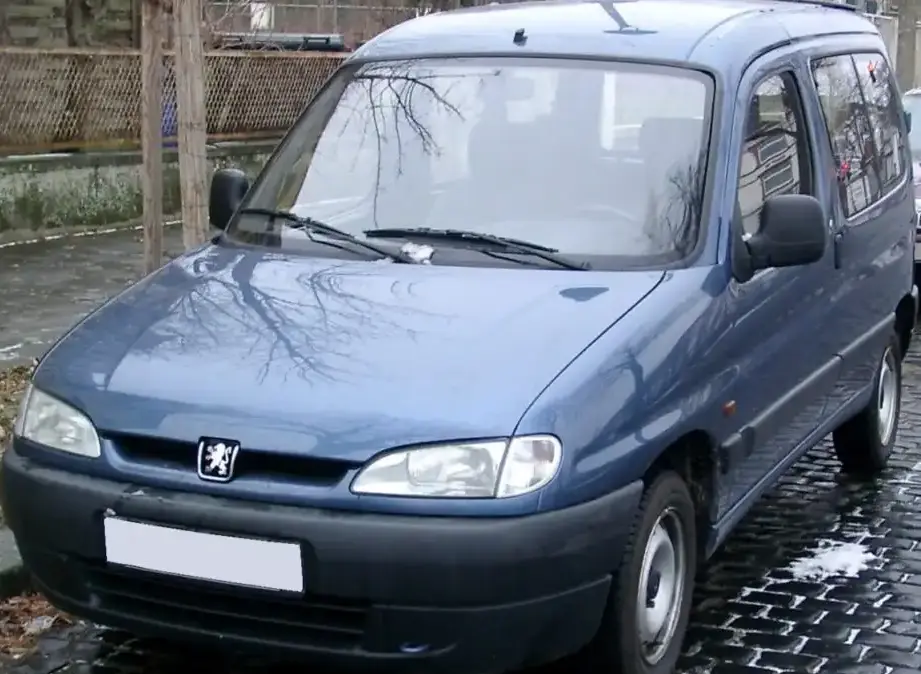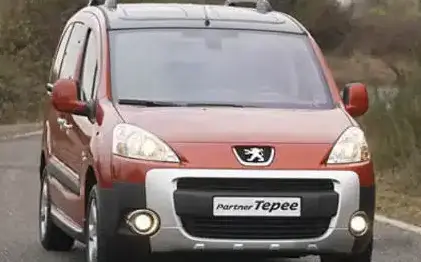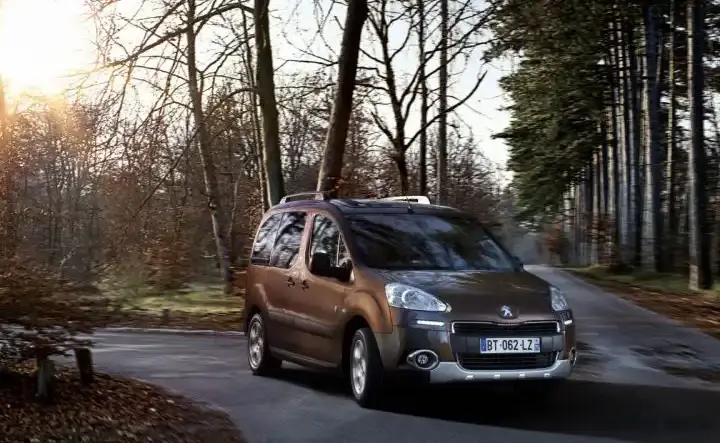
The Peugeot Partner II Tepee, specifically the Phase II model produced from 2012 to 2018, represented a significant iteration of Peugeot’s popular leisure activity vehicle (LAV). This variant, equipped with the 1.6 HDi 75 horsepower diesel engine and a five-speed manual transmission, occupied the entry-level position within the Partner Tepee lineup. Designed as a versatile and practical vehicle for families and commercial users alike, the Partner II Tepee aimed to provide an affordable and efficient transportation solution within the European market. It shared its platform with the Citroën Berlingo and Opel Combo, benefiting from collaborative engineering efforts between the PSA Group (now Stellantis).
Technical Specifications
| Brand | Peugeot |
| Model | Partner |
| Generation | Partner II Tepee (Phase II, 2012) |
| Type (Engine) | 1.6 HDi (75 Hp) |
| Start of production | 2012 |
| End of production | 2018 |
| Powertrain Architecture | Internal Combustion engine |
| Body type | Minivan |
| Seats | 5 |
| Doors | 5 |
| Fuel consumption (urban) | 6.2 l/100 km (37.9 US mpg, 45.6 UK mpg, 16.1 km/l) |
| Fuel consumption (extra urban) | 4.8 l/100 km (49 US mpg, 58.9 UK mpg, 20.8 km/l) |
| Fuel consumption (combined) | 5.3 l/100 km (44.4 US mpg, 53.3 UK mpg, 18.9 km/l) |
| CO2 emissions | 135 g/km |
| Fuel Type | Diesel |
| Acceleration 0 – 100 km/h | 14.3 sec |
| Acceleration 0 – 62 mph | 14.3 sec |
| Acceleration 0 – 60 mph | 13.6 sec |
| Maximum speed | 150 km/h (93.21 mph) |
| Emission standard | Euro 5 |
| Weight-to-power ratio | 18.8 kg/Hp, 53.2 Hp/tonne |
| Weight-to-torque ratio | 7.6 kg/Nm, 131.2 Nm/tonne |
| Power | 75 Hp @ 4000 rpm |
| Power per litre | 48.1 Hp/l |
| Torque | 185 Nm @ 1500 rpm (136.45 lb.-ft. @ 1500 rpm) |
| Engine layout | Front, Transverse |
| Engine Model/Code | 9HN DV6ETED, BHW DV6FE |
| Engine displacement | 1560 cm3 (95.2 cu. in.) |
| Number of cylinders | 4 |
| Engine configuration | Inline |
| Cylinder Bore | 75 mm (2.95 in.) |
| Piston Stroke | 88.3 mm (3.48 in.) |
| Number of valves per cylinder | 2 |
| Fuel injection system | Diesel Commonrail |
| Engine aspiration | Turbocharger, Intercooler |
| Engine oil capacity | 3.75 l (3.96 US qt | 3.3 UK qt) |
| Coolant | 6.3 l (6.66 US qt | 5.54 UK qt) |
| Kerb Weight | 1410 kg (3108.52 lbs.) |
| Max. weight | 2040 kg (4497.43 lbs.) |
| Max load | 630 kg (1388.91 lbs.) |
| Trunk (boot) space – minimum | 675 l (23.84 cu. ft.) |
| Trunk (boot) space – maximum | 3000 l (105.94 cu. ft.) |
| Fuel tank capacity | 60 l (15.85 US gal | 13.2 UK gal) |
| Length | 4380 mm (172.44 in.) |
| Width | 1810 mm (71.26 in.) |
| Height | 1800 mm (70.87 in.) |
| Wheelbase | 2730 mm (107.48 in.) |
| Front track | 1505 mm (59.25 in.) |
| Rear (Back) track | 1554 mm (61.18 in.) |
| Minimum turning circle | 11 m (36.09 ft.) |
| Drivetrain Architecture | Front wheel drive |
| Number of gears | 5 gears, manual transmission |
| Front suspension | Independent, type McPherson with coil spring and anti-roll bar |
| Rear suspension | Independent coil spring |
| Front brakes | Ventilated discs |
| Rear brakes | Disc |
| Assisting systems | ABS (Anti-lock braking system) |
| Steering type | Steering rack and pinion |
| Tires size | 205/65 R15 |
| Wheel rims size | 15 |
Powertrain & Engine Architecture
The heart of this Partner Tepee variant is the 1.6 HDi diesel engine, specifically the 9HN (DV6ETED) or BHW (DV6FE) engine code. These engines are members of the DV6 family, known for their robust construction and relatively simple design. The engine utilizes a common rail direct injection system, delivering fuel at high pressure directly into the combustion chamber for improved efficiency and reduced emissions. A turbocharger with an intercooler is employed to boost power output, providing 75 horsepower at 4000 rpm and 185 Nm (136 lb-ft) of torque at a low 1500 rpm. This torque characteristic is particularly beneficial for a vehicle intended for carrying passengers or light cargo. The five-speed manual transmission was the standard offering, chosen for its affordability and fuel efficiency. The gear ratios were tuned for maximizing fuel economy rather than outright performance.
Driving Characteristics
The 1.6 HDi 75 hp engine, paired with the five-speed manual transmission, provided adequate, but not exhilarating, performance. Acceleration from 0 to 100 km/h (0-62 mph) took approximately 14.3 seconds, and top speed was limited to 150 km/h (93 mph). The focus was on usability and fuel economy. The engine’s strong low-end torque made it well-suited for everyday driving and navigating urban environments. However, overtaking maneuvers required careful planning, and the engine could feel strained when fully loaded or climbing steep hills. Compared to higher-powered versions of the Partner Tepee, such as those equipped with the 1.6 BlueHDi 100 or 120 hp engines, this variant offered a more economical but less dynamic driving experience. The manual transmission, while efficient, lacked the convenience of an automatic gearbox.
Equipment & Trim Levels
The 1.6 HDi 75 hp Partner Tepee typically came with a basic, yet functional, level of equipment. Standard features included power steering, central locking, electric front windows, and an adjustable steering column. Safety features such as ABS and driver/passenger airbags were also standard. Interior upholstery was typically cloth, and the dashboard featured a simple, straightforward design. Optional extras included air conditioning, rear parking sensors, and a basic audio system. Higher trim levels, available with more powerful engines, offered features like alloy wheels, upgraded interior trim, and more advanced infotainment systems. This base trim was aimed at budget-conscious buyers prioritizing practicality and affordability.
Chassis & Braking
The Partner Tepee utilized a McPherson strut front suspension and a trailing arm rear suspension, providing a comfortable ride quality, particularly on smoother roads. The suspension was tuned for carrying loads, meaning it could handle a significant amount of weight without compromising ride comfort. The braking system consisted of ventilated discs on the front wheels and solid discs on the rear. ABS (Anti-lock Braking System) was standard, enhancing braking performance and stability. The vehicle’s relatively light weight (1410 kg / 3108.52 lbs) helped to compensate for the modest braking power.
Market Reception & Comparison
The 1.6 HDi 75 hp Partner Tepee was generally well-received as an affordable and practical option within the LAV segment. Critics praised its fuel efficiency and versatility, but noted its lack of outright performance. Compared to other trims in the Partner Tepee lineup, this variant offered the lowest purchase price but also the least amount of power and refinement. It competed with other compact vans and MPVs, such as the Citroën Berlingo, Opel Combo, and Renault Kangoo. Its fuel economy of around 5.3 l/100 km (44.4 US mpg) was a key selling point, making it an attractive option for those seeking a cost-effective vehicle for both personal and commercial use.
Legacy
The 1.6 HDi engine, in its various iterations, proved to be a reliable and durable powertrain. While some early versions of the DV6 engine experienced issues with the exhaust gas recirculation (EGR) valve and diesel particulate filter (DPF), these problems were largely addressed in later revisions. Today, used examples of the 1.6 HDi 75 hp Partner Tepee are readily available and generally offer good value for money. Regular maintenance, including timely oil changes and DPF regeneration, is crucial for ensuring long-term reliability. The Partner Tepee remains a popular choice for those seeking a practical and affordable vehicle for family transport or light commercial duties.