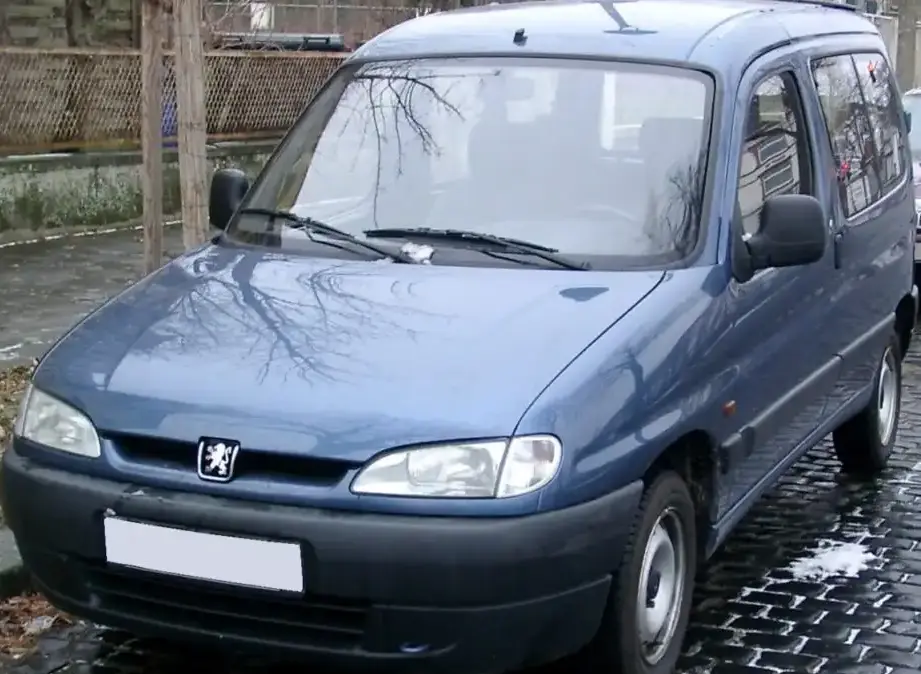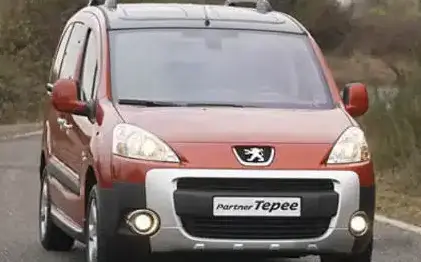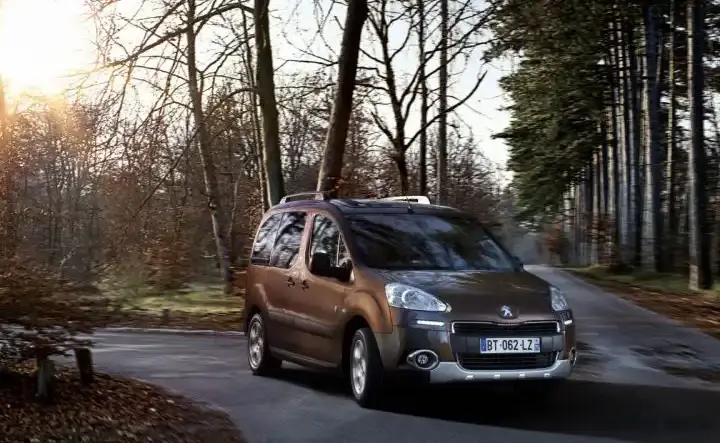
The Peugeot Partner II Tepee, specifically the Phase II model produced from 2012 to 2018, represented a significant evolution of Peugeot’s popular leisure activity vehicle (LAV). The 1.6 VTi variant, producing 120 horsepower, occupied a middle ground within the Partner Tepee lineup, offering a balance between affordability, fuel efficiency, and practicality. This version aimed to appeal to families and individuals seeking a versatile vehicle for both daily commuting and recreational pursuits. It was primarily marketed in Europe, where compact MPVs were – and continue to be – a popular choice.
Technical Specifications
| Brand | Peugeot |
| Model | Partner |
| Generation | Partner II Tepee (Phase II, 2012) |
| Type (Engine) | 1.6 VTi (120 Hp) |
| Start of production | 2012 |
| End of production | 2018 |
| Powertrain Architecture | Internal Combustion engine |
| Body type | Minivan |
| Seats | 5 |
| Doors | 5 |
| Fuel consumption (urban) | 9.4 l/100 km (25 US mpg, 30.1 UK mpg, 10.6 km/l) |
| Fuel consumption (extra urban) | 5.8 l/100 km (40.6 US mpg, 48.7 UK mpg, 17.2 km/l) |
| Fuel consumption (combined) | 7.1 l/100 km (33.1 US mpg, 39.8 UK mpg, 14.1 km/l) |
| CO2 emissions | 164 g/km |
| Fuel Type | Petrol (Gasoline) |
| Acceleration 0 – 100 km/h | 12 sec |
| Acceleration 0 – 62 mph | 12 sec |
| Acceleration 0 – 60 mph | 11.4 sec |
| Maximum speed | 177 km/h (109.98 mph) |
| Emission standard | Euro 5 |
| Weight-to-power ratio | 11.6 kg/Hp, 86 Hp/tonne |
| Weight-to-torque ratio | 8.7 kg/Nm, 114.7 Nm/tonne |
| Power | 120 Hp @ 6000 rpm |
| Power per litre | 75.1 Hp/l |
| Torque | 160 Nm @ 4250 rpm (118.01 lb.-ft. @ 4250 rpm) |
| Engine layout | Front, Transverse |
| Engine Model/Code | 5FS EP6C |
| Engine displacement | 1598 cm3 (97.52 cu. in.) |
| Number of cylinders | 4 |
| Engine configuration | Inline |
| Cylinder Bore | 77 mm (3.03 in.) |
| Piston Stroke | 85.5 mm (3.37 in.) |
| Compression ratio | 11:1 |
| Number of valves per cylinder | 4 |
| Fuel injection system | Multi-port manifold injection |
| Engine aspiration | Naturally aspirated engine |
| Engine oil capacity | 4.25 l (4.49 US qt | 3.74 UK qt) |
| Coolant | 5.9 l (6.23 US qt | 5.19 UK qt) |
| Kerb Weight | 1395 kg (3075.45 lbs.) |
| Max. weight | 2000 kg (4409.25 lbs.) |
| Max load | 605 kg (1333.8 lbs.) |
| Trunk (boot) space – minimum | 675 l (23.84 cu. ft.) |
| Trunk (boot) space – maximum | 3000 l (105.94 cu. ft.) |
| Fuel tank capacity | 60 l (15.85 US gal | 13.2 UK gal) |
| Length | 4380 mm (172.44 in.) |
| Width | 1810 mm (71.26 in.) |
| Height | 1800 mm (70.87 in.) |
| Wheelbase | 2730 mm (107.48 in.) |
| Front track | 1505 mm (59.25 in.) |
| Rear (Back) track | 1554 mm (61.18 in.) |
| Minimum turning circle | 11 m (36.09 ft.) |
| Drivetrain Architecture | Front wheel drive |
| Drive wheel | Front wheel drive |
| Number of gears | 5 gears, manual transmission |
| Front suspension | Independent, type McPherson with coil spring and anti-roll bar |
| Rear suspension | Independent coil spring |
| Front brakes | Ventilated discs |
| Rear brakes | Disc |
| Assisting systems | ABS (Anti-lock braking system) |
| Steering type | Steering rack and pinion |
| Tires size | 205/65 R15 |
| Wheel rims size | 15 |
Powertrain & Engine Architecture
The 1.6 VTi engine, identified by the code 5FS EP6C, is a naturally aspirated, inline-four cylinder petrol engine. It belongs to the Peugeot-Citroën Prince engine family, known for its compact design and relatively lightweight construction. This engine utilizes a multi-point fuel injection system, delivering fuel directly into the intake ports. The engine features a dual overhead camshaft (DOHC) valvetrain with four valves per cylinder, contributing to its respectable power output for its displacement. The 120 horsepower and 160 Nm (118 lb-ft) of torque are achieved at 6000 rpm and 4250 rpm respectively. The Partner Tepee 1.6 VTi was typically paired with a five-speed manual transmission, although an optional four-speed automatic transmission was also available. The automatic transmission, while offering convenience, was known to slightly impact fuel economy and acceleration compared to the manual version.
Driving Characteristics
The 1.6 VTi engine in the Partner Tepee provided adequate performance for everyday driving. Acceleration from 0 to 60 mph took around 11.4 seconds, and top speed was approximately 109.98 mph. While not particularly sporty, the engine offered sufficient power for highway cruising and overtaking maneuvers. The five-speed manual transmission allowed drivers to maintain optimal engine speed for efficiency or performance. The automatic transmission, while smooth, exhibited a tendency to hunt for gears in certain situations, particularly when climbing hills. The overall driving experience was comfortable and predictable, prioritizing practicality and ease of use over outright performance. Compared to the more powerful diesel variants, the 1.6 VTi offered a quieter and smoother ride, but at the expense of fuel economy and low-end torque.
Equipment & Trim Levels
The Partner Tepee 1.6 VTi typically came equipped with a reasonable level of standard features. These included power windows, central locking, air conditioning, and a basic audio system. Higher trim levels, such as the Outdoor or Escape, added features like alloy wheels, fog lights, and upgraded interior trim. Interior upholstery was typically cloth, with options for more durable and stain-resistant materials. Optional extras included a panoramic sunroof, navigation system, and rear parking sensors. The modular interior design allowed for flexible seating configurations, with the rear seats folding flat or even being removed entirely to maximize cargo space.
Chassis & Braking
The Partner Tepee utilized a McPherson strut front suspension and a trailing arm rear suspension. This setup provided a comfortable ride quality, absorbing bumps and imperfections in the road surface effectively. The front brakes were ventilated discs, offering good stopping power, while the rear brakes were solid discs. Anti-lock Braking System (ABS) was standard, enhancing safety during emergency braking situations. The steering was a rack and pinion system, providing precise and responsive handling. The vehicle’s relatively lightweight construction contributed to its nimble handling characteristics.
Market Reception & Comparison
The Peugeot Partner Tepee 1.6 VTi was generally well-received by critics as a practical and versatile family vehicle. It was praised for its spacious interior, comfortable ride, and reasonable fuel economy. However, some reviewers noted that the engine lacked the punch of the diesel alternatives, and the automatic transmission could be hesitant at times. Compared to other MPVs in its class, such as the Citroën Berlingo (with which it shared many components) and the Renault Kangoo, the Partner Tepee offered a competitive package in terms of price, features, and practicality. The 1.6 VTi variant was often seen as a good choice for drivers who primarily used their vehicle for short to medium-distance journeys and did not require the extra power or fuel efficiency of a diesel engine.
Legacy
The Peugeot Partner II Tepee 1.6 VTi has proven to be a relatively reliable vehicle, with the 5FS EP6C engine generally considered durable. Common issues include occasional problems with the ignition coils and fuel injectors, but these are typically relatively inexpensive to repair. The automatic transmission, while not as robust as some other units, has also proven to be generally reliable with regular maintenance. In the used car market, the Partner Tepee 1.6 VTi remains a popular choice for budget-conscious buyers seeking a practical and versatile MPV. Its spacious interior, comfortable ride, and reasonable running costs make it a compelling option for families and individuals alike.