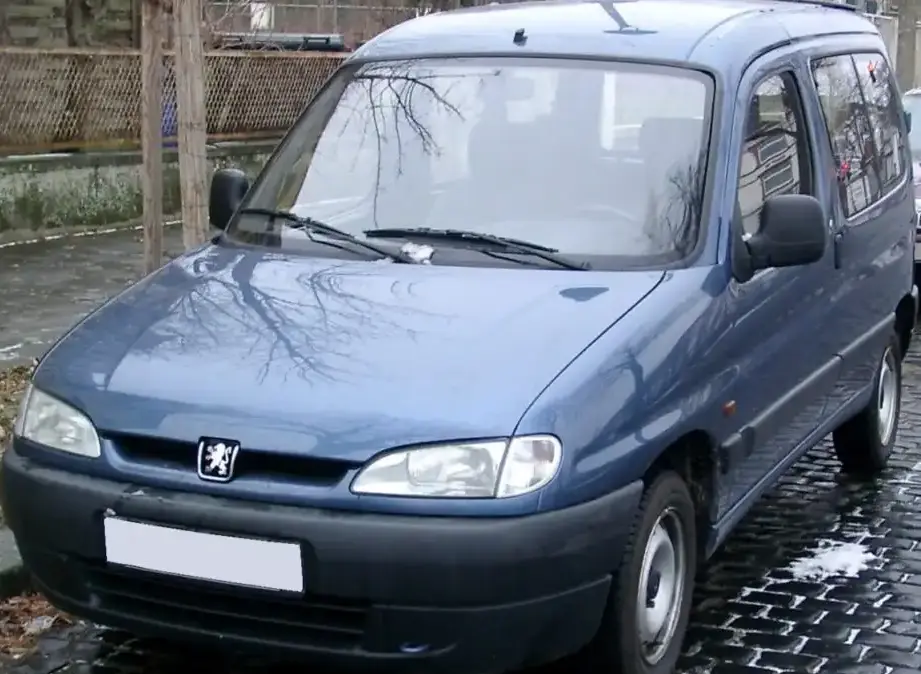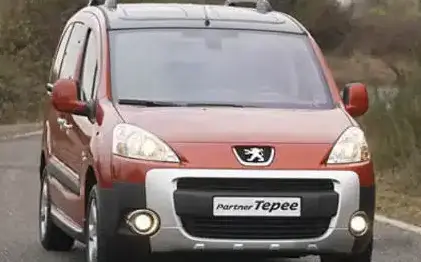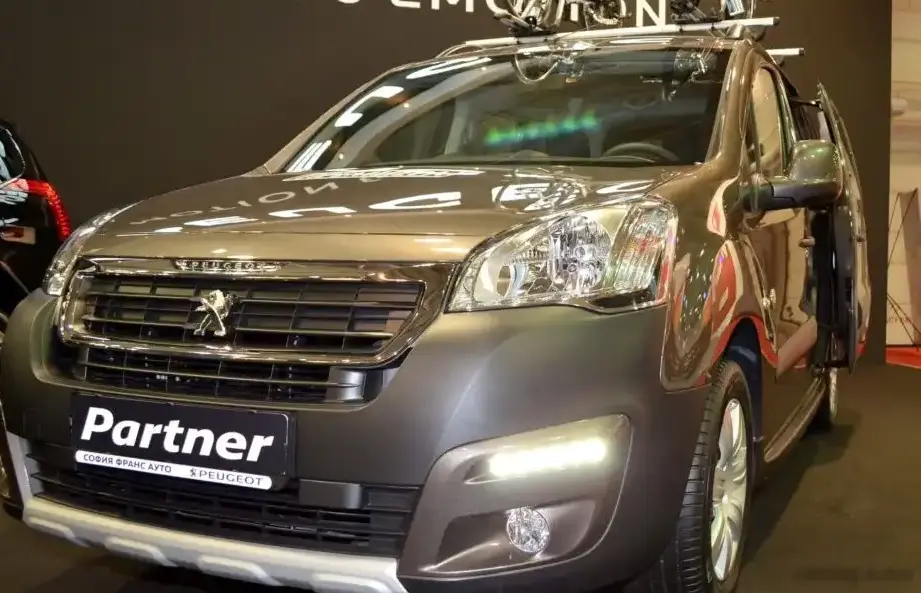
The Peugeot Partner II Tepee Electric, specifically the Phase III model produced from 2017 to 2018, represents Peugeot’s early foray into the electric light commercial vehicle and passenger vehicle segment. Powered by a 22.5 kWh battery pack and a 67 horsepower electric motor, this variant was designed to offer a practical, zero-emission solution for urban deliveries and family transport. It sat within the broader Partner Tepee range as the entry-level electric option, aimed at buyers prioritizing low running costs and environmental considerations over outright performance. This model is based on the Partner II platform (T8), which was also shared with Citroën Berlingo and Opel/Vauxhall Combo.
Technical Specifications
| Brand | Peugeot |
| Model | Partner |
| Generation | Partner II Tepee (Phase III, 2015) |
| Type (Engine) | 22.5 kWh (67 Hp) Electric |
| Start of production | 2017 |
| End of production | 2018 |
| Powertrain Architecture | BEV (Electric Vehicle) |
| Body type | Minivan |
| Seats | 5 |
| Doors | 5 |
| Fuel Type | Electricity |
| Acceleration 0 – 100 km/h | 19.5 sec |
| Acceleration 0 – 62 mph | 19.5 sec |
| Acceleration 0 – 60 mph | 18.5 sec |
| Maximum speed | 110 km/h (68.35 mph) |
| Weight-to-power ratio | 26.8 kg/Hp, 37.3 Hp/tonne |
| Weight-to-torque ratio | 9 kg/Nm, 111.5 Nm/tonne |
| Gross battery capacity | 22.5 kWh |
| Net (usable) battery capacity | 20.5 kWh |
| Battery voltage | 300 V |
| Battery technology | Lithium-ion (Li-Ion) |
| Battery location | Under the rear seats, Under the trunk |
| All-electric range (NEDC) | 170 km (105.63 mi) |
| Average Energy consumption (NEDC) | 17.7 kWh/100 km (28.49 kWh/100 mi, 118 MPGe, 5.6 km/kWh, 3.5 mi/kWh) |
| Electric motor power | 67 Hp @ 4000-9200 rpm |
| Electric motor Torque | 200 Nm @ 0-1500 rpm (147.51 lb.-ft. @ 0-1500 rpm) |
| Electric motor location | Front axle, Transverse |
| System power | 67 Hp @ 4000-9200 rpm |
| System torque | 200 Nm @ 0-1500 rpm (147.51 lb.-ft. @ 0-1500 rpm) |
| Kerb Weight | 1794 kg (3955.09 lbs) |
| Max. weight | 2175 kg (4795.05 lbs) |
| Max load | 381 kg (839.96 lbs) |
| Trunk (boot) space – minimum | 544 l (19.21 cu. ft) |
| Trunk (boot) space – maximum | 3000 l (105.94 cu. ft) |
| Length | 4380 mm (172.44 in) |
| Width | 1810 mm (71.26 in) |
| Width including mirrors | 2112 mm (83.15 in) |
| Height | 1883 mm (74.13 in) |
| Wheelbase | 2728 mm (107.4 in) |
| Front track | 1505 mm (59.25 in) |
| Rear (Back) track | 1554 mm (61.18 in) |
| Front overhang | 925 mm (36.42 in) |
| Rear overhang | 727 mm (28.62 in) |
| Ride height (ground clearance) | 144 mm (5.67 in) |
| Minimum turning circle | 11.5 m (37.73 ft) |
| Drivetrain Architecture | One electric motor drives the front wheels |
| Drive wheel | Front wheel drive |
| Number of gears | 1 |
| Gearbox type | Automatic transmission |
| Front suspension | Independent type McPherson |
| Rear suspension | Torsion |
| Front brakes | Ventilated discs |
| Rear brakes | Disc |
| Assisting systems | ABS (Anti-lock braking system) |
| Steering type | Steering rack and pinion |
| Tires size | 195/70 R15 |
| Wheel rims size | 15 |
INTRODUCTION
The Peugeot Partner II Tepee Electric, launched in 2017 as part of the Phase III refresh of the Partner II generation, marked Peugeot’s initial steps into offering an all-electric version of its popular light commercial and passenger vehicle. Built on the 1HX0/A3 platform, this variant aimed to provide a practical and environmentally friendly alternative to traditional internal combustion engine (ICE) vehicles. The Tepee designation signifies the passenger-oriented version of the Partner, featuring five seats and a more comfortable interior trim compared to the commercial van. Production of this specific 22.5 kWh, 67 hp version was relatively short-lived, ending in 2018, likely due to the rapid advancements in battery technology and the demand for increased range.
Powertrain & Engine Architecture
At the heart of the Partner II Tepee Electric lies a 67 horsepower electric motor, delivering 200 Nm (147.51 lb-ft) of torque. The motor is transversely mounted on the front axle, driving the front wheels. The electric powertrain utilizes a 300V Lithium-ion battery pack with a gross capacity of 22.5 kWh, providing a usable capacity of 20.5 kWh. The battery is strategically located under the rear seats and within the trunk floor, minimizing impact on passenger and cargo space. The vehicle employs a single-speed automatic transmission, typical for electric vehicles, providing seamless acceleration. The motor controller manages power delivery and regenerative braking, enhancing efficiency. Unlike more sophisticated electric vehicles, this model lacks advanced thermal management systems for the battery, which could impact longevity and performance in extreme temperatures.
Driving Characteristics
The 67 hp electric motor and single-speed automatic transmission deliver a driving experience focused on practicality rather than performance. Acceleration is modest, taking approximately 19.5 seconds to reach 62 mph (100 km/h). The instant torque characteristic of electric motors provides adequate responsiveness for urban driving, but overtaking on highways requires careful planning. The single gear ratio prioritizes efficiency over outright speed. Compared to the 1.6L diesel or gasoline versions of the Partner Tepee, the electric variant offers a quieter and smoother ride, but with significantly reduced power output. The regenerative braking system allows for one-pedal driving in certain conditions, further enhancing efficiency and convenience. The vehicle’s weight, at approximately 1794 kg (3955 lbs), contributes to the somewhat sluggish acceleration.
Equipment & Trim Levels
The Partner II Tepee Electric, in its base configuration, typically included features such as air conditioning, power steering, electric front windows, and a basic audio system. Safety equipment included ABS (Anti-lock Braking System) and driver/passenger airbags. Interior upholstery was typically cloth, with a functional and durable design. Optional extras included rear parking sensors, a touchscreen infotainment system, and upgraded interior trim. The trim level was generally positioned as the entry point into the electric Partner Tepee range, focusing on providing essential features at an accessible price point. The interior design prioritized practicality and ease of cleaning, reflecting its intended use as a family vehicle or small business transport.
Chassis & Braking
The Partner II Tepee Electric utilizes a McPherson strut independent suspension system at the front and a torsion beam suspension at the rear. This setup provides a reasonable balance between ride comfort and handling. The front brakes are ventilated discs, while the rear brakes are solid discs. The steering system is a rack and pinion type, offering precise control. The vehicle rides on 15-inch wheels with 195/70 R15 tires. The suspension tuning is geared towards comfort and load-carrying capacity, rather than sporty handling. The relatively modest weight of the battery pack, compared to larger EV batteries, means the suspension doesn’t require significant reinforcement.
Market Reception & Comparison
The Peugeot Partner II Tepee Electric received mixed reviews upon its launch. Critics praised its practicality, low running costs, and zero-emission capability, but noted its limited range and modest performance. Compared to the diesel and gasoline versions of the Partner Tepee, the electric variant offered a significantly higher purchase price but lower fuel costs. The 170 km (105.63 mi) range, based on the NEDC cycle, was considered adequate for urban commuting but insufficient for longer journeys. The electric version was often compared to similar electric vans and MPVs from other manufacturers, such as the Citroën Berlingo Electric and Renault Kangoo Z.E., with the Peugeot often being seen as a competitively priced option.
Legacy
The Peugeot Partner II Tepee Electric, while a relatively short-lived model, played a crucial role in paving the way for Peugeot’s broader adoption of electric vehicle technology. The powertrain, while limited by contemporary battery technology, proved to be reasonably reliable in real-world use. On the used car market, these early electric Partners are becoming increasingly sought after by buyers looking for affordable and environmentally friendly transportation. However, potential buyers should be aware of the limited range and the potential for battery degradation over time. The lessons learned from this early electric vehicle helped inform the development of Peugeot’s subsequent electric models, such as the e-Partner, which offer significantly improved range and performance.