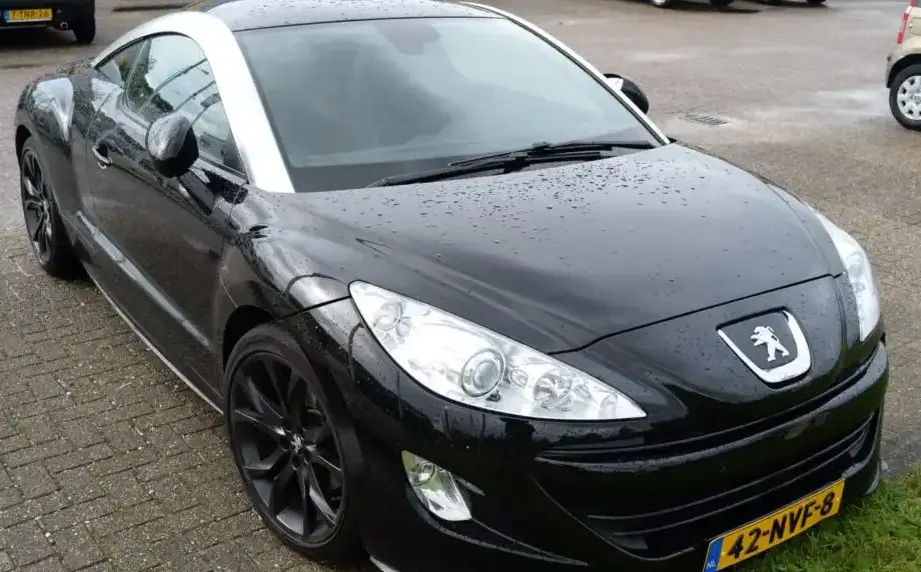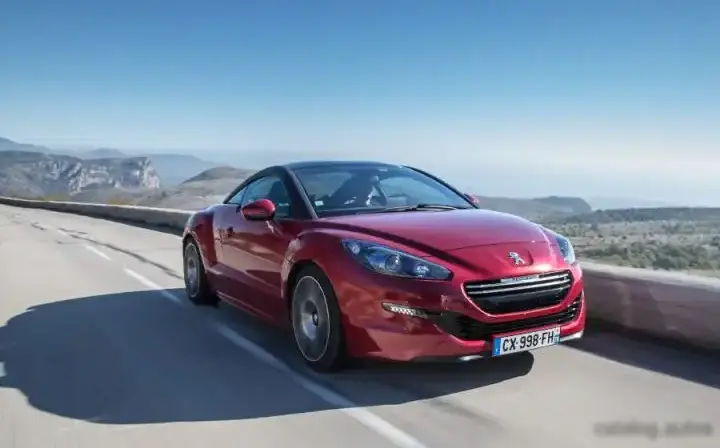
The Peugeot RCZ (facelift, produced from 2013 to December 2015) 1.6 THP 155 horsepower variant represented a compelling offering in the European sports coupe market. Positioned as a mid-range trim level within the RCZ lineup, it bridged the gap between the base 1.6 VTi model and the more potent 1.6 THP 200 horsepower version. The RCZ itself was a distinctive vehicle, notable for its double-bubble roof design and aiming to provide a more driver-focused experience than many contemporary hatchbacks. This facelift brought styling revisions and minor equipment upgrades, solidifying the RCZ’s position as a stylish and relatively affordable coupe.
Technical Specifications
| Brand | Peugeot |
| Model | RCZ |
| Generation | RCZ (facelift 2013) |
| Type (Engine) | 1.6 THP (155 Hp) |
| Start of production | 2013 |
| End of production | December, 2015 |
| Powertrain Architecture | Internal Combustion engine |
| Body type | Coupe |
| Seats | 4 |
| Doors | 2 |
| Fuel consumption (urban) | 8.9 l/100 km (26.4 US mpg) |
| Fuel consumption (extra urban) | 5.1 l/100 km (46.1 US mpg) |
| Fuel consumption (combined) | 6.4 l/100 km (36.8 US mpg) |
| CO2 emissions | 149 g/km |
| Fuel Type | Petrol (Gasoline) |
| Acceleration 0 – 100 km/h | 8 sec |
| Acceleration 0 – 62 mph | 8 sec |
| Acceleration 0 – 60 mph | 7.6 sec |
| Maximum speed | 217 km/h (134.84 mph) |
| Emission standard | Euro 5 |
| Weight-to-power ratio | 8.2 kg/Hp |
| Weight-to-torque ratio | 5.3 kg/Nm |
| Power | 155 Hp @ 6000 rpm |
| Torque | 240 Nm @ 1400 rpm (177.01 lb.-ft. @ 1400 rpm) |
| Engine layout | Front, Transverse |
| Engine Model/Code | 5FV EP6CDT |
| Engine displacement | 1598 cm3 (97.52 cu. in.) |
| Number of cylinders | 4 |
| Engine configuration | Inline |
| Number of valves per cylinder | 4 |
| Fuel injection system | Direct injection |
| Engine aspiration | Turbocharger, Intercooler |
| Engine oil capacity | 4.25 l (4.49 US qt | 3.74 UK qt) |
| Coolant capacity | 6.2 l (6.55 US qt | 5.46 UK qt) |
| Kerb Weight | 1275 kg (2810.89 lbs.) |
| Max. weight | 1740 kg (3836.04 lbs.) |
| Max load | 465 kg (1025.15 lbs.) |
| Trunk (boot) space – minimum | 321 l (11.34 cu. ft.) |
| Fuel tank capacity | 55 l (14.53 US gal | 12.1 UK gal) |
| Length | 4287 mm (168.78 in.) |
| Width | 1958 mm (77.09 in.) |
| Height | 1362 mm (53.62 in.) |
| Wheelbase | 2612 mm (102.83 in.) |
| Front track | 1580 mm (62.2 in.) |
| Rear track | 1593 mm (62.72 in.) |
| Ride height (ground clearance) | 111 mm (4.37 in.) |
| Minimum turning circle | 11.5 m (37.73 ft.) |
| Drivetrain Architecture | Front wheel drive |
| Number of gears | 6 |
| Gearbox type | Manual transmission |
| Front suspension | Independent, McPherson with coil spring and anti-roll bar |
| Rear suspension | Semi-independent, coil spring |
| Front brakes | Ventilated discs |
| Rear brakes | Disc |
| Assisting systems | ABS (Anti-lock braking system) |
| Steering type | Steering rack and pinion |
| Tires size | 235/45 R18 |
| Wheel rims size | 18 |
Powertrain & Engine Architecture
The heart of the RCZ 1.6 THP 155 was the PSA-developed 5FV EP6CDT engine. This 1.6-liter inline-four cylinder engine utilized direct fuel injection and a twin-scroll turbocharger, contributing to its responsive power delivery. The engine code ‘EP6CDT’ signifies its technological lineage within the Prince engine family, a collaboration between PSA Peugeot Citroën and BMW. The direct injection system, coupled with the turbocharger, allowed for a high compression ratio (around 10.5:1) without detonation, maximizing efficiency and power. The engine featured a timing chain, intended for longer service intervals compared to timing belts. The six-speed manual transmission was the standard offering for this variant, providing a direct connection between the engine and the front wheels. The gearbox was chosen for its relatively short ratios, aiding acceleration, but also contributing to slightly higher engine speeds at highway cruising.
Driving Characteristics
The RCZ 1.6 THP 155 offered a noticeably more engaging driving experience than many front-wheel-drive coupes. While not as overtly powerful as the 200 horsepower version, the 155 hp engine provided ample power for spirited driving on winding roads. The turbocharger provided a noticeable boost in torque from around 1400 rpm, making it flexible in everyday driving situations. The 0-60 mph time of around 7.6 seconds was respectable for its class. The manual transmission allowed for precise gear changes, and the chassis, while not overly stiff, provided a good balance between comfort and handling. Compared to the 200 hp version, the 155 hp model felt less stressed at higher speeds and offered slightly better fuel economy. The shorter gearing meant the engine needed to work harder on the highway, potentially leading to a slightly noisier cabin.
Equipment & Trim Levels
The RCZ 1.6 THP 155 typically came equipped with features such as air conditioning, alloy wheels (usually 18-inch), a leather-wrapped steering wheel, and a basic audio system. Higher trim levels, often denoted by specific packages, added features like automatic climate control, parking sensors, a more advanced infotainment system with navigation, and sport seats. Interior upholstery was typically a combination of cloth and leather. Optional extras included a panoramic glass roof, xenon headlights, and a premium sound system. The RCZ’s interior design was driver-focused, with a relatively minimalist dashboard layout and well-placed controls.
Chassis & Braking
The RCZ utilized a McPherson strut front suspension and a semi-independent coil spring rear suspension. This setup provided a good compromise between ride comfort and handling precision. The front suspension incorporated an anti-roll bar to reduce body roll during cornering. Braking duties were handled by ventilated discs at the front and solid discs at the rear, equipped with ABS (Anti-lock Braking System). The braking system was generally considered adequate for the car’s performance, providing good stopping power and pedal feel. The RCZ’s weight distribution was reasonably balanced, contributing to its neutral handling characteristics.
Market Reception & Comparison
The Peugeot RCZ 1.6 THP 155 was generally well-received by automotive critics. It was praised for its stylish design, engaging driving dynamics, and relatively affordable price point. However, some critics noted the limited rear passenger space and the somewhat compromised visibility due to the sloping roofline. Compared to rivals like the Volkswagen Scirocco and the Audi TT, the RCZ offered a more distinctive design and a more driver-focused experience at a lower price. The 155 hp version offered a good balance between performance and fuel economy, making it a practical choice for everyday use. The 200 hp version was favored by those seeking more outright performance, while the base 1.6 VTi model was aimed at buyers prioritizing fuel efficiency.
Legacy
The Peugeot RCZ, including the 1.6 THP 155 variant, has developed a loyal following among enthusiasts. The EP6CDT engine, while generally reliable, is known to require regular oil changes and careful maintenance to prevent issues with the carbon buildup on the intake valves, a common issue with direct-injection engines. The RCZ’s distinctive styling has ensured its continued appeal in the used car market. Today, well-maintained examples of the RCZ 1.6 THP 155 can be found at reasonable prices, offering a stylish and engaging driving experience for those seeking a unique coupe.