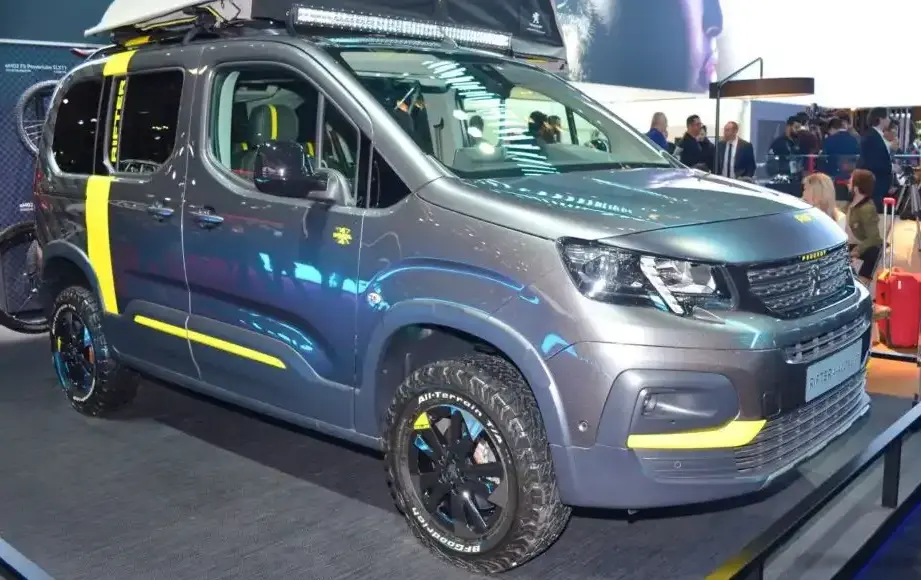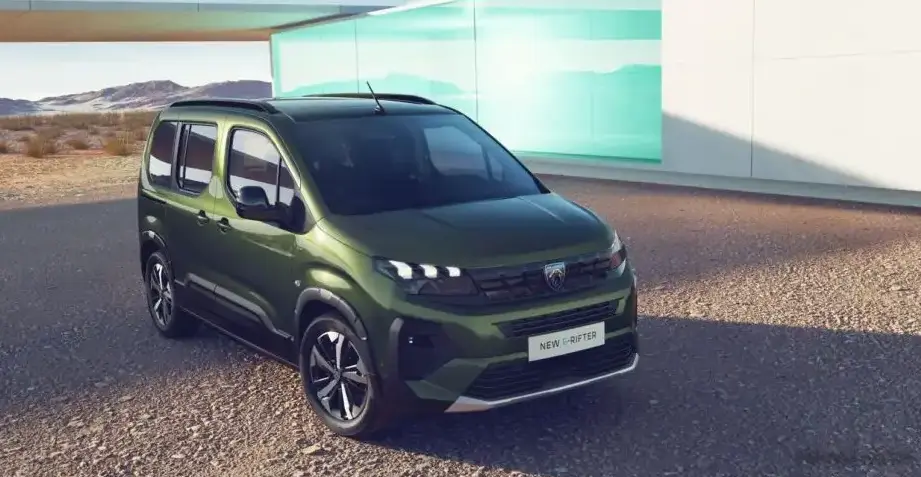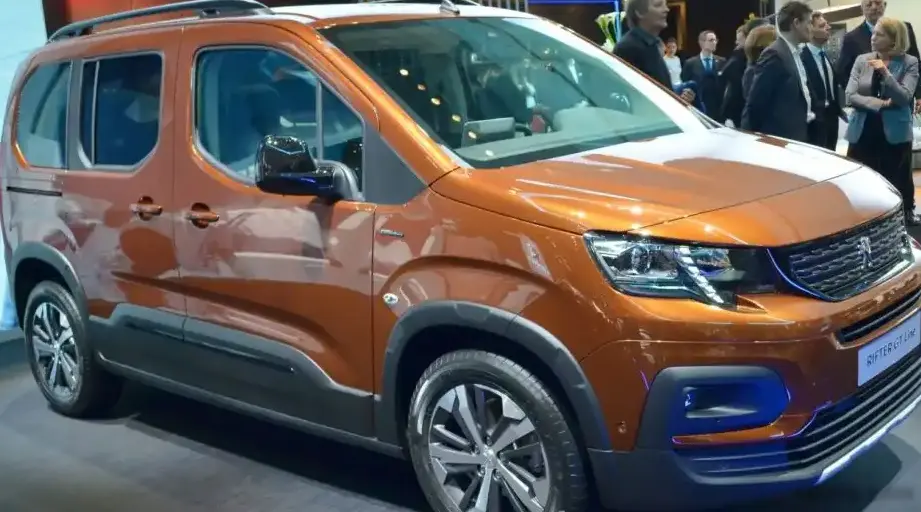
The Peugeot Rifter L1 1.2 PureTech (110 hp) is a five-seat minivan produced by the French manufacturer Peugeot between May 2019 and March 2024. Positioned as a mid-range offering within the Rifter L1 lineup, it catered to families and individuals seeking a practical and versatile vehicle. The Rifter L1, representing the short wheelbase version of the Rifter, is part of the broader first generation (introduced in 2018) and shares its platform with the Citroën Berlingo and Opel Combo Life, all stemming from the EMP2 modular platform developed by the PSA Group (now Stellantis). This variant aimed to balance fuel efficiency with adequate performance for everyday driving needs.
Technical Specifications
| Brand | Peugeot |
| Model | Rifter |
| Generation | Rifter L1 |
| Type (Engine) | 1.2 PureTech (110 Hp) |
| Start of production | May, 2019 |
| End of production | March, 2024 |
| Powertrain Architecture | Internal Combustion engine |
| Body type | Minivan |
| Seats | 5 |
| Doors | 5 |
| Fuel consumption at Low speed (WLTP) | 7.2-7.8 l/100 km (32.7 – 30.2 US mpg, 39.2 – 36.2 UK mpg, 13.9 – 12.8 km/l) |
| Fuel consumption at Medium speed (WLTP) | 5.8-6.9 l/100 km (40.6 – 34.1 US mpg, 48.7 – 40.9 UK mpg, 17.2 – 14.5 km/l) |
| Fuel consumption at high speed (WLTP) | 5.3-6.4 l/100 km (44.4 – 36.8 US mpg, 53.3 – 44.1 UK mpg, 18.9 – 15.6 km/l) |
| Fuel consumption at very high speed (WLTP) | 6.7-8.3 l/100 km (35.1 – 28.3 US mpg, 42.2 – 34 UK mpg, 14.9 – 12 km/l) |
| Combined fuel consumption (WLTP) | 6.2-7.4 l/100 km (37.9 – 31.8 US mpg, 45.6 – 38.2 UK mpg, 16.1 – 13.5 km/l) |
| CO2 emissions (WLTP) | 149-167 g/km |
| Fuel Type | Petrol (Gasoline) |
| Acceleration 0 – 100 km/h | 11.7 sec |
| Acceleration 0 – 62 mph | 11.7 sec |
| Acceleration 0 – 60 mph | 11.1 sec |
| Maximum speed | 174 km/h (108.12 mph) |
| Emission standard | Euro 6d-ISC |
| Weight-to-power ratio | 12.7 kg/Hp, 78.7 Hp/tonne |
| Weight-to-torque ratio | 6.8 kg/Nm, 146.6 Nm/tonne |
| Power | 110 Hp @ 5500 rpm |
| Power per litre | 91.7 Hp/l |
| Torque | 205 Nm @ 1750 rpm (151.2 lb.-ft. @ 1750 rpm) |
| Engine layout | Front, Transverse |
| Engine Model/Code | HNP EB2ADT |
| Engine displacement | 1199 cm3 (73.17 cu. in.) |
| Number of cylinders | 3 |
| Engine configuration | Inline |
| Number of valves per cylinder | 4 |
| Fuel injection system | Direct injection |
| Engine aspiration | Turbocharger, Intercooler |
| Engine oil capacity | 3.5 l (3.7 US qt | 3.08 UK qt) |
| Kerb Weight | 1398 kg (3082.06 lbs.) |
| Max. weight | 2060 kg (4541.52 lbs.) |
| Max load | 662 kg (1459.46 lbs.) |
| Trunk (boot) space – minimum | 775 l (27.37 cu. ft.) |
| Trunk (boot) space – maximum | 3000 l (105.94 cu. ft.) |
| Fuel tank capacity | 60 l (15.85 US gal | 13.2 UK gal) |
| Permitted trailer load with brakes (12%) | 1150 kg (2535.32 lbs.) |
| Permitted towbar download | 74 kg (163.14 lbs.) |
| Length | 4403 mm (173.35 in.) |
| Width | 1848 mm (72.76 in.) |
| Width with mirrors folded | 1921 mm (75.63 in.) |
| Width including mirrors | 2107 mm (82.95 in.) |
| Height | 1874-1878 mm (73.78 – 73.94 in.) |
| Wheelbase | 2785 mm (109.65 in.) |
| Front track | 1553 mm (61.14 in.) |
| Rear (Back) track | 1567 mm (61.69 in.) |
| Front overhang | 892 mm (35.12 in.) |
| Rear overhang | 726 mm (28.58 in.) |
| Ride height (ground clearance) | 216 mm (8.5 in.) |
| Approach angle | 17.5° |
| Departure angle | 25.7° |
| Drivetrain Architecture | The Internal combustion engine (ICE) drives the front wheels of the vehicle. |
| Drive wheel | Front wheel drive |
| Number of gears and type of gearbox | 6 gears, manual transmission |
| Front suspension | Independent type McPherson |
| Rear suspension | Wishbone |
| Front brakes | Disc |
| Rear brakes | Disc |
| Assisting systems | ABS (Anti-lock braking system) |
| Steering type | Steering rack and pinion |
| Tires size | 215/65 R16 95U; 215/60 R17 95U |
| Wheel rims size | 6.5J x 16 ET47; 7.0J x 17 ET44 |
Powertrain & Engine Architecture
The Rifter L1 1.2 PureTech (110 hp) is powered by the PSA EB2ADT engine, a 1.2-liter turbocharged three-cylinder petrol engine. This engine is part of the PureTech family, known for its direct injection and use of a single-scroll turbocharger. The engine code ‘HNP’ denotes specific calibration for the Rifter model. The engine utilizes a multi-point fuel injection system and features four valves per cylinder. The turbocharger and intercooler work together to improve efficiency and power output. The engine is transversely mounted at the front of the vehicle. The 110 hp version of this engine produces 205 Nm (151.2 lb-ft) of torque at 1750 rpm. The engine is paired with a six-speed manual transmission, delivering power to the front wheels. While an eight-speed automatic transmission was available on some Rifter models, it was not typically offered with this specific 110 hp engine configuration.
Driving Characteristics
The 1.2 PureTech 110 hp engine in the Rifter L1 provides adequate performance for everyday driving. Acceleration from 0-100 km/h (0-62 mph) takes approximately 11.7 seconds. The engine feels responsive at lower speeds, thanks to the turbocharger, but can feel strained when fully loaded or during overtaking maneuvers. The six-speed manual transmission allows for reasonable control over the engine’s power band. The gear ratios are tuned for fuel efficiency rather than outright performance. Compared to the more powerful 130 hp version of the same engine, the 110 hp variant offers slightly less punch but delivers better fuel economy. The Rifter L1’s weight of around 1398 kg (3082 lbs) does impact acceleration, making it feel less nimble than smaller vehicles.
Equipment & Trim Levels
The Rifter L1 1.2 PureTech (110 hp) typically came equipped with features such as air conditioning, a touchscreen infotainment system with Bluetooth connectivity, and electric windows. Safety features included ABS, ESP (Electronic Stability Program), and multiple airbags. Higher trim levels offered additional features like rear parking sensors, a reversing camera, and a panoramic sunroof. Interior upholstery was typically cloth, with options for upgraded materials on higher trims. The dashboard layout is functional and straightforward, prioritizing practicality over luxury. Optional extras included navigation systems, a head-up display, and advanced driver-assistance systems (ADAS).
Chassis & Braking
The Rifter L1 utilizes a McPherson strut front suspension and a twist-beam rear suspension. This setup provides a comfortable ride quality, suitable for carrying passengers and cargo. The front brakes are ventilated discs, while the rear brakes are also discs. The steering is a rack and pinion system, providing reasonable precision. The Rifter L1’s suspension is tuned for comfort rather than sporty handling. Stabilizer bars are fitted to both the front and rear axles to reduce body roll. The vehicle’s ride height of 216 mm (8.5 in) provides good ground clearance for navigating uneven surfaces.
Market Reception & Comparison
The Peugeot Rifter L1 1.2 PureTech (110 hp) was generally well-received by critics as a practical and versatile family vehicle. It was praised for its spacious interior, comfortable ride, and fuel efficiency. However, some reviewers noted that the engine could feel underpowered when fully loaded. Compared to the diesel-powered Rifter variants (like the 1.5 BlueHDi), the 1.2 PureTech offered lower running costs in areas with higher diesel fuel prices, but potentially lower fuel economy during long highway journeys. The 110 hp version positioned itself as a sweet spot for buyers prioritizing affordability and fuel efficiency over outright performance.
Legacy
The Peugeot Rifter L1 1.2 PureTech (110 hp) has proven to be a relatively reliable vehicle in the used car market. The 1.2 PureTech engine, while initially subject to some reports of timing chain issues in earlier iterations, has seen improvements in later models. Regular maintenance, including oil changes and timing chain inspections, is crucial for ensuring long-term reliability. The Rifter L1’s spacious interior and practical features continue to make it a popular choice for families seeking a versatile and affordable vehicle. Its blend of practicality, fuel efficiency, and reasonable running costs ensures its continued presence on the used car market.