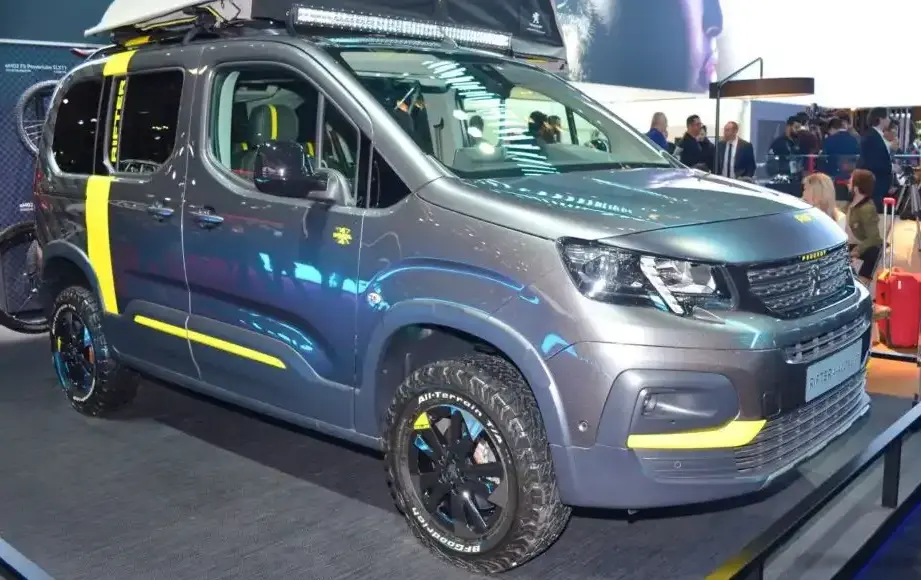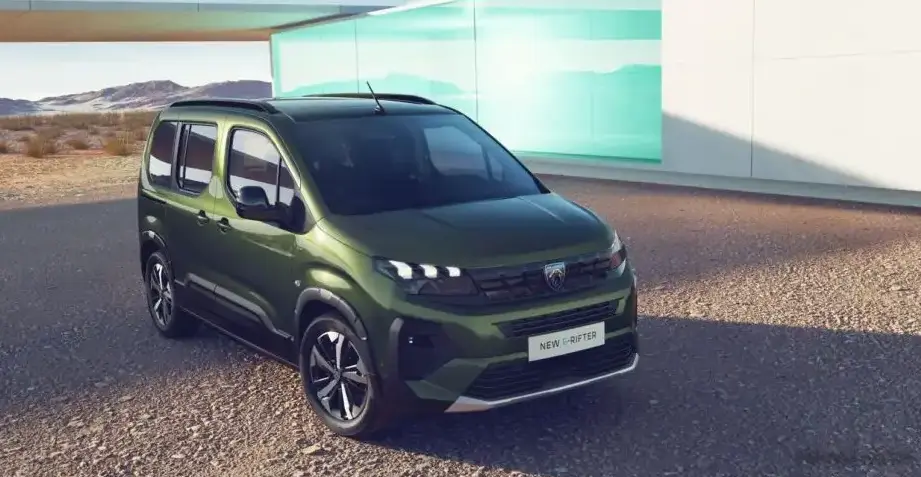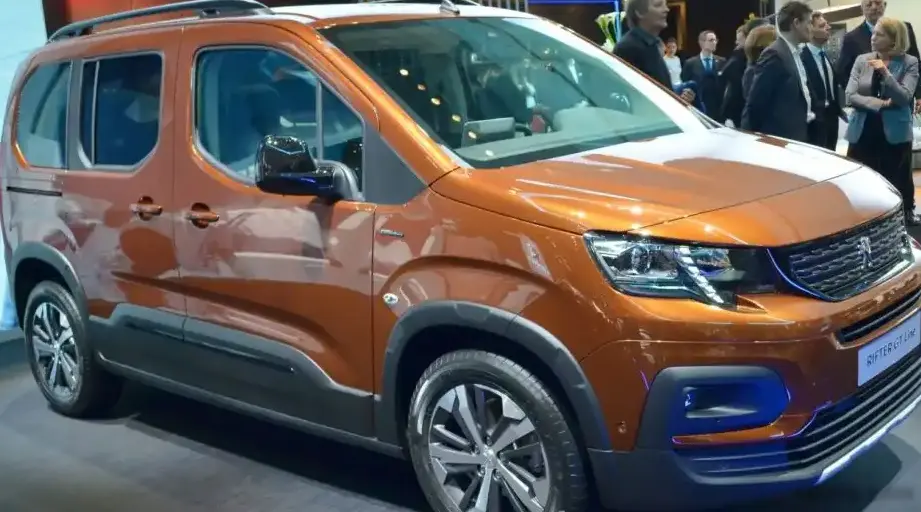
The Peugeot Rifter L1 1.2 PureTech (110 hp) S&S was a popular configuration of Peugeot’s entry into the leisure activity vehicle (LAV) segment, produced from September 2018 through May 2019. Positioned as a practical and versatile option within the Rifter L1 range, this variant aimed to balance affordability with reasonable performance and fuel efficiency. The Rifter L1, representing the shorter wheelbase version, was designed to appeal to families and individuals seeking a spacious and adaptable vehicle for both everyday transport and recreational pursuits. It shared its platform and many components with the Citroën Berlingo and Opel Combo Life, forming part of a collaborative effort between the PSA Group (now Stellantis) brands.
Technical Specifications
| Brand | Peugeot |
| Model | Rifter |
| Generation | Rifter L1 |
| Type (Engine) | 1.2 PureTech (110 Hp) S&S |
| Start of production | September, 2018 |
| End of production | May, 2019 |
| Powertrain Architecture | Internal Combustion engine |
| Body type | Minivan |
| Seats | 5 |
| Doors | 5 |
| Fuel consumption (urban) | 6.3 l/100 km (37.3 US mpg, 44.8 UK mpg, 15.9 km/l) |
| Fuel consumption (extra urban) | 5 l/100 km (47 US mpg, 56.5 UK mpg, 20 km/l) |
| Fuel consumption (combined) | 5.5 l/100 km (42.8 US mpg, 51.4 UK mpg, 18.2 km/l) |
| CO2 emissions | 126 g/km |
| Fuel Type | Petrol (Gasoline) |
| Maximum speed | 175 km/h (108.74 mph) |
| Emission standard | Euro 6d |
| Weight-to-power ratio | 12.6 kg/Hp, 79.3 Hp/tonne |
| Weight-to-torque ratio | 6.8 kg/Nm, 147.8 Nm/tonne |
| Power | 110 Hp @ 5500 rpm |
| Power per litre | 91.7 Hp/l |
| Torque | 205 Nm @ 1750 rpm (151.2 lb.-ft. @ 1750 rpm) |
| Engine layout | Front, Transverse |
| Engine Model/Code | HNP EB2ADT |
| Engine displacement | 1199 cm3 (73.17 cu. in.) |
| Number of cylinders | 3 |
| Engine configuration | Inline |
| Number of valves per cylinder | 4 |
| Fuel injection system | Direct injection |
| Engine aspiration | Turbocharger, Intercooler |
| Engine oil capacity | 3.5 l (3.7 US qt | 3.08 UK qt) |
| Kerb Weight | 1387 kg (3057.81 lbs.) |
| Max. weight | 2060 kg (4541.52 lbs.) |
| Max load | 673 kg (1483.71 lbs.) |
| Trunk (boot) space – minimum | 775 l (27.37 cu. ft.) |
| Trunk (boot) space – maximum | 3000 l (105.94 cu. ft.) |
| Fuel tank capacity | 60 l (15.85 US gal | 13.2 UK gal) |
| Permitted trailer load with brakes (12%) | 1150 kg (2535.32 lbs.) |
| Permitted towbar download | 74 kg (163.14 lbs.) |
| Length | 4403 mm (173.35 in.) |
| Width | 1848 mm (72.76 in.) |
| Width with mirrors folded | 1921 mm (75.63 in.) |
| Width including mirrors | 2107 mm (82.95 in.) |
| Height | 1878 mm (73.94 in.) |
| Wheelbase | 2785 mm (109.65 in.) |
| Front track | 1553 mm (61.14 in.) |
| Rear (Back) track | 1567 mm (61.69 in.) |
| Front overhang | 892 mm (35.12 in.) |
| Rear overhang | 726 mm (28.58 in.) |
| Drivetrain Architecture | The Internal combustion engine (ICE) drives the front wheels of the vehicle. |
| Drive wheel | Front wheel drive |
| Number of gears and type of gearbox | 6 gears, manual transmission |
| Front suspension | Independent type McPherson |
| Rear suspension | Wishbone |
| Front brakes | Ventilated discs |
| Rear brakes | Ventilated discs |
| Assisting systems | ABS (Anti-lock braking system) |
| Tires size | 215/65 R16 |
| Wheel rims size | 16 |
Powertrain & Engine Architecture
The heart of the Rifter L1 1.2 PureTech (110 hp) S&S is the PSA Group’s EB2ADT engine, a 1.2-liter turbocharged three-cylinder petrol engine. This engine is part of the “PureTech” family, known for its direct fuel injection and use of a single-scroll turbocharger. The engine utilizes a timing chain for durability and features four valves per cylinder. The ‘S&S’ designation indicates the inclusion of a Start & Stop system, designed to improve fuel economy by automatically shutting off the engine when the vehicle is stationary. The engine produces 110 horsepower at 5500 rpm and 205 Nm (151.2 lb-ft) of torque at 1750 rpm. This torque figure, available relatively low in the rev range, contributes to the vehicle’s usability in everyday driving conditions. The engine is transversely mounted at the front of the vehicle, driving the front wheels. The transmission is a six-speed manual gearbox, chosen for its efficiency and driver engagement, although an eight-speed automatic was available as an option on some Rifter trims.
Driving Characteristics
The 1.2 PureTech 110 hp engine, paired with the six-speed manual transmission, provides adequate performance for the Rifter L1. While not particularly sporty, it offers sufficient power for typical urban and highway driving. Acceleration is reasonable, but fully loaded with passengers and luggage, the engine can feel strained, especially when overtaking. The six-speed gearbox is well-matched to the engine’s characteristics, allowing for comfortable cruising at highway speeds. The gear ratios are spaced to maximize fuel efficiency while still providing enough power for most situations. Compared to the more powerful 130 hp version of the 1.2 PureTech, the 110 hp variant offers slightly less punch but delivers better fuel economy. It also differs significantly from the diesel-powered Rifter models, which offer superior torque and fuel efficiency but at the cost of increased complexity and potential maintenance costs.
Equipment & Trim Levels
The Rifter L1 1.2 PureTech (110 hp) S&S typically came equipped with a respectable level of standard features. These included air conditioning, a touchscreen infotainment system with Bluetooth connectivity, USB ports, and electric front windows. Safety features such as ABS, ESP (Electronic Stability Program), and multiple airbags were also standard. Higher trim levels offered additional features such as rear parking sensors, a reversing camera, navigation system, and upgraded interior upholstery. The interior design was functional and durable, with a focus on practicality. The dashboard layout was straightforward, with easy-to-use controls. Optional extras included panoramic sunroof, different wheel designs, and various interior customization options.
Chassis & Braking
The Rifter L1 utilizes a McPherson strut front suspension and a twist-beam rear suspension. This setup provides a comfortable ride quality, absorbing bumps and imperfections in the road surface effectively. The steering is light and precise, making it easy to maneuver in urban environments. The braking system consists of ventilated discs on all four wheels, providing adequate stopping power. ABS (Anti-lock Braking System) is standard, enhancing safety during emergency braking situations. The Rifter L1’s chassis is designed to handle the vehicle’s weight and provide a stable driving experience, even when fully loaded.
Market Reception & Comparison
The Peugeot Rifter L1 1.2 PureTech (110 hp) S&S was generally well-received by automotive critics. It was praised for its spacious interior, versatility, and fuel efficiency. However, some reviewers noted that the engine could feel underpowered when the vehicle was fully loaded. Compared to its siblings, the Citroën Berlingo and Opel Combo Life, the Rifter offered a slightly more stylish exterior design and a more refined interior. In terms of fuel economy, the 1.2 PureTech 110 hp variant performed competitively against other petrol-powered vehicles in its class, but it was outperformed by the diesel-powered models. Reliability reports suggest that the PureTech engine has had some issues with timing chain wear, although these problems appear to be more prevalent in earlier versions of the engine.
Legacy
The Peugeot Rifter L1 1.2 PureTech (110 hp) S&S remains a popular choice in the used car market, particularly for families and individuals seeking a practical and affordable vehicle. While the PureTech engine has been subject to some scrutiny regarding long-term reliability, regular maintenance and adherence to recommended service intervals can help mitigate potential issues. The Rifter’s spacious interior, versatile seating configuration, and reasonable running costs continue to make it an attractive option for those seeking a multi-purpose vehicle.