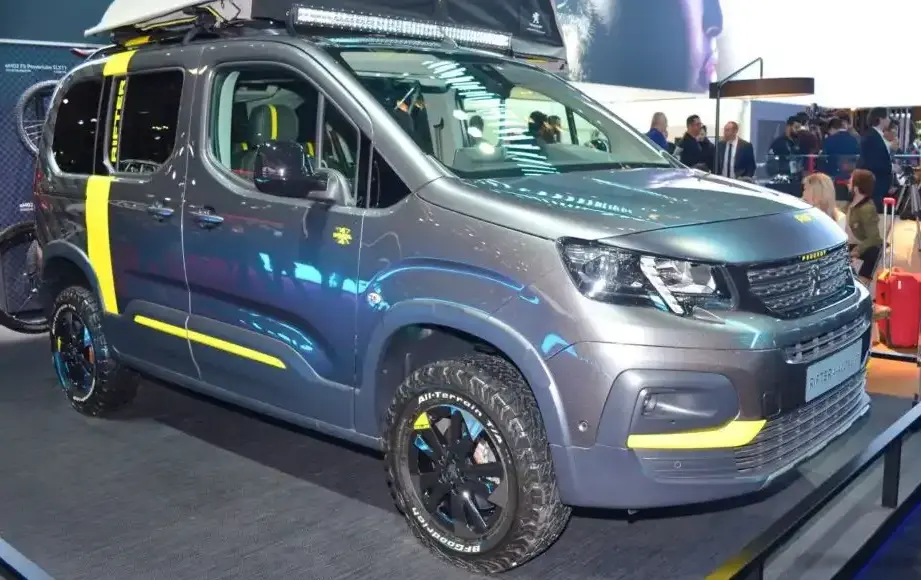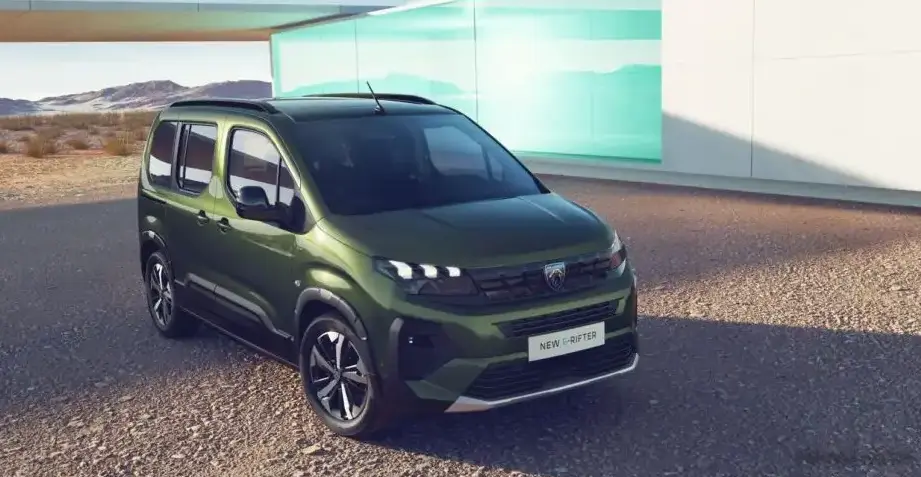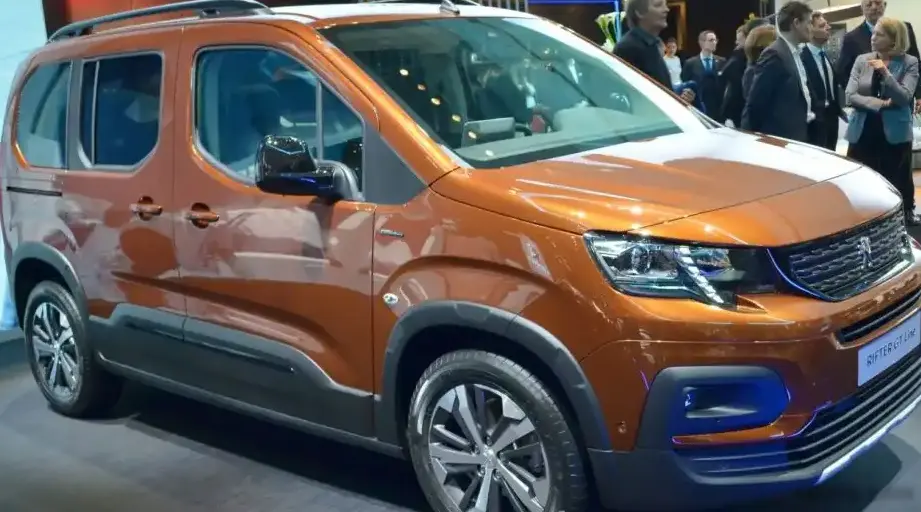
The Peugeot Rifter L1 1.5 BlueHDi (102 hp) is a compact recreational vehicle (RV) produced by the French manufacturer Peugeot between September 2018 and March 2020. Part of the first generation of the Rifter line (introduced as a replacement for the Peugeot Partner), the L1 designation indicates the short wheelbase version. This particular variant, powered by the 1.5-liter BlueHDi diesel engine producing 102 horsepower, served as a key entry point into the Rifter range, targeting families and individuals seeking a practical and fuel-efficient vehicle for both daily commuting and leisure activities. It competed directly with other small vans and MPVs like the Citroën Berlingo, Renault Kangoo, and Volkswagen Caddy.
Technical Specifications
| Brand | Peugeot |
| Model | Rifter |
| Generation | Rifter L1 |
| Type (Engine) | 1.5 BlueHDi (102 Hp) |
| Start of production | September, 2018 |
| End of production | March, 2020 |
| Powertrain Architecture | Internal Combustion engine |
| Body type | Minivan |
| Seats | 5 |
| Doors | 5 |
| Fuel consumption (urban) | 4.8 l/100 km (49 US mpg, 58.9 UK mpg, 20.8 km/l) |
| Fuel consumption (extra urban) | 4 l/100 km (58.8 US mpg, 70.6 UK mpg, 25 km/l) |
| Fuel consumption (combined) | 4.3 l/100 km (54.7 US mpg, 65.7 UK mpg, 23.3 km/l) |
| CO2 emissions | 113 g/km |
| Fuel Type | Diesel |
| Maximum speed | 175 km/h (108.74 mph) |
| Emission standard | Euro 6d |
| Weight-to-power ratio | 14 kg/Hp, 71.6 Hp/tonne |
| Weight-to-torque ratio | 5.6 kg/Nm, 178.4 Nm/tonne |
| Power | 102 Hp @ 3500 rpm |
| Power per litre | 68 Hp/l |
| Torque | 254 Nm @ 1750 rpm (187.34 lb.-ft. @ 1750 rpm) |
| Engine layout | Front, Transverse |
| Engine Model/Code | YHY DV5RD |
| Engine displacement | 1499 cm3 (91.47 cu. in.) |
| Number of cylinders | 4 |
| Engine configuration | Inline |
| Number of valves per cylinder | 4 |
| Fuel injection system | Diesel Commonrail |
| Engine aspiration | Turbocharger, Intercooler |
| Engine oil capacity | 4 l (4.23 US qt | 3.52 UK qt) |
| Kerb Weight | 1424 kg (3139.38 lbs.) |
| Max. weight | 2100 kg (4629.71 lbs.) |
| Max load | 676 kg (1490.32 lbs.) |
| Trunk (boot) space – minimum | 775 l (27.37 cu. ft.) |
| Trunk (boot) space – maximum | 3000 l (105.94 cu. ft.) |
| Fuel tank capacity | 51 l (13.47 US gal | 11.22 UK gal) |
| Permitted trailer load with brakes (12%) | 1300 kg (2866.01 lbs.) |
| Permitted towbar download | 74 kg (163.14 lbs.) |
| Length | 4403 mm (173.35 in.) |
| Width | 1848 mm (72.76 in.) |
| Width with mirrors folded | 1921 mm (75.63 in.) |
| Width including mirrors | 2107 mm (82.95 in.) |
| Height | 1878 mm (73.94 in.) |
| Wheelbase | 2785 mm (109.65 in.) |
| Front track | 1553 mm (61.14 in.) |
| Rear (Back) track | 1567 mm (61.69 in.) |
| Front overhang | 892 mm (35.12 in.) |
| Rear overhang | 726 mm (28.58 in.) |
| Drivetrain Architecture | The Internal combustion engine (ICE) drives the front wheels of the vehicle. |
| Drive wheel | Front wheel drive |
| Number of gears and type of gearbox | 5 gears, manual transmission |
| Front suspension | Independent type McPherson |
| Rear suspension | Wishbone |
| Front brakes | Ventilated discs |
| Rear brakes | Ventilated discs |
| Assisting systems | ABS (Anti-lock braking system) |
| Tires size | 215/65 R16 |
| Wheel rims size | 16 |
INTRODUCTION
The Peugeot Rifter L1 1.5 BlueHDi (102 hp) represents Peugeot’s entry into the increasingly popular leisure activity vehicle (LAV) segment. Introduced in 2018, the Rifter, along with its Citroën Berlingo and Opel/Vauxhall Combo Life siblings (all built on the PSA Group’s EMP2 platform), aimed to provide a more stylish and versatile alternative to traditional vans. The “L1” designation signifies the shorter of the two available body lengths, making it more manageable for urban driving while still offering a generous amount of interior space. This 102 hp diesel variant was positioned as the fuel-economy champion of the range, appealing to buyers prioritizing practicality and running costs over outright performance.
Powertrain & Engine Architecture
At the heart of the Rifter L1 1.5 BlueHDi (102 hp) lies the PSA Group’s DV5RD engine, a 1.5-liter inline-four cylinder diesel engine. This engine, identified by the code YHY, is a member of the BlueHDi family, incorporating advanced technologies to reduce emissions and improve fuel efficiency. It features a turbocharger with an intercooler, boosting power output while maintaining a relatively small displacement. The engine utilizes a common-rail direct fuel injection system, delivering fuel directly into the combustion chamber at high pressure for optimized combustion. The engine also incorporates a diesel particulate filter (DPF) to trap soot particles, complying with stringent Euro 6d emission standards. The 102 hp version of this engine is tuned for efficiency, prioritizing torque delivery over peak horsepower. It’s paired with a five-speed manual transmission, which was the standard offering for this trim level. The transmission is a conventional setup, designed for durability and ease of use.
Driving Characteristics
The Rifter L1 1.5 BlueHDi (102 hp) offers a comfortable and practical driving experience, though it’s not designed for sporty performance. With 102 horsepower and 254 Nm (187 lb-ft) of torque, acceleration is adequate for everyday driving, but it can feel strained when fully loaded or tackling steep inclines. The five-speed manual transmission is well-matched to the engine’s characteristics, providing sufficient gear ratios for both urban and highway driving. The gear ratios are optimized for fuel efficiency, resulting in a relatively low engine speed at cruising speeds. Compared to the more powerful BlueHDi 130 hp variant, the 102 hp version feels noticeably slower, particularly during overtaking maneuvers. However, the lower-powered engine offers better fuel economy and a more relaxed driving experience. The Rifter’s suspension is tuned for comfort, absorbing bumps and imperfections in the road surface effectively.
Equipment & Trim Levels
The Rifter L1 1.5 BlueHDi (102 hp) typically came equipped with a reasonable level of standard equipment. This included features such as air conditioning, electric front windows, a touchscreen infotainment system with Bluetooth connectivity, and a range of safety features including ABS, ESP (Electronic Stability Program), and multiple airbags. Interior upholstery was typically cloth, with a durable and practical finish. Higher trim levels offered upgrades such as alloy wheels, rear parking sensors, a panoramic sunroof, and more advanced infotainment systems. Optional extras included navigation, a reversing camera, and various driver-assistance systems. The dashboard layout was functional and user-friendly, with clearly labeled controls and a logical arrangement of instruments.
Chassis & Braking
The Rifter L1 utilizes a McPherson strut front suspension and a trailing arm rear suspension. This setup provides a good balance between ride comfort and handling. The front brakes are ventilated discs, offering good stopping power, while the rear brakes are also ventilated discs. The steering is electrically assisted, providing a light and responsive feel. The Rifter’s chassis is designed to accommodate a variety of loads, making it suitable for both passenger and cargo transport. The vehicle’s weight distribution is well-balanced, contributing to its stability and handling characteristics.
Market Reception & Comparison
The Peugeot Rifter L1 1.5 BlueHDi (102 hp) was generally well-received by automotive critics, who praised its practicality, fuel efficiency, and comfortable ride. However, some reviewers noted that the engine could feel underpowered when fully loaded. Compared to the more powerful BlueHDi 130 hp variant, the 102 hp version offered significantly better fuel economy, making it a popular choice for buyers prioritizing running costs. It also proved to be a more affordable option, appealing to budget-conscious buyers. In terms of reliability, the BlueHDi engine has generally proven to be robust, although owners should be aware of the potential for DPF issues, particularly if the vehicle is primarily used for short journeys.
Legacy
The Peugeot Rifter L1 1.5 BlueHDi (102 hp) remains a popular choice in the used car market, offering a compelling combination of practicality, fuel efficiency, and affordability. The 1.5 BlueHDi engine has proven to be relatively reliable, although regular maintenance is essential to ensure its longevity. The Rifter’s spacious interior and versatile configuration make it a suitable vehicle for families, adventurers, and anyone needing a practical and adaptable vehicle. While newer models offer more advanced technology and features, the first-generation Rifter continues to represent a solid and dependable option in the compact RV segment.