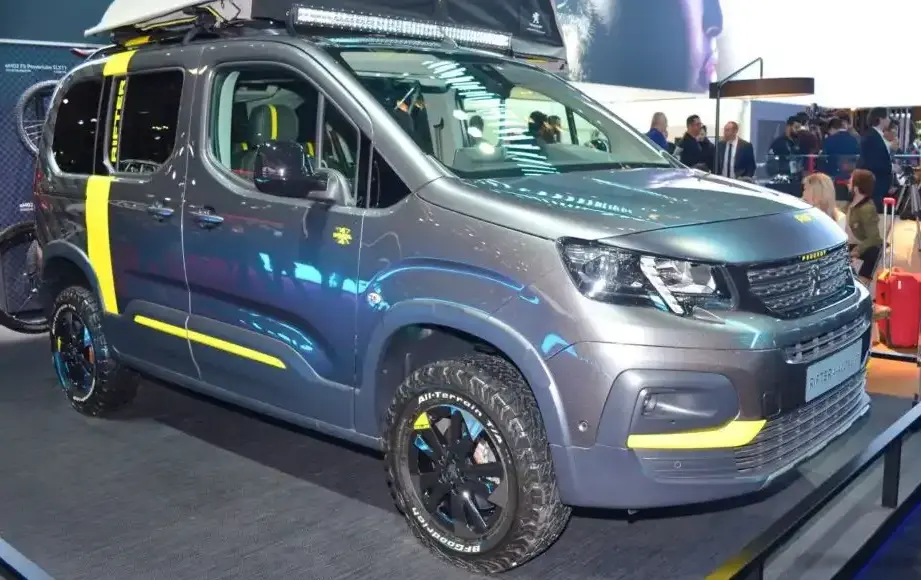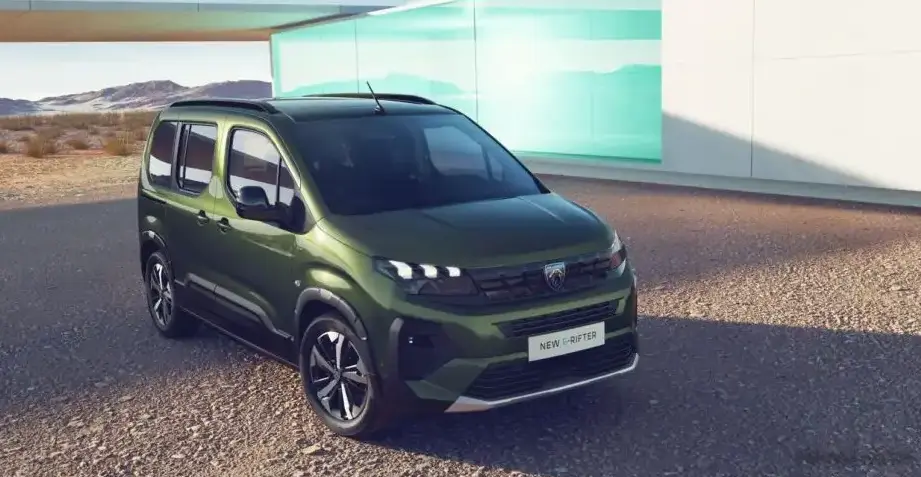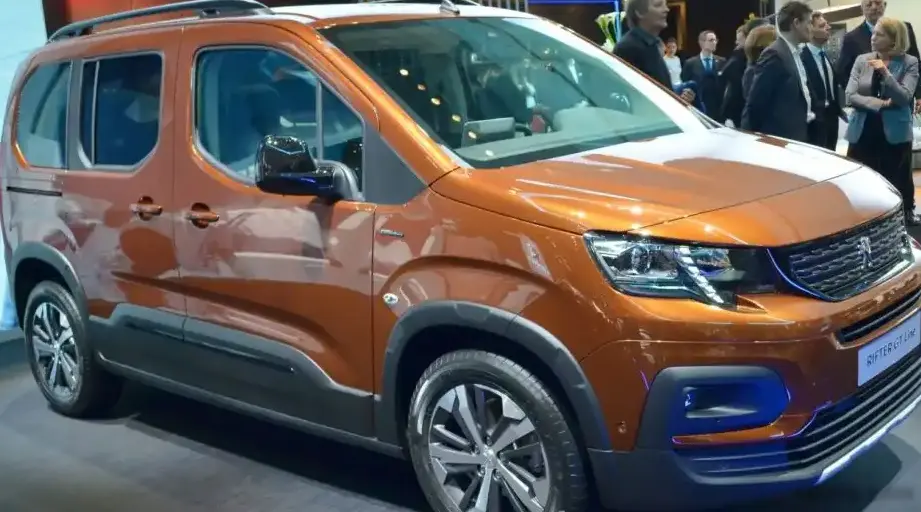
The Peugeot Rifter L1 1.5 BlueHDi 76 hp, produced from September 2018 to May 2019, represents an entry-level offering within the first generation of the Peugeot Rifter (introduced as part of the broader PSA Group’s multi-purpose vehicle strategy). Positioned as a practical and economical choice in the European leisure activity vehicle (LAV) segment, the Rifter L1 aimed to provide a versatile and affordable option for families and those requiring a spacious, adaptable vehicle. It shared its platform and many components with the Citroën Berlingo and Opel/Vauxhall Combo Life, forming a collaborative effort to maximize development efficiency and market reach. This particular variant, with its lower horsepower output and manual transmission, was specifically targeted at buyers prioritizing fuel efficiency and lower running costs over outright performance.
Technical Specifications
| Brand | Peugeot |
| Model | Rifter |
| Generation | Rifter L1 |
| Type (Engine) | 1.5 BlueHDi (76 Hp) |
| Start of production | September, 2018 |
| End of production | May, 2019 |
| Powertrain Architecture | Internal Combustion engine |
| Body type | Minivan |
| Seats | 5 |
| Doors | 5 |
| Fuel consumption (urban) | 4.6 l/100 km (51.1 US mpg, 61.4 UK mpg, 21.7 km/l) |
| Fuel consumption (extra urban) | 3.9 l/100 km (60.3 US mpg, 72.4 UK mpg, 25.6 km/l) |
| Fuel consumption (combined) | 4.1 l/100 km (57.4 US mpg, 68.9 UK mpg, 24.4 km/l) |
| CO2 emissions | 109 g/km |
| Fuel Type | Diesel |
| Maximum speed | 153 km/h (95.07 mph) |
| Emission standard | Euro 6d |
| Weight-to-power ratio | 18.7 kg/Hp, 53.4 Hp/tonne |
| Weight-to-torque ratio | 6.2 kg/Nm, 161.5 Nm/tonne |
| Power | 76 Hp @ 3500 rpm |
| Power per litre | 50.7 Hp/l |
| Torque | 230 Nm @ 1750 rpm (169.64 lb.-ft. @ 1750 rpm) |
| Engine layout | Front, Transverse |
| Engine Model/Code | YHW DV5RE |
| Engine displacement | 1499 cm3 (91.47 cu. in.) |
| Number of cylinders | 4 |
| Engine configuration | Inline |
| Number of valves per cylinder | 4 |
| Fuel injection system | Diesel Commonrail |
| Engine aspiration | Turbocharger, Intercooler |
| Engine oil capacity | 4 l (4.23 US qt | 3.52 UK qt) |
| Kerb Weight | 1424 kg (3139.38 lbs.) |
| Max. weight | 2100 kg (4629.71 lbs.) |
| Max load | 676 kg (1490.32 lbs.) |
| Trunk (boot) space – minimum | 775 l (27.37 cu. ft.) |
| Trunk (boot) space – maximum | 3000 l (105.94 cu. ft.) |
| Fuel tank capacity | 51 l (13.47 US gal | 11.22 UK gal) |
| Permitted trailer load with brakes (12%) | 1000 kg (2204.62 lbs.) |
| Permitted towbar download | 74 kg (163.14 lbs.) |
| Length | 4403 mm (173.35 in.) |
| Width | 1848 mm (72.76 in.) |
| Width with mirrors folded | 1921 mm (75.63 in.) |
| Width including mirrors | 2107 mm (82.95 in.) |
| Height | 1878 mm (73.94 in.) |
| Wheelbase | 2785 mm (109.65 in.) |
| Front track | 1553 mm (61.14 in.) |
| Rear (Back) track | 1567 mm (61.69 in.) |
| Front overhang | 892 mm (35.12 in.) |
| Rear overhang | 726 mm (28.58 in.) |
| Drivetrain Architecture | The Internal combustion engine (ICE) drives the front wheels of the vehicle. |
| Drive wheel | Front wheel drive |
| Number of gears and type of gearbox | 5 gears, manual transmission |
| Front suspension | Independent type McPherson |
| Rear suspension | Wishbone |
| Front brakes | Ventilated discs |
| Rear brakes | Ventilated discs |
| Assisting systems | ABS (Anti-lock braking system) |
| Tires size | 215/65 R16 |
| Wheel rims size | 16 |
Powertrain & Engine Architecture
The Rifter L1 1.5 BlueHDi 76 hp utilizes the PSA Group’s DV5RE engine, a 1.5-liter inline four-cylinder diesel engine. This engine is part of the BlueHDi family, incorporating a diesel particulate filter (DPF) and Selective Catalytic Reduction (SCR) system to meet stringent Euro 6d emission standards. The engine employs a common rail direct injection system, delivering fuel at high pressure for optimized combustion. A turbocharger with an intercooler is used to boost power output, providing 76 horsepower at 3500 rpm and 230 Nm (169.64 lb-ft) of torque at 1750 rpm. The engine features four valves per cylinder and a single overhead camshaft. The transmission is a five-speed manual gearbox, chosen for its simplicity and contribution to fuel economy. This configuration prioritizes efficiency over performance, with the engine’s torque curve optimized for low-end responsiveness rather than high-revving power.
Driving Characteristics
The 76 hp 1.5 BlueHDi engine, paired with the five-speed manual transmission, delivers a driving experience focused on practicality and economy. Acceleration is modest, and overtaking requires careful planning. The gear ratios are tuned for fuel efficiency, meaning the engine operates at relatively low revolutions per minute (rpm) during cruising. This contributes to a quiet and comfortable ride, but can also feel somewhat strained when climbing hills or carrying a full load. Compared to higher-output versions of the Rifter (such as those with the 1.5 BlueHDi 100 hp or 130 hp engines), this variant offers significantly less power, resulting in slower acceleration and a reduced ability to carry heavy loads with ease. However, the lower power output also translates to improved fuel economy, making it an attractive option for drivers who primarily use the vehicle for short trips and urban driving.
Equipment & Trim Levels
The Rifter L1 1.5 BlueHDi 76 hp typically came with a base level of equipment, focusing on essential features. Standard equipment generally included air conditioning, electric front windows, a basic audio system with USB connectivity, and ABS brakes. Safety features such as driver and passenger airbags, electronic stability control, and lane departure warning were also commonly included. Interior upholstery was typically cloth, and the dashboard featured a functional, if somewhat basic, design. Optional extras included features such as rear parking sensors, a touchscreen infotainment system with navigation, and cruise control. Higher trim levels offered more luxurious interior appointments, such as upgraded upholstery and additional chrome trim.
Chassis & Braking
The Rifter L1 utilizes a McPherson strut front suspension and a twist-beam rear suspension. This setup provides a comfortable ride quality, although it is not particularly sporty. The front brakes are ventilated discs, while the rear brakes are typically solid discs. The steering is electrically assisted, providing light and easy steering feel. The vehicle’s weight-to-power ratio of 18.7 kg/Hp influences its handling characteristics, resulting in a less agile feel compared to lighter vehicles. Stabilizer bars are fitted to both the front and rear axles to reduce body roll during cornering.
Market Reception & Comparison
The Peugeot Rifter L1 1.5 BlueHDi 76 hp was generally well-received by critics as a practical and affordable family vehicle. Its fuel efficiency and low running costs were particularly praised. However, some reviewers noted that the engine lacked power, especially when fully loaded. Compared to the more powerful Rifter variants, this version offered a more economical option, but at the expense of performance. It competed with other compact MPVs and leisure activity vehicles, such as the Citroën Berlingo, Opel/Vauxhall Combo Life, and Renault Kangoo.
Legacy
The 1.5 BlueHDi engine has proven to be a relatively reliable powertrain, although, like all diesel engines, it requires regular maintenance, including oil changes and DPF servicing. The Rifter L1 1.5 BlueHDi 76 hp remains a popular choice in the used car market, particularly for buyers seeking an affordable and economical family vehicle. Its simple mechanical design and readily available parts contribute to its relatively low maintenance costs. While not the most exciting vehicle to drive, its practicality, versatility, and fuel efficiency continue to make it a compelling option for those prioritizing value and functionality.