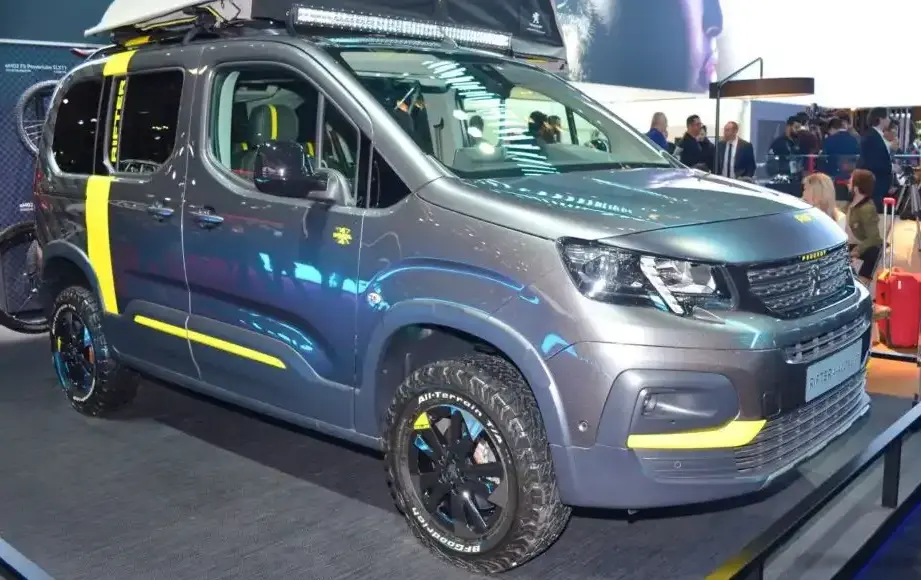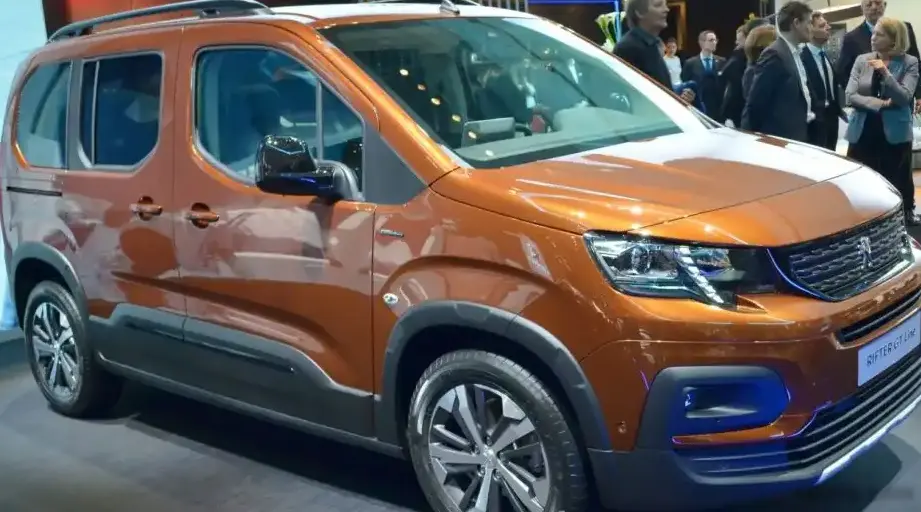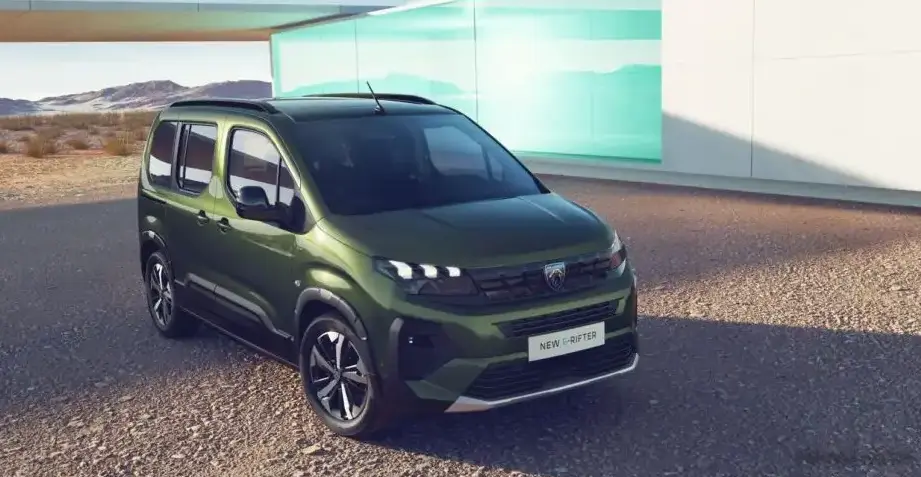
The Peugeot Rifter L1, particularly the facelifted 2024 model powered by the 1.5 BlueHDi 131 horsepower engine paired with the EAT8 eight-speed automatic transmission, represents a compelling offering in the European leisure activity vehicle (LAV) segment. Introduced in March 2024, this variant builds upon the original Rifter launched in 2018, benefiting from styling updates and refinements to its powertrain. The Rifter L1, denoting the shorter wheelbase version, is designed to appeal to families and individuals seeking a practical, versatile, and relatively efficient vehicle for both daily commuting and recreational pursuits. It slots into the mid-range of the Rifter lineup, offering a balance between affordability and features compared to higher-powered or more extensively equipped models.
Technical Specifications
| Brand | Peugeot |
| Model | Rifter |
| Generation | Rifter L1 (facelift 2024) |
| Type (Engine) | 1.5 BlueHDi (131 Hp) EAT8 |
| Start of production | March, 2024 |
| Powertrain Architecture | Internal Combustion engine |
| Body type | Minivan |
| Seats | 5 |
| Doors | 5 |
| Fuel consumption at Low speed (WLTP) | 6.6 l/100 km (35.6 US mpg, 42.8 UK mpg, 15.2 km/l) |
| Fuel consumption at Medium speed (WLTP) | 5.5 l/100 km (42.8 US mpg, 51.4 UK mpg, 18.2 km/l) |
| Fuel consumption at high speed (WLTP) | 4.9 l/100 km (48 US mpg, 57.6 UK mpg, 20.4 km/l) |
| Fuel consumption at very high speed (WLTP) | 6.3 l/100 km (37.3 US mpg, 44.8 UK mpg, 15.9 km/l) |
| Combined fuel consumption (WLTP) | 5.7 l/100 km (41.3 US mpg, 49.6 UK mpg, 17.5 km/l) |
| CO2 emissions (WLTP) | 151 g/km |
| Fuel Type | Diesel |
| Acceleration 0 – 100 km/h | 11.6 sec |
| Acceleration 0 – 62 mph | 11.6 sec |
| Acceleration 0 – 60 mph | 11 sec |
| Maximum speed | 184 km/h (114.33 mph) |
| Emission standard | Euro 6e |
| Weight-to-power ratio | 11.5 kg/Hp, 86.9 Hp/tonne |
| Weight-to-torque ratio | 5 kg/Nm, 199.1 Nm/tonne |
| Power | 131 Hp @ 3750 rpm |
| Torque | 300 Nm @ 1750 rpm (221.27 lb.-ft. @ 1750 rpm) |
| Engine layout | Front, Transverse |
| Engine Model/Code | YHZ DV5RC |
| Engine displacement | 1499 cm3 (91.47 cu. in.) |
| Number of cylinders | 4 |
| Engine configuration | Inline |
| Number of valves per cylinder | 4 |
| Fuel injection system | Diesel Commonrail |
| Engine aspiration | Turbocharger, Intercooler |
| Engine oil capacity | 4 l (4.23 US qt | 3.52 UK qt) |
| Kerb Weight | 1507-1690 kg (3322.37 – 3725.81 lbs.) |
| Max. weight | 2100 kg (4629.71 lbs.) |
| Max load | 410-593 kg (903.9 – 1307.34 lbs.) |
| Trunk (boot) space – minimum | 775 l (27.37 cu. ft.) |
| Trunk (boot) space – maximum | 3000 l (105.94 cu. ft.) |
| Fuel tank capacity | 50 l (13.21 US gal | 11 UK gal) |
| Max. roof load | 100 kg (220.46 lbs.) |
| Permitted trailer load with brakes (12%) | 1300 kg (2866.01 lbs.) |
| Permitted trailer load without brakes | 750 kg (1653.47 lbs.) |
| Permitted towbar download | 52 kg (114.64 lbs.) |
| Length | 4405 mm (173.43 in.) |
| Width | 1848 mm (72.76 in.) |
| Width with mirrors folded | 1921 mm (75.63 in.) |
| Width including mirrors | 2107 mm (82.95 in.) |
| Height | 1818 mm (71.57 in.) |
| Wheelbase | 2785 mm (109.65 in.) |
| Front track | 1553 mm (61.14 in.) |
| Rear (Back) track | 1567 mm (61.69 in.) |
| Front overhang | 894 mm (35.2 in.) |
| Rear overhang | 726 mm (28.58 in.) |
| Minimum turning circle (turning diameter) | 10.8 m (35.43 ft.) |
| Drivetrain Architecture | The Internal combustion engine (ICE) drives the front wheels of the vehicle. |
| Drive wheel | Front wheel drive |
| Number of gears and type of gearbox | 8 gears, automatic transmission |
| Front suspension | Independent type McPherson |
| Rear suspension | Elastic beam |
| Front brakes | Disc |
| Rear brakes | Disc |
| Assisting systems | ABS (Anti-lock braking system) |
| Steering type | Steering rack and pinion |
| Power steering | Electric Steering |
| Tires size | 215/60 R17 |
| Wheel rims size | 17 |
INTRODUCTION
The Peugeot Rifter L1 1.5 BlueHDi EAT8, launched in its updated form in 2024, is a five-seater minivan designed for practicality and versatility. It’s built on the EMP2 platform, shared with other Stellantis vehicles like the Citroën Berlingo and Opel Combo Life. The “L1” designation indicates the shorter of the two available body lengths, making it more manageable for urban driving while still offering a generous amount of interior space. This particular variant, with its 131 horsepower diesel engine and eight-speed automatic transmission, aims to provide a comfortable and efficient driving experience for families and those needing a flexible vehicle for work and leisure.
Powertrain & Engine Architecture
At the heart of the Rifter L1 1.5 BlueHDi EAT8 lies the DV5RC engine, a 1.5-liter four-cylinder diesel engine. This engine is part of Peugeot’s BlueHDi range, known for its focus on reducing emissions. The engine utilizes a common-rail direct injection system, delivering fuel at high pressure for efficient combustion. A turbocharger with an intercooler further enhances performance by forcing more air into the cylinders. The engine produces 131 horsepower at 3750 rpm and 300 Nm (221 lb-ft) of torque at 1750 rpm. The EAT8 transmission is an eight-speed automatic gearbox developed by Aisin, known for its smooth shifting and responsiveness. It features a torque converter and is designed to optimize fuel efficiency and driving comfort. The engine also incorporates a particulate filter to minimize soot emissions, complying with Euro 6e emission standards.
Driving Characteristics
The 1.5 BlueHDi engine, while not exceptionally powerful, provides adequate performance for everyday driving. Acceleration from 0 to 100 km/h (0-62 mph) takes around 11.6 seconds, and the top speed is 184 km/h (114 mph). The EAT8 transmission contributes to a relaxed driving experience, with smooth gear changes and a willingness to downshift when needed. Compared to the manual transmission versions, the automatic offers greater convenience, particularly in urban traffic. However, the automatic does slightly impact fuel economy. Compared to higher-powered Rifter variants, this 131 hp version feels less eager during overtaking maneuvers, but its fuel efficiency and lower running costs make it an attractive option for those prioritizing practicality over outright performance. The gear ratios are tuned for fuel economy, with taller gearing in higher gears for efficient cruising.
Equipment & Trim Levels
The Rifter L1 1.5 BlueHDi EAT8 typically comes with a good level of standard equipment. This includes air conditioning, a touchscreen infotainment system with Apple CarPlay and Android Auto compatibility, Bluetooth connectivity, and a range of safety features such as ABS, ESP, and multiple airbags. Higher trim levels add features like a reversing camera, parking sensors, a panoramic sunroof, and more advanced driver-assistance systems. Interior upholstery is typically cloth, with options for upgraded materials. The dashboard layout is functional and user-friendly, with a focus on practicality. Optional extras often include navigation systems, upgraded audio systems, and various styling enhancements.
Chassis & Braking
The Rifter L1 utilizes an independent McPherson strut suspension at the front and an elastic beam suspension at the rear. This setup provides a comfortable ride quality, absorbing bumps and imperfections in the road surface effectively. Disc brakes are fitted on all four wheels, providing adequate stopping power. The steering is electric power-assisted, offering a light and precise feel. The vehicle’s weight-to-power ratio is 11.5 kg/Hp, and the weight-to-torque ratio is 5 kg/Nm, indicating a reasonable balance between power and weight. The Rifter L1 is designed to prioritize comfort and practicality over sporty handling.
Market Reception & Comparison
The Peugeot Rifter L1 1.5 BlueHDi EAT8 has been generally well-received by critics for its practicality, versatility, and fuel efficiency. It’s often praised for its spacious interior, comfortable ride, and user-friendly features. Compared to other trims in the Rifter lineup, this variant offers a good balance between price and performance. The 1.5 BlueHDi engine provides decent fuel economy, with combined figures around 5.7 l/100 km (41.3 US mpg). While the higher-powered diesel variants offer more performance, they come at a higher cost and with slightly increased fuel consumption. Compared to petrol-powered Rifter models, the diesel offers superior fuel economy, particularly on longer journeys.
Legacy
The 1.5 BlueHDi engine has proven to be a reliable and durable unit in other Stellantis vehicles. The EAT8 transmission is also known for its robustness. However, as with any diesel engine, proper maintenance is crucial to ensure long-term reliability. Regular servicing, including oil changes and filter replacements, is essential. In the used car market, the Rifter L1 1.5 BlueHDi EAT8 is likely to hold its value reasonably well, thanks to its practicality, fuel efficiency, and reputation for reliability. It represents a sensible choice for buyers seeking a versatile and economical family vehicle.