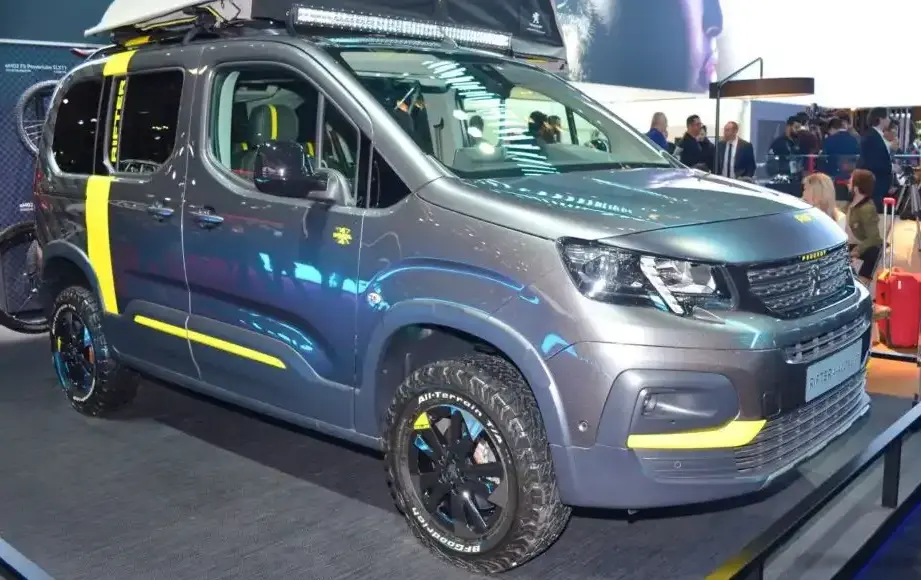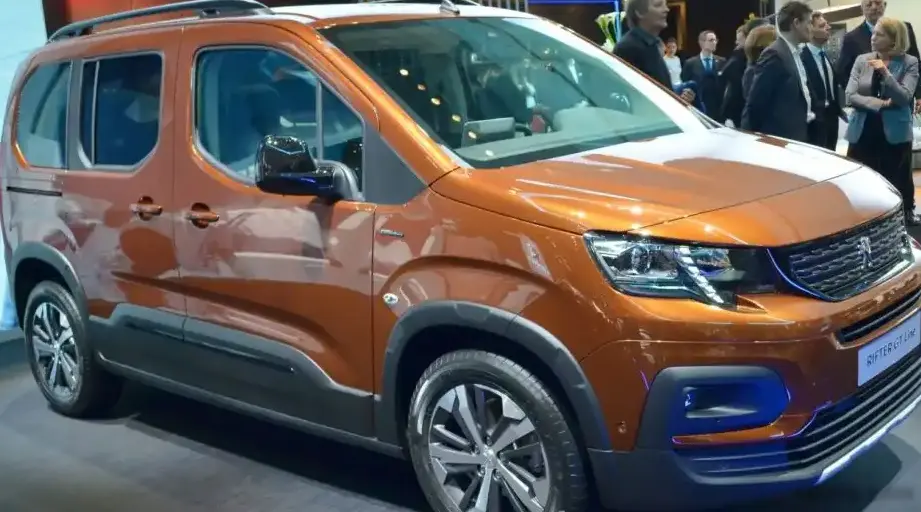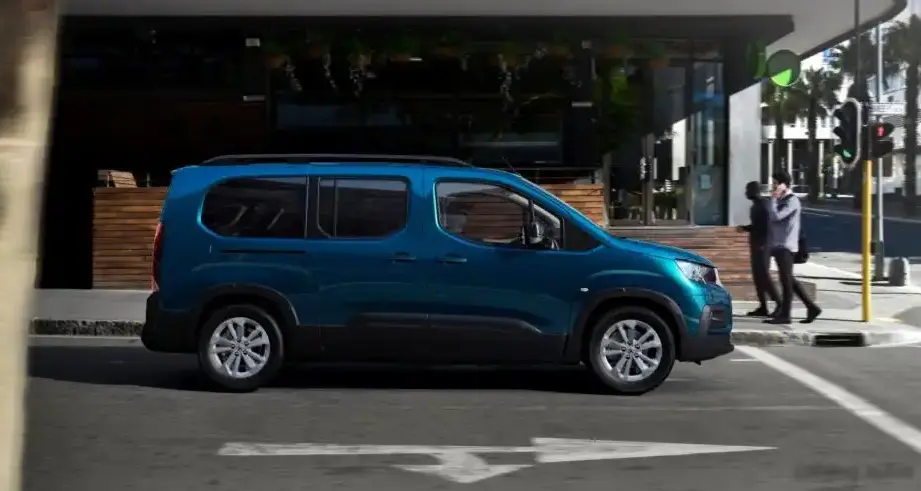
The Peugeot Rifter L2 1.2 PureTech (110 hp) is a five-door, seven-seat minivan produced by the French manufacturer Peugeot between May 2019 and March 2024. Positioned as a mid-range offering within the Rifter L2 lineup, it catered to families and those requiring a versatile, spacious vehicle. The Rifter L2, an extended wheelbase version of the standard Rifter, was designed to maximize interior space and practicality. It falls within the first generation of the Rifter model, sharing its platform and many components with the Citroën Berlingo and Opel Combo Life, a result of the Stellantis (then PSA Group) multi-brand strategy. This variant aimed to balance affordability with reasonable performance and fuel efficiency, making it a popular choice in the European leisure activity vehicle (LAV) segment.
Technical Specifications
| Brand | Peugeot |
| Model | Rifter |
| Generation | Rifter L2 |
| Type (Engine) | 1.2 PureTech (110 Hp) |
| Start of production | May, 2019 |
| End of production | March, 2024 |
| Powertrain Architecture | Internal Combustion engine |
| Body type | Minivan |
| Seats | 7 |
| Doors | 5 |
| Fuel consumption at Low speed (WLTP) | 7.2-7.8 l/100 km (32.7 – 30.2 US mpg, 39.2 – 36.2 UK mpg, 13.9 – 12.8 km/l) |
| Fuel consumption at Medium speed (WLTP) | 5.8-6.9 l/100 km (40.6 – 34.1 US mpg, 48.7 – 40.9 UK mpg, 17.2 – 14.5 km/l) |
| Fuel consumption at high speed (WLTP) | 5.3-6.4 l/100 km (44.4 – 36.8 US mpg, 53.3 – 44.1 UK mpg, 18.9 – 15.6 km/l) |
| Fuel consumption at very high speed (WLTP) | 6.7-8.3 l/100 km (35.1 – 28.3 US mpg, 42.2 – 34 UK mpg, 14.9 – 12 km/l) |
| Combined fuel consumption (WLTP) | 6.2-7.4 l/100 km (37.9 – 31.8 US mpg, 45.6 – 38.2 UK mpg, 16.1 – 13.5 km/l) |
| CO2 emissions (WLTP) | 153-167 g/km |
| Fuel Type | Petrol (Gasoline) |
| Acceleration 0 – 100 km/h | 12.3 sec |
| Acceleration 0 – 62 mph | 12.3 sec |
| Acceleration 0 – 60 mph | 11.7 sec |
| Maximum speed | 174 km/h (108.12 mph) |
| Emission standard | Euro 6d-ISC |
| Weight-to-power ratio | 13.8 kg/Hp, 72.6 Hp/tonne |
| Weight-to-torque ratio | 7.4 kg/Nm, 135.3 Nm/tonne |
| Power | 110 Hp @ 5500 rpm |
| Power per litre | 91.7 Hp/l |
| Torque | 205 Nm @ 1750 rpm (151.2 lb.-ft. @ 1750 rpm) |
| Engine layout | Front, Transverse |
| Engine Model/Code | HNP EB2ADT |
| Engine displacement | 1199 cm3 (73.17 cu. in.) |
| Number of cylinders | 3 |
| Engine configuration | Inline |
| Number of valves per cylinder | 4 |
| Fuel injection system | Direct injection |
| Engine aspiration | Turbocharger, Intercooler |
| Engine oil capacity | 3.5 l (3.7 US qt | 3.08 UK qt) |
| Kerb Weight | 1515 kg (3340 lbs.) |
| Max. weight | 2250 kg (4960.4 lbs.) |
| Max load | 735 kg (1620.4 lbs.) |
| Trunk (boot) space – minimum | 1050 l (37.08 cu. ft.) |
| Trunk (boot) space – maximum | 3500 l (123.6 cu. ft.) |
| Fuel tank capacity | 60 l (15.85 US gal | 13.2 UK gal) |
| Permitted trailer load with brakes (12%) | 900 kg (1984.16 lbs.) |
| Permitted towbar download | 50 kg (110.23 lbs.) |
| Length | 4753 mm (187.13 in.) |
| Width | 1848 mm (72.76 in.) |
| Width with mirrors folded | 1921 mm (75.63 in.) |
| Width including mirrors | 2107 mm (82.95 in.) |
| Height | 1879-1882 mm (73.98 – 74.09 in.) |
| Wheelbase | 2975 mm (117.13 in.) |
| Front track | 1553 mm (61.14 in.) |
| Rear (Back) track | 1567 mm (61.69 in.) |
| Front overhang | 892 mm (35.12 in.) |
| Rear overhang | 886 mm (34.88 in.) |
| Ride height (ground clearance) | 216 mm (8.5 in.) |
| Approach angle | 17.5° |
| Departure angle | 25.7° |
| Drivetrain Architecture | The Internal combustion engine (ICE) drives the front wheels of the vehicle. |
| Drive wheel | Front wheel drive |
| Number of gears and type of gearbox | 6 gears, manual transmission |
| Front suspension | Independent type McPherson |
| Rear suspension | Wishbone |
| Front brakes | Disc |
| Rear brakes | Disc |
| Assisting systems | ABS (Anti-lock braking system) |
| Steering type | Steering rack and pinion |
| Tires size | 215/65 R16 95U; 215/60 R17 95U |
| Wheel rims size | 6.5J x 16 ET47; 7.0J x 17 ET44 |
Powertrain & Engine Architecture
The Rifter L2 1.2 PureTech (110 hp) is powered by the PSA EB2ADT engine, a 1.2-liter turbocharged three-cylinder petrol engine. This engine is part of the PureTech family, known for its efficiency and relatively compact size. The EB2ADT features direct fuel injection, a single-scroll turbocharger, and an intercooler to enhance performance. The engine produces 110 horsepower at 5500 rpm and 205 Nm (151.2 lb-ft) of torque at 1750 rpm. The engine utilizes a timing chain, reducing the need for periodic belt replacements. The engine is transversely mounted at the front of the vehicle. The transmission is a six-speed manual gearbox, chosen for its fuel efficiency and lower cost compared to an automatic option. The engine is designed to meet Euro 6d-ISC emission standards, incorporating a particulate filter to reduce emissions.
Driving Characteristics
The 1.2 PureTech 110 hp engine, paired with the six-speed manual transmission, provides adequate performance for everyday driving. Acceleration from 0 to 62 mph takes approximately 12.3 seconds, and the top speed is 174 km/h (108.12 mph). While not particularly sporty, the engine delivers sufficient power for highway cruising and overtaking maneuvers. The turbocharger provides a noticeable boost in power at lower engine speeds, improving responsiveness. The six-speed gearbox allows for efficient cruising at highway speeds, keeping engine revs relatively low. Compared to higher-powered versions of the Rifter, this variant feels less energetic, particularly when fully loaded with passengers and luggage. However, the lighter engine weight contributes to improved handling and fuel economy. The gear ratios are tuned for fuel efficiency rather than outright acceleration.
Equipment & Trim Levels
The Rifter L2 1.2 PureTech (110 hp) typically came equipped with a range of standard features, including air conditioning, a touchscreen infotainment system with Bluetooth connectivity, USB ports, and electric front windows. Safety features included ABS, ESP (Electronic Stability Program), and multiple airbags. Higher trim levels offered additional features such as rear parking sensors, a reversing camera, navigation system, and automatic climate control. Interior upholstery was typically cloth, with options for upgraded materials. The dashboard layout is functional and straightforward, prioritizing practicality over luxury. Optional extras included panoramic sunroof, and various driver-assistance systems.
Chassis & Braking
The Rifter L2 utilizes a McPherson strut front suspension and a twist-beam rear suspension. This setup provides a comfortable ride quality, absorbing bumps and imperfections in the road surface effectively. The front brakes are ventilated discs, while the rear brakes are solid discs. The steering is a rack and pinion system, providing precise and responsive handling. The vehicle’s relatively high ground clearance (216 mm / 8.5 in) makes it suitable for tackling rough terrain and uneven roads. The tires are typically 215/65 R16 or 215/60 R17, providing good grip in various weather conditions.
Market Reception & Comparison
The Peugeot Rifter L2 1.2 PureTech (110 hp) was generally well-received by critics for its practicality, spaciousness, and fuel efficiency. It was often praised as a sensible choice for families and those needing a versatile vehicle. Compared to the more powerful diesel variants, the 1.2 PureTech offered lower purchase price and reduced running costs, but at the expense of performance. Fuel economy figures of 6.2-7.4 l/100 km (37.9 – 31.8 US mpg) were considered competitive within its segment. Some reviewers noted that the engine could feel strained when fully loaded or driving uphill. Compared to the Citroën Berlingo and Opel Combo Life, which shared the same platform and engine, the Rifter distinguished itself with its unique styling and Peugeot’s brand image.
Legacy
The Peugeot Rifter L2 1.2 PureTech (110 hp) has proven to be a relatively reliable powertrain in the used car market. The 1.2 PureTech engine, while initially subject to some reports of timing chain issues in earlier iterations, has seen improvements in later models. Regular maintenance, including oil changes and adherence to the manufacturer’s service schedule, is crucial for ensuring long-term reliability. The Rifter L2 remains a popular choice for those seeking a practical and affordable family vehicle, offering a good balance of space, efficiency, and comfort. Its robust construction and readily available parts contribute to its continued appeal in the used car market.