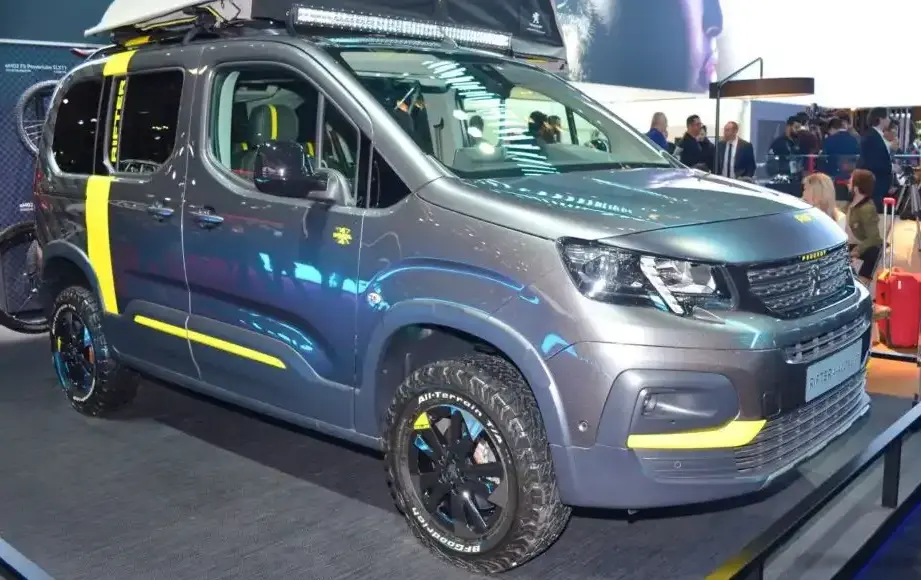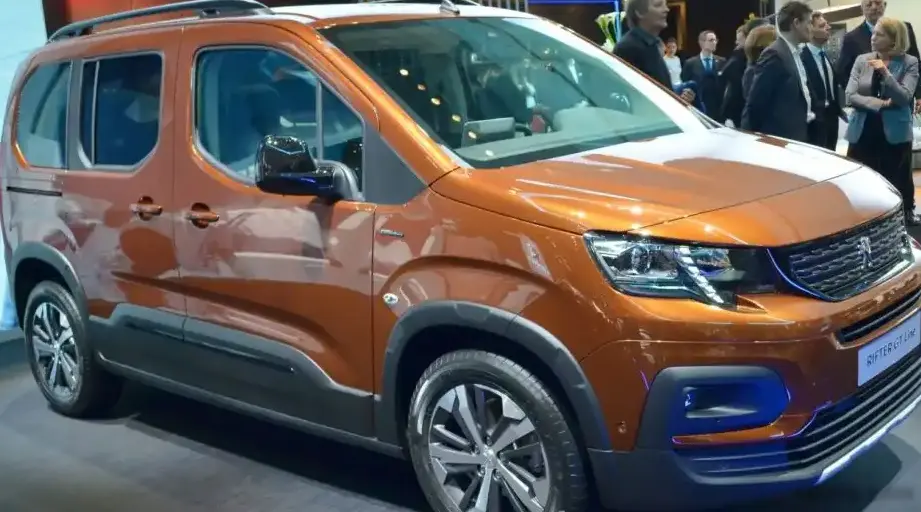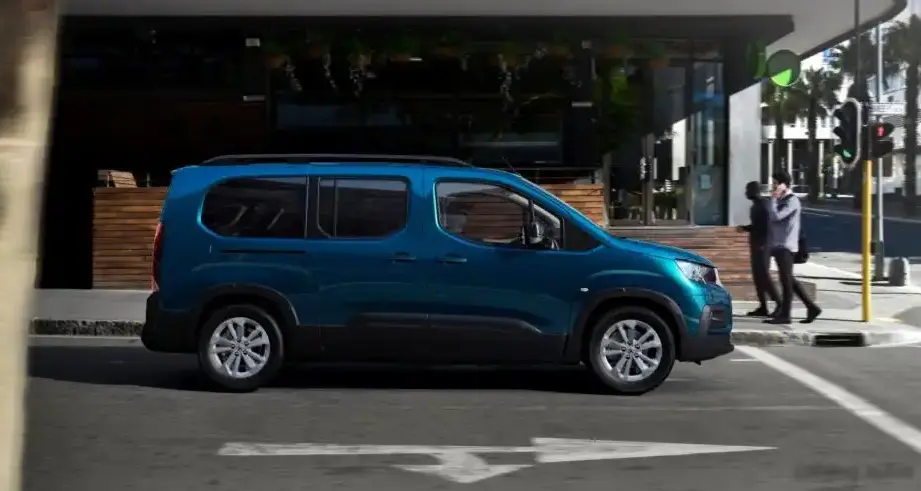
The Peugeot Rifter L2 1.2 PureTech (131 hp) Automatic is a five-door, seven-seat minivan produced from May 2019 to December 2021. Part of the second generation of the Rifter line, the L2 designation indicates an extended wheelbase version, offering increased interior space and cargo capacity. This variant occupied a mid-range position within the Rifter lineup, appealing to families and those requiring a versatile vehicle for both passenger and light cargo transport. It was primarily marketed in Europe, where the compact minivan segment remained popular, offering a practical alternative to larger MPVs and SUVs.
Technical Specifications
| Brand | Peugeot |
| Model | Rifter |
| Generation | Rifter L2 |
| Type (Engine) | 1.2 PureTech (131 Hp) Automatic |
| Start of production | May, 2019 |
| End of production | December, 2021 |
| Powertrain Architecture | Internal Combustion engine |
| Body type | Minivan |
| Seats | 7 |
| Doors | 5 |
| Fuel consumption at Low speed (WLTP) | 7.9-8.6 l/100 km (29.8 – 27.4 US mpg, 35.8 – 32.8 UK mpg, 12.7 – 11.6 km/l) |
| Fuel consumption at Medium speed (WLTP) | 6.2-7.3 l/100 km (37.9 – 32.2 US mpg, 45.6 – 38.7 UK mpg, 16.1 – 13.7 km/l) |
| Fuel consumption at high speed (WLTP) | 5.5-6.6 l/100 km (42.8 – 35.6 US mpg, 51.4 – 42.8 UK mpg, 18.2 – 15.2 km/l) |
| Fuel consumption at very high speed (WLTP) | 6.9-8.5 l/100 km (34.1 – 27.7 US mpg, 40.9 – 33.2 UK mpg, 14.5 – 11.8 km/l) |
| Combined fuel consumption (WLTP) | 6.5-7.7 l/100 km (36.2 – 30.5 US mpg, 43.5 – 36.7 UK mpg, 15.4 – 13 km/l) |
| CO2 emissions (WLTP) | 160-173 g/km |
| Fuel Type | Petrol (Gasoline) |
| Acceleration 0 – 100 km/h | 10.9 sec |
| Acceleration 0 – 62 mph | 10.9 sec |
| Acceleration 0 – 60 mph | 10.4 sec |
| Maximum speed | 200 km/h (124.27 mph) |
| Emission standard | Euro 6d-ISC |
| Weight-to-power ratio | 11.8 kg/Hp, 85.1 Hp/tonne |
| Weight-to-torque ratio | 6.7 kg/Nm, 149.4 Nm/tonne |
| Power | 131 Hp @ 5500 rpm |
| Power per litre | 109.3 Hp/l |
| Torque | 230 Nm @ 1750 rpm (169.64 lb.-ft. @ 1750 rpm) |
| Engine layout | Front, Transverse |
| Engine Model/Code | HNS EB2ADTS |
| Engine displacement | 1199 cm3 (73.17 cu. in.) |
| Number of cylinders | 3 |
| Engine configuration | Inline |
| Number of valves per cylinder | 4 |
| Fuel injection system | Direct injection |
| Engine aspiration | Turbocharger, Intercooler |
| Engine oil capacity | 3.5 l (3.7 US qt | 3.08 UK qt) |
| Kerb Weight | 1540 kg (3395.12 lbs.) |
| Max. weight | 2280 kg (5026.54 lbs.) |
| Max load | 740 kg (1631.42 lbs.) |
| Trunk (boot) space – minimum | 1050 l (37.08 cu. ft.) |
| Trunk (boot) space – maximum | 3500 l (123.6 cu. ft.) |
| Fuel tank capacity | 60 l (15.85 US gal | 13.2 UK gal) |
| Permitted trailer load with brakes (12%) | 950 kg (2094.39 lbs.) |
| Permitted towbar download | 50 kg (110.23 lbs.) |
| Length | 4753 mm (187.13 in.) |
| Width | 1848 mm (72.76 in.) |
| Width with mirrors folded | 1921 mm (75.63 in.) |
| Width including mirrors | 2107 mm (82.95 in.) |
| Height | 1879-1882 mm (73.98 – 74.09 in.) |
| Wheelbase | 2975 mm (117.13 in.) |
| Front track | 1553 mm (61.14 in.) |
| Rear (Back) track | 1567 mm (61.69 in.) |
| Front overhang | 892 mm (35.12 in.) |
| Rear overhang | 886 mm (34.88 in.) |
| Ride height (ground clearance) | 216 mm (8.5 in.) |
| Approach angle | 17.5° |
| Departure angle | 25.7° |
| Drivetrain Architecture | The Internal combustion engine (ICE) drives the front wheels of the vehicle. |
| Drive wheel | Front wheel drive |
| Number of gears and type of gearbox | 8 gears, automatic transmission |
| Front suspension | Independent type McPherson |
| Rear suspension | Wishbone |
| Front brakes | Disc |
| Rear brakes | Disc |
| Assisting systems | ABS (Anti-lock braking system) |
| Steering type | Steering rack and pinion |
| Tires size | 215/65 R16 95U; 215/60 R17 95U |
| Wheel rims size | 6.5J x 16 ET47; 7.0J x 17 ET44 |
Powertrain & Engine Architecture
The Rifter L2 1.2 PureTech Automatic is powered by the PSA Group’s (now Stellantis) HNS EB2ADTS engine, a 1.2-liter turbocharged inline-three cylinder petrol engine. This engine is part of the “PureTech” family, known for its efficiency and responsiveness. The engine utilizes direct fuel injection, optimizing combustion and contributing to improved fuel economy. It also features a turbocharger with an intercooler, boosting power output. The engine produces 131 horsepower at 5500 rpm and 230 Nm (169.64 lb-ft) of torque at 1750 rpm. The engine is transversely mounted at the front of the vehicle.
The engine is paired with an Aisin-sourced eight-speed automatic transmission. This transmission offers smooth gear changes and contributes to the vehicle’s overall refinement. The automatic transmission was chosen to provide ease of use, particularly in urban environments, and to broaden the Rifter’s appeal to drivers not preferring a manual gearbox. The transmission is electronically controlled, adapting shift patterns based on driving conditions and driver input.
Driving Characteristics
The 1.2 PureTech 131 hp Automatic Rifter L2 offers adequate performance for everyday driving. While not particularly sporty, the engine provides sufficient power for highway cruising and overtaking maneuvers. The eight-speed automatic transmission helps to keep the engine in its optimal power band, delivering a reasonably responsive driving experience. Acceleration from 0 to 100 km/h (0-62 mph) takes approximately 10.9 seconds. Compared to the more powerful diesel variants, the 1.2 PureTech feels less effortless when fully loaded or tackling steep inclines. However, the automatic transmission provides a smoother and more convenient driving experience than the manual gearbox options.
Equipment & Trim Levels
The Rifter L2 1.2 PureTech Automatic typically came equipped with a range of standard features, including air conditioning, a touchscreen infotainment system with Apple CarPlay and Android Auto compatibility, Bluetooth connectivity, and a suite of safety features such as ABS, ESP, and multiple airbags. Higher trim levels offered additional features such as navigation, a panoramic sunroof, rear parking sensors, and advanced driver-assistance systems like lane departure warning and automatic emergency braking. Interior upholstery was typically cloth, with options for upgraded materials on higher trims. The extended wheelbase of the L2 model provided ample space for passengers and luggage, making it a practical choice for families.
Chassis & Braking
The Rifter L2 utilizes an independent McPherson strut suspension at the front and a twist-beam axle at the rear. This suspension setup provides a comfortable ride quality, absorbing bumps and imperfections in the road surface effectively. The vehicle is equipped with disc brakes on all four wheels, providing adequate stopping power. The steering is a rack-and-pinion system, offering precise and responsive handling. The Rifter L2’s relatively high ground clearance of 216 mm (8.5 in.) enhances its versatility, allowing it to navigate rough terrain and uneven surfaces with ease.
Market Reception & Comparison
The Peugeot Rifter L2 1.2 PureTech Automatic was generally well-received by automotive critics for its practicality, spaciousness, and comfortable ride. However, some reviewers noted that the 1.2-liter engine could feel strained when the vehicle was fully loaded. Compared to the diesel variants, the petrol engine offered lower torque but potentially lower maintenance costs. Fuel economy was competitive within the segment, but the diesel models generally offered superior fuel efficiency. The Rifter L2 competed with other compact minivans such as the Citroën Berlingo, Renault Kangoo, and Volkswagen Caddy.
Legacy
The Peugeot Rifter L2 1.2 PureTech Automatic has proven to be a reliable and durable vehicle in the used car market. The 1.2 PureTech engine, while occasionally subject to reports of timing chain issues (a common concern across the PSA group), generally offers good long-term reliability with regular maintenance. The Aisin automatic transmission is also known for its robustness. The Rifter L2’s spacious interior, practical features, and comfortable ride continue to make it a popular choice for families and those seeking a versatile vehicle. Its blend of practicality and affordability ensures its continued presence on European roads.