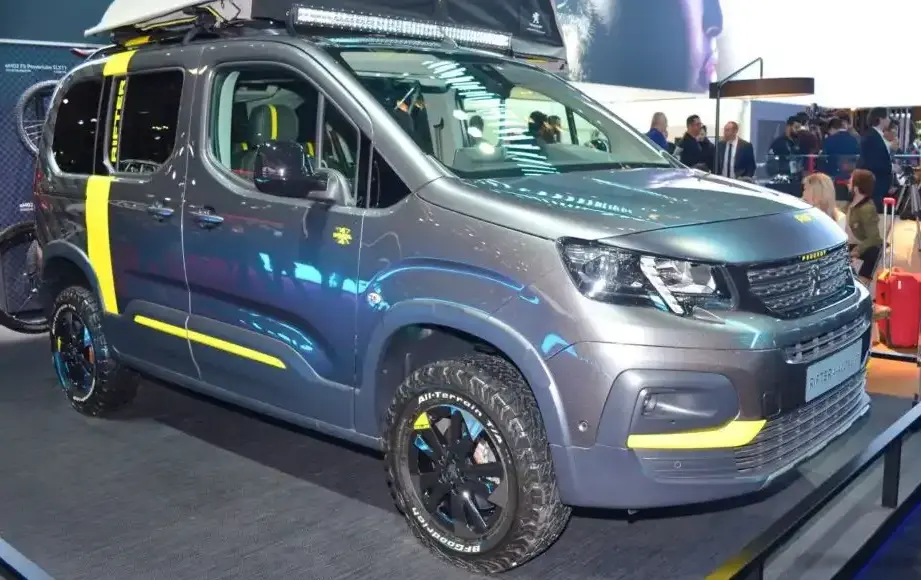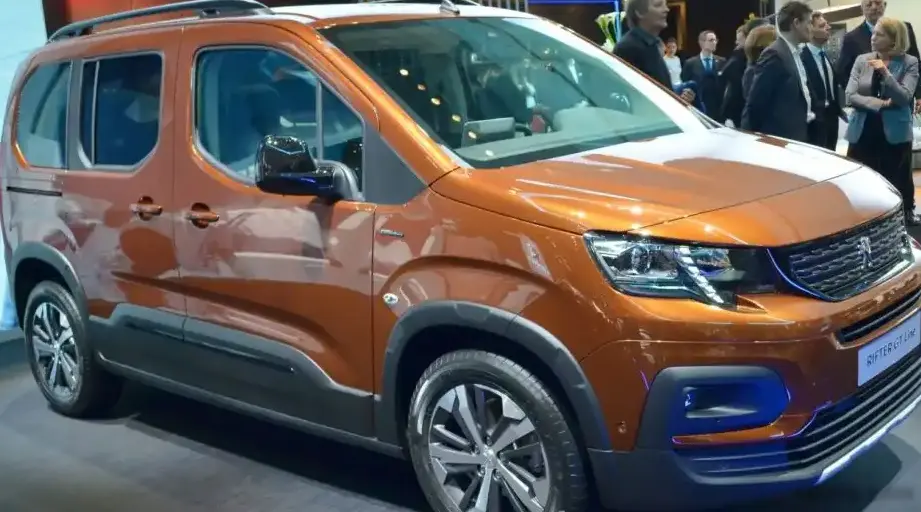
The Peugeot Rifter L2 (facelift 2024) 1.5 BlueHDi, producing 131 horsepower, represents a significant iteration within the Rifter lineup. Introduced in March 2024, this variant builds upon the foundation of the original Rifter, a leisure activity vehicle (LAV) designed to compete with offerings like the Citroën Berlingo and Renault Kangoo. The “L2” designation indicates an extended wheelbase, providing increased interior space and cargo capacity. This facelift brought styling updates and refinements to the existing platform, aiming to enhance the Rifter’s appeal in the European market as a practical and versatile family vehicle. It slots into the mid-range of the Rifter offerings, balancing fuel efficiency with adequate performance for everyday use.
Technical Specifications
| Brand | Peugeot |
| Model | Rifter |
| Generation | Rifter L2 (facelift 2024) |
| Type (Engine) | 1.5 BlueHDi (131 Hp) |
| Start of production | March, 2024 |
| Powertrain Architecture | Internal Combustion engine |
| Body type | Minivan |
| Seats | 5 |
| Doors | 5 |
| Fuel consumption at Low speed (WLTP) | 7 l/100 km (33.6 US mpg, 40.4 UK mpg, 14.3 km/l) |
| Fuel consumption at Medium speed (WLTP) | 5.5 l/100 km (42.8 US mpg, 51.4 UK mpg, 18.2 km/l) |
| Fuel consumption at high speed (WLTP) | 4.9 l/100 km (48 US mpg, 57.6 UK mpg, 20.4 km/l) |
| Fuel consumption at very high speed (WLTP) | 6.1 l/100 km (38.6 US mpg, 46.3 UK mpg, 16.4 km/l) |
| Combined fuel consumption (WLTP) | 5.7 l/100 km (41.3 US mpg, 49.6 UK mpg, 17.5 km/l) |
| CO2 emissions (WLTP) | 151 g/km |
| Fuel Type | Diesel |
| Acceleration 0 – 100 km/h | 12 sec |
| Acceleration 0 – 62 mph | 12 sec |
| Acceleration 0 – 60 mph | 11.4 sec |
| Maximum speed | 184 km/h (114.33 mph) |
| Emission standard | Euro 6e |
| Weight-to-power ratio | 11.8 kg/Hp, 84.4 Hp/tonne |
| Weight-to-torque ratio | 5.2 kg/Nm, 193.3 Nm/tonne |
| Power | 131 Hp @ 3750 rpm |
| Torque | 300 Nm @ 1750 rpm (221.27 lb.-ft. @ 1750 rpm) |
| Engine layout | Front, Transverse |
| Engine Model/Code | YHZ DV5RC |
| Engine displacement | 1499 cm3 (91.47 cu. in.) |
| Number of cylinders | 4 |
| Engine configuration | Inline |
| Number of valves per cylinder | 4 |
| Fuel injection system | Diesel Commonrail |
| Engine aspiration | Turbocharger, Intercooler |
| Engine oil capacity | 4 l (4.23 US qt | 3.52 UK qt) |
| Kerb Weight | 1552-1683 kg (3421.57 – 3710.38 lbs.) |
| Max. weight | 2150 kg (4739.94 lbs.) |
| Max load | 467-598 kg (1029.56 – 1318.36 lbs.) |
| Trunk (boot) space – minimum | 1050 l (37.08 cu. ft.) |
| Trunk (boot) space – maximum | 3500 l (123.6 cu. ft.) |
| Fuel tank capacity | 50 l (13.21 US gal | 11 UK gal) |
| Max. roof load | 100 kg (220.46 lbs.) |
| Permitted trailer load with brakes (12%) | 1250 kg (2755.78 lbs.) |
| Permitted trailer load without brakes | 750 kg (1653.47 lbs.) |
| Permitted towbar download | 74 kg (163.14 lbs.) |
| Length | 4755 mm (187.2 in.) |
| Width | 1848 mm (72.76 in.) |
| Width with mirrors folded | 1921 mm (75.63 in.) |
| Width including mirrors | 2107 mm (82.95 in.) |
| Height | 1837 mm (72.32 in.) |
| Wheelbase | 2975 mm (117.13 in.) |
| Front track | 1553 mm (61.14 in.) |
| Rear (Back) track | 1567 mm (61.69 in.) |
| Front overhang | 894 mm (35.2 in.) |
| Rear overhang | 886 mm (34.88 in.) |
| Minimum turning circle (turning diameter) | 11.5 m (37.73 ft.) |
| Drivetrain Architecture | The Internal combustion engine (ICE) drives the front wheels of the vehicle. |
| Drive wheel | Front wheel drive |
| Number of gears and type of gearbox | 6 gears, manual transmission |
| Front suspension | Independent type McPherson |
| Rear suspension | Elastic beam |
| Front brakes | Disc |
| Rear brakes | Disc |
| Assisting systems | ABS (Anti-lock braking system) |
| Steering type | Steering rack and pinion |
| Power steering | Electric Steering |
| Tires size | 215/65 R16 |
| Wheel rims size | 16 |
Powertrain & Engine Architecture
The heart of the Rifter L2 1.5 BlueHDi is the DV5RC engine, a 1.5-liter inline four-cylinder diesel engine. This engine falls under Peugeot’s “BlueHDi” designation, signifying its compliance with stringent Euro 6 emissions standards. The engine utilizes a common-rail direct fuel injection system, delivering fuel at extremely high pressure for optimized combustion. A turbocharger with an intercooler is employed to boost power output and improve efficiency. The 131 horsepower peak is achieved at 3750 rpm, while the 300 Nm (221 lb-ft) of torque is readily available from 1750 rpm, providing good low-end responsiveness. The engine incorporates a particulate filter to reduce soot emissions. The standard transmission is a 6-speed manual gearbox, chosen for its balance of efficiency and driver engagement.
Driving Characteristics
The 1.5 BlueHDi 131 hp engine, paired with the 6-speed manual transmission, delivers a practical and usable driving experience. Acceleration from 0-100 km/h (0-62 mph) takes approximately 12 seconds, which is adequate for everyday driving but doesn’t offer particularly sporty performance. The engine’s strong low-end torque makes it well-suited for carrying passengers and cargo, and the manual gearbox allows for precise control. Compared to higher-output versions of the Rifter, this variant prioritizes fuel economy over outright speed. The gear ratios are tuned for efficiency, with a relatively long sixth gear for comfortable highway cruising. While not as refined as some gasoline engines, the BlueHDi diesel offers a decent level of noise insulation and vibration damping.
Equipment & Trim Levels
The Rifter L2 1.5 BlueHDi typically comes equipped with a respectable level of standard features. These generally include air conditioning, a touchscreen infotainment system with Bluetooth connectivity, USB ports, and basic driver-assistance systems like ABS and ESP. Interior upholstery is typically cloth, with durable and practical materials used throughout the cabin. Higher trim levels offer upgrades such as navigation, a rearview camera, parking sensors, and more advanced safety features. Optional extras could include panoramic sunroof, upgraded audio systems, and various customization options for the interior and exterior.
Chassis & Braking
The Rifter L2 utilizes a McPherson strut front suspension and an elastic beam rear suspension. This setup provides a good balance between ride comfort and handling. The front brakes are discs, while the rear brakes are also discs, providing adequate stopping power for the vehicle’s weight. The electric power steering offers light and precise control. The extended wheelbase of the L2 variant contributes to improved stability, particularly when carrying a full load or towing a trailer.
Market Reception & Comparison
The Peugeot Rifter L2 1.5 BlueHDi was generally well-received by automotive critics as a practical and versatile family vehicle. Its fuel efficiency was a key selling point, particularly in Europe where diesel engines remain popular. Compared to the more powerful petrol variants, the 1.5 BlueHDi offered a more economical option for drivers who prioritize fuel costs. The manual transmission was praised for its smooth operation and driver engagement. However, some critics noted that the engine could feel strained when fully loaded or driving uphill. Compared to competitors like the Citroën Berlingo and Renault Kangoo, the Rifter offered a similar level of practicality and value.
Legacy
The 1.5 BlueHDi engine has proven to be a relatively reliable powertrain in the Peugeot Rifter. While diesel engines can be susceptible to issues with the particulate filter and fuel injection system, the BlueHDi engines have generally demonstrated good durability. On the used car market, the Rifter L2 1.5 BlueHDi represents a good value proposition for buyers seeking a spacious and economical family vehicle. Its practicality, fuel efficiency, and relatively low running costs make it an attractive option for those who need a versatile vehicle for both everyday commuting and leisure activities.