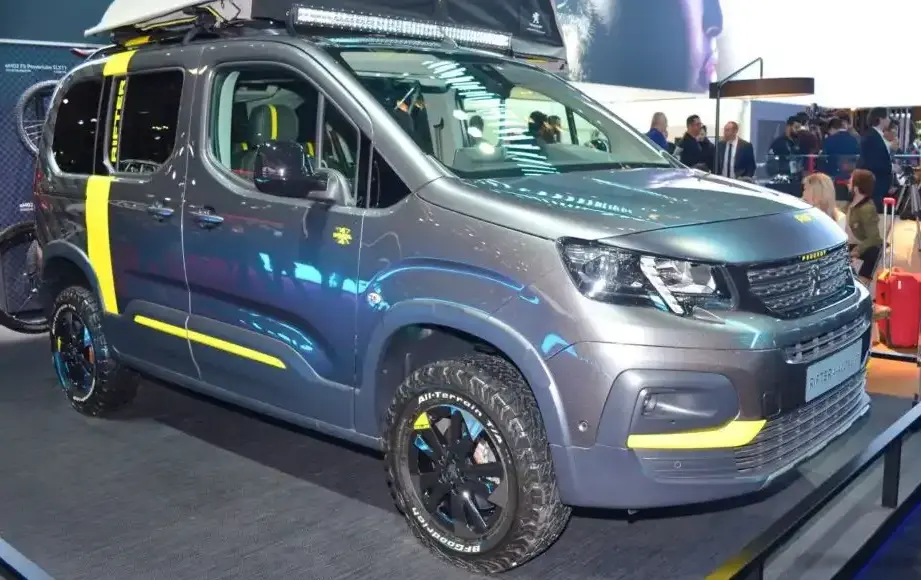
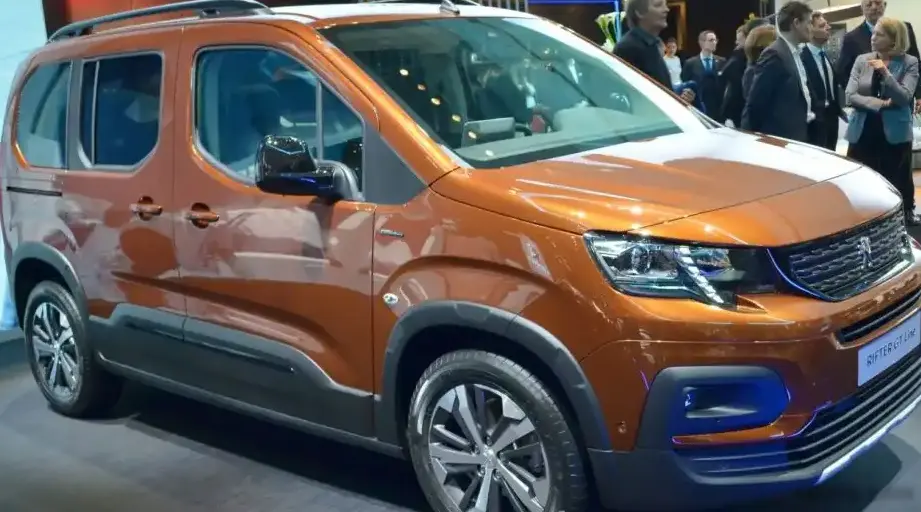
The Peugeot Rifter L2 e-Rifter 50 kWh, introduced in March 2024 as part of the Rifter’s facelift, represents Peugeot’s entry into the electric minivan segment. This seven-seat configuration, built on the extended-length L2 platform, aims to provide a practical and efficient transportation solution for families and those requiring versatile space. Positioned as a mid-range offering within the Rifter lineup, it slots between the standard length Rifter and potential future, higher-capacity battery variants. The e-Rifter is primarily targeted towards the European market, where demand for multi-purpose vehicles and electric options is strong, offering a compelling alternative to traditional gasoline or diesel-powered MPVs.
Technical Specifications
| Brand | Peugeot |
| Model | Rifter |
| Generation | Rifter L2 (facelift 2024) |
| Type | e-Rifter 50 kWh (136 Hp) 7 Seat |
| Start of production | March, 2024 |
| Powertrain Architecture | BEV (Electric Vehicle) |
| Body type | Minivan |
| Seats | 7 |
| Doors | 5 |
| Fuel Type | Electricity |
| 0 – 100 km/h | 11.5 sec |
| 0 – 62 mph | 11.5 sec |
| 0 – 60 mph | 10.9 sec |
| Maximum speed | 132 km/h (82.02 mph) |
| Weight-to-power ratio | 13.7 kg/Hp, 72.9 Hp/tonne |
| Weight-to-torque ratio | 6.9 kg/Nm, 144.7 Nm/tonne |
| Gross battery capacity | 50 kWh |
| Battery technology | Lithium-ion (Li-Ion) |
| Battery location | Below the floor |
| All-electric range (WLTP) | 329 km (204.43 mi) |
| Average Energy consumption (WLTP) | 19.1 kWh/100 km (30.74 kWh/100 mi) |
| MPGe | 110 |
| km/kWh | 5.2 |
| mi/kWh | 3.3 |
| Electric motor power | 136 Hp @ 6000 rpm |
| Electric motor Torque | 270 Nm (199.14 lb.-ft.) |
| Electric motor location | Front axle, Transverse |
| Electric motor type | Synchronous |
| System power | 136 Hp @ 6000 rpm |
| System torque | 270 Nm (199.14 lb.-ft.) |
| Kerb Weight | 1866-1924 kg (4113.83 – 4241.69 lbs.) |
| Max. weight | 2450 kg (5401.33 lbs.) |
| Max load | 526-584 kg (1159.63 – 1287.5 lbs.) |
| Trunk (boot) space – minimum | 209-322 l (7.38 – 11.37 cu. ft.) |
| Max. roof load | 100 kg (220.46 lbs.) |
| Length | 4755 mm (187.2 in.) |
| Width | 1848 mm (72.76 in.) |
| Width with mirrors folded | 1921 mm (75.63 in.) |
| Width including mirrors | 2107 mm (82.95 in.) |
| Height | 1837 mm (72.32 in.) |
| Wheelbase | 2975 mm (117.13 in.) |
| Front track | 1553 mm (61.14 in.) |
| Rear (Back) track | 1567 mm (61.69 in.) |
| Front overhang | 894 mm (35.2 in.) |
| Rear overhang | 886 mm (34.88 in.) |
| Minimum turning circle | 11.5 m (37.73 ft.) |
| Drivetrain Architecture | One electric motor drives the front wheels. |
| Drive wheel | Front wheel drive |
| Number of gears | 1 |
| Gearbox type | automatic transmission |
| Front suspension | Independent type McPherson |
| Rear suspension | Elastic beam |
| Front brakes | Disc |
| Rear brakes | Disc |
| Assisting systems | ABS (Anti-lock braking system) |
| Steering type | Steering rack and pinion |
| Power steering | Electric Steering |
| Tires size | 215/65 R16; 215/60 R17 |
| Wheel rims size | 16; 17 |
Powertrain & Engine Architecture
The e-Rifter L2 utilizes a fully electric powertrain, centered around a 50 kWh lithium-ion battery pack positioned under the vehicle floor. This placement contributes to a lower center of gravity, enhancing stability. The electric motor, a synchronous type, delivers 136 horsepower at 6000 rpm and 270 Nm (199 lb-ft) of torque. The single-speed automatic transmission efficiently transfers power to the front wheels. The motor doesn’t require the complex systems of an internal combustion engine – no fuel injectors, spark plugs, or exhaust system – simplifying maintenance. The battery supports various charging options, including AC and DC fast charging, allowing for convenient replenishment at home or public charging stations. The charging port locations are not publicly available.
Driving Characteristics
The 136 hp electric motor provides adequate, though not exhilarating, performance for the Rifter L2. Acceleration from 0 to 100 km/h (0-62 mph) takes approximately 11.5 seconds. The instant torque characteristic of electric motors delivers brisk acceleration at lower speeds, making it well-suited for urban driving. Compared to gasoline or diesel Rifter variants, the e-Rifter offers a quieter and smoother driving experience. The single-speed transmission simplifies operation, while the regenerative braking system helps to recapture energy and extend the vehicle’s range. The extended L2 wheelbase does impact agility somewhat, but the lower center of gravity helps mitigate body roll. The driving experience is geared towards comfort and practicality rather than sporty handling.
Equipment & Trim Levels
The e-Rifter L2 50 kWh 7-seat trim typically includes standard features such as air conditioning, a touchscreen infotainment system with smartphone integration (Apple CarPlay and Android Auto), and a suite of safety features including ABS, electronic stability control, and multiple airbags. Interior upholstery is generally cloth, with options for upgraded materials. Dashboard configuration is functional and driver-focused. Optional extras may include a panoramic sunroof, rear parking sensors, a reversing camera, and advanced driver-assistance systems (ADAS) like lane departure warning and automatic emergency braking. Specific trim levels and available options vary depending on the market.
Chassis & Braking
The Rifter L2 utilizes an independent McPherson strut suspension at the front and an elastic beam suspension at the rear. This setup provides a good balance between ride comfort and handling. Disc brakes are fitted on all four wheels, providing adequate stopping power. The electric power steering offers light and precise control. Tire sizes typically range from 215/65 R16 to 215/60 R17, depending on the trim level. The suspension is tuned to prioritize comfort, absorbing bumps and irregularities in the road surface effectively. Stabilizer bars are included to reduce body roll during cornering.
Market Reception & Comparison
The Peugeot Rifter e-Rifter has been generally well-received by critics for its practicality, spaciousness, and zero-emission capability. Compared to gasoline or diesel Rifter models, the e-Rifter offers lower running costs due to reduced fuel and maintenance expenses. However, the higher purchase price and limited range compared to internal combustion engine variants are potential drawbacks. Competitors in the electric minivan segment include the Citroën ë-SpaceTourer (which shares many components with the Rifter), the Volkswagen ID. Buzz, and the Mercedes-Benz EQV. The Rifter often represents a more affordable option within this segment.
Legacy
The Peugeot Rifter e-Rifter 50 kWh represents a significant step towards electrification for the Peugeot brand. The longevity of the battery pack and electric motor is expected to be good, with manufacturers typically offering warranties of eight years or 100,000 miles. As the electric vehicle market matures, the e-Rifter is likely to become an increasingly popular choice for families and businesses seeking a practical and environmentally friendly transportation solution. Its relatively simple electric powertrain should translate to lower long-term maintenance costs compared to more complex internal combustion engine vehicles. The used car market for early e-Rifter models is still developing, but demand is expected to grow as awareness of electric vehicle benefits increases.