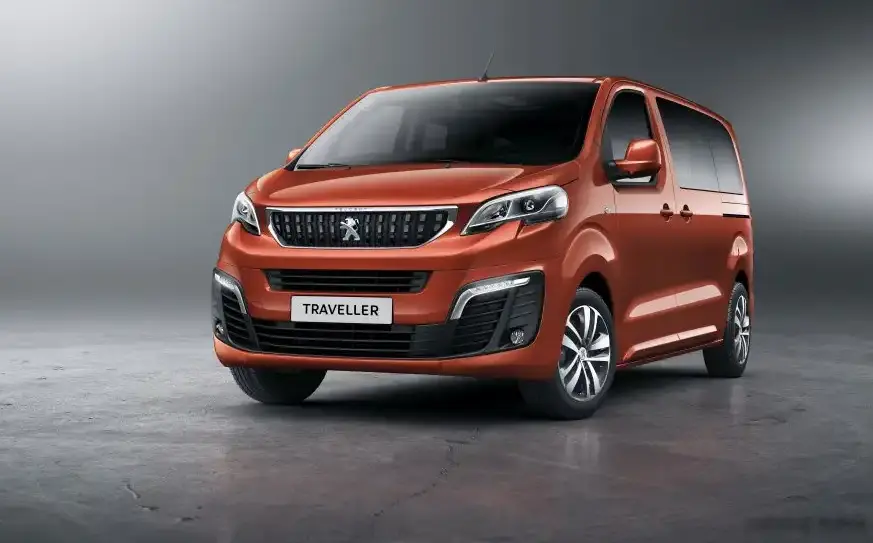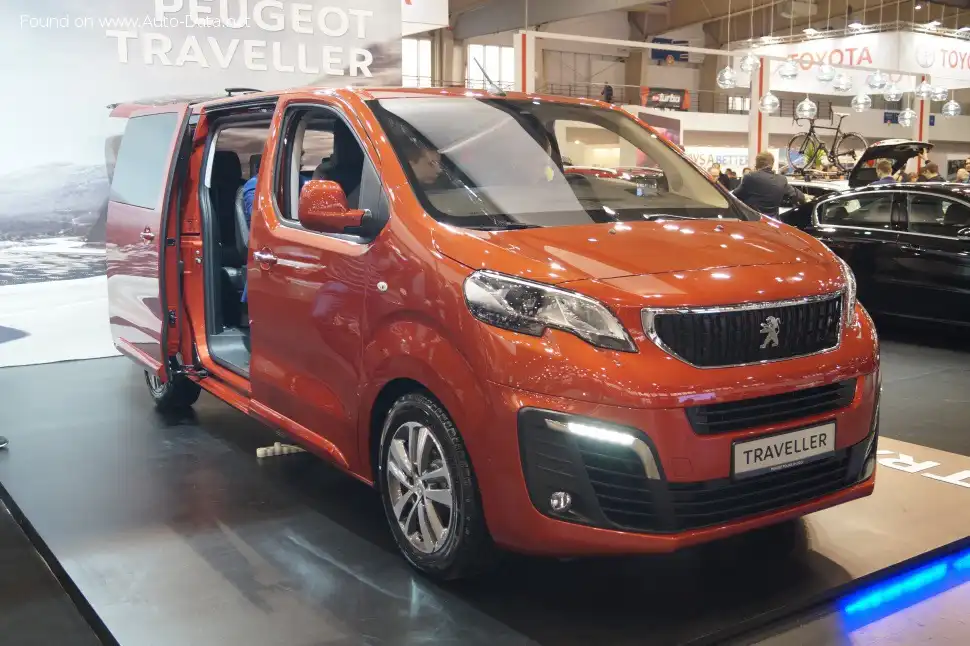
The Peugeot Traveller L2 2.0 BlueHDi (144 hp) is a front-wheel-drive minivan produced by the French manufacturer Peugeot between October 2020 and December 2021. Positioned as a mid-range offering within the broader Traveller L2 lineup, it catered to buyers seeking a balance between fuel efficiency, practicality, and a reasonable level of performance for family or commercial use. The L2 designation indicates a body length, shorter than the long-wheelbase (L3) version, offering enhanced maneuverability in urban environments. This variant played a significant role in Peugeot’s strategy to compete in the increasingly popular European minivan/MPV segment, offering a stylish and functional alternative to established rivals like the Citroën SpaceTourer and Volkswagen Multivan, all built on the EMP2 platform.
Technical Specifications
| Brand | Peugeot |
| Model | Traveller |
| Generation | Traveller L2 |
| Type (Engine) | 2.0 BlueHDi (144 Hp) |
| Start of production | October, 2020 |
| End of production | December, 2021 |
| Powertrain Architecture | Internal Combustion engine |
| Body type | Minivan |
| Seats | 5-8 |
| Doors | 5 |
| Fuel consumption (urban) | 5.7 l/100 km (41.3 US mpg, 49.6 UK mpg, 17.5 km/l) |
| Fuel consumption (extra urban) | 4.9 l/100 km (48 US mpg, 57.6 UK mpg, 20.4 km/l) |
| Fuel consumption (combined) | 5.2 l/100 km (45.2 US mpg, 54.3 UK mpg, 19.2 km/l) |
| CO2 emissions | 138 g/km |
| Fuel Type | Diesel |
| Maximum speed | 185 km/h (114.95 mph) |
| Emission standard | Euro 6d |
| Weight-to-power ratio | 11.9 kg/Hp, 83.8 Hp/tonne |
| Weight-to-torque ratio | 4.6 kg/Nm, 215.4 Nm/tonne |
| Power | 144 Hp @ 3700 rpm |
| Power per litre | 72.1 Hp/l |
| Torque | 370 Nm @ 2000 rpm (272.9 lb.-ft. @ 2000 rpm) |
| Engine layout | Front, Transverse |
| Engine Model/Code | DW10FD |
| Engine displacement | 1997 cm3 (121.86 cu. in.) |
| Number of cylinders | 4 |
| Engine configuration | Inline |
| Number of valves per cylinder | 4 |
| Fuel injection system | Diesel Commonrail |
| Engine aspiration | Turbocharger, Intercooler |
| Engine oil capacity | 6 l (6.34 US qt | 5.28 UK qt) |
| Kerb Weight | 1718-2138 kg (3787.54 – 4713.48 lbs.) |
| Max. weight | 2760 kg (6084.76 lbs.) |
| Max load | 622-1042 kg (1371.28 – 2297.22 lbs.) |
| Trunk (boot) space – minimum | 603-798 l (21.29 – 28.18 cu. ft.) |
| Trunk (boot) space – maximum | 2700 l (95.35 cu. ft.) |
| Fuel tank capacity | 70 l (18.49 US gal | 15.4 UK gal) |
| Max. roof load | 150 kg (330.69 lbs.) |
| Permitted trailer load with brakes (12%) | 1900 kg (4188.78 lbs.) |
| Permitted trailer load without brakes | 750 kg (1653.47 lbs.) |
| Permitted towbar download | 84 kg (185.19 lbs.) |
| Length | 4959 mm (195.24 in.) |
| Width | 1920 mm (75.59 in.) |
| Width including mirrors | 2204 mm (86.77 in.) |
| Height | 1877 mm (73.9 in.) |
| Wheelbase | 3275 mm (128.94 in.) |
| Front track | 1630 mm (64.17 in.) |
| Rear (Back) track | 1618 mm (63.7 in.) |
| Front overhang | 881 mm (34.69 in.) |
| Rear overhang | 803 mm (31.61 in.) |
| Minimum turning circle | 12.9 m (42.32 ft.) |
| Drivetrain Architecture | Front wheel drive |
| Number of gears and type of gearbox | 6 gears, manual transmission |
| Front suspension | Independent type McPherson |
| Rear suspension | Independent coil spring |
| Front brakes | Ventilated discs |
| Rear brakes | Disc |
| Assisting systems | ABS (Anti-lock braking system) |
| Steering type | Steering rack and pinion |
| Power steering | Electric Steering |
| Tires size | 225/55 R17 101V |
| Wheel rims size | 17 |
Powertrain & Engine Architecture
The Peugeot Traveller L2 2.0 BlueHDi (144 hp) is powered by the DW10FD engine, a 2.0-liter inline-four cylinder diesel engine. This engine is a member of Peugeot’s BlueHDi family, incorporating a diesel particulate filter (DPF) and Selective Catalytic Reduction (SCR) technology to meet stringent Euro 6d emission standards. The DW10FD utilizes a common rail direct fuel injection system, delivering fuel at extremely high pressures for optimized combustion. A turbocharger with an intercooler is employed to boost power output and improve torque across a wider rev range. The engine produces 144 horsepower at 3700 rpm and 370 Nm (272.9 lb-ft) of torque at 2000 rpm. This specific variant was paired with a six-speed manual transmission, sending power to the front wheels. The engine’s architecture prioritizes fuel efficiency and reduced emissions, making it suitable for both urban and long-distance driving.
Driving Characteristics
The 144 hp 2.0 BlueHDi engine in the Traveller L2 provides adequate, though not exhilarating, performance. Acceleration is linear, with the engine delivering usable torque from relatively low engine speeds. The six-speed manual transmission allows drivers to keep the engine in its optimal power band. Compared to higher-output versions of the Traveller, this variant feels less strained when fully loaded with passengers and luggage. However, it lacks the outright pace for quick overtaking maneuvers on the highway. The gear ratios are tuned for fuel economy, resulting in a comfortable cruising experience but requiring more frequent downshifts when tackling steep inclines. The front-wheel-drive configuration provides predictable handling, but it’s not designed for sporty driving. Overall, the driving experience is geared towards practicality and comfort rather than performance.
Equipment & Trim Levels
The Traveller L2 2.0 BlueHDi (144 hp) typically came equipped with a respectable level of standard features. These included air conditioning, electric front windows, a touchscreen infotainment system with Bluetooth connectivity, and a multi-function steering wheel. Safety features such as ABS, ESP (Electronic Stability Program), and multiple airbags were also standard. Higher trim levels offered upgrades such as rear parking sensors, a rearview camera, navigation system, and more luxurious interior upholstery. Optional extras included panoramic sunroof, leather seats, and advanced driver-assistance systems like lane departure warning and automatic emergency braking. The interior design was functional and modern, with a focus on maximizing space and practicality.
Chassis & Braking
The Peugeot Traveller L2 utilizes an independent McPherson strut suspension at the front and an independent coil spring suspension at the rear. This setup provides a comfortable ride quality, absorbing bumps and imperfections in the road surface effectively. The front brakes are ventilated discs, while the rear brakes are solid discs, providing adequate stopping power for the vehicle’s weight. Electric power steering offers light and precise steering feel. The chassis is designed to prioritize stability and comfort, rather than sporty handling. The suspension is tuned to manage the vehicle’s weight and provide a stable platform, even when fully loaded.
Market Reception & Comparison
The Peugeot Traveller L2 2.0 BlueHDi (144 hp) was generally well-received by automotive critics for its practicality, fuel efficiency, and comfortable ride. It was often praised for its spacious interior and versatile seating configurations. Compared to the more powerful BlueHDi 180 hp variant, the 144 hp version offered a more affordable entry point into the Traveller range, albeit with a noticeable reduction in performance. Fuel economy was a key selling point, with the 2.0 BlueHDi engine consistently delivering impressive MPG figures. Reliability reports suggest that the DW10FD engine is generally robust, but owners should be mindful of maintaining the DPF system to avoid potential issues.
Legacy
The Peugeot Traveller L2 2.0 BlueHDi (144 hp) remains a popular choice in the used car market, particularly for families and businesses seeking a practical and fuel-efficient minivan. The DW10FD engine has proven to be relatively reliable, provided it has been properly maintained. The availability of spare parts is good, and the vehicle’s relatively simple mechanical design makes it relatively easy to repair. While newer models offer more advanced technology and features, the Traveller L2 2.0 BlueHDi continues to represent a good value proposition for buyers seeking a dependable and versatile people carrier.