Technical Specifications
| Brand | Peugeot |
| Model | Traveller |
| Generation | Traveller L2 |
| Type (Engine) | 2.0 BlueHDi (150 Hp) |
| Start of production | September, 2016 |
| End of production | October, 2020 |
| Powertrain Architecture | Internal Combustion engine |
| Body type | Minivan |
| Seats | 5-8 |
| Doors | 5 |
| Fuel consumption (urban) | 5.9 l/100 km (39.9 US mpg) |
| Fuel consumption (extra urban) | 4.9 l/100 km (48 US mpg) |
| Fuel consumption (combined) | 5.3 l/100 km (44.4 US mpg) |
| CO2 emissions | 139 g/km |
| Fuel Type | Diesel |
| Acceleration 0 – 100 km/h | 11 sec |
| Acceleration 0 – 62 mph | 11 sec |
| Acceleration 0 – 60 mph | 10.5 sec |
| Maximum speed | 170 km/h (105.63 mph) |
| Emission standard | Euro 6 |
| Weight-to-power ratio | 11.4 kg/Hp |
| Weight-to-torque ratio | 4.6 kg/Nm |
| Power | 150 Hp @ 4000 rpm |
| Torque | 370 Nm @ 2000 rpm (272.9 lb.-ft. @ 2000 rpm) |
| Engine layout | Front, Transverse |
| Engine Model/Code | AHX DW10FD |
| Engine displacement | 1997 cm3 (121.86 cu. in.) |
| Number of cylinders | 4 |
| Engine configuration | Inline |
| Cylinder Bore | 85 mm (3.35 in.) |
| Piston Stroke | 88 mm (3.46 in.) |
| Number of valves per cylinder | 4 |
| Fuel injection system | Diesel Commonrail |
| Engine aspiration | Turbocharger, Intercooler |
| Engine oil capacity | 6 l (6.34 US qt | 5.28 UK qt) |
| Kerb Weight | 1705 kg (3758.88 lbs.) |
| Max. weight | 2740 kg (6040.67 lbs.) |
| Max load | 1035 kg (2281.78 lbs.) |
| Trunk (boot) space – maximum | 2550 l (90.05 cu. ft.) |
| Fuel tank capacity | 69 l (18.23 US gal | 15.18 UK gal) |
| AdBlue tank | 22.4 l (5.92 US gal | 4.93 UK gal) |
| Max. roof load | 140-170 kg (308.65 – 374.79 lbs.) |
| Permitted trailer load with brakes (12%) | 2300 kg (5070.63 lbs.) |
| Length | 4956 mm (195.12 in.) |
| Width | 1920 mm (75.59 in.) |
| Width with mirrors folded | 2010 mm (79.13 in.) |
| Width including mirrors | 2204 mm (86.77 in.) |
| Height | 1890 mm (74.41 in.) |
| Wheelbase | 3275 mm (128.94 in.) |
| Front overhang | 881 mm (34.69 in.) |
| Minimum turning circle | 12.9 m (42.32 ft.) |
| Drivetrain Architecture | Front wheel drive |
| Number of gears | 6 gears, manual transmission |
| Front suspension | Independent type McPherson |
| Rear suspension | Independent coil spring |
| Front brakes | Ventilated discs |
| Rear brakes | Disc |
| Tires size | 215/60 R17 |
| Wheel rims size | 17 |
Introduction
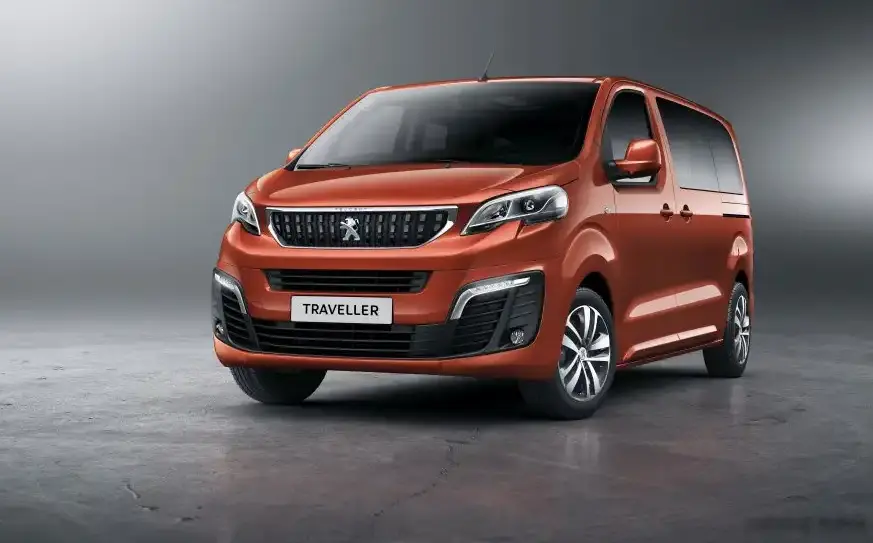
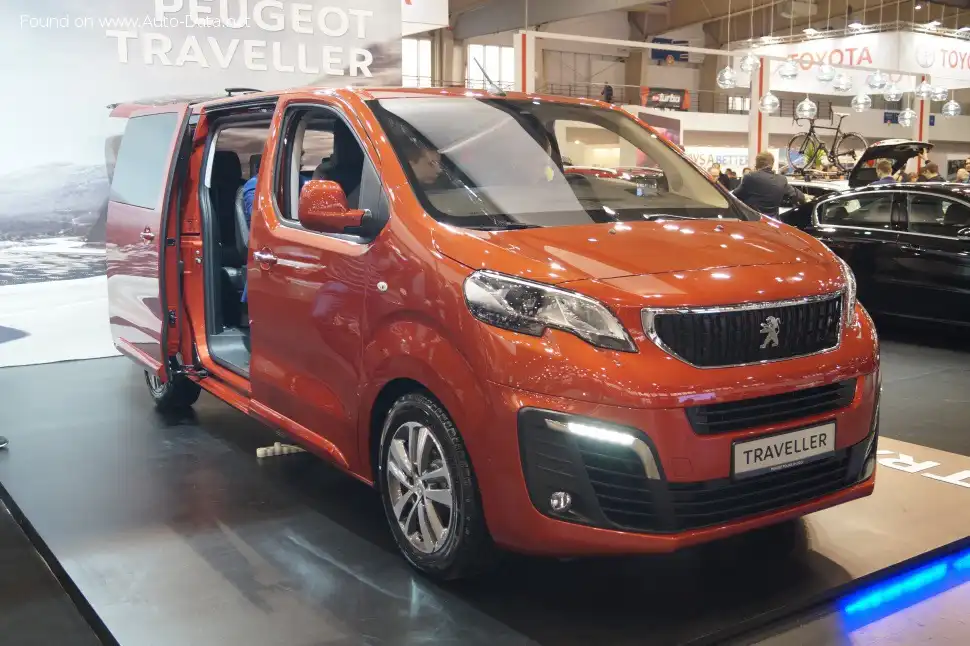
The Peugeot Traveller L2 2.0 BlueHDi (150 Hp) is a minivan produced by the French manufacturer Peugeot between September 2016 and October 2020. It forms part of the first generation of the Traveller, designated internally as the K9. The “L2” designation indicates a body length, representing a medium-length wheelbase version of the vehicle. This particular variant, powered by the 2.0 BlueHDi engine producing 150 horsepower, was positioned as a mid-range offering within the Traveller lineup, appealing to families and those requiring flexible passenger and cargo space. The Traveller, along with its Citroën SpaceTourer and Opel/Vauxhall Zafira Life siblings (all built on the PSA EMP2 platform), aimed to provide a more modern and refined alternative to traditional MPVs.
Powertrain & Engine Architecture
The heart of the Traveller L2 2.0 BlueHDi (150 Hp) is the DW10FD engine, identified by the code AHX. This is a 2.0-liter, four-cylinder diesel engine utilizing common rail direct injection and a turbocharger with intercooling. The engine benefits from Peugeot’s BlueHDi technology, incorporating a Selective Catalytic Reduction (SCR) system utilizing AdBlue to reduce nitrogen oxide (NOx) emissions, ensuring compliance with Euro 6 emission standards. The engine produces 150 horsepower at 4000 rpm and a substantial 370 Nm (272.9 lb-ft) of torque at 2000 rpm. This torque output is a key characteristic of modern diesel engines, providing strong pulling power and relaxed cruising. The engine features four valves per cylinder and a sophisticated engine management system to optimize fuel efficiency and performance. The 6-speed manual transmission was standard on this variant, offering a balance between fuel economy and driver control. The transmission’s gear ratios are tuned to maximize the engine’s torque, providing responsive acceleration in everyday driving situations.
Driving Characteristics
The 150 horsepower 2.0 BlueHDi engine, coupled with the 6-speed manual transmission, delivers a practical and comfortable driving experience in the Traveller L2. While not overtly sporty, the engine provides sufficient power for fully loaded vehicles and highway cruising. Acceleration from 0-60 mph takes approximately 10.5 seconds, and the top speed is around 105.63 mph. The engine’s strong low-end torque makes overtaking relatively effortless, even with a full complement of passengers. Compared to higher-output versions of the 2.0 BlueHDi (typically 180 hp), this variant offers a more fuel-efficient and relaxed driving style. The manual transmission allows for greater driver engagement and control, although it may require more effort in stop-and-go traffic compared to an automatic. The gear ratios are well-matched to the engine’s characteristics, providing smooth and seamless shifts.
Equipment & Trim Levels
The Traveller L2 2.0 BlueHDi (150 Hp) typically came equipped with a reasonable level of standard features. These included air conditioning, electric front windows, a touchscreen infotainment system with Bluetooth connectivity, and a range of safety features such as ABS, ESP (Electronic Stability Program), and multiple airbags. Interior upholstery was typically cloth, with options for upgraded materials available. Common optional extras included navigation system, rear parking sensors, a panoramic sunroof, and various driver-assistance systems. Trim levels varied depending on the market, but generally offered progressively more luxurious features such as leather upholstery, automatic climate control, and advanced infotainment systems. The L2 length provided a generous amount of interior space, with seating configurations ranging from five to eight passengers.
Chassis & Braking
The Peugeot Traveller L2 utilizes a McPherson strut independent suspension at the front and an independent coil spring suspension at the rear. This setup provides a comfortable ride quality, even on uneven road surfaces. The suspension is tuned to prioritize comfort and stability, rather than outright sportiness. The braking system consists of ventilated discs at the front and solid discs at the rear, providing adequate stopping power for the vehicle’s weight. ABS (Anti-lock Braking System) and ESP (Electronic Stability Program) are standard features, enhancing safety and control. The steering is a rack and pinion system, offering precise and responsive handling. The vehicle rides on 215/60 R17 tires, providing a good balance between grip and ride comfort.
Market Reception & Comparison
The Peugeot Traveller L2 2.0 BlueHDi (150 Hp) was generally well-received by automotive critics. It was praised for its spacious interior, comfortable ride, and fuel efficiency. The 150 hp engine was considered adequate for most users, although some reviewers noted that it could feel strained when fully loaded or driving uphill. Compared to the higher-output 180 hp version, the 150 hp model offered better fuel economy, but at the expense of some performance. The Traveller also faced competition from other MPVs such as the Volkswagen Touran, Ford Galaxy, and Renault Espace. The Traveller distinguished itself with its modern design, flexible interior, and competitive pricing.
Legacy
The DW10FD engine, in its various iterations, has proven to be a relatively reliable powertrain. While diesel engines can be susceptible to issues with the diesel particulate filter (DPF) and turbocharger, the BlueHDi system has generally improved reliability. On the used car market, the Peugeot Traveller L2 2.0 BlueHDi (150 Hp) represents a practical and affordable option for families and those needing a versatile vehicle. Maintenance costs are generally reasonable, although it’s important to ensure that the DPF is properly maintained and that regular servicing is carried out. The EMP2 platform on which the Traveller is based is also known for its robustness and reliability, contributing to the vehicle’s long-term durability.