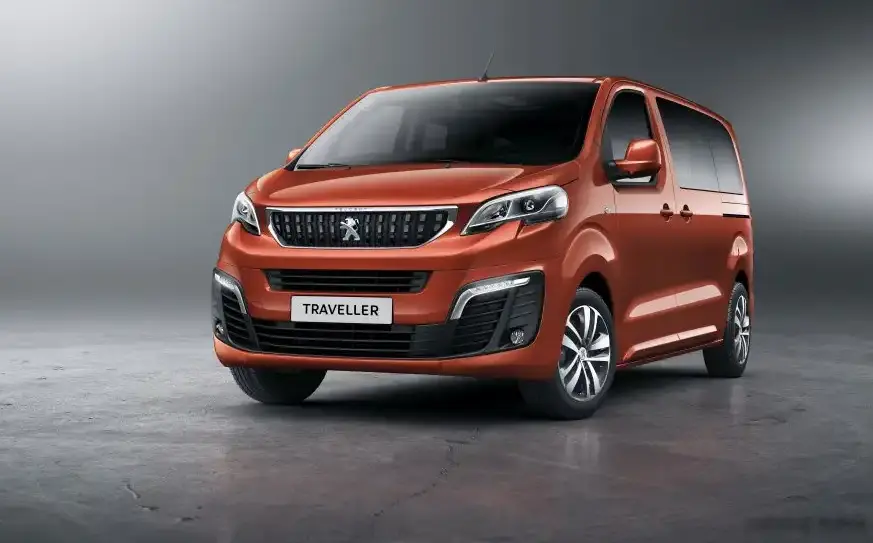
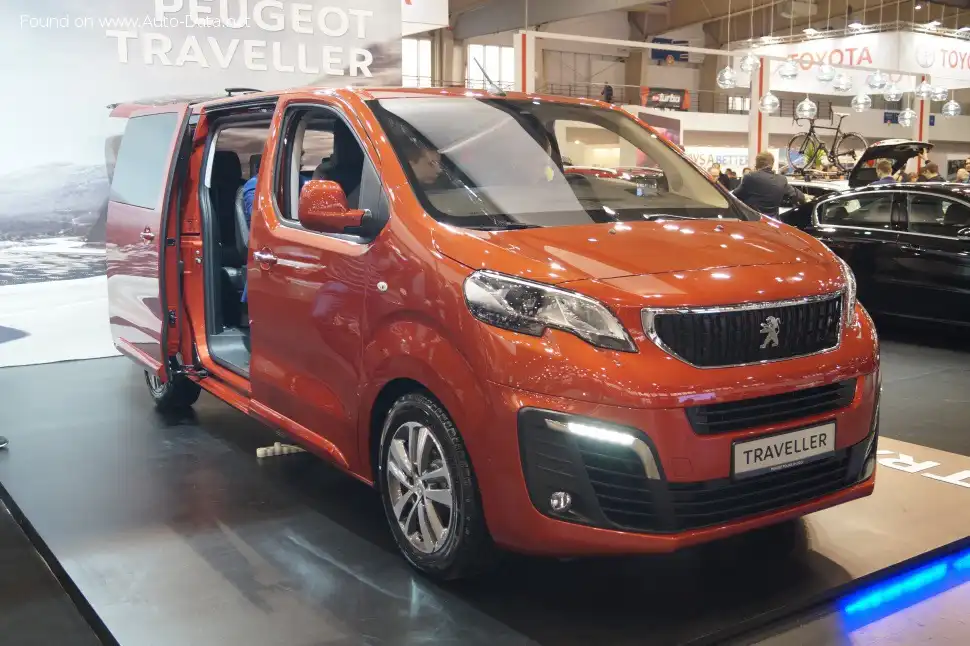
Technical Specifications
| Brand | Peugeot |
| Model | Traveller |
| Generation | Traveller L3 |
| Type (Engine) | 2.0 BlueHDi (144 Hp) |
| Start of production | October, 2020 |
| End of production | December, 2021 |
| Powertrain Architecture | Internal Combustion engine |
| Body type | Minivan |
| Seats | 5-8 |
| Doors | 5 |
| Fuel consumption (urban) | 5.7 l/100 km (41.3 US mpg, 49.6 UK mpg, 17.5 km/l) |
| Fuel consumption (extra urban) | 5.0 l/100 km (47 US mpg, 56.5 UK mpg, 20 km/l) |
| Fuel consumption (combined) | 5.2 l/100 km (45.2 US mpg, 54.3 UK mpg, 19.2 km/l) |
| CO2 emissions | 138 g/km |
| Fuel Type | Diesel |
| Maximum speed | 185 km/h (114.95 mph) |
| Emission standard | Euro 6d |
| Weight-to-power ratio | 12.1 kg/Hp, 82.4 Hp/tonne |
| Weight-to-torque ratio | 4.7 kg/Nm, 211.7 Nm/tonne |
| Power | 144 Hp @ 3700 rpm |
| Power per litre | 72.1 Hp/l |
| Torque | 370 Nm @ 2000 rpm (272.9 lb.-ft. @ 2000 rpm) |
| Engine layout | Front, Transverse |
| Engine Model/Code | DW10FD |
| Engine displacement | 1997 cm3 (121.86 cu. in.) |
| Number of cylinders | 4 |
| Engine configuration | Inline |
| Number of valves per cylinder | 4 |
| Fuel injection system | Diesel Commonrail |
| Engine aspiration | Turbocharger, Intercooler |
| Engine oil capacity | 6 l (6.34 US qt | 5.28 UK qt) |
| Kerb Weight | 1748-2171 kg (3853.68 – 4786.24 lbs.) |
| Max. weight | 2790 kg (6150.9 lbs.) |
| Max load | 619-1042 kg (1364.66 – 2297.22 lbs.) |
| Trunk (boot) space – minimum | 989-1384 l (34.93 – 48.88 cu. ft.) |
| Trunk (boot) space – maximum | 3300 l (116.54 cu. ft.) |
| Fuel tank capacity | 70 l (18.49 US gal | 15.4 UK gal) |
| Max. roof load | 150 kg (330.69 lbs.) |
| Permitted trailer load (braked) | 1900 kg (4188.78 lbs.) |
| Permitted trailer load (unbraked) | 750 kg (1653.47 lbs.) |
| Permitted towbar download | 84 kg (185.19 lbs.) |
| Length | 5309 mm (209.02 in.) |
| Width | 1920 mm (75.59 in.) |
| Width including mirrors | 2204 mm (86.77 in.) |
| Height | 1877 mm (73.9 in.) |
| Wheelbase | 3275 mm (128.94 in.) |
| Front track | 1630 mm (64.17 in.) |
| Rear track | 1618 mm (63.7 in.) |
| Front overhang | 881 mm (34.69 in.) |
| Rear overhang | 1153 mm (45.39 in.) |
| Minimum turning circle | 12.9 m (42.32 ft.) |
| Drivetrain | Front wheel drive |
| Number of gears | 6 |
| Gearbox type | Manual |
| Front suspension | Independent type McPherson |
| Rear suspension | Independent coil spring |
| Front brakes | Ventilated discs |
| Rear brakes | Disc |
| Steering type | Steering rack and pinion |
| Power steering | Electric |
| Tires size | 225/55 R17 101V |
| Wheel rims size | 17 |
The Peugeot Traveller L3 2.0 BlueHDi (144 hp) was introduced as part of the first-generation Traveller range, launched in 2016. The Traveller, along with its Citroën SpaceTourer and Opel/Vauxhall Zafira Life siblings, was designed to offer a modern and practical alternative to traditional MPVs. The L3 variant, signifying the longest wheelbase, prioritizes interior space, making it suitable for larger families or those needing to transport goods. The 2.0 BlueHDi engine, producing 144 horsepower, represented a balance between fuel efficiency and acceptable performance for everyday driving. This specific configuration was a popular choice in Europe, offering a compelling package for those seeking a versatile and economical people carrier.
Powertrain & Engine Architecture
At the heart of the Traveller L3 2.0 BlueHDi (144 hp) lies the DW10FD engine, a 2.0-liter inline-four cylinder diesel engine. This engine is a member of Peugeot’s BlueHDi family, incorporating advanced technologies to reduce emissions and improve fuel economy. It utilizes a common rail direct injection system, delivering fuel directly into the combustion chamber at extremely high pressure. A turbocharger with an intercooler further enhances performance by forcing more air into the engine. The engine produces 144 horsepower at 3700 rpm and 370 Nm (272.9 lb-ft) of torque at 2000 rpm. The engine is transversely mounted in the front of the vehicle. The 144 hp variant was paired with a six-speed manual transmission, providing a good balance between fuel efficiency and driver control. The transmission’s gear ratios are tuned for relaxed cruising and reasonable acceleration, prioritizing fuel economy over outright performance.
Driving Characteristics
The driving experience in the Peugeot Traveller L3 2.0 BlueHDi (144 hp) is characterized by comfort and practicality rather than sporty performance. The 144 hp output, while adequate for most driving situations, doesn’t provide particularly brisk acceleration, especially when the vehicle is fully loaded. The six-speed manual transmission allows for reasonable control, but the long wheelbase and weight of the vehicle mean that gear changes are necessary to maintain momentum, particularly on inclines. Compared to higher-powered versions of the Traveller, this variant feels noticeably slower. However, it offers better fuel economy and a more relaxed driving experience. The suspension is tuned for comfort, absorbing bumps and imperfections in the road well, making it a pleasant vehicle for long journeys. Steering is light and precise, making it easy to maneuver in urban environments.
Equipment & Trim Levels
The Traveller L3 2.0 BlueHDi (144 hp) typically came equipped with a reasonable level of standard features. These included air conditioning, electric front windows, a touchscreen infotainment system with Bluetooth connectivity, and a range of safety features such as ABS, ESP, and multiple airbags. Higher trim levels offered additional features such as rear parking sensors, a panoramic sunroof, leather upholstery, and a more advanced infotainment system with navigation. Optional extras included a head-up display, adaptive cruise control, and a hands-free parking assist system. Interior upholstery was typically cloth, with higher trims offering leather options. The dashboard layout was functional and modern, with a focus on ergonomics and ease of use.
Chassis & Braking
The Peugeot Traveller L3 utilizes an independent McPherson strut suspension at the front and an independent coil spring suspension at the rear. This setup provides a comfortable ride and good handling characteristics. The front brakes are ventilated discs, while the rear brakes are solid discs. ABS (Anti-lock Braking System) and ESP (Electronic Stability Program) are standard features, enhancing safety and stability. The steering system is a rack and pinion type with electric power assistance, providing light and precise steering feel. The tires are typically 225/55 R17, offering a good balance between grip and rolling resistance.
Market Reception & Comparison
The Peugeot Traveller L3 2.0 BlueHDi (144 hp) was generally well-received by critics as a practical and versatile MPV. It was praised for its spacious interior, comfortable ride, and good fuel economy. However, some critics noted that the 144 hp engine could feel underpowered when the vehicle was fully loaded. Compared to the higher-powered diesel variants, this version offered a more affordable entry point into the Traveller range, but at the expense of performance. Its fuel economy was comparable to other MPVs in its class, and its reliability was generally considered to be good. The manual transmission was favored by many drivers for its greater control and fuel efficiency compared to the optional automatic.
Legacy
The Peugeot Traveller L3 2.0 BlueHDi (144 hp) remains a popular choice in the used car market, particularly for families and those needing a versatile people carrier. The DW10FD engine is known for its durability and reliability, provided it has been properly maintained. Common issues include diesel particulate filter (DPF) problems, particularly on vehicles that have primarily been used for short journeys. Overall, this variant represents a good value proposition, offering a spacious, comfortable, and economical vehicle at a reasonable price. Its continued presence on the used car market is a testament to its practicality and enduring appeal.