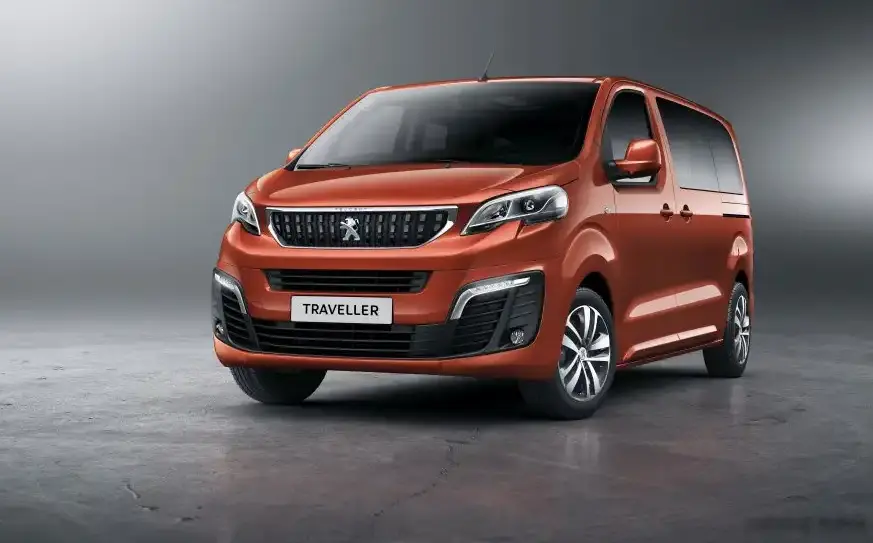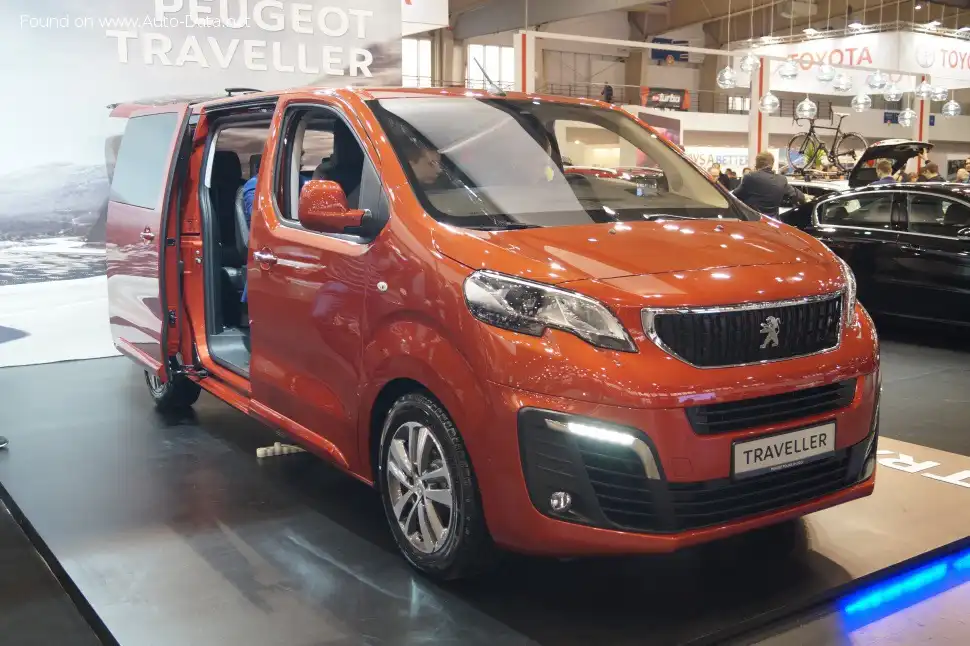
The Peugeot Traveller L3 e-Traveller 75 kWh, producing 136 horsepower, represents Peugeot’s entry into the electric minivan segment. Introduced in October 2020 and continuing through April 2024, this variant is part of the broader Traveller (also known as the SpaceTourer and Expert depending on the market) L3 long-wheelbase generation. Positioned as a practical and eco-conscious people carrier, the e-Traveller aimed to provide a zero-emission alternative within the popular European minivan class. It caters to families and businesses seeking a spacious and versatile vehicle with reduced running costs and environmental impact. The L3 designation indicates an extended wheelbase, offering increased interior space and cargo capacity compared to the standard-length Traveller.
Technical Specifications
| Brand | Peugeot |
| Model | Traveller |
| Generation | Traveller L3 |
| Type (Engine) | e-Traveller 75 kWh (136 Hp) |
| Start of production | October, 2020 |
| End of production | April, 2024 |
| Powertrain Architecture | BEV (Electric Vehicle) |
| Body type | Minivan |
| Seats | 5-8 |
| Doors | 5 |
| Fuel Type | Electricity |
| Acceleration 0 – 100 km/h | 14.3 sec |
| Acceleration 0 – 62 mph | 14.3 sec |
| Acceleration 0 – 60 mph | 13.6 sec |
| Maximum speed | 130 km/h (80.78 mph) |
| Weight-to-power ratio | 15.4 kg/Hp, 65 Hp/tonne |
| Weight-to-torque ratio | 8 kg/Nm, 124.3 Nm/tonne |
| Gross battery capacity | 75 kWh |
| Battery technology | Lithium-ion (Li-Ion) |
| Battery location | Below the floor |
| All-electric range (WLTP) | 320 km (198.84 mi) |
| Average Energy consumption (WLTP) | 27.9 kWh/100 km (44.9 kWh/100 mi) |
| MPGe | 75 |
| km/kWh | 3.6 |
| mi/kWh | 2.2 |
| Electric motor power | 136 Hp @ 5500 rpm |
| Electric motor Torque | 260 Nm (191.77 lb.-ft.) |
| Electric motor location | Front axle, Transverse |
| Electric motor type | Synchronous |
| System power | 136 Hp @ 5500 rpm |
| System torque | 260 Nm (191.77 lb.-ft.) |
| Kerb Weight | 2092-2439 kg (4612.07 – 5377.07 lbs.) |
| Max. weight | 3100 kg (6834.33 lbs.) |
| Max load | 661-1008 kg (1457.26 – 2222.26 lbs.) |
| Trunk (boot) space – minimum | 989-1384 l (34.93 – 48.88 cu. ft.) |
| Trunk (boot) space – maximum | 3300 l (116.54 cu. ft.) |
| Length | 5309 mm (209.02 in.) |
| Width | 1920 mm (75.59 in.) |
| Width including mirrors | 2204 mm (86.77 in.) |
| Height | 1877 mm (73.9 in.) |
| Wheelbase | 3275 mm (128.94 in.) |
| Front track | 1630 mm (64.17 in.) |
| Rear (Back) track | 1618 mm (63.7 in.) |
| Front overhang | 881 mm (34.69 in.) |
| Rear overhang | 1153 mm (45.39 in.) |
| Minimum turning circle | 12.9 m (42.32 ft.) |
| Drivetrain Architecture | One electric motor drives the front wheels. |
| Drive wheel | Front wheel drive |
| Number of gears | 1 |
| Gearbox type | Automatic transmission |
| Front suspension | Independent type McPherson |
| Rear suspension | Independent coil spring |
| Front brakes | Ventilated discs |
| Rear brakes | Disc |
| Assisting systems | ABS (Anti-lock braking system) |
| Steering type | Steering rack and pinion |
| Power steering | Electric |
| Tires size | 225/55 R17 101V |
| Wheel rims size | 17 |
Powertrain & Engine Architecture
The Peugeot e-Traveller L3 utilizes a fully electric powertrain. At its heart is a 75 kWh lithium-ion battery pack positioned under the vehicle floor, contributing to a low center of gravity and maximizing interior space. This battery powers a synchronous electric motor mounted transversely on the front axle, delivering 136 horsepower at 5500 rpm and 260 Nm (191.77 lb.-ft.) of torque. The single-speed automatic transmission efficiently transfers power to the front wheels. The charging system supports both AC and DC fast charging, allowing for convenient replenishment of the battery at home or on the go. The e-Traveller does not employ a traditional multi-gear transmission, relying on the electric motor’s broad torque curve and the single-speed gearbox for propulsion.
Driving Characteristics
The 136 hp electric powertrain in the e-Traveller L3 prioritizes efficiency and smooth operation over outright performance. Acceleration from 0-60 mph takes approximately 13.6 seconds, and top speed is limited to 80.78 mph. While not particularly quick, the instant torque delivery characteristic of electric motors provides adequate responsiveness for everyday driving situations. The single-speed transmission offers seamless acceleration, and the lack of gear changes contributes to a refined driving experience. Compared to petrol or diesel-powered Traveller variants, the e-Traveller offers a quieter and more relaxed driving experience, particularly in urban environments. The extended wheelbase of the L3 model enhances stability, but also slightly reduces maneuverability compared to the standard-length Traveller.
Equipment & Trim Levels
The e-Traveller L3 typically came equipped with a generous level of standard features, reflecting its positioning as a modern and practical vehicle. Interior appointments included comfortable seating for up to eight passengers, depending on the configuration. Standard features often included air conditioning, a touchscreen infotainment system with smartphone integration (Apple CarPlay and Android Auto), and a suite of safety features such as ABS, electronic stability control, and multiple airbags. Higher trim levels offered upgrades such as leather upholstery, panoramic sunroof, and advanced driver-assistance systems like adaptive cruise control and lane-keeping assist. Optional extras included parking sensors, a reversing camera, and a navigation system.
Chassis & Braking
The e-Traveller L3 utilizes an independent McPherson strut suspension at the front and an independent coil spring suspension at the rear, providing a comfortable ride quality. The suspension is tuned to balance ride comfort with handling stability, considering the vehicle’s weight and dimensions. Braking duties are handled by ventilated discs at the front and solid discs at the rear, providing adequate stopping power. The electric powertrain incorporates regenerative braking, which helps to recapture energy during deceleration and extend the vehicle’s range. Electric power steering provides light and precise steering feel.
Market Reception & Comparison
The Peugeot e-Traveller L3 was generally well-received by critics for its practicality, spaciousness, and zero-emission credentials. Its range of approximately 198.84 miles (WLTP) was considered competitive within the electric minivan segment, although it fell short of some longer-range alternatives. Fuel economy, expressed as 75 MPGe, was a significant advantage over conventional petrol or diesel vehicles. Compared to the petrol and diesel Traveller variants, the e-Traveller offered lower running costs due to reduced fuel and maintenance expenses. However, the higher initial purchase price was a potential drawback for some buyers. The e-Traveller competed with other electric minivans such as the Volkswagen ID. Buzz and the Mercedes-Benz EQV.
Legacy
The Peugeot e-Traveller L3 represents a significant step towards electrification in the minivan segment. While still relatively new to the market, early reports suggest that the electric powertrain is proving to be reliable. The battery pack is covered by an eight-year/100,000-mile warranty, providing peace of mind for owners. On the used car market, the e-Traveller L3 is gaining popularity as buyers increasingly seek electric vehicles. Its spacious interior, practical features, and zero-emission operation make it an attractive option for families and businesses looking for a sustainable and versatile people carrier. As battery technology continues to improve and charging infrastructure expands, the e-Traveller is likely to become an increasingly desirable and valuable vehicle.