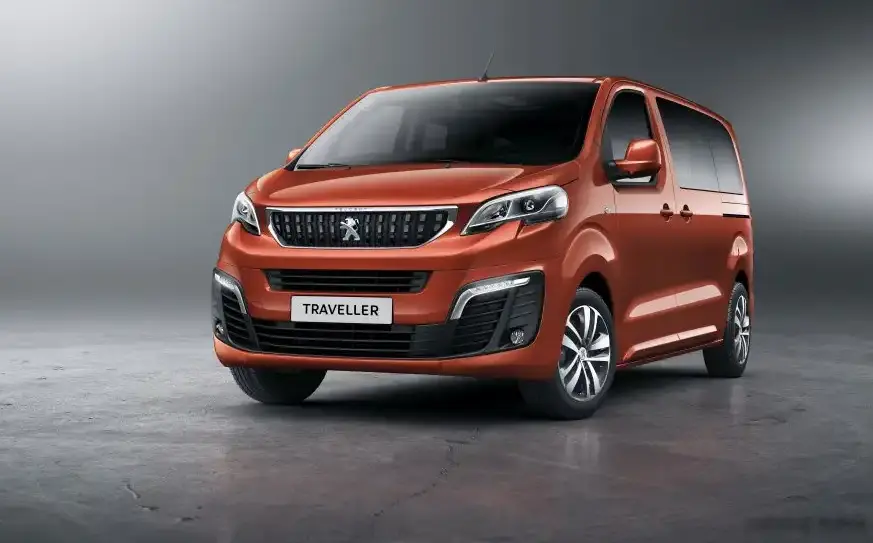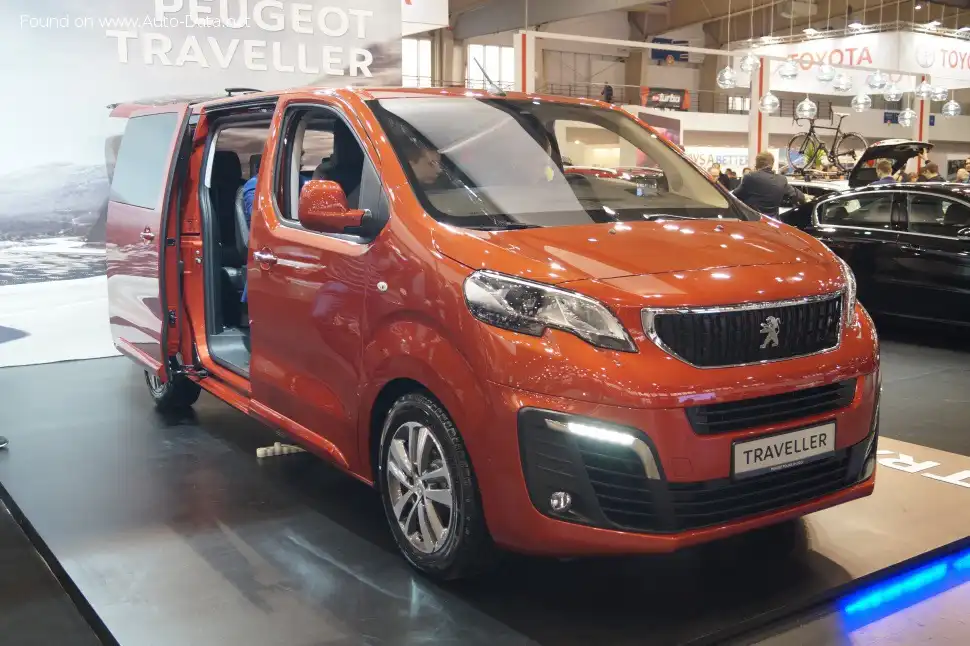
The Peugeot Traveller L3 (facelift 2024) 2.0 BlueHDi 177 Hp EAT8 represents a significant iteration of Peugeot’s popular minivan, launched in April 2024. This variant slots into the mid-range of the Traveller L3 lineup, offering a balance between fuel efficiency, performance, and practicality for families and commercial users alike. The L3 designation indicates the extended wheelbase version, providing increased interior space and cargo capacity compared to the standard-length Traveller. It’s positioned within the broader Peugeot light commercial vehicle and passenger vehicle strategy, aiming to compete with offerings from Volkswagen, Citroën, and Renault in the European market. This model builds upon the foundations of the original Traveller, introduced in 2016, incorporating updated styling, technology, and powertrain refinements.
Technical Specifications
| Brand | Peugeot |
| Model | Traveller |
| Generation | Traveller L3 (facelift 2024) |
| Type (Engine) | 2.0 BlueHDi (177 Hp) EAT8 |
| Start of production | April, 2024 |
| Powertrain Architecture | Internal Combustion engine |
| Body type | Minivan |
| Seats | 5-8 |
| Doors | 5 |
| Fuel consumption at Low speed (WLTP) | 8.8-8.9 l/100 km (26.7 – 26.4 US mpg, 32.1 – 31.7 UK mpg, 11.4 – 11.2 km/l) |
| Fuel consumption at Medium speed (WLTP) | 7.1-7.2 l/100 km (33.1 – 32.7 US mpg, 39.8 – 39.2 UK mpg, 14.1 – 13.9 km/l) |
| Fuel consumption at high speed (WLTP) | 6.3-6.4 l/100 km (37.3 – 36.8 US mpg, 44.8 – 44.1 UK mpg, 15.9 – 15.6 km/l) |
| Fuel consumption at very high speed (WLTP) | 8.0-8.1 l/100 km (29.4 – 29 US mpg, 35.3 – 34.9 UK mpg, 12.5 – 12.3 km/l) |
| Combined fuel consumption (WLTP) | 7.4-7.5 l/100 km (31.8 – 31.4 US mpg, 38.2 – 37.7 UK mpg, 13.5 – 13.3 km/l) |
| CO2 emissions (WLTP) | 194-197 g/km |
| Fuel Type | Diesel |
| Acceleration 0 – 100 km/h | 10.6 sec |
| Acceleration 0 – 62 mph | 10.6 sec |
| Acceleration 0 – 60 mph | 10.1 sec |
| Maximum speed | 185 km/h (114.95 mph) |
| Emission standard | Euro 6e |
| Weight-to-power ratio | 10.8 kg/Hp, 92.6 Hp/tonne |
| Weight-to-torque ratio | 4.8 kg/Nm, 209.3 Nm/tonne |
| Power | 177 Hp @ 3750 rpm |
| Power per litre | 88.6 Hp/l |
| Torque | 400 Nm @ 2000 rpm (295.02 lb.-ft. @ 2000 rpm) |
| Engine layout | Front, Transverse |
| Engine Model/Code | DW10FDCU |
| Engine displacement | 1997 cm3 (121.86 cu. in.) |
| Number of cylinders | 4 |
| Engine configuration | Inline |
| Number of valves per cylinder | 4 |
| Fuel injection system | Diesel Commonrail |
| Engine aspiration | Turbocharger, Intercooler |
| Engine oil capacity | 6 l (6.34 US qt | 5.28 UK qt) |
| Kerb Weight | 1911-2260 kg (4213.03 – 4982.45 lbs.) |
| Max. weight | 2869 kg (6325.06 lbs.) |
| Max load | 609-958 kg (1342.62 – 2112.03 lbs.) |
| Trunk (boot) space – minimum | 989-1384 l (34.93 – 48.88 cu. ft.) |
| Trunk (boot) space – maximum | 3300 l (116.54 cu. ft.) |
| Fuel tank capacity | 70 l (18.49 US gal | 15.4 UK gal) |
| Max. roof load | 150 kg (330.69 lbs.) |
| Permitted trailer load with brakes (12%) | 1900 kg (4188.78 lbs.) |
| Permitted trailer load without brakes | 750 kg (1653.47 lbs.) |
| Permitted towbar download | 84 kg (185.19 lbs.) |
| Length | 5333 mm (209.96 in.) |
| Width | 1920 mm (75.59 in.) |
| Width with mirrors folded | 2010 mm (79.13 in.) |
| Width including mirrors | 2204 mm (86.77 in.) |
| Height | 1890 mm (74.41 in.) |
| Wheelbase | 3275 mm (128.94 in.) |
| Front track | 1627 mm (64.06 in.) |
| Rear (Back) track | 1600 mm (62.99 in.) |
| Front overhang | 904 mm (35.59 in.) |
| Rear overhang | 1153 mm (45.39 in.) |
| Minimum turning circle (turning diameter) | 12.9 m (42.32 ft.) |
| Drivetrain Architecture | The Internal combustion engine (ICE) drives the front wheels of the vehicle. |
| Drive wheel | Front wheel drive |
| Number of gears and type of gearbox | 8 gears, automatic transmission |
| Front brakes | Ventilated discs |
| Rear brakes | Disc |
| Assisting systems | ABS (Anti-lock braking system) |
| Steering type | Steering rack and pinion |
| Power steering | Electric Steering |
| Tires size | 225/55 R17 101V |
| Wheel rims size | 17 |
Powertrain & Engine Architecture
The heart of the Peugeot Traveller L3 2.0 BlueHDi 177 is the DW10FDCU engine, a 2.0-liter inline-four cylinder diesel engine. This engine is a member of the PSA Group’s (now Stellantis) BlueHDi family, known for its focus on reducing emissions through advanced aftertreatment systems. The engine utilizes a common rail direct injection system, delivering fuel at extremely high pressures for optimized combustion. A turbocharger with an intercooler further enhances performance by forcing more air into the cylinders. The engine produces 177 horsepower at 3750 rpm and 400 Nm (295 lb-ft) of torque at 2000 rpm. This torque output is particularly beneficial for a vehicle of this size, providing ample pulling power for carrying passengers and cargo. The engine is paired with an EAT8 (Efficient Automatic Transmission 8-speed) automatic gearbox. This transmission is designed for smooth and efficient gear changes, contributing to improved fuel economy and driving comfort. The EAT8 features a torque converter and is electronically controlled, adapting to driving conditions and driver input.
Driving Characteristics
The 177 hp 2.0 BlueHDi engine, coupled with the EAT8 transmission, delivers a competent, if not exhilarating, driving experience. Acceleration from 0-60 mph takes around 10.1 seconds, which is adequate for everyday driving but noticeably slower than higher-powered Traveller variants. The EAT8 transmission generally shifts smoothly, although occasional hesitation can be felt during quick acceleration. The gear ratios are well-chosen for maintaining comfortable cruising speeds on highways. The engine provides sufficient torque for overtaking maneuvers, but drivers may need to utilize the transmission’s manual mode for more responsive downshifts. Compared to the 1.5 BlueHDi engine, the 2.0 offers more power and torque, resulting in improved performance, especially when fully loaded. However, it doesn’t match the responsiveness of the petrol engines available in some markets. The front-wheel-drive configuration provides predictable handling, but it’s not designed for off-road use.
Equipment & Trim Levels
The Traveller L3 2.0 BlueHDi 177 typically comes well-equipped, reflecting its mid-range positioning. Standard features often include air conditioning, a touchscreen infotainment system with Apple CarPlay and Android Auto compatibility, Bluetooth connectivity, and a rearview camera. Higher trim levels add features such as navigation, a panoramic sunroof, leather upholstery, and advanced driver-assistance systems (ADAS) like adaptive cruise control and lane-keeping assist. The interior is designed with practicality in mind, offering flexible seating configurations and ample storage compartments. The L3’s extended wheelbase provides generous legroom for passengers in the second and third rows. Optional extras include a head-up display, a premium sound system, and parking sensors.
Chassis & Braking
The Peugeot Traveller L3 utilizes a conventional front-wheel-drive chassis with MacPherson strut suspension at the front and a torsion beam suspension at the rear. This setup provides a comfortable ride quality, absorbing bumps and imperfections in the road surface effectively. The steering is light and precise, making it easy to maneuver in urban environments. The braking system consists of ventilated discs at the front and solid discs at the rear, providing adequate stopping power. Anti-lock Braking System (ABS) and Electronic Stability Control (ESC) are standard safety features. The suspension is tuned to prioritize comfort over sporty handling, reflecting the vehicle’s intended use as a family or commercial vehicle.
Market Reception & Comparison
The Peugeot Traveller L3 2.0 BlueHDi 177 has been generally well-received by critics and consumers. It’s praised for its spacious interior, comfortable ride, and fuel efficiency. The EAT8 transmission is also a positive point, offering smooth and convenient gear changes. However, some reviewers have noted that the engine can be somewhat noisy under heavy acceleration. Compared to the 1.5 BlueHDi variant, the 2.0 offers a noticeable performance improvement, making it a better choice for those who frequently carry passengers or cargo. Fuel economy is competitive within its class, averaging around 31.8-31.4 US mpg in combined driving conditions. Reliability has been generally good, although some owners have reported minor issues with the infotainment system.
Legacy
The DW10FDCU engine has proven to be a durable and reliable powerplant, with many examples exceeding high mileage without major issues. The EAT8 transmission has also demonstrated good longevity. In the used car market, the Peugeot Traveller L3 2.0 BlueHDi 177 represents a practical and versatile option for families and businesses. Its spacious interior, comfortable ride, and reasonable running costs make it an attractive alternative to larger SUVs and MPVs. As with any used vehicle, it’s important to check the service history and inspect the vehicle thoroughly before purchasing.