
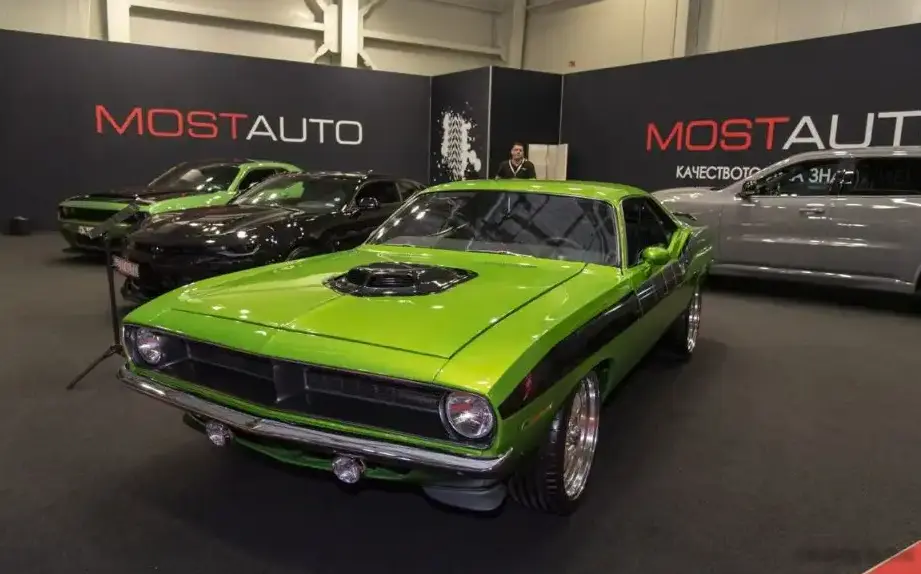
The Plymouth Barracuda III, specifically the 5.2 V8 (230 Hp) variant, represents a pivotal moment in the Barracuda’s lineage. Produced solely for the 1970 model year, this iteration marked a significant departure from its earlier, more compact predecessors. The Barracuda III was the first generation to be based on the Chrysler A-body platform, sharing its underpinnings with the Dodge Challenger. This move aimed to position the Barracuda as a more serious competitor in the burgeoning muscle car market. The 1970 model year was a single year design, making it a unique and collectible vehicle within the Barracuda’s history.
Technical Specifications
| Brand | Plymouth |
| Model | Barracuda |
| Generation | Barracuda III |
| Type (Engine) | 5.2 V8 (230 Hp) |
| Start of production | 1970 |
| End of production | 1970 |
| Powertrain Architecture | Internal Combustion engine |
| Body type | Coupe |
| Seats | 4 |
| Doors | 2 |
| Fuel Type | Petrol (Gasoline) |
| Power | 230 Hp @ 4400 rpm |
| Power per litre | 44.2 Hp/l |
| Torque | 434 Nm @ 2000 rpm / 320.1 lb.-ft. @ 2000 rpm |
| Engine layout | Front, Longitudinal |
| Engine Model/Code | LA |
| Engine displacement | 5200 cm3 / 317.32 cu. in. |
| Number of cylinders | 8 |
| Engine configuration | V-engine |
| Cylinder Bore | 99.2 mm / 3.91 in. |
| Piston Stroke | 84.1 mm / 3.31 in. |
| Compression ratio | 8.8:1 |
| Number of valves per cylinder | 2 |
| Fuel injection system | Carburettor |
| Engine aspiration | Naturally aspirated engine |
| Valvetrain | OHV |
| Engine oil capacity | 4.7 l / 4.97 US qt | 4.14 UK qt |
| Trunk (boot) space – minimum | 167 l / 5.9 cu. ft. |
| Fuel tank capacity | 72 l / 19.02 US gal | 15.84 UK gal |
| Length | 4742 mm / 186.69 in. |
| Width | 1902 mm / 74.88 in. |
| Height | 1293 mm / 50.91 in. |
| Wheelbase | 2743 mm / 107.99 in. |
| Front track | 1516 mm / 59.69 in. |
| Rear (Back) track | 1557 mm / 61.3 in. |
| Drivetrain Architecture | The Internal combustion engine (ICE) drives the rear wheels of the vehicle. |
| Drive wheel | Rear wheel drive |
| Number of gears and type of gearbox | 3 gears, manual transmission |
| Front suspension | Independent torsion bar, double wishbone |
| Rear suspension | Rigid axle suspension, Leaf spring |
| Front brakes | Drum, 254×63.5 mm |
| Rear brakes | Drum, 254×63.5 mm |
| Steering type | Cone worm with recirculation balls |
| Wheel rims size | 5J x 14; 6J x 14 |
Powertrain & Engine Architecture
The heart of the 1970 Barracuda III 5.2 V8 was the Chrysler LA engine family. Specifically, this variant utilized the 318 cubic inch (5.2-liter) LA 318 engine. This engine was a robust and relatively simple design, featuring a cast iron block and cylinder heads. The LA engine was known for its durability and ease of maintenance. The 230 horsepower output was achieved through a two-barrel carburetor, a relatively conservative setup compared to the higher-performance versions available with four-barrel carburetors and different camshaft profiles. The engine employed an overhead valve (OHV) valvetrain with two valves per cylinder. The 8.8:1 compression ratio was a compromise between performance and the increasing concerns about emissions regulations at the time. The engine was mounted longitudinally in the engine bay, driving the rear wheels.
Driving Characteristics
The 1970 Barracuda III with the 318 V8 and three-speed manual transmission offered a balanced driving experience. While not as overtly aggressive as the 340 or 383 cubic inch variants, the 318 provided ample power for everyday driving and spirited cruising. The three-speed manual transmission offered a straightforward driving experience, with gear ratios geared towards acceleration and highway cruising. Acceleration was respectable for the era, but the 318 lacked the raw punch of its larger displacement siblings. Handling was typical of American muscle cars of the time – competent but not particularly refined. The torsion bar front suspension provided a reasonably comfortable ride, while the leaf spring rear suspension could be prone to some axle hop under hard acceleration.
Equipment & Trim Levels
The 1970 Barracuda III offered a range of standard and optional equipment. The base model included basic interior trim, a simple dashboard layout, and standard bench seats. The 5.2 V8 variant typically came with a slightly upgraded interior compared to the base six-cylinder models, but it still remained relatively spartan. Optional extras included upgraded upholstery, a center console, a radio, and various exterior trim packages. The Barracuda was available in a variety of colors, both exterior and interior, allowing buyers to personalize their vehicles. The ‘Cuda’ package, while often associated with the higher-performance models, could also be ordered with the 318 engine, adding a sporty appearance with unique badging and exterior trim.
Chassis & Braking
The Barracuda III utilized a robust chassis based on the Chrysler A-body platform. The front suspension featured an independent torsion bar setup with double wishbones, providing a relatively comfortable ride. The rear suspension employed a traditional leaf spring setup with a solid axle. Braking duties were handled by drum brakes on all four wheels, a common setup for the time. The drum brakes were adequate for normal driving conditions, but they lacked the stopping power of disc brakes, which were becoming increasingly common on performance cars. Steering was accomplished via a cone worm and recirculating ball system, providing a somewhat vague but manageable steering feel.
Market Reception & Comparison
The 1970 Plymouth Barracuda III 5.2 V8 was generally well-received by automotive critics. It was praised for its stylish design, comfortable interior, and reliable powertrain. However, it was often overshadowed by the higher-performance models, such as the 340 and 383 variants. Compared to the 340 Barracuda, the 318 offered less power and acceleration, but it also delivered better fuel economy and lower maintenance costs. The 318 was also a more affordable option, making it accessible to a wider range of buyers. In terms of reliability, the 318 engine was considered to be one of the most durable and long-lasting engines produced by Chrysler.
Legacy
The 1970 Plymouth Barracuda III 5.2 V8, while not the most sought-after variant, holds a special place in automotive history. It represents a transitional period for the Barracuda, moving from a compact car to a more substantial muscle car. The LA 318 engine proved to be exceptionally durable, and many examples are still on the road today. In the used car market, the 1970 Barracuda III 5.2 V8 is considered a relatively affordable entry point into the classic muscle car world. Its simplicity, reliability, and readily available parts make it a popular choice for restoration projects and enthusiasts. While it may not possess the same cachet as its higher-performance siblings, the 318-powered Barracuda offers a unique blend of style, comfort, and affordability.
