
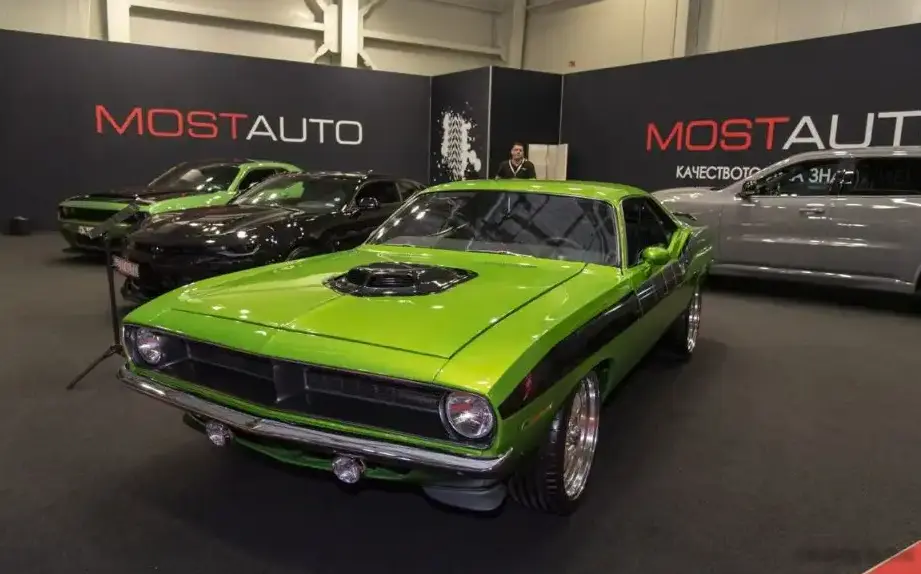
The Plymouth Barracuda III, specifically the 5.6 V8 (275 Hp) variant, represents a pivotal moment in the muscle car era. Produced solely for the 1970 model year, this iteration of the Barracuda marked a significant departure from its earlier, more compact predecessors. It was the first year of the third generation, and the Barracuda moved to a larger platform, sharing its underpinnings with the Dodge Challenger. This shift aimed to broaden the Barracuda’s appeal and compete more directly with the Ford Mustang and Chevrolet Camaro. The 1970 Barracuda offered a wide range of engine options, with the 5.6L V8 being a popular choice for those seeking a balance of performance and affordability.
Technical Specifications
| Brand | Plymouth |
| Model | Barracuda |
| Generation | Barracuda III |
| Type (Engine) | 5.6 V8 (275 Hp) |
| Start of production | 1970 |
| End of production | 1970 |
| Powertrain Architecture | Internal Combustion engine |
| Body type | Coupe |
| Seats | 4 |
| Doors | 2 |
| Fuel Type | Petrol (Gasoline) |
| Power | 275 Hp @ 5000 rpm |
| Power per litre | 49.4 Hp/l |
| Torque | 461 Nm @ 3200 rpm / 340.02 lb.-ft. @ 3200 rpm |
| Engine layout | Front, Longitudinal |
| Engine Model/Code | LA |
| Engine displacement | 5563 cm3 / 339.48 cu. in. |
| Number of cylinders | 8 |
| Engine configuration | V-engine |
| Cylinder Bore | 102.6 mm / 4.04 in. |
| Piston Stroke | 84.1 mm / 3.31 in. |
| Compression ratio | 10.5:1 |
| Number of valves per cylinder | 2 |
| Fuel injection system | Carburettor |
| Engine aspiration | Naturally aspirated engine |
| Valvetrain | OHV |
| Engine oil capacity | 4.7 l / 4.97 US qt | 4.14 UK qt |
| Trunk (boot) space – minimum | 167 l / 5.9 cu. ft. |
| Fuel tank capacity | 72 l / 19.02 US gal | 15.84 UK gal |
| Length | 4742 mm / 186.69 in. |
| Width | 1902 mm / 74.88 in. |
| Height | 1293 mm / 50.91 in. |
| Wheelbase | 2743 mm / 107.99 in. |
| Front track | 1516 mm / 59.69 in. |
| Rear (Back) track | 1542 mm / 60.71 in. |
| Drivetrain Architecture | The Internal combustion engine (ICE) drives the rear wheels of the vehicle. |
| Drive wheel | Rear wheel drive |
| Number of gears and type of gearbox | 3 gears, manual transmission |
| Front suspension | Independent torsion bar, double wishbone, Transverse stabilizer |
| Rear suspension | Rigid axle suspension, Transverse stabilizer, Leaf spring |
| Front brakes | Drum, 279.4×76.2 mm |
| Rear brakes | Drum, 279.4×63.5 mm |
| Steering type | Cone worm with recirculation balls |
| Wheel rims size | 7J x 15 |
Powertrain & Engine Architecture
The heart of the 1970 Barracuda III 5.6 V8 was the LA engine series, specifically the 340 cubic inch (5.6L) V8. This engine was a robust and relatively lightweight design, known for its strong low-end torque. The LA engine utilized a cast iron block and cylinder heads, with a two-barrel carburetor managing fuel delivery. The overhead valve (OHV) configuration, while traditional, proved reliable and easy to maintain. The 275 horsepower output was achieved through a 10.5:1 compression ratio and a carefully tuned exhaust system. While not the most powerful engine option available for the Barracuda (the 426 Hemi and 440 Magnum offered significantly more horsepower), the 340 provided a good balance of performance and fuel efficiency for everyday driving. The engine was mounted longitudinally in the front of the vehicle, sending power to the rear wheels.
Driving Characteristics
The 1970 Barracuda III 5.6 V8, equipped with the standard three-speed manual transmission, offered a spirited driving experience. The 340 cubic inch engine delivered ample torque, making it responsive in various driving situations. Acceleration was brisk, though not comparable to the higher-horsepower variants. The three-speed manual transmission provided a direct connection to the engine, allowing for precise control. Compared to the automatic transmission options, the manual offered a more engaging driving experience and slightly improved fuel economy. The Barracuda’s relatively lightweight construction, compared to some of its larger muscle car rivals, contributed to its nimble handling. However, the leaf spring rear suspension, while common for the time, could result in a somewhat rough ride over uneven surfaces.
Equipment & Trim Levels
The 1970 Barracuda III offered a range of trim levels, with the 5.6 V8 being available on several of them. Standard features included a basic interior with vinyl upholstery, a three-spoke steering wheel, and a simple dashboard layout. Optional extras included upgraded interior trim packages, bucket seats, a center console, and a variety of convenience features such as power steering and power brakes. The Barracuda also offered a wide array of exterior options, including different paint colors, stripes, and hood scoops. The ‘Cuda’ package, a popular option, added a more aggressive appearance with unique styling cues and performance enhancements.
Chassis & Braking
The 1970 Barracuda III utilized a robust chassis designed to handle the power of its various engine options. The front suspension featured an independent torsion bar setup with double wishbones and a transverse stabilizer bar, providing good handling and ride comfort. The rear suspension employed a traditional rigid axle setup with leaf springs and a transverse stabilizer bar. Braking duties were handled by drum brakes on all four wheels, which were adequate for the car’s performance capabilities but lacked the stopping power of disc brakes. The steering system was a cone worm with recirculation balls, offering a reasonable level of precision and feedback.
Market Reception & Comparison
The 1970 Plymouth Barracuda III was generally well-received by automotive critics. The new, larger platform and improved styling were praised, as was the wide range of engine options. The 5.6 V8 variant was considered a good value for those seeking a balance of performance and affordability. Compared to the more expensive Hemi and Magnum models, the 340 offered a more accessible entry point into the muscle car market. Fuel economy, while not exceptional, was reasonable for a V8-powered vehicle of the era. Reliability was generally good, although the carburetor required periodic adjustment and maintenance.
Legacy
The 1970 Plymouth Barracuda III 5.6 V8 holds a significant place in automotive history as a representative of the classic muscle car era. The LA 340 engine proved to be a durable and reliable powerplant, and many examples are still on the road today. In the used car market, the 1970 Barracuda III, particularly well-maintained examples, has become increasingly collectible. The 5.6 V8 variant, while not as sought after as the Hemi or Magnum models, remains a popular choice for enthusiasts seeking a classic muscle car with a good balance of performance, affordability, and reliability. Its enduring appeal is a testament to the Barracuda’s iconic design and the enduring legacy of the American muscle car.
