
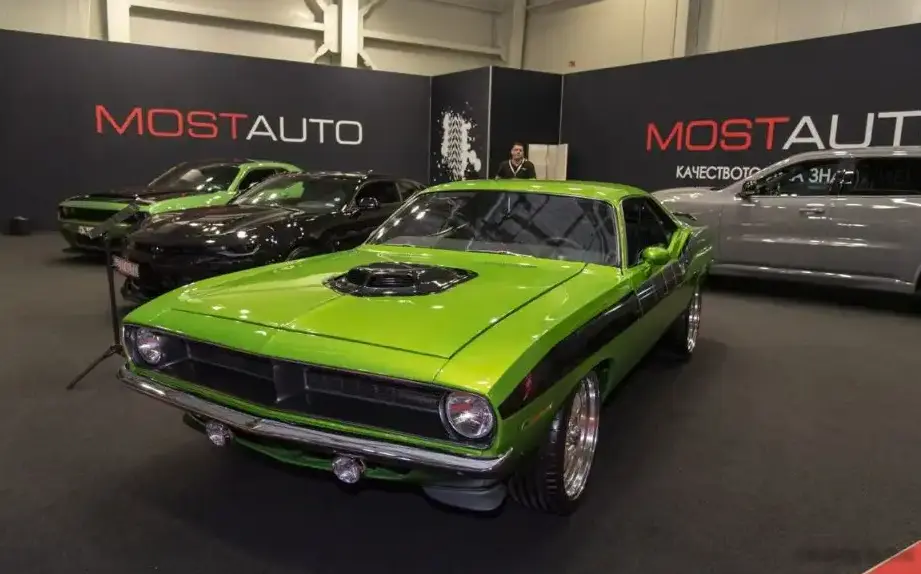
The Plymouth Barracuda III, specifically the variant equipped with the 6.3-liter (383 cubic inch) V8 engine producing 290 horsepower and paired with the TorqueFlite automatic transmission, represents a significant offering within the second-generation Barracuda lineup. Produced solely for the 1970 model year, this configuration aimed to provide a balance between performance and convenience for the American muscle car enthusiast. It occupied a middle ground in the Barracuda range, positioned above the base inline-six models but below the higher-performance ‘Cuda variants featuring larger displacement engines like the 426 Hemi and 440 Magnum.
Technical Specifications
| Brand | Plymouth |
| Model | Barracuda |
| Generation | Barracuda III |
| Type (Engine) | 6.3 V8 (290 Hp) TorqueFlite |
| Start of production | 1970 |
| End of production | 1970 |
| Powertrain Architecture | Internal Combustion engine |
| Body type | Coupe |
| Seats | 4 |
| Doors | 2 |
| Fuel Type | Petrol (Gasoline) |
| Power | 290 Hp @ 4400 rpm |
| Power per litre | 46.2 Hp/l |
| Torque | 529 Nm @ 2800 rpm / 390.17 lb.-ft. @ 2800 rpm |
| Engine layout | Front, Longitudinal |
| Engine Model/Code | B |
| Engine displacement | 6277 cm3 / 383.05 cu. in. |
| Number of cylinders | 8 |
| Engine configuration | V-engine |
| Cylinder Bore | 108 mm / 4.25 in. |
| Piston Stroke | 85.7 mm / 3.37 in. |
| Compression ratio | 8.7:1 |
| Number of valves per cylinder | 2 |
| Fuel injection system | Carburettor |
| Engine aspiration | Naturally aspirated engine |
| Valvetrain | OHV |
| Engine oil capacity | 4.7 l / 4.97 US qt | 4.14 UK qt |
| Trunk (boot) space – minimum | 167 l / 5.9 cu. ft. |
| Fuel tank capacity | 72 l / 19.02 US gal | 15.84 UK gal |
| Length | 4742 mm / 186.69 in. |
| Width | 1902 mm / 74.88 in. |
| Height | 1293 mm / 50.91 in. |
| Wheelbase | 2743 mm / 107.99 in. |
| Front track | 1516 mm / 59.69 in. |
| Rear (Back) track | 1557 mm / 61.3 in. |
| Drivetrain Architecture | The Internal combustion engine (ICE) drives the rear wheels of the vehicle. |
| Drive wheel | Rear wheel drive |
| Number of gears and type of gearbox | 3 gears, automatic transmission TorqueFlite |
| Front suspension | Independent torsion bar, double wishbone |
| Rear suspension | Rigid axle suspension, Leaf spring |
| Front brakes | Drum, 254×63.5 mm |
| Rear brakes | Drum, 254×63.5 mm |
| Steering type | Cone worm with recirculation balls |
| Wheel rims size | 5J x 14; 6J x 14 |
Powertrain & Engine Architecture
The heart of this Barracuda variant is the Plymouth B engine, a 6.3-liter (383 cubic inch) V8. This engine, utilizing a cast iron block and cylinder heads, was a staple of Chrysler’s mid-range performance offerings. It featured a 8.7:1 compression ratio and a two-barrel carburetor, contributing to its 290 horsepower output. The overhead valve (OHV) valvetrain, a common design for the era, employed hydraulic lifters for simplified maintenance. The engine’s longitudinal front-engine layout was typical for rear-wheel-drive American cars of the time. The TorqueFlite A727 automatic transmission, a three-speed unit, was specifically chosen for its durability and smooth operation. This transmission was known for its robust construction and ability to handle the engine’s torque, making it a popular choice for both street and strip applications.
Driving Characteristics
The 1970 Barracuda III with the 383 V8 and TorqueFlite offered a comfortable and capable driving experience. While not as brutally fast as the Hemi or 440-equipped models, it provided ample power for everyday driving and spirited acceleration. The TorqueFlite transmission’s gear ratios were optimized for both cruising and quick downshifts. The automatic transmission, while convenient, did result in some power loss compared to the available four-speed manual transmissions. The 0-60 mph time was estimated to be around 7.5 seconds, respectable for the era. The car’s weight distribution, combined with the torsion bar front suspension and leaf spring rear suspension, provided a reasonably comfortable ride, although it wasn’t as refined as some contemporary European grand tourers.
Equipment & Trim Levels
The Barracuda III 383 Automatic typically came standard with features like a vinyl interior, a basic AM radio, and full wheel covers. Optional extras included upgraded interior trim packages, a console with a floor shifter, power steering, power brakes, and various exterior trim options. The ‘Cuda package, while often associated with the higher-performance engines, could also be ordered with the 383, adding a more aggressive appearance with hood pins, a blacked-out grille, and special striping. Interior color choices were varied, allowing buyers to personalize their vehicle. Bucket seats were a popular option, enhancing the sporty feel of the car.
Chassis & Braking
The Barracuda III utilized a robust unibody construction. The front suspension featured an independent torsion bar setup with double wishbones, providing a relatively smooth ride and good handling characteristics. The rear suspension employed a traditional leaf spring setup with a solid axle. Braking duties were handled by drum brakes on all four wheels, measuring 254×63.5 mm. While adequate for the car’s weight and performance, the drum brakes lacked the stopping power and fade resistance of disc brakes, which were becoming increasingly common on performance cars of the era. Steering was accomplished via a cone worm and recirculating ball system, offering a reasonable level of precision.
Market Reception & Comparison
The 1970 Barracuda III 383 Automatic was generally well-received by automotive journalists. It was praised for its comfortable ride, ample power, and smooth-shifting TorqueFlite transmission. Critics noted that it offered a good balance between performance and practicality, making it an appealing option for buyers who wanted a muscle car that could also be used as a daily driver. Compared to the base inline-six models, the 383 provided a significant performance upgrade. However, it couldn’t match the outright acceleration of the 440 and Hemi-equipped Barracudas. Fuel economy, unsurprisingly, was not a strong point, averaging around 15 mpg in mixed driving. Reliability was generally good, although the carburetor required periodic adjustment and maintenance.
Legacy
Today, the 1970 Plymouth Barracuda III 383 Automatic is a sought-after classic muscle car. While not as valuable as the Hemi or 440 ‘Cuda models, it represents a more affordable entry point into the Barracuda ownership experience. The 383 engine is known for its durability and relative ease of maintenance, making it a practical choice for enthusiasts. Parts availability is generally good, although some specific trim pieces can be difficult to find. Well-maintained examples command respectable prices in the used car market, reflecting the enduring appeal of the second-generation Barracuda and its place in American automotive history. The TorqueFlite transmission, if properly maintained, continues to be a reliable component, contributing to the long-term usability of these vehicles.
