
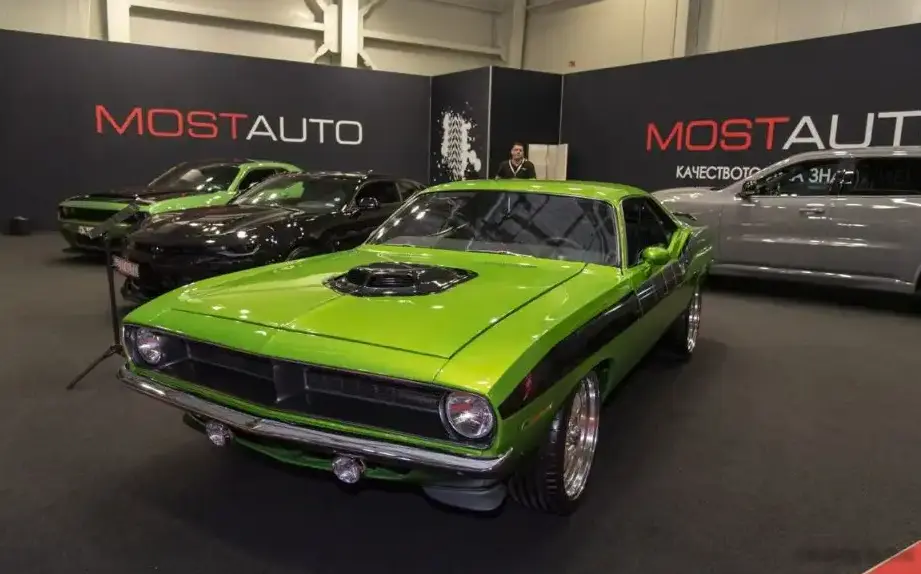
The Plymouth Barracuda III, specifically the variant equipped with the 6.3-liter (383.05 cubic inch) V8 engine producing 330 horsepower, represents a pivotal moment in the muscle car era. Produced solely for the 1970 model year, this iteration of the Barracuda marked a significant departure from its earlier, more compact predecessors. It was built on the newly designed E-body platform, shared with the Dodge Challenger, and aimed to compete directly with the Ford Mustang and Chevrolet Camaro. This particular engine and transmission combination occupied a sweet spot in the Barracuda lineup, offering substantial performance without the higher price tag of the more potent 426 Hemi or 440 Magnum options.
Technical Specifications
| Brand | Plymouth |
| Model | Barracuda |
| Generation | Barracuda III |
| Type (Engine) | 6.3 V8 (330 Hp) |
| Start of production | 1970 |
| End of production | 1970 |
| Powertrain Architecture | Internal Combustion engine |
| Body type | Coupe |
| Seats | 4 |
| Doors | 2 |
| Fuel Type | Petrol (Gasoline) |
| Power | 330 Hp @ 5000 rpm |
| Power per litre | 52.6 Hp/l |
| Torque | 576 Nm @ 3200 rpm / 424.84 lb.-ft. @ 3200 rpm |
| Engine layout | Front, Longitudinal |
| Engine Model/Code | B |
| Engine displacement | 6277 cm3 / 383.05 cu. in. |
| Number of cylinders | 8 |
| Engine configuration | V-engine |
| Cylinder Bore | 108 mm / 4.25 in. |
| Piston Stroke | 85.7 mm / 3.37 in. |
| Compression ratio | 9.5:1 |
| Number of valves per cylinder | 2 |
| Fuel injection system | Carburettor |
| Engine aspiration | Naturally aspirated engine |
| Valvetrain | OHV |
| Engine oil capacity | 4.7 l / 4.97 US qt | 4.14 UK qt |
| Trunk (boot) space – minimum | 167 l / 5.9 cu. ft. |
| Fuel tank capacity | 72 l / 19.02 US gal | 15.84 UK gal |
| Length | 4742 mm / 186.69 in. |
| Width | 1902 mm / 74.88 in. |
| Height | 1293 mm / 50.91 in. |
| Wheelbase | 2743 mm / 107.99 in. |
| Front track | 1516 mm / 59.69 in. |
| Rear (Back) track | 1557 mm / 61.3 in. |
| Drivetrain Architecture | The Internal combustion engine (ICE) drives the rear wheels of the vehicle. |
| Drive wheel | Rear wheel drive |
| Number of gears and type of gearbox | 3 gears, manual transmission |
| Front suspension | Independent torsion bar, double wishbone |
| Rear suspension | Rigid axle suspension, Leaf spring |
| Front brakes | Drum, 254×63.5 mm |
| Rear brakes | Drum, 254×63.5 mm |
| Steering type | Cone worm with recirculation balls |
| Wheel rims size | 5J x 14; 6J x 14 |
Powertrain & Engine Architecture
The heart of this Barracuda variant was the Chrysler B engine, specifically the 383 cubic inch (6.3-liter) V8. This engine, designated with the ‘B’ engine code, was a robust and reliable powerplant. It featured a cast iron block and cylinder heads, with a 9.5:1 compression ratio. Fuel delivery was handled by a four-barrel carburetor, providing a good balance between performance and drivability. The overhead valve (OHV) configuration utilized a traditional pushrod valvetrain. The 383 engine was known for its strong low-end torque, making it well-suited for both street driving and occasional drag racing. The standard transmission for this model was a three-speed manual, though a Torqueflite A727 automatic transmission was also available as an option. The engine was mounted longitudinally in the front of the vehicle, sending power to the rear wheels.
Driving Characteristics
The 1970 Barracuda III with the 383 V8 and manual transmission offered a compelling driving experience. While not as brutally fast as the Hemi or 440 models, it provided ample power for spirited driving. Acceleration was brisk, and the engine’s torque made it easy to maintain highway speeds. The three-speed manual transmission, while not offering the most modern gear ratios, was durable and relatively easy to operate. Compared to the automatic transmission equipped models, the manual offered a more engaging driving experience and slightly improved fuel economy. The Barracuda’s torsion bar front suspension provided a comfortable ride, while the leaf spring rear suspension offered adequate handling, though it could be prone to some axle hop under hard acceleration.
Equipment & Trim Levels
The 1970 Barracuda offered a range of trim levels, with the 383 V8 model typically falling into the mid-range. Standard features included a basic interior with vinyl upholstery, a three-spoke steering wheel, and a simple dashboard layout. Optional extras were plentiful, including upgraded interior trim, bucket seats, a center console, a rally instrument cluster, and various exterior styling enhancements. Popular options included power steering, power brakes, and a high-performance exhaust system. The Barracuda’s interior, while functional, was not as luxurious as some of its competitors, focusing more on a sporty and driver-oriented feel.
Chassis & Braking
The Barracuda III utilized a robust chassis designed to handle the power of its V8 engines. The front suspension featured an independent torsion bar setup with double wishbones, providing a relatively comfortable ride and decent handling. The rear suspension employed a traditional leaf spring setup with a solid axle. Braking duties were handled by drum brakes on all four wheels, which were adequate for the car’s weight and performance, but lacked the stopping power of disc brakes. Steering was accomplished via a cone worm and recirculating ball system, offering reasonable precision but requiring some effort at low speeds.
Market Reception & Comparison
The 1970 Plymouth Barracuda III, particularly the 383 V8 variant, was generally well-received by automotive critics. It was praised for its stylish design, strong performance, and comfortable ride. Compared to the higher-performance Hemi and 440 models, the 383 offered a more affordable entry point into the muscle car market. It also proved to be more reliable and easier to maintain than the more exotic engine options. Fuel economy, however, was predictably poor, typical of muscle cars of the era. The 383 Barracuda competed directly with the Ford Mustang Mach 1 and Chevrolet Camaro SS, offering a similar blend of performance and style.
Legacy
The 1970 Plymouth Barracuda III, including the 383 V8 model, remains a highly sought-after classic muscle car today. The 383 engine is known for its durability and relative simplicity, making it a popular choice for restoration projects. While not as valuable as the Hemi or 440 versions, well-maintained 383 Barracudas command respectable prices in the used car market. The E-body platform, shared with the Dodge Challenger, is celebrated for its iconic design and enduring appeal. The 1970 Barracuda represents a high point in American muscle car history, embodying the spirit of performance and style that defined the era.
