
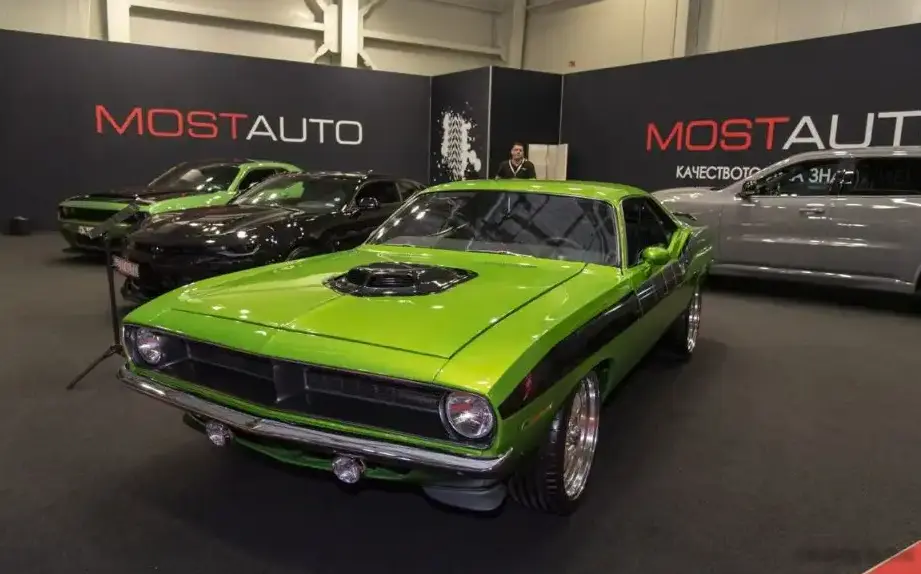
The Plymouth Barracuda III, specifically equipped with the 7.2-liter (439.74 cubic inch) V8 engine producing 390 horsepower, represents a pivotal moment in the Barracuda’s lineage. Produced solely for the 1970 model year, this iteration marked a significant departure from the earlier, more compact Barracuda models, transitioning to a larger, more aggressive design based on the Dodge Challenger. This third generation aimed to compete directly with the Ford Mustang and Chevrolet Camaro in the burgeoning pony car market, offering a blend of performance and style. The 390 hp variant occupied a high-performance position within the Barracuda III lineup, sitting below the even more potent 426 Hemi and 440 Magnum options, but offering a substantial power upgrade over the base 318 and 340 cubic inch engines.
Technical Specifications
| Brand | Plymouth |
| Model | Barracuda |
| Generation | Barracuda III |
| Engine Type | 7.2 V8 (390 Hp) |
| Production Years | 1970 |
| Powertrain Architecture | Internal Combustion engine |
| Body Type | Coupe |
| Seats | 4 |
| Doors | 2 |
| Fuel Type | Petrol (Gasoline) |
| Power | 390 Hp @ 4700 rpm |
| Power per litre | 54.1 Hp/l |
| Torque | 664 Nm @ 3200 rpm / 489.74 lb.-ft. @ 3200 rpm |
| Engine Layout | Front, Longitudinal |
| Engine Model/Code | RB |
| Engine Displacement | 7206 cm3 / 439.74 cu. in. |
| Number of Cylinders | 8 |
| Engine Configuration | V-engine |
| Cylinder Bore | 109.7 mm / 4.32 in. |
| Piston Stroke | 95.3 mm / 3.75 in. |
| Compression Ratio | 10.5:1 |
| Valves per Cylinder | 2 |
| Fuel Injection System | Carburettor |
| Engine Aspiration | Naturally aspirated |
| Valvetrain | OHV |
| Engine Oil Capacity | 4.7 l / 4.97 US qt | 4.14 UK qt |
| Trunk Space (minimum) | 167 l / 5.9 cu. ft. |
| Fuel Tank Capacity | 72 l / 19.02 US gal | 15.84 UK gal |
| Length | 4742 mm / 186.69 in. |
| Width | 1902 mm / 74.88 in. |
| Height | 1293 mm / 50.91 in. |
| Wheelbase | 2743 mm / 107.99 in. |
| Front Track | 1516 mm / 59.69 in. |
| Rear Track | 1542 mm / 60.71 in. |
| Drivetrain | Rear wheel drive |
| Gearbox | 4 gears, manual transmission |
| Front Suspension | Independent torsion bar, double wishbone, Transverse stabilizer |
| Rear Suspension | Rigid axle suspension, Transverse stabilizer, Leaf spring |
| Front Brakes | Drum, 279.4×76.2 mm |
| Rear Brakes | Drum, 279.4×63.5 mm |
| Steering | Cone worm with recirculation balls |
| Wheel Rims | 6J x 14; 7J x 15 |
Powertrain & Engine Architecture
The heart of the 1970 Barracuda III 7.2 V8 was the Chrysler RB engine, specifically the 439.74 cubic inch (7206 cc) version. This engine, designated within the RB family, was a robust and reliable powerplant known for its substantial torque output. It featured a cast iron block and cylinder heads, with a 10.5:1 compression ratio. Fuel delivery was managed by a carburetor, a common practice for the era, and the engine utilized an overhead valve (OHV) valvetrain with two valves per cylinder. The 390 horsepower rating was achieved at 4700 rpm, while peak torque of 489.74 lb-ft. arrived at 3200 rpm. The engine was mounted longitudinally in the front of the vehicle, driving the rear wheels. The standard transmission for this configuration was a four-speed manual, although a three-speed automatic transmission was also available as an option.
Driving Characteristics
The 7.2-liter V8, coupled with the four-speed manual transmission, provided a thrilling driving experience. While not as nimble as some of the smaller pony cars, the Barracuda III offered impressive straight-line acceleration. The engine’s abundant torque meant strong performance across the rev range, making it well-suited for both cruising and spirited driving. The four-speed manual allowed drivers to fully exploit the engine’s power, while the automatic option prioritized ease of use. Compared to the base 318 engine, the 7.2-liter offered a significant performance boost, and while the 440 Magnum and Hemi provided even more power, the 390 hp version struck a balance between performance and affordability. The relatively heavy weight of the Barracuda III, however, did impact handling, making it less agile than some of its competitors.
Equipment & Trim Levels
The Barracuda III 7.2 V8 was typically equipped with a fairly comprehensive list of standard features for the time. These included a vinyl interior, basic instrumentation, and a floor-mounted shifter (with the manual transmission). Optional extras included upgraded interior trim, a premium sound system, power steering, power brakes, and various cosmetic enhancements. The Barracuda was available in a range of vibrant colors, and buyers could choose from a variety of stripes and decals to personalize their vehicle. The ‘Cuda’ package, a popular option, added a distinctive appearance with hood pins, a blacked-out grille, and other sporty touches.
Chassis & Braking
The Barracuda III utilized a robust chassis designed to handle the power of its larger engines. The front suspension featured an independent torsion bar setup with double wishbones and a transverse stabilizer bar, providing a comfortable ride and reasonable handling. The rear suspension employed a traditional rigid axle setup with leaf springs and a transverse stabilizer bar. Braking duties were handled by drum brakes on all four wheels, although power brakes were available as an option. The drum brakes, while adequate for the time, were a limitation compared to the disc brakes offered on some competing models. Steering was accomplished via a cone worm and recirculating ball system.
Market Reception & Comparison
The 1970 Barracuda III was generally well-received by automotive critics, who praised its aggressive styling and powerful engine options. The 7.2-liter V8 was considered a strong performer, offering a good balance of power and drivability. However, some critics noted the car’s relatively heavy weight and less-than-stellar handling compared to other pony cars. Fuel economy was also a concern, as was typical for large-displacement V8 engines of the era. Compared to the 318 and 340 cubic inch engines, the 7.2-liter offered a significant performance upgrade, but at a higher price point. The 440 Magnum and 426 Hemi provided even more power, but were considerably more expensive and less fuel-efficient.
Legacy
The 1970 Plymouth Barracuda III 7.2 V8 holds a special place in automotive history as a representative of the muscle car era. While the third-generation Barracuda was only produced for a single year, it remains a highly sought-after collectible today. The RB engine, known for its durability, continues to be a popular choice for engine swaps and restorations. Well-maintained examples of the 7.2-liter Barracuda command high prices in the used car market, reflecting their rarity and historical significance. The car’s robust construction and relatively simple mechanical design contribute to its long-term reliability, making it a rewarding vehicle for enthusiasts to own and enjoy. The 1970 Barracuda III, with its potent V8 engine, embodies the spirit of American muscle and continues to captivate car enthusiasts decades later.
