
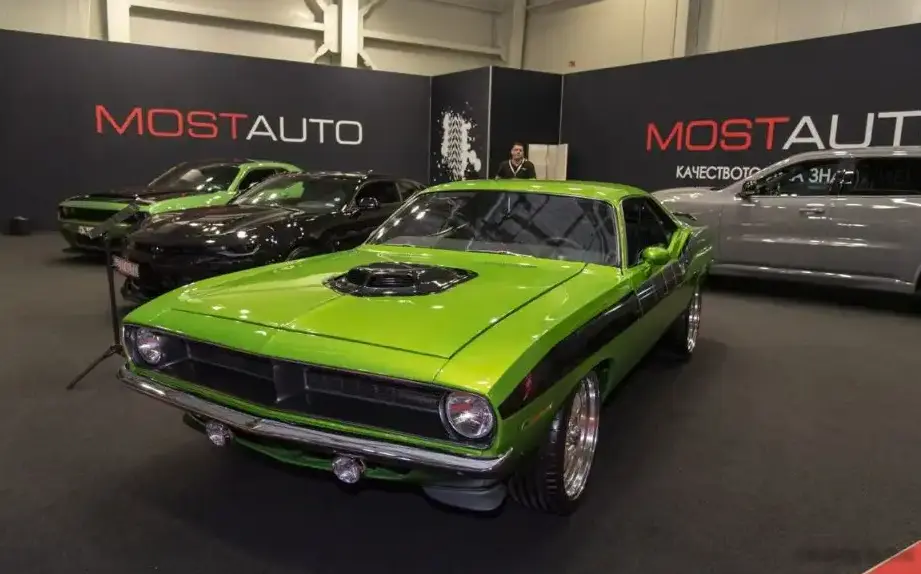
The Plymouth Barracuda AAR, produced for a single model year in 1970, represents a potent and relatively rare iteration of the third-generation Barracuda (often referred to as the ‘Cuda). Designed as a homologation special for the Trans-American Racing series, the AAR – standing for All American Racer – was a collaborative effort between Plymouth and Dan Gurney’s All American Racers team. While the standard Barracuda offered a range of engine options, the AAR was specifically equipped with a 340 cubic inch (5.6-liter) V8 engine tuned for performance, paired exclusively with a three-speed TorqueFlite automatic transmission. This combination aimed to deliver a competitive edge on the track while offering a thrilling driving experience on the road. Production was limited to approximately 2,775 units, making it a sought-after collector’s item today.
Technical Specifications
| Brand | Plymouth |
| Model | Barracuda |
| Generation | Barracuda III |
| Type (Engine) | AAR 5.6 V8 (290 Hp) TorqueFlite |
| Start of production | 1970 |
| End of production | 1970 |
| Powertrain Architecture | Internal Combustion engine |
| Body type | Coupe |
| Seats | 4 |
| Doors | 2 |
| Fuel Type | Petrol (Gasoline) |
| Weight-to-power ratio | 5.6 kg/Hp, 178 Hp/tonne |
| Weight-to-torque ratio | 3.4 kg/Nm, 291.6 Nm/tonne |
| Power | 290 Hp @ 5000 rpm |
| Power per litre | 52.1 Hp/l |
| Torque | 475 Nm @ 2800 rpm, 350.34 lb.-ft. @ 2800 rpm |
| Engine layout | Front, Longitudinal |
| Engine Model/Code | LA |
| Engine displacement | 5563 cm3, 339.48 cu. in. |
| Number of cylinders | 8 |
| Engine configuration | V-engine |
| Cylinder Bore | 102.6 mm, 4.04 in. |
| Piston Stroke | 84.1 mm, 3.31 in. |
| Compression ratio | 10.5:1 |
| Number of valves per cylinder | 2 |
| Fuel injection system | Carburettor |
| Engine aspiration | Naturally aspirated engine |
| Valvetrain | OHV |
| Kerb Weight | 1629 kg, 3591.33 lbs |
| Trunk (boot) space – minimum | 167 l, 5.9 cu. ft. |
| Fuel tank capacity | 72 l, 19.02 US gal | 15.84 UK gal |
| Length | 4742 mm, 186.69 in. |
| Width | 1902 mm, 74.88 in. |
| Height | 1293 mm, 50.91 in. |
| Wheelbase | 2743 mm, 107.99 in. |
| Front track | 1516 mm, 59.69 in. |
| Rear (Back) track | 1542 mm, 60.71 in. |
| Drivetrain Architecture | The Internal combustion engine (ICE) drives the rear wheels of the vehicle. |
| Drive wheel | Rear wheel drive |
| Number of gears and type of gearbox | 3 gears, automatic transmission TorqueFlite |
| Front suspension | Independent torsion bar, double wishbone, Transverse stabilizer |
| Rear suspension | Rigid axle suspension, Transverse stabilizer, Leaf spring |
| Front brakes | Disc |
| Rear brakes | Drum, 279.4×63.5 mm |
| Steering type | Cone worm with recirculation balls |
| Wheel rims size | 7J x 15 |
Powertrain & Engine Architecture
The heart of the Barracuda AAR is the LA-series 340 cubic inch (5.6L) V8 engine. This engine, designated as the E-body 340, was a significant upgrade over the standard 318 cubic inch V8 offered in other Barracuda models. It featured a cast iron block, cast iron cylinder heads, and a forged steel crankshaft. The engine utilized a single four-barrel carburetor, contributing to its 290 horsepower output at 5000 rpm and 350 lb-ft of torque at 2800 rpm. The overhead valve (OHV) configuration, while traditional, was robust and relatively simple to maintain. The TorqueFlite A727 automatic transmission was the sole transmission option, chosen for its durability and ability to handle the engine’s power. This three-speed automatic featured a relatively conservative gear ratio setup, prioritizing drivability over outright acceleration. The engine was longitudinally mounted, driving the rear wheels.
Driving Characteristics
The AAR’s driving experience was a blend of muscle car grunt and relatively refined handling. While not as raw or visceral as some of its contemporaries with manual transmissions, the TorqueFlite automatic provided smooth and effortless acceleration. The 340 engine delivered strong low-end torque, making it responsive in everyday driving situations. However, the automatic transmission’s gear ratios meant that the engine didn’t rev as freely as it could have, and the car didn’t feel quite as nimble as the manual transmission-equipped Barracudas. The torsion bar front suspension and leaf spring rear suspension provided a reasonably comfortable ride, but the car exhibited some body roll during aggressive cornering. The AAR was more of a grand tourer than a dedicated track weapon, offering a balance of performance and comfort.
Equipment & Trim Levels
The Barracuda AAR came with a fairly comprehensive list of standard equipment, reflecting its positioning as a performance-oriented model. Exterior features included a distinctive fiberglass hood with a centrally-mounted air scoop (designed to clear the carburetor), a rear spoiler, and “AAR” striping. The interior featured high-back bucket seats, a center console, and a woodgrain-trimmed steering wheel. While not lavishly appointed, the interior was functional and driver-focused. Optional extras included power steering, power disc brakes, and a radio. The AAR was available in a limited palette of colors, typically bright and attention-grabbing hues like Tor-Red, Lemon Yellow, and Plum Crazy Purple.
Chassis & Braking
The Barracuda AAR utilized a unibody construction, providing a good balance of strength and weight. The front suspension consisted of an independent torsion bar system with double wishbones and a transverse stabilizer bar. The rear suspension employed a traditional leaf spring setup with a transverse stabilizer bar. Braking duties were handled by disc brakes at the front and drum brakes at the rear. While the front discs provided adequate stopping power, the rear drums were a limiting factor in overall braking performance. The 7×15 inch wheels were fitted with Goodyear Polyglas tires, offering a good compromise between grip and ride comfort.
Market Reception & Comparison
The Barracuda AAR was generally well-received by automotive critics, who praised its performance and distinctive styling. However, some reviewers noted that the automatic transmission held the engine back from reaching its full potential. Compared to the standard Barracuda models, the AAR offered a significant performance upgrade, but it also came at a higher price. Compared to other muscle cars of the era, such as the Chevrolet Chevelle SS and the Ford Mustang Mach 1, the AAR offered a unique combination of performance, handling, and exclusivity. The AAR’s limited production run also contributed to its desirability among collectors.
Legacy
The Plymouth Barracuda AAR remains a highly collectible and sought-after muscle car. The 340 engine and TorqueFlite transmission combination, while not the most technologically advanced of the era, proved to be remarkably durable. Well-maintained AARs continue to provide a thrilling driving experience today. The AAR’s legacy extends beyond its performance capabilities; it represents a unique chapter in Plymouth’s history and a testament to the collaboration between an American automaker and a racing legend. In the used car market, AARs command premium prices, reflecting their rarity and historical significance. Finding a completely original, unrestored example is becoming increasingly difficult, making these cars a prized possession for enthusiasts.
