
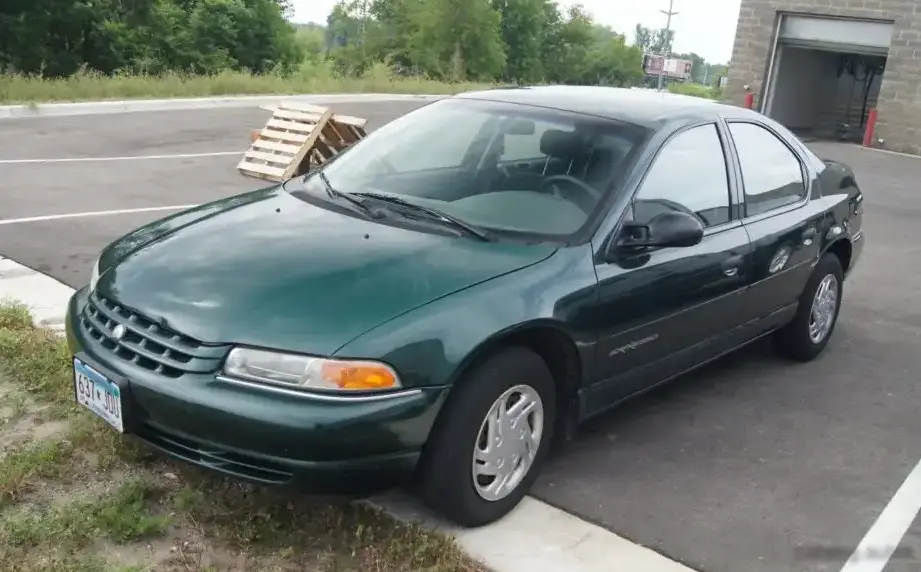
The Plymouth Breeze 2.0 16V Automatic, produced between 1995 and 2000, represented Plymouth’s entry into the mid-size sedan market. Part of the broader ‘JA’ platform generation, shared with the Dodge Stratus and Chrysler Cirrus, the Breeze aimed to offer a comfortable and affordable family vehicle. The 2.0-liter, 16-valve engine paired with a four-speed automatic transmission was a key configuration, positioned as a balance between fuel economy and acceptable performance within the Breeze lineup. It served as the base engine option, appealing to buyers prioritizing value and ease of driving over outright speed.
Technical Specifications
| Brand | Plymouth |
| Model | Breeze |
| Generation | Breeze |
| Type (Engine) | 2.0 16V (132 Hp) Automatic |
| Start of production | 1995 |
| End of production | 2000 |
| Powertrain Architecture | Internal Combustion engine |
| Body type | Sedan |
| Seats | 5 |
| Doors | 4 |
| Fuel consumption (urban) | 10.7 l/100 km (22 US mpg) |
| Fuel consumption (extra urban) | 7.6 l/100 km (30.9 US mpg) |
| Fuel Type | Petrol (Gasoline) |
| Maximum speed | 180 km/h (111.85 mph) |
| Weight-to-power ratio | 10.1 kg/Hp |
| Weight-to-torque ratio | 7.6 kg/Nm |
| Power | 132 Hp @ 6000 rpm |
| Power per litre | 66.1 Hp/l |
| Torque | 175 Nm @ 5000 rpm (129.07 lb.-ft. @ 5000 rpm) |
| Engine layout | Front, Transverse |
| Engine Model/Code | ECB |
| Engine displacement | 1996 cm3 (121.8 cu. in.) |
| Number of cylinders | 4 |
| Engine configuration | Inline |
| Cylinder Bore | 87.5 mm (3.44 in.) |
| Piston Stroke | 83 mm (3.27 in.) |
| Compression ratio | 9.8:1 |
| Number of valves per cylinder | 4 |
| Fuel injection system | Multi-port manifold injection |
| Engine aspiration | Naturally aspirated engine |
| Valvetrain | DOHC |
| Engine oil capacity | 4.3 l (4.54 US qt | 3.78 UK qt) |
| Coolant | 8 l (8.45 US qt | 7.04 UK qt) |
| Kerb Weight | 1330 kg (2932.15 lbs.) |
| Trunk (boot) space – minimum | 445 l (15.72 cu. ft.) |
| Fuel tank capacity | 60 l (15.85 US gal | 13.2 UK gal) |
| Length | 4739 mm (186.57 in.) |
| Width | 1803 mm (70.98 in.) |
| Height | 1374 mm (54.09 in.) |
| Wheelbase | 2743 mm (107.99 in.) |
| Front track | 1529 mm (60.2 in.) |
| Rear (Back) track | 1529 mm (60.2 in.) |
| Drivetrain Architecture | The Internal combustion engine (ICE) drives the front wheels of the vehicle. |
| Drive wheel | Front wheel drive |
| Number of gears and type of gearbox | 4 gears, automatic transmission |
| Front suspension | Double wishbone |
| Rear suspension | Double wishbone |
| Front brakes | Ventilated discs |
| Rear brakes | Drum |
| Assisting systems | ABS (Anti-lock braking system) |
| Steering type | Steering rack and pinion |
| Power steering | Hydraulic Steering |
| Tires size | 195/70 R14 S |
| Wheel rims size | 14 |
Powertrain & Engine Architecture
The Plymouth Breeze 2.0 16V Automatic utilized the Chrysler ECB engine, a 2.0-liter inline-four cylinder powerplant. This engine featured a double overhead camshaft (DOHC) valvetrain operating four valves per cylinder, contributing to its relatively high output for its displacement. Fuel delivery was managed by a multi-port fuel injection system, optimizing air-fuel mixture for improved efficiency and performance. The engine’s 9.8:1 compression ratio was a compromise between performance and the ability to run on readily available gasoline grades. The four-speed automatic transmission, a Chrysler-built unit (typically the 42RE or similar), was chosen for its smooth operation and ease of use, catering to a broader demographic than a manual transmission. While not known for its sportiness, the transmission was generally reliable.
Driving Characteristics
The 132 horsepower and 129 lb-ft of torque produced by the 2.0-liter engine in the Breeze Automatic translated to adequate, but not exhilarating, performance. Acceleration from 0 to 60 mph was typically in the 10-11 second range. The automatic transmission’s gear ratios were geared towards fuel economy and smooth cruising rather than aggressive acceleration. Compared to the optional V6 engines available in the Breeze, the 2.0L automatic felt noticeably slower, particularly when fully loaded or climbing hills. However, the 2.0L offered a more relaxed driving experience, with a focus on comfort and ease of operation. The automatic transmission, while smooth, lacked the responsiveness of a manual gearbox, and didn’t offer any manual shift modes.
Equipment & Trim Levels
The 2.0L Automatic Breeze typically came standard with features such as air conditioning, power steering, power windows, and an AM/FM stereo. Interior upholstery was generally cloth, with options for upgraded fabrics available. The dashboard layout was functional and straightforward, prioritizing usability over stylistic flair. Optional extras included a CD player, upgraded sound systems, cruise control, and power locks. The base trim level was fairly spartan, but offered a good value proposition for budget-conscious buyers. Higher trim levels added more convenience and comfort features.
Chassis & Braking
The Breeze utilized a front-wheel-drive layout with independent double wishbone suspension at both the front and rear. This suspension setup provided a comfortable ride quality, absorbing bumps and irregularities in the road surface effectively. Front brakes were ventilated discs, offering adequate stopping power, while rear brakes were drums, a cost-saving measure common in this class of vehicle. An anti-lock braking system (ABS) was often included as standard equipment, enhancing safety. The steering was rack-and-pinion with hydraulic power assist, providing light and easy steering feel.
Market Reception & Comparison
The Plymouth Breeze 2.0 Automatic was generally well-received as an affordable and practical family sedan. Critics noted its comfortable ride and spacious interior, but also pointed out its lack of sporty handling and relatively modest performance. Compared to the V6-powered Breeze models, the 2.0L automatic offered significantly better fuel economy, but at the expense of acceleration. Against competitors like the Honda Accord and Toyota Camry, the Breeze offered a lower price point but lacked the same level of refinement and brand reputation. Reliability was generally considered average, with some reports of minor issues with the automatic transmission and engine sensors.
Legacy
The Plymouth Breeze, and specifically the 2.0L Automatic variant, has become a relatively affordable and accessible used car. The ECB engine, while not known for its longevity in extreme conditions, is generally reliable with proper maintenance. Parts availability is good, as many components are shared with other Chrysler, Dodge, and Plymouth models. Today, these vehicles are often found as economical transportation for students or as budget-friendly family cars. While not a collector’s item, the Breeze 2.0 Automatic represents a practical and reasonably dependable example of 1990s American automotive engineering. Its simplicity and relatively low running costs continue to make it a viable option for those seeking basic, reliable transportation.
