
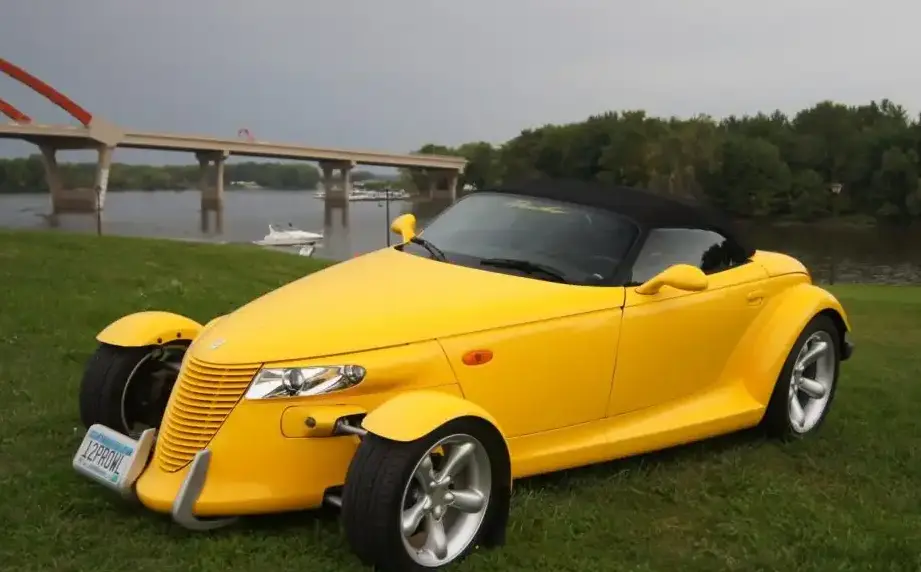
The Plymouth Prowler 3.5 V6, produced from 1999 to 2002, was a striking and unconventional American sports car. Designed to evoke the hot rods of the 1930s, the Prowler represented a bold attempt by Plymouth to recapture a sense of excitement and performance before the brand’s eventual discontinuation. It was built on a unique, purpose-built platform, and the 3.5-liter V6 variant, producing 253 horsepower, was the sole engine and transmission configuration offered throughout its production run. The Prowler aimed to appeal to enthusiasts seeking a distinctive, head-turning vehicle with a blend of retro styling and modern technology.
Technical Specifications
| Brand | Plymouth |
| Model | Prowler |
| Generation | Prowler |
| Type (Engine) | 3.5 V6 (253 Hp) |
| Start of production | 1999 |
| End of production | 2002 |
| Powertrain Architecture | Internal Combustion engine |
| Body type | Cabriolet |
| Seats | 2 |
| Doors | 2 |
| Fuel consumption (combined) | 9 l/100 km (26.1 US mpg, 31.4 UK mpg, 11.1 km/l) |
| Fuel Type | Petrol (Gasoline) |
| Acceleration 0 – 100 km/h | 7.5 sec |
| Acceleration 0 – 62 mph | 7.5 sec |
| Acceleration 0 – 60 mph | 7.1 sec |
| Maximum speed | 230 km/h (142.92 mph) |
| Power | 253 Hp @ 6400 rpm |
| Power per litre | 71.9 Hp/l |
| Torque | 346 Nm @ 3950 rpm (255.2 lb.-ft. @ 3950 rpm) |
| Maximum engine speed | 6800 rpm |
| Engine layout | Front, Longitudinal |
| Engine Model/Code | EGG |
| Engine displacement | 3518 cm3 (214.68 cu. in.) |
| Number of cylinders | 6 |
| Engine configuration | V-engine |
| Cylinder Bore | 96 mm (3.78 in.) |
| Piston Stroke | 81 mm (3.19 in.) |
| Compression ratio | 9.6:1 |
| Number of valves per cylinder | 4 |
| Fuel injection system | Multi-port manifold injection |
| Engine aspiration | Naturally aspirated engine |
| Valvetrain | SOHC |
| Engine oil capacity | 4.7 l (4.97 US qt | 4.14 UK qt) |
| Max. weight | 1287 kg (2837.35 lbs.) |
| Trunk (boot) space – maximum | 586 l (20.69 cu. ft.) |
| Fuel tank capacity | 45 l (11.89 US gal | 9.9 UK gal) |
| Length | 4199 mm (165.31 in.) |
| Width | 1943 mm (76.5 in.) |
| Height | 1293 mm (50.91 in.) |
| Wheelbase | 2878 mm (113.31 in.) |
| Front track | 1580 mm (62.2 in.) |
| Rear (Back) track | 1613 mm (63.5 in.) |
| Ride height (ground clearance) | 114 mm (4.49 in.) |
| Drivetrain Architecture | The Internal combustion engine (ICE) drives the rear wheels of the vehicle. |
| Drive wheel | Rear wheel drive |
| Number of gears and type of gearbox | 4 gears, automatic transmission |
| Front suspension | Double wishbone |
| Rear suspension | Wishbone |
| Front brakes | Disc |
| Rear brakes | Disc |
| Assisting systems | ABS (Anti-lock braking system) |
| Steering type | Steering rack and pinion |
| Power steering | Hydraulic Steering |
| Tires size | 225/45 HR17; 295/40 VR20 |
| Wheel rims size | 7.5J x 17; 10J x 20 |
Powertrain & Engine Architecture
The Plymouth Prowler was powered exclusively by the 3.5-liter EGG V6 engine, derived from the Chrysler 3.5L High Output engine family. This engine featured a single overhead camshaft (SOHC) design with four valves per cylinder. Multi-port fuel injection delivered fuel to the cylinders, and the engine produced 253 horsepower at 6,400 rpm and 346 Nm (255.2 lb-ft) of torque at 3,950 rpm. The engine was mounted longitudinally in the front of the vehicle, driving the rear wheels. The sole transmission option was a four-speed automatic transmission, specifically the 42RE unit. This transmission was chosen for its durability and smooth operation, though it wasn’t known for particularly quick shifts. The engine’s architecture prioritized smooth power delivery over outright acceleration, aligning with the Prowler’s intended grand touring character.
Driving Characteristics
The Prowler’s driving experience was unique. The 3.5L V6 and four-speed automatic provided adequate, but not overwhelming, performance. Acceleration from 0 to 60 mph took approximately 7.1-7.5 seconds. The automatic transmission, while smooth, lacked the responsiveness of a manual gearbox, and the gear ratios were geared more towards cruising than aggressive driving. The Prowler felt most comfortable on open roads, where its long wheelbase and relatively soft suspension provided a stable and comfortable ride. Compared to a hypothetical Prowler with a manual transmission, the automatic version sacrificed some driver engagement and responsiveness. The Prowler wasn’t designed to be a track weapon; it was intended to be a stylish and comfortable cruiser that turned heads wherever it went.
Equipment & Trim Levels
The Prowler was relatively sparsely equipped, focusing on a minimalist aesthetic. Standard features included leather upholstery, air conditioning, power windows and locks, and an AM/FM stereo with a CD player. The interior was designed to evoke the look of classic hot rods, with a simple, functional layout. Optional extras included a premium sound system, upgraded wheels, and special paint colors. The Prowler didn’t offer a wide range of trim levels; it was essentially a single, well-equipped model with a few customization options. The focus was on the overall design and driving experience rather than a long list of features.
Chassis & Braking
The Prowler’s chassis was a unique, purpose-built design featuring a tubular steel frame. This provided a strong and rigid platform for the body. The suspension utilized a double wishbone setup at the front and a wishbone arrangement at the rear. Brakes were discs on all four wheels, and an anti-lock braking system (ABS) was standard. The Prowler’s weight distribution was relatively balanced, contributing to its stable handling. The rear brakes were sized appropriately for the vehicle’s weight and performance capabilities. The suspension was tuned for comfort rather than aggressive handling, prioritizing a smooth ride over sharp cornering.
Market Reception & Comparison
The Plymouth Prowler received mixed reviews from automotive critics. Its striking styling was widely praised, but its performance and value were often questioned. Some critics found the engine and transmission combination underwhelming, while others appreciated the Prowler’s comfortable ride and unique character. Compared to other sports cars of the era, such as the Mazda MX-5 Miata or the Ford Mustang, the Prowler offered a different experience. It wasn’t as sporty or agile as the Miata, but it was more comfortable and luxurious. Fuel economy was reasonable for a V6-powered vehicle, averaging around 26.1 US mpg. Reliability was generally good, although some owners reported minor issues with the electrical system.
Legacy
The Plymouth Prowler, despite its relatively short production run, left a lasting impression on the automotive world. It represented a bold and unconventional design statement, and it helped to revive interest in classic hot rod styling. The 3.5L V6 and 42RE automatic transmission proved to be reasonably reliable, and many Prowlers are still on the road today. In the used car market, the Prowler remains a sought-after vehicle among collectors and enthusiasts who appreciate its unique design and limited production numbers. While not a high-performance machine, the Prowler’s distinctive style and comfortable ride continue to appeal to those seeking a truly unique American automobile.
