
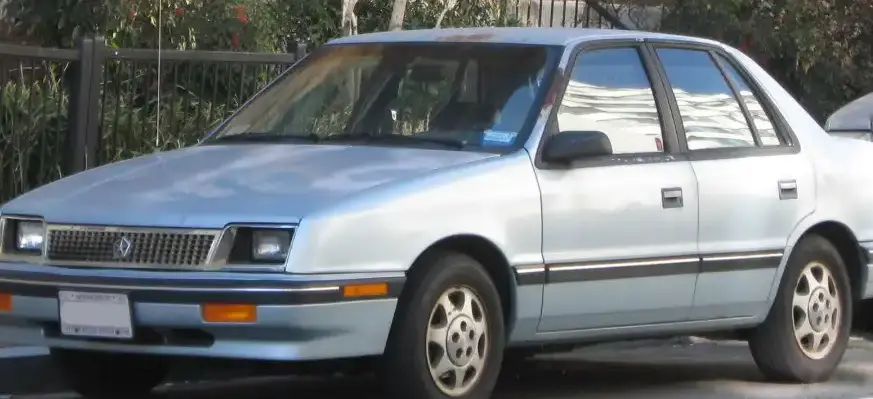
The Plymouth Sundance 3.0i V6 Automatic, produced between 1992 and 1994, represented a mid-range offering within the second generation of the Sundance compact car. Positioned as a step up from the base 2.5-liter models, the 3.0i aimed to provide a balance of performance and affordability in the American compact car market. It was built on the Chrysler JA platform, sharing components with the Dodge Spirit and Chrysler LeBaron. The Sundance, as a whole, was Plymouth’s attempt to modernize its image and compete with increasingly popular Japanese imports. This particular variant, with its V6 engine and automatic transmission, catered to buyers seeking a more refined driving experience than the base models offered.
Technical Specifications
| Brand | Plymouth |
| Model | Sundance |
| Type (Engine) | 3.0i V6 (143 Hp) Automatic |
| Start of production | 1992 |
| End of production | 1994 |
| Powertrain Architecture | Internal Combustion engine |
| Body type | Hatchback |
| Seats | 5 |
| Doors | 3/5 |
| Fuel consumption (urban) | 15 l/100 km (15.7 US mpg, 18.8 UK mpg, 6.7 km/l) |
| Fuel consumption (extra urban) | 9 l/100 km (26.1 US mpg, 31.4 UK mpg, 11.1 km/l) |
| Fuel Type | Petrol (Gasoline) |
| Maximum speed | 190 km/h (118.06 mph) |
| Weight-to-power ratio | 8.6 kg/Hp, 115.8 Hp/tonne |
| Weight-to-torque ratio | 5.3 kg/Nm, 187.9 Nm/tonne |
| Power | 143 Hp @ 5000 rpm |
| Power per litre | 48.1 Hp/l |
| Torque | 232 Nm @ 3600 rpm (171.11 lb.-ft. @ 3600 rpm) |
| Engine layout | Front, Transverse |
| Engine Model/Code | 6G72 |
| Engine displacement | 2972 cm3 (181.36 cu. in.) |
| Number of cylinders | 6 |
| Engine configuration | V-engine |
| Cylinder Bore | 91.1 mm (3.59 in.) |
| Piston Stroke | 76 mm (2.99 in.) |
| Compression ratio | 8.9:1 |
| Number of valves per cylinder | 2 |
| Fuel injection system | Multi-port manifold injection |
| Engine aspiration | Naturally aspirated engine |
| Valvetrain | OHC |
| Engine oil capacity | 4.3 l (4.54 US qt | 3.78 UK qt) |
| Coolant | 9 l (9.51 US qt | 7.92 UK qt) |
| Kerb Weight | 1235 kg (2722.71 lbs.) |
| Trunk (boot) space – minimum | 375 l (13.24 cu. ft.) |
| Trunk (boot) space – maximum | 870 l (30.72 cu. ft.) |
| Fuel tank capacity | 53 l (14 US gal | 11.66 UK gal) |
| Length | 4365 mm (171.85 in.) |
| Width | 1710 mm (67.32 in.) |
| Height | 1340 mm (52.76 in.) |
| Wheelbase | 2470 mm (97.24 in.) |
| Front track | 1465 mm (57.68 in.) |
| Rear (Back) track | 1455 mm (57.28 in.) |
| Drivetrain Architecture | The Internal combustion engine (ICE) drives the front wheels of the vehicle. |
| Drive wheel | Front wheel drive |
| Number of gears and type of gearbox | 4 gears, automatic transmission |
| Front suspension | Coil spring |
| Rear suspension | Coil spring |
| Front brakes | Ventilated discs |
| Rear brakes | Disc |
| Assisting systems | ABS (Anti-lock braking system) |
| Steering type | Steering rack and pinion |
| Power steering | Hydraulic Steering |
| Tires size | 205/60 R14 |
| Wheel rims size | 14 |
Powertrain & Engine Architecture
The heart of the Sundance 3.0i was the Mitsubishi-sourced 6G72 3.0-liter V6 engine. This engine, a 60-degree V configuration, featured a single overhead camshaft (OHC) design operating two valves per cylinder. The 6G72 was known for its relatively smooth operation and decent power output for its displacement. Fuel delivery was handled by a multi-port fuel injection system, contributing to improved efficiency and reduced emissions compared to earlier carbureted engines. The engine produced 143 horsepower at 5000 rpm and 171 lb-ft of torque at 3600 rpm. Paired with this engine was a four-speed automatic transmission, providing convenient shifting for everyday driving. This transmission was a typical torque-converter automatic, prioritizing smooth engagement and ease of use over outright performance.
Driving Characteristics
The 3.0i Automatic Sundance offered a noticeable improvement in acceleration and highway cruising ability compared to the base 2.5-liter models. While not a sports car, the V6 provided sufficient power for merging onto highways and passing slower traffic. The automatic transmission, while smooth, did contribute to some power loss and a less engaging driving experience than the available five-speed manual. Gear ratios were tuned for fuel economy and comfortable cruising, rather than aggressive acceleration. The automatic transmission’s shift points were generally well-placed, but could feel somewhat sluggish during quick maneuvers. The overall driving experience was geared towards comfort and practicality, making it a suitable choice for daily commuting and family transportation.
Equipment & Trim Levels
The 3.0i trim generally included features such as air conditioning, power steering, and an upgraded sound system compared to the base Sundance. Interior upholstery typically consisted of cloth seats, with options for upgraded materials available. Dashboard configuration was fairly standard for the early 1990s, featuring analog gauges and basic controls. Optional extras included features like a sunroof, upgraded audio systems, and alloy wheels. The 3.0i was often positioned as a mid-range trim, offering a step up in features and performance without reaching the price point of fully-loaded models.
Chassis & Braking
The Sundance 3.0i utilized a front-wheel-drive layout with coil spring suspension at all four corners. The front suspension featured MacPherson struts, while the rear employed a twist-beam setup. Braking duties were handled by ventilated discs at the front and solid discs at the rear. An anti-lock braking system (ABS) was often included as standard equipment, enhancing safety and control during emergency braking situations. The suspension was tuned for a comfortable ride, prioritizing smoothness over sporty handling. Stabilizer bars were present, but relatively modest in size, contributing to a slight degree of body roll during cornering.
Market Reception & Comparison
The Sundance 3.0i V6 Automatic received mixed reviews from automotive critics. While the V6 engine was praised for its smoothness and adequate power, the automatic transmission was sometimes criticized for its lack of responsiveness. Fuel economy was considered average for the time, falling in line with other V6-powered compact cars. Compared to the base 2.5-liter models, the 3.0i offered a significant performance upgrade, but at a higher price point. Compared to competitors like the Honda Accord and Toyota Camry, the Sundance was often seen as less refined and less reliable, but more affordable. The 1.8L and 2.5L versions were more popular due to their lower price and better fuel economy, making the 3.0i a niche offering for those prioritizing performance.
Legacy
The Plymouth Sundance 3.0i V6 Automatic, while not a standout performer, holds a place in automotive history as a representative of American compact car design in the early 1990s. The 6G72 V6 engine proved to be relatively durable, and well-maintained examples can still be found on the road today. However, like many vehicles of its era, the Sundance is prone to rust and age-related mechanical issues. In the used car market, the 3.0i typically commands a slightly higher price than the base models, reflecting its increased performance and features. Its legacy is one of affordability and practicality, offering a comfortable and reasonably reliable transportation option for its time.
