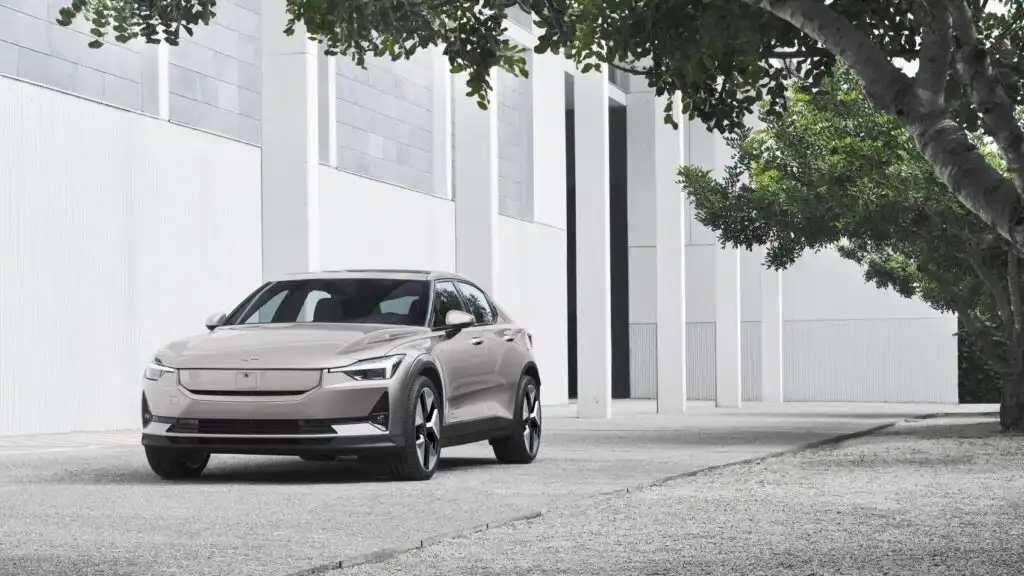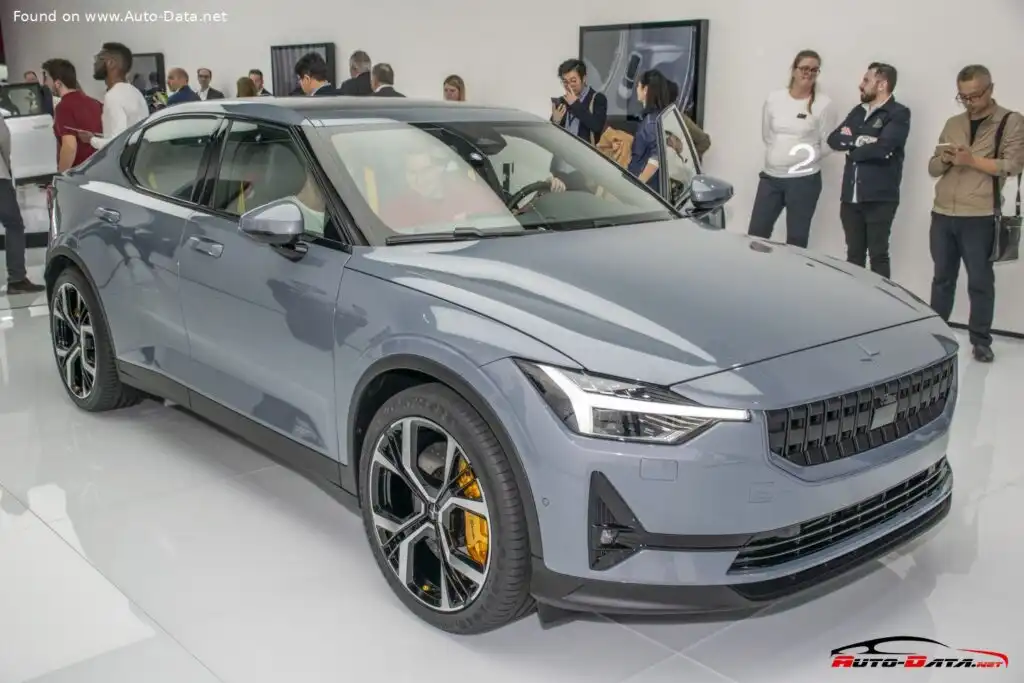
The Polestar 2 64 kWh Standard Range Single Motor, produced from April 2021 to March 2022, represents the entry point into the Polestar 2 lineup. Positioned as the most accessible version of the fastback, it offered a balance of performance, range, and affordability within the burgeoning electric vehicle market. This variant played a crucial role in establishing Polestar as a standalone electric performance brand, distinct from its parent company, Volvo. It’s built on the Compact Modular Architecture (CMA) platform, shared with the Volvo XC40 Recharge, but with a distinct focus on a more driver-centric experience and Scandinavian minimalist design.
Technical Specifications
| Brand | Polestar |
| Model | 2 |
| Generation | 2 |
| Type (Engine) | 64 kWh (224 Hp) Standard Range Single Motor |
| Start of production | April, 2021 |
| End of production | March, 2022 |
| Powertrain Architecture | BEV (Electric Vehicle) |
| Body type | Fastback |
| Seats | 5 |
| Doors | 5 |
| Fuel Type | Electricity |
| Acceleration 0 – 100 km/h | 7.4 sec |
| Acceleration 0 – 62 mph | 7.4 sec |
| Acceleration 0 – 60 mph | 7 sec |
| Maximum speed | 160 km/h (99.42 mph) |
| Weight-to-power ratio | 8.7 kg/Hp, 115.5 Hp/tonne |
| Weight-to-torque ratio | 5.9 kg/Nm, 170.1 Nm/tonne |
| Gross battery capacity | 64 kWh |
| Battery technology | Lithium-ion (Li-Ion) |
| Battery location | Below the floor |
| All-electric range (WLTP) | 440 km (273.4 mi) |
| Electric motor power | 224 Hp |
| Electric motor Torque | 330 Nm (243.4 lb.-ft.) |
| Electric motor location | Front axle, Transverse |
| System power | 224 Hp |
| System torque | 330 Nm (243.4 lb.-ft.) |
| Kerb Weight | 1940 kg (4276.97 lbs.) |
| Max. weight | 2390 kg (5269.05 lbs.) |
| Max load | 450 kg (992.08 lbs.) |
| Trunk (boot) space – minimum | 440 l (15.54 cu. ft.) |
| Permitted trailer load with brakes (12%) | 1500 kg (3306.93 lbs.) |
| Length | 4606 mm (181.34 in.) |
| Width | 1800 mm (70.87 in.) |
| Width including mirrors | 1859 mm (73.19 in.) |
| Height | 1479 mm (58.23 in.) |
| Wheelbase | 2735 mm (107.68 in.) |
| Front track | 1602 mm (63.07 in.) |
| Rear (Back) track | 1601 mm (63.03 in.) |
| Front overhang | 860 mm (33.86 in.) |
| Rear overhang | 1011 mm (39.8 in.) |
| Ride height (ground clearance) | 151 mm (5.94 in.) |
| Approach angle | 15.1° |
| Departure angle | 22° |
| Drivetrain Architecture | One electric motor drives the front wheels. |
| Drive wheel | Front wheel drive |
| Number of gears and type of gearbox | 1 gears, automatic transmission |
| Front suspension | Independent type McPherson |
| Rear suspension | Independent multi-link suspension |
| Front brakes | Ventilated discs, 345×30 mm |
| Rear brakes | Ventilated discs, 320×20 mm |
| Assisting systems | ABS (Anti-lock braking system) |
| Steering type | Steering rack and pinion |
| Tires size | 245/45 R19; 245/40 R20 |
| Wheel rims size | 19; 20 |
Powertrain & Engine Architecture
The Polestar 2 64 kWh Standard Range Single Motor utilizes a single electric motor positioned on the front axle. This motor produces 224 horsepower and 330 Newton-meters (243 lb-ft) of torque. The powertrain is powered by a 64 kWh lithium-ion battery pack located under the floor of the vehicle, contributing to a low center of gravity and improved handling. The single-speed automatic transmission delivers power to the front wheels. The motor employs a permanent magnet synchronous motor design, known for its efficiency and power density. The battery management system (BMS) is crucial for optimizing battery life, performance, and safety, monitoring cell voltages, temperatures, and overall health. The car supports DC fast charging, allowing for a significant range boost in a relatively short period.
Driving Characteristics
The single-motor, front-wheel-drive configuration of the 64 kWh Polestar 2 delivers a comfortable and efficient driving experience. Acceleration from 0 to 60 mph takes approximately 7 seconds, which is respectable but noticeably slower than the dual-motor variants. The single gear ratio provides smooth, linear acceleration, but lacks the immediate punch of the dual-motor models. The front-wheel-drive setup offers good traction in most conditions, but can exhibit some torque steer under hard acceleration. The relatively lower weight compared to the dual-motor versions contributes to a more agile feel in corners. The steering is precise and well-weighted, providing good feedback to the driver. Regenerative braking is adjustable, allowing drivers to customize the level of deceleration when lifting off the throttle.
Equipment & Trim Levels
The Standard Range Single Motor Polestar 2 came standard with a comprehensive suite of features, including a 12.3-inch touchscreen infotainment system powered by Android Automotive OS, over-the-air software updates, a panoramic glass roof, and a premium audio system. Standard safety features included automatic emergency braking, lane keeping assist, and adaptive cruise control. Interior upholstery typically consisted of a mix of textile and synthetic leather. Optional extras included Nappa leather upholstery, performance upgrades (available through Polestar’s software updates), and various exterior styling packages. The minimalist Scandinavian design aesthetic was a hallmark of the Polestar 2 interior, with a focus on clean lines and high-quality materials.
Chassis & Braking
The Polestar 2 features an independent McPherson strut suspension at the front and an independent multi-link suspension at the rear. This setup provides a comfortable ride and good handling characteristics. The chassis is designed to be stiff and lightweight, contributing to the car’s overall agility. The braking system consists of ventilated discs on all four wheels, with the front discs being slightly larger than the rear discs (345x30mm front, 320x20mm rear). ABS (Anti-lock Braking System) is standard. The car’s relatively low center of gravity, thanks to the battery pack’s placement, further enhances its stability and handling.
Market Reception & Comparison
The Polestar 2 64 kWh Standard Range Single Motor was generally well-received by critics, who praised its stylish design, advanced technology, and comfortable driving experience. However, some reviewers noted that its acceleration was not as brisk as that of the dual-motor variants. Fuel economy, expressed as energy consumption, was competitive with other electric vehicles in its class. Compared to the Long Range Dual Motor version, the Standard Range model offered a more affordable entry point but sacrificed some performance and range. Compared to rivals like the Tesla Model 3 Standard Range Plus, the Polestar 2 offered a more premium interior and a more refined driving experience, but Tesla had a more established charging network.
Legacy
The Polestar 2 64 kWh Standard Range Single Motor played a significant role in establishing Polestar as a credible competitor in the electric vehicle market. While it was superseded by updated versions with larger battery packs and improved performance, it remains a popular choice in the used car market. The powertrain has proven to be relatively reliable, with few widespread issues reported. The car’s advanced technology, including its Android Automotive OS, continues to be a selling point for many buyers. As the electric vehicle market matures, the Polestar 2 64 kWh Standard Range Single Motor is remembered as a pioneering vehicle that helped to accelerate the adoption of electric mobility.