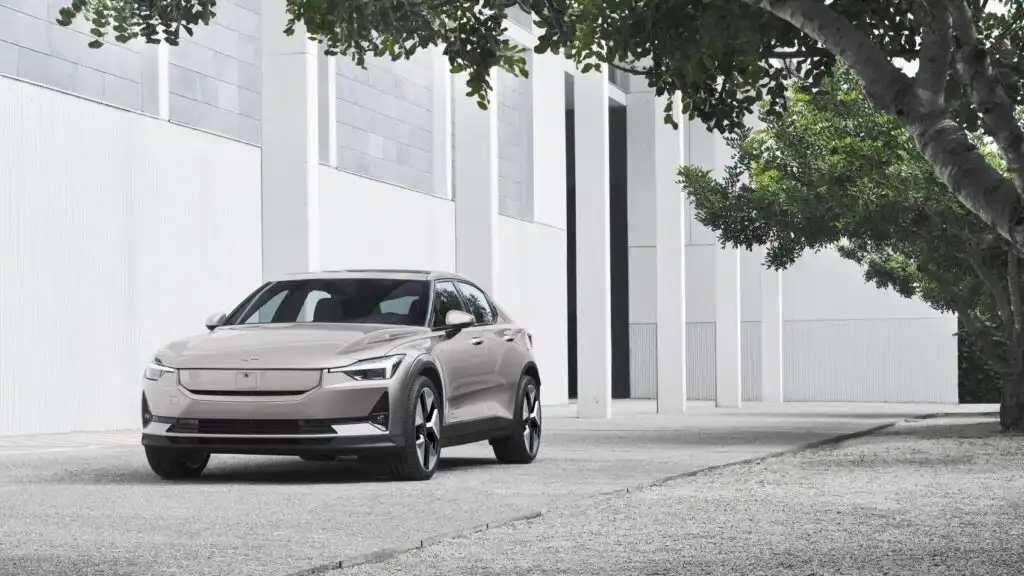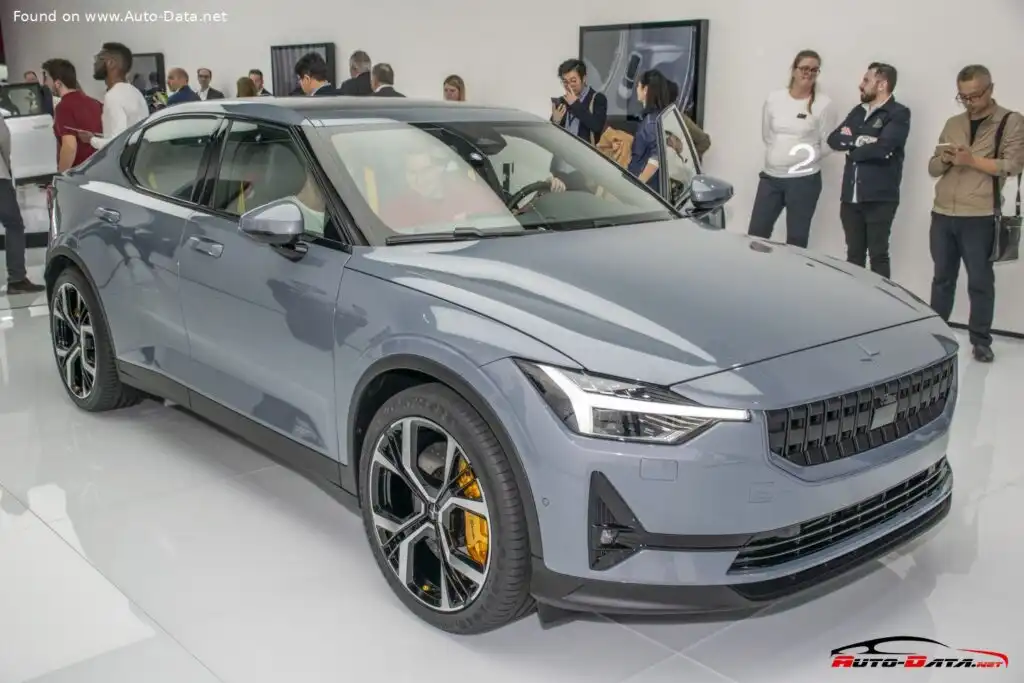
The Polestar 2 78 kWh Long Range Single Motor, produced from April 2021 to January 2023, represents a key variant within the Polestar 2 model range. Positioned as the entry-level offering with extended range, it aimed to provide a balance between affordability, practicality, and the brand’s commitment to electric performance. This fastback, five-door vehicle played a significant role in establishing Polestar as a standalone electric vehicle manufacturer, distinct from its parent company, Volvo. It competed directly with vehicles like the Tesla Model 3 and Hyundai Ioniq 5, offering a Scandinavian-designed alternative in the burgeoning EV market.
Technical Specifications
| Brand | Polestar |
| Model | 2 |
| Generation | 2 |
| Type (Engine) | 78 kWh (231 Hp) Long Range Single Motor |
| Start of production | April, 2021 |
| End of production | January, 2023 |
| Powertrain Architecture | BEV (Electric Vehicle) |
| Body type | Fastback |
| Seats | 5 |
| Doors | 5 |
| Fuel Type | Electricity |
| Acceleration 0 – 100 km/h | 7.4 sec |
| Acceleration 0 – 62 mph | 7.4 sec |
| Acceleration 0 – 60 mph | 7 sec |
| Maximum speed | 160 km/h (99.42 mph) |
| Weight-to-power ratio | 8.6 kg/Hp, 115.8 Hp/tonne |
| Weight-to-torque ratio | 6 kg/Nm, 165.5 Nm/tonne |
| Gross battery capacity | 78 kWh |
| Battery technology | Lithium-ion (Li-Ion) |
| Battery location | Below the floor |
| All-electric range (WLTP) | 540 km (335.54 mi) |
| Electric motor power | 231 Hp |
| Electric motor Torque | 330 Nm (243.4 lb.-ft.) |
| Electric motor location | Front axle, Transverse |
| System power | 231 Hp |
| System torque | 330 Nm (243.4 lb.-ft.) |
| Kerb Weight | 1994 kg (4396.02 lbs.) |
| Max. weight | 2490 kg (5489.51 lbs.) |
| Max load | 496 kg (1093.49 lbs.) |
| Trunk (boot) space – minimum | 440 l (15.54 cu. ft.) |
| Permitted trailer load with brakes (12%) | 1500 kg (3306.93 lbs.) |
| Length | 4606 mm (181.34 in.) |
| Width | 1800 mm (70.87 in.) |
| Width including mirrors | 1859 mm (73.19 in.) |
| Height | 1479 mm (58.23 in.) |
| Wheelbase | 2735 mm (107.68 in.) |
| Front track | 1602 mm (63.07 in.) |
| Rear (Back) track | 1601 mm (63.03 in.) |
| Front overhang | 860 mm (33.86 in.) |
| Rear overhang | 1011 mm (39.8 in.) |
| Ride height (ground clearance) | 151 mm (5.94 in.) |
| Approach angle | 15.1° |
| Departure angle | 22° |
| Drivetrain Architecture | One electric motor drives the front wheels. |
| Drive wheel | Front wheel drive |
| Number of gears and type of gearbox | 1 gears, automatic transmission |
| Front suspension | Independent type McPherson |
| Rear suspension | Independent multi-link suspension |
| Front brakes | Ventilated discs, 345×30 mm |
| Rear brakes | Ventilated discs, 320×20 mm |
| Assisting systems | ABS (Anti-lock braking system) |
| Steering type | Steering rack and pinion |
| Tires size | 245/45 R19; 245/40 R20 |
| Wheel rims size | 19; 20 |
Powertrain & Engine Architecture
The Polestar 2 78 kWh Single Motor utilizes a permanently magnetized synchronous electric motor driving the front wheels. This motor produces 231 horsepower and 243 lb-ft of torque. The 78 kWh lithium-ion battery pack is positioned low in the vehicle’s floor, contributing to a lower center of gravity and improved handling. The battery utilizes a liquid thermal management system to maintain optimal operating temperatures. The single-speed automatic transmission is a direct-drive unit, typical of electric vehicles, providing seamless acceleration. The car’s powertrain is managed by a sophisticated battery management system (BMS) that optimizes energy usage and extends battery life. The charging port is located on the rear quarter panel, supporting both AC and DC fast charging.
Driving Characteristics
The single-motor configuration of this Polestar 2 delivers brisk, though not blistering, acceleration. The 0-60 mph time of around 7 seconds is respectable for an EV in this class. The immediate torque delivery characteristic of electric motors provides responsive acceleration in everyday driving situations. Compared to the dual-motor Polestar 2, the single-motor version offers a more relaxed driving experience, prioritizing efficiency over outright performance. The single-speed transmission provides smooth, linear acceleration without the gear changes found in traditional internal combustion engine vehicles. The front-wheel-drive layout offers predictable handling, although it may exhibit some torque steer under hard acceleration. The low center of gravity, thanks to the battery placement, contributes to stable cornering.
Equipment & Trim Levels
The 78 kWh Long Range Single Motor Polestar 2 typically came standard with a comprehensive suite of features, including a 12.3-inch touchscreen infotainment system powered by Android Automotive OS, over-the-air software updates, a panoramic glass roof, and a premium audio system. Standard safety features included automatic emergency braking, lane keeping assist, and adaptive cruise control. Interior upholstery was typically a vegan-friendly textile option, with leather alternatives available as an upgrade. Optional extras included performance packs with upgraded Brembo brakes and Öhlins dampers, as well as various interior and exterior styling packages. The interior design emphasized minimalism and Scandinavian aesthetics, with a focus on sustainable materials.
Chassis & Braking
The Polestar 2 features a McPherson strut front suspension and a multi-link rear suspension, providing a comfortable and controlled ride. The suspension is tuned to balance handling and ride quality. The vehicle utilizes ventilated disc brakes on all four wheels, with the front discs being slightly larger than the rear. The electronic stability control (ESC) system and anti-lock braking system (ABS) work in conjunction to enhance safety and stability. The steering system is a rack-and-pinion setup with electric power assistance, providing precise and responsive steering feel. Wheel sizes ranged from 19 to 20 inches, impacting ride comfort and handling characteristics.
Market Reception & Comparison
The Polestar 2 78 kWh Single Motor was generally well-received by automotive critics. It was praised for its stylish design, high-quality interior, and advanced technology. The extended range offered by the 78 kWh battery pack was a significant selling point. Compared to the dual-motor Polestar 2, the single-motor version offered a more affordable entry point into the Polestar brand, but at the expense of some performance. Fuel economy, expressed as miles per gallon equivalent (MPGe), was competitive with other EVs in its class. Reliability reports have been generally positive, with few major issues reported. However, some owners have noted minor software glitches, which Polestar has addressed through over-the-air updates.
Legacy
The Polestar 2 78 kWh Long Range Single Motor played a crucial role in establishing Polestar as a viable competitor in the electric vehicle market. Its combination of Scandinavian design, advanced technology, and competitive pricing appealed to a growing number of EV buyers. The powertrain has proven to be reliable, and the vehicle continues to hold its value well in the used car market. As Polestar expands its model lineup, the 2 remains a key part of its brand identity, representing the company’s commitment to sustainable mobility and innovative design. The success of this variant paved the way for future single-motor Polestar models and helped to accelerate the adoption of electric vehicles globally.