
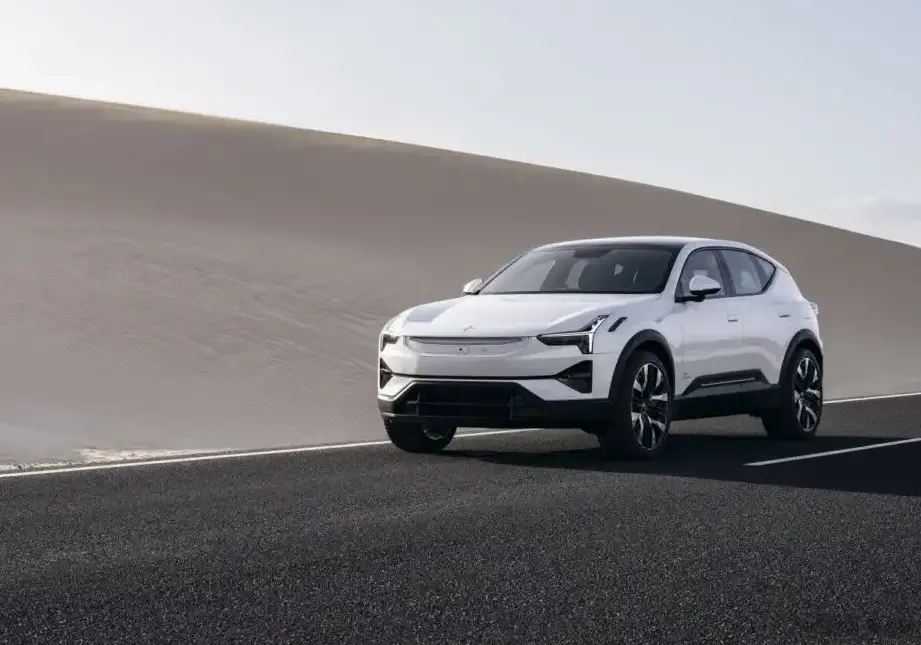
The Polestar 3 92 kWh (333 Hp) Rear Motor represents Polestar’s entry into the premium electric SUV segment, commencing production in October 2025. Positioned as a foundational model within the broader Polestar 3 lineup, it offers a balance of performance, range, and technology. The vehicle is built upon a dedicated electric vehicle architecture, aiming to compete with established luxury EVs from brands like BMW, Mercedes-Benz, and Audi. It’s a five-door, five-seat SUV designed to appeal to buyers seeking a sophisticated and sustainable driving experience.
Technical Specifications
| Brand | Polestar |
| Model | 3 |
| Generation | 3 |
| Type (Engine) | 92 kWh (333 Hp) Rear Motor |
| Start of production | October, 2025 |
| Powertrain Architecture | BEV (Electric Vehicle) |
| Body type | SUV |
| Seats | 5 |
| Doors | 5 |
| Fuel Type | Electricity |
| Acceleration 0 – 60 mph | 6.3 sec |
| Maximum speed | 209 km/h (129.87 mph) |
| Weight-to-power ratio | 7 kg/Hp, 143.8 Hp/tonne |
| Weight-to-torque ratio | 4.8 kg/Nm, 207.3 Nm/tonne |
| Gross battery capacity | 92 kWh |
| Net (usable) battery capacity | 88 kWh |
| Battery voltage | 800 V |
| Battery technology | Lithium-ion (Li-Ion) |
| Battery location | Below the floor |
| All-electric range (WLTP) | 603.5 km (375 mi) |
| Average Energy consumption (WLTP) | 17.6-21.6 kWh/100 km (28.32 – 34.76 kWh/100 mi) |
| Average Energy consumption (MPGe) | 119 – 97 |
| Average Energy consumption (km/kWh) | 5.7 – 4.6 |
| Average Energy consumption (mi/kWh) | 3.5 – 2.9 |
| Electric motor power | 333 Hp |
| Electric motor Torque | 480 Nm (354.03 lb.-ft.) |
| Electric motor location | Rear axle, Transverse |
| Electric motor type | Synchronous |
| System power | 333 Hp |
| System torque | 480 Nm (354.03 lb.-ft.) |
| Kerb Weight | 2315-2400 kg (5103.7 – 5291.09 lbs.) |
| Trunk (boot) space – minimum | 484 l (17.09 cu. ft.) |
| Trunk (boot) space – maximum | 1411 l (49.83 cu. ft.) |
| Permitted trailer load with brakes (12%) | 1500 kg (3306.93 lbs.) |
| Length | 4900 mm (192.91 in.) |
| Width | 1968 mm (77.48 in.) |
| Width including mirrors | 2120 mm (83.46 in.) |
| Height | 1622 mm (63.86 in.) |
| Wheelbase | 2985 mm (117.52 in.) |
| Front track | 1675-1679 mm (65.94 – 66.1 in.) |
| Rear (Back) track | 1669-1680 mm (65.71 – 66.14 in.) |
| Ride height (ground clearance) | 205-208 mm (8.07 – 8.19 in.) |
| Minimum turning circle (turning diameter) | 11.8 m (38.71 ft.) |
| Number of gears and type of gearbox | 1 gears, automatic transmission |
| Front suspension | Double wishbone |
| Rear suspension | Independent multi-link suspension |
| Front brakes | Ventilated discs, 400 mm |
| Rear brakes | Ventilated discs, 390 mm |
| Steering type | Steering rack and pinion |
| Power steering | Electric Steering |
| Front wheel tires | 255/50 R20; 265/45 R21; 265/40 R22 |
| Rear wheel tires | 285/45 R20; 295/40 R21; 295/35 R22 |
| Front wheel rims | 20; 21; 22 |
| Rear wheel rims | 20; 21; 22 |
Powertrain & Engine Architecture
The Polestar 3 92 kWh Rear Motor utilizes a single, permanently magnetized synchronous electric motor driving the rear wheels. This configuration simplifies the drivetrain, reducing weight and complexity compared to dual-motor all-wheel-drive variants. The motor is powered by a 92 kWh (gross) / 88 kWh (net) lithium-ion battery pack positioned low in the vehicle’s floor to enhance stability and lower the center of gravity. The 800-volt architecture allows for rapid DC fast charging, capable of adding significant range in a short period. The motor produces 333 horsepower and 480 Nm (354 lb-ft) of torque, providing brisk acceleration. The single-speed automatic transmission is integral to the motor unit, delivering seamless power delivery.
Driving Characteristics
The rear-wheel-drive configuration of the 92 kWh variant imparts a distinct driving feel compared to the dual-motor Polestar 3. While not as explosively quick as its AWD sibling (0-60 mph in 6.3 seconds), it offers a more engaging and balanced driving experience. The single gear ratio is optimized for a blend of acceleration and efficiency. Power delivery is immediate and linear, characteristic of electric motors. The lower weight, due to the absence of a front motor and associated components, contributes to improved handling and agility. The rear-wheel-drive setup can exhibit a slight tendency towards oversteer under hard cornering, offering a more traditional sports SUV feel.
Equipment & Trim Levels
The Polestar 3 92 kWh Rear Motor serves as the entry point to the Polestar 3 range. Standard equipment includes a large central touchscreen infotainment system running the Android Automotive OS, a premium audio system, panoramic glass roof, and a comprehensive suite of advanced driver-assistance systems (ADAS) such as adaptive cruise control, lane keeping assist, and automatic emergency braking. Interior upholstery typically consists of high-quality sustainable materials, with options for leather or textile alternatives. Optional extras include upgraded audio systems, ventilated and massaging seats, and a head-up display. The base trim focuses on providing a luxurious and technologically advanced experience without the added cost of dual-motor performance.
Chassis & Braking
The Polestar 3 features a sophisticated chassis design with a double wishbone front suspension and an independent multi-link rear suspension. This setup is tuned to provide a comfortable ride while maintaining precise handling. Ventilated disc brakes are used on all four wheels, with 400mm rotors at the front and 390mm rotors at the rear, providing ample stopping power. The electronic stability control (ESC) system is calibrated to work in conjunction with the rear-wheel-drive layout, enhancing stability and control. The steering system is an electric power-assisted rack and pinion, offering precise and responsive steering feel.
Market Reception & Comparison
Initial reviews of the Polestar 3 have been generally positive, with critics praising its stylish design, luxurious interior, and advanced technology. The 92 kWh Rear Motor variant has been noted for its efficiency and engaging driving dynamics. Compared to the dual-motor version, it offers a more affordable entry price point, making it accessible to a wider range of buyers. Fuel economy, expressed as energy consumption, is rated at 17.6-21.6 kWh/100 km (28.32 – 34.76 kWh/100 mi), translating to a WLTP range of 603.5 km (375 miles). Reliability data is still emerging, as the vehicle is relatively new to the market, but Polestar’s focus on quality and durability suggests a promising outlook.
Legacy
The Polestar 3 92 kWh Rear Motor is poised to become a significant player in the growing electric SUV market. Its combination of performance, range, and luxury positions it as a compelling alternative to established competitors. The long-term reliability of the powertrain remains to be seen, but the robust design of the electric motor and battery pack suggests a durable and long-lasting system. As the electric vehicle market matures, the Polestar 3 is expected to maintain its appeal as a stylish, sustainable, and technologically advanced SUV.
