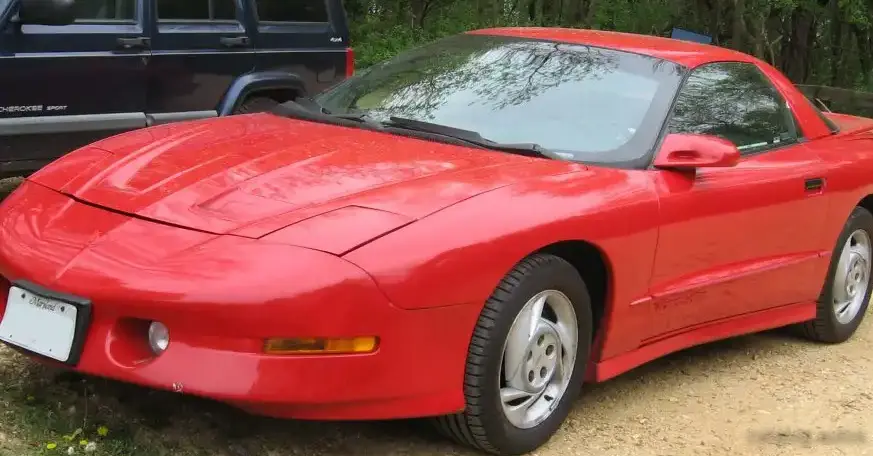
The Pontiac Firebird III 5.0i V8, produced from 1985 to 1992, represented a significant iteration of the third-generation Firebird (1982-1992). This variant, equipped with the 5.0-liter (305 cubic inch) V8 engine producing 210 horsepower, occupied a middle ground in the Firebird lineup, offering a balance between performance and affordability. It served as a step up from the base V6 models, appealing to buyers seeking a more potent driving experience without the higher price tag of the Formula or Trans Am trims. The Firebird III, as a whole, aimed to modernize the Firebird image, moving away from the more overtly muscle-car aesthetic of the 1970s towards a sleeker, more aerodynamic design.
Technical Specifications
| Brand | Pontiac |
| Model | Firebird |
| Generation | Firebird III |
| Engine Type | 5.0i V8 (210 Hp) |
| Production Years | 1985 – 1992 |
| Powertrain Architecture | Internal Combustion Engine |
| Body Type | Coupe |
| Number of Doors | 2 |
| Fuel Type | Petrol (Gasoline) |
| Power Output | 210 Hp |
| Engine Aspiration | Naturally Aspirated |
| Engine Oil Capacity | 4.7 liters (4.97 US qt, 4.14 UK qt) |
| Coolant Capacity | 16.5 liters (17.44 US qt, 14.52 UK qt) |
| Fuel Tank Capacity | 60.5 liters (15.98 US gal, 13.31 UK gal) |
| Length | 4833 mm (190.28 in) |
| Width | 1838 mm (72.36 in) |
| Height | 1264 mm (49.76 in) |
Powertrain & Engine Architecture
The heart of the Firebird III 5.0i was the Chevrolet small-block 305 cubic inch (5.0 liter) V8 engine. This engine, designated L03 in its base form, featured a cast iron block and cylinder heads, with two valves per cylinder. Fuel delivery was handled by a Central Port Injection (CPI) system, a precursor to full multi-port fuel injection. While not as sophisticated as later systems, CPI offered improved fuel efficiency and emissions control compared to carbureted engines. The engine produced 210 horsepower at 4,800 rpm and 275 lb-ft of torque at 3,200 rpm. The engine was typically paired with a four-speed automatic transmission (4L60), although a five-speed manual transmission was available as an option, albeit less commonly ordered. The automatic transmission was geared towards smooth cruising and acceptable acceleration, prioritizing comfort over outright performance.
Driving Characteristics
The 5.0i V8-equipped Firebird III offered a noticeable step up in performance compared to the base V6 models. Acceleration from 0 to 60 mph typically took around 7.5 to 8.5 seconds, depending on the transmission and rear axle ratio. The automatic transmission, while providing smooth shifts, did result in some power loss compared to the manual transmission. The gear ratios were optimized for highway cruising, making the Firebird III a comfortable grand tourer. Handling was generally considered competent, but not particularly sporty. The suspension, while improved over earlier Firebird generations, was tuned for ride comfort rather than aggressive cornering. The car felt planted and stable at highway speeds, but could exhibit some body roll during more spirited driving.
Equipment & Trim Levels
The Firebird III 5.0i typically came standard with features such as air conditioning, power steering, power brakes, and a basic AM/FM stereo. Interior upholstery was typically cloth, although leather was available as an option. The dashboard featured analog gauges, including a speedometer, tachometer, and fuel gauge. Optional extras included a premium sound system, cruise control, power windows, power locks, and a T-top roof. The Firebird III trim level itself sat between the base Firebird and the more performance-oriented Formula and Trans Am models. It offered a more upscale appearance than the base model, with features like color-keyed exterior trim and a more refined interior.
Chassis & Braking
The Firebird III was built on the F-body platform, shared with the Chevrolet Camaro. The chassis featured a unibody construction, providing a good balance of strength and weight. The front suspension consisted of independent MacPherson struts, while the rear suspension utilized a solid axle with coil springs. Braking duties were handled by power-assisted disc brakes in the front and drum brakes in the rear. Anti-lock brakes (ABS) were available as an option. The rear drum brakes were a cost-saving measure, and were often criticized for their limited stopping power compared to rear disc brakes found on the Formula and Trans Am models. Stabilizer bars were standard front and rear, helping to reduce body roll during cornering.
Market Reception & Comparison
The Firebird III 5.0i V8 was generally well-received by automotive critics. It was praised for its smooth engine, comfortable ride, and attractive styling. However, some critics noted that the performance was not as exhilarating as that of the Formula or Trans Am models. Fuel economy was rated at around 17 mpg city and 25 mpg highway. Compared to the V6-powered Firebird, the 5.0i offered a significant performance boost, but at a higher price. Compared to the Formula and Trans Am, the 5.0i offered a more affordable entry point into the V8 Firebird experience, but lacked the more aggressive styling and performance upgrades of those models. The 5.0i was often seen as a good compromise for buyers who wanted a V8-powered Firebird without breaking the bank.
Legacy
The Firebird III 5.0i V8 remains a popular choice among enthusiasts today. The 305 V8 engine is known for its reliability and relatively simple maintenance requirements. Parts availability is generally good, thanks to the engine’s widespread use in other General Motors vehicles. While not a high-performance machine by modern standards, the Firebird III 5.0i offers a nostalgic driving experience and a classic American muscle car aesthetic. Well-maintained examples command reasonable prices in the used car market, making them an accessible entry point into the world of classic Pontiacs. The car represents a transitional period in automotive design, bridging the gap between the traditional muscle car era and the more modern, aerodynamic designs of the 1990s.